
Sign up to save your podcasts
Or

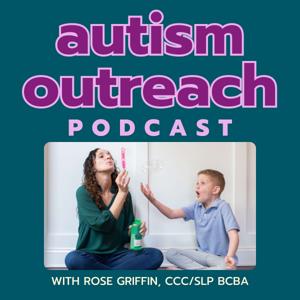


Many times, assessments and standardized tests don’t tell the whole story of the learner. So, what do you do when you’re overwhelmed with where to start with a younger nonspeaking or autistic learner. When I first started my career I remember being discouraged at times and with a lack of the resources available unlike what we have today, I had to find the information myself and blaze that trail. Today I want to share how I get started with these learners, to help them find their voice and start communicating today.
Top 8 Foundational skills for young autistic learners:
1. Joint Attention - There is power in shared activities, a time that generates spontaneous communication. Both the therapist and the learner in an activity surrounding Literacy, Music, or Play. Check out the episode for my list of favorites!
2. Imitation - Keep it fun and functional by practicing during play. The key is playing with similar items in a way that the child will want to repeat. For example, role-play with a baby doll.
3. Requesting - Work on meaningful words that can make communication powerful for a student's real life. Specific requesting skills teach students that communicating can get them something!
4. Matching - There are so many great skills that come along with matching like scanning and engagement. I share a bit about how I use my favorite resource and modify matching games to work with the students' level.
5. Play - Play routines and leisure skills are SO important. Work on playing with fun games, shape sorting, and building around their language level.
6. Following One-Step Directions - This is critical not only in school but at home. Be sure to think about your kids and how their communication impacts their day outside of the therapy room. Examples: “Put your coat on” “Stand by the door” etc.
7. Labeling - Students should be comfortable talking about things in their environment. Be aware of your students' level and chronological age, is it appropriate to use flashcards? Or is it important to work on it during play?
8. Fill in the Blank - “Ready…Set….___” This skill starts with, “I say something, you say something”, which opens the door for so much communication, like asking and answering questions!
All of my advice today comes from my experience in private practice, where I am afforded the opportunity to work one on one. Be sure to take into account all of your circumstances, therapy opportunities, and resources when planning to individualize these skills to your students. If you have questions or want to know more about my favorite resources discussed in today’s episode, you can always contact me at ABA Speech.
#ABASpeechTherapy #Autism
What’s Inside:
Mentioned In This Episode:
Start Communicating Today Live - ABA Speech
ABA Speech: Home
I think it’s so important to think outside of the box when engaging our students in therapy. Today I am talking with Kim and Amy from Talk Yoga, two SLP friends who met at work and combined their passion for speech and yoga to help their clients grow.
Not only is Yoga a fun, engaging activity in itself but as a trained yoga instructor, Amy has adapted poses for her clients into what she calls Articulation Poses. Talk Yoga really believes in the whole body of the child and how all of their physical movements inform the movements inside the mouth. Articulation poses are modified versions that connect to oral motor skills for articulation and connect the body to the mouth.
Another use for yoga that Amy and Kim embed into their practice is teaching vocabulary using alliteration associated with movements. For younger students, skills like labeling, imitation, and even imagination work can be really engaging through yoga. Yoga is a shared activity and leisure skill that can be benefited from across the lifespan, Amy and Kim emphasize that their work can be applied to any age range.
As a therapist, it can be difficult to find shared activities that generalize into the community or home, but yoga is perfect for this. Yoga is accessible to anyone and families can enjoy yoga together as a connecting activity. One tool Amy and Kim use is allowing the student to become the teacher, having students dictate and verbalize the poses creates so many language opportunities!
Yoga is a practice grounded in breathwork, calm, and mindfulness. Amy and Kim embed this into each and every one of their sessions, starting with breathwork. The best part of this is it not only calms and prepares your client, but you as the therapist can enter the best headspace to be there with your client.
I know firsthand that I see spontaneous communication explode in shared activities like Yoga. Amy and Kim provide so many tips and ideas for embedding yoga into your therapy sessions, I can’t wait for you to try them!
#autism #speechtheraphy
What’s Inside:
Mentioned In This Episode:
Start Communicating Today Live - ABA Speech
ABA Speech: Home
Talk Yoga
Talk Yoga SLP Podcast
In my 20 years of experience, I have divided my time between school-based and private setting therapy. I have dedicated my career to autistic learners and today I want to share my TOP TEN tips on developing an IEP and conducting a successful smooth IEP meeting. These tips will ensure you are prepared, remain calm, and work to the benefit of the student, especially when working on more difficult cases for students who are non-typical or non-speaking.
#austism #speechtherapy
What’s Inside:
Mentioned In This Episode:
ABA Speech: Home
Start Communicating Today Live
Are you feeling stressed? Are you feeling like you just can’t achieve that work-life balance? May tends to be a tough time for many providers, educators, and even parents. Today I talk with Marie Muratalla, SLP, Podcaster, Mindset Coach, and creator of the Say Thanks More Gratitude Journal.
Like many of us, in 2020 when the COVID shutdown began, Marie struggled to bear the weight of her job. In a time when her job was no longer what it was, she battled her personal identity and where that separated from her work identity. This began her business, grounded in the practice of gratitude which she was always passionate about, Marie created Thanks More Gratitude Journals and advocated for the use of mindful habits to set boundaries and create joy.
Marie’s Mindful Habits
1. Daily Gratitude Practice: Try journaling or starting small by writing down one thing you’re thankful for. It can be at any part of your day and can be as simple as a dedicated 5 minutes during your morning coffee or before bed.
2. Morning Meditation: Marie practices 3 minutes of meditation each morning, it doesn’t have to be the same amount of time. It can be whatever works for you. But locking that time in to ground yourself and let go of all other thoughts for just a moment is so important.
3. Bring Presence into your Routine: Whether it's even yoga, affirmations, journaling, meditation….Set intentions and a time to be present for yourself. Marie shared some great apps that she uses to build these routines into her day.
Something so many struggle with is work-life balance. Marie’s number one solution to this is setting boundaries. It can be hard but try to focus on where you are at the moment, and not bring thoughts about work home or into your weekend. For Marie, this means removing her work email from her phone and being firm with colleagues when they ask her questions outside of work.
Mindfulness and gratitude practices are research-based and are proven to reduce stress and increase joy and productivity. Studies have shown that by participating in a gratitude practice, like journaling, you are increasing serotonin levels and decreasing cortisol levels. This practice reduces stress because you are able to take ownership of your emotions and feelings and you are putting it into a safe place. The more you practice these, the more you bring yourself to that balance present place.
Try these tips yourself by introducing these positive habits one small step at a time. If you’d like to learn more about Marie Muratalla or the Say Thanks More Community, you can find her on her website or on social media.
#autism #speechtheraphy
What’s Inside:
Mentioned In This Episode:
Thanks Morris
Marie on (@thanksmorris) • Instagram photos and videos
Marie on (@thanksmorris) TikTok
Down Dog
I am - Daily Affirmations on the App Store
Atomic Habits: An Easy & Proven Way to Build Good Habits & Break Bad Ones
ABA Speech: Home
Start Communicating Today
I have been following Theresa Richard’s business journey for a while and when I recently learned about her son’s autism diagnosis, I had to learn more about her. Theresa is an SLP, Board Certified Specialist in swallowing and swallowing disorders, Business owner, Podcaster, Author, and creator of the MedSLP Collective. She started her business in 2013, began blogging in 2014, and moved into the podcast world in 2017. I have really enjoyed following her work and Theresa does an excellent job disseminating information in a lesser-known field.
Theresa proclaims that she has such a passion for helping children with special needs. She recently sold one of her mobile FEES businesses and donated all proceeds to the foundation, set up in her son’s honor. Theresa’s son was born with an extremely rare chromosomal abnormality. There was no concrete syndrome which was extremely lonely to not be able to find a support group or community.
Her journey brought her family on a big move from New York to Florida to seek out therapy for her son at age 5. During the assessments to receive a therapy placement, her son received the shocking diagnosis of Autism. While this knowledge was surprising and unexpected, it affected their lives in a positive way. This diagnosis opened the door to a whole new world of support. In Florida, under this diagnosis, Theresa has been able to find the perfect school and specialized therapists that see him at school.
A team working toward the benefit of your child is so important, and Theresa speaks out to families to let them know that facilities and schools, and therapists who are ready to work toward that are out there. Theresa on her journey has had a variety of experiences and she shares her advice for providers from a parent's perspective: open-ended, nonjudgmental communication is vital. She makes these conversations, questions, and discussions an important part of her son’s therapy plans.
Theresa’s parting words for parents new to the journey of autism, is to not be afraid to reach out. Social media and groups can be a negative place but don’t go there, surround yourself in the positive groups and the positive voices. As an autism mother it can be scary and lonely but there are people out there who want to help and support you!
You can follow Theresa Richard and her journey by checking out her website or following her on social media!
#autism #speectherapy
What’s Inside:
Mentioned In This Episode:
Thank you to this episode's sponsor, Mightier. We make video games that help kids build their emotional strength.
Learn how to #beMightier at www.mightier.com
— MedSLP Collective
— Theresa Richard Medical SLP
— TheresaRichardSLP on Instragram
— Theresa Richard on Facebook
— So You're Having Trouble Swallowing Paperback – August 11, 2021
— ABA Speech: Home
I am always interested in learning more about the variety of students I can help. Today I am interviewing Annie DiVello, an SLP who specializes in Selective Mutism. At the time Annie was in grad school, it was believed that selective mutism was more of a mental health disorder and that SLPs were not involved, but even now there is still a real lack of information or resources both in school and in private practice.
What is Selective Mutism?
Selective Mutism (SM) is essentially a phobia of speaking, along with comorbidities. This fear of speaking can be attached to a singular person, people, or places, during certain activities. Selective Mutism often occurs along with anxiety disorders or other speech disorders.
Supporting Learners with Selective Mutism:
Annie discusses the importance of a ‘Round Table’ of support for students with Selective Mutism. These learners cannot be worked with in isolation and should be supported by a variety of professionals that are experts in the complex variety of needs of students with selective mutism.
When it comes to assessment, Annie directs the question about performance vs. skills and ability. A student's performance is not always indicative of their skills, especially in the case of Selective Mutism. Annie provides some tips for SLPs to collect this information, including parent interviews and respectful videoing. Selective Mutism can be effectively diagnosed with a multidisciplinary team at the age of 30 months.
Getting started with therapy for students with Selective Mutism:
As a school-based clinician, you may not come across students with Selective Mutism, but working with experts like Annie DiVello is such a key piece in developing a framework for your therapy with students with more complex needs. This episode is packed with great tips for SLPs working with learners of all ages. Annie is an ASHA-approved CEU trainer, you can find out more about her and her work on her website, AnnieDiVello.com.
#autism #speechtherapy
What’s Inside:
Mentioned In This Episode:
Annie DiVello Consulting
ABA Speech: Home
I love any opportunity to chat with adults with autism who can share their insight on diagnosis, support, and living life with autism. Billy Mayfair is a top professional golfer in the United States, who found his diagnosis late in life in 2019. Today he shares his journey in early life and the concerns that led to his evaluation, and how those answers have helped him find the support he needed.
Growing up golf was a safe haven, he found joy in being alone. Unlike those who receive an early diagnosis, because Autism was not on the radar Bill did not have support in school. He found school to be very difficult and struggled all the way through. Billy's high school counselor even told him not to try to go to college, that he needed to just go out and get a job and struggle for the rest of his life. This was a huge motivator for him, propelling him into completing college and into his golf career.
Billy's wife was instrumental in seeking a diagnosis. There was a pivotal moment during a golf tournament in which he was wrongly disqualified. When he did not comprehend what was happening and he wasn't speaking up for himself, his wife's concerns pushed him to an evaluation. Billy shares that even though he knew something was going on, he was reluctant to seek answers and even took weeks to actually read the findings report.
One of Billy's key struggles throughout his adult life has been with thought delay presenting as unpleasant facial expressions. Oftentimes when he needed more time to think about something, he looked defiant and angry. He's learned that it's okay and even important to ask for more time to think or process. It's really key to self-advocacy.
With this late in life diagnosis, Billy has adapted to new support such as seeing a neuropsychologist and even a nutritionist who is helping him connect the dots between his diet and his brain.
Billy and his wife are currently working on starting a foundation to support athletes with autism and their family members.
#autism #speechtherapy
What’s Inside:
Mentioned In This Episode:
ABA Speech: Home
Billy Mayfair on Twitter
Thank you to this episode's sponsor Mightier - We make video games that help kids build their emotional strength. Learn how to #beMightier at https://www.mightier.com/autismoutreach
On today's podcast, I had the opportunity to learn from Haley Moss. Haley is an author, lawyer, educator, speaker, and is also autistic. In this episode, she shares her perspective on important issues in the autism and neurodivergent community, as we have a conversation surrounding inclusivity in therapy and society.
"Be yourself, but not like that". It can be extremely exhausting for adults to keep up with behaviors that are seen as typical and don't come naturally to them. Haley compares Neurodivergent social skills to being bilingual. It's not that they don't have social skills, they are just different and no matter what or how they try to make them "alike" neurotypical individuals it will always come out with an "autistic accent". She emphasizes the importance of teaching the reason behind typical social skills as cultural needs versus them being "better" or "normal". Everything someone does has a reason behind it and tying trust and understanding to that is really helpful.
What is Neurodiversity?
Neurodiversity is a difference in cognition in which everyone's brain works differently. Neurotypical brains operate in ways that may be expected in a "normal" manner. Neurodivergent is a scope of operation involving the brain out of the box, outside of what would be "expected" ways to include autism, ADHD, mental health, intellectual disabilities, and acquired disabilities such as traumatic injury or illness.
What is Ableism?
Haley shares a definition from the Center for Disability Rights, "Ableism is a set of beliefs or practices that devalue and discriminate against people with physical, intellectual, or psychiatric disabilities and often rest on the assumption that people with disabilities need to be fixed in one way or another." Ableism is much more prevalent in society than people realize, especially in the manner of accessibility and that neurodivergent individuals are not given seats at the table for key discussions.
Practicing Empathy in Your Therapy Sessions
As professionals, we truly want to help people. One of my goals with this podcast is to help therapists and providers do better by knowing better. Haley shares some of her tips from a neurodivergent perspective on how to be empathic as a provider.
I learned so much during this chat with Haley. If you'd like to learn more or connect with her, you can find her on her website and all social media platforms.
#autism #speechtherapy
What’s Inside:
Mentioned In This Episode:
Haley Moss
ABA Speech: Home
SLPs have such a broad scope. We get so much training in graduate school but creating specializations based on your passions really happens through your own research and work out in the field. So there are many areas that fall under the scope of speech therapy that not all SLPs understand completely or feel comfortable with. As my listeners know, Autism has become my area of focus, so I really did not have a lot of awareness or understanding about Dyslexia. This chat with Jeannette Roberes was so educating and informative for me.
Jeannette is an SLP, software engineer, and educator who specializes in Dyslexia. Dyslexia is a combination of characteristics involving reading, writing, and talking. An individual with Dyslexia is going to struggle in one or all of these areas. Symptoms can include late talking, slow to learn words, and a severe delay in reading.
Jeannette has made some great strides in advocating and educating on Dyslexia and how to support her students. She and her colleagues are working on a book to educate SLPs on how to appropriately assess, treat, and diagnose students presenting with Dyslexia.
Her tips for intervention for Dyslexia revolve around a multisensory structured language approach involving decoding, fluency training, vocabulary, and comprehension. She says that a successful session is tapping into the essential components of teaching reading. Jeanette talks about the big five: Phonemic Awareness, Alphabetic Principle, Fluency, Vocabulary, and Comprehension. When working with Dyslexia or any literacy based skill, books are your greatest resource, there are so many activities that can be planned around one book even over the course of 4 sessions. It also instills a love of reading that is so important.
Jeannette is really passionate about using diverse inclusive books in your literacy opportunities, because in our therapy sessions we are preparing students for a world in which they will interact with individuals who don’t always look like them. She calls books sliding glass doors, a stepping stone or path into a bigger world. She encourages families and therapists to read books reflecting both disabilities and different cultures.
You can find out more about Jeannette on all social media platforms by searching in Bearly Articulating and check out her book, Technical Difficulties: Why Dyslexic Narratives Matter In Tech, available on Amazon.
#autism #speechtherapy
What’s Inside:
Mentioned In This Episode:
Bearly Articulating Teaching Resources | Teachers Pay Teachers
Amazon.com: Technical Difficulties: Why Dyslexic Narratives Matter In Tech eBook : Washington, Jeannette: Kindle Store
ABA Speech: Home
ABA SPEECH Your Autism Resource
Today, I am providing 15 strategies for SLPs working in an ABA setting. I have had the opportunity to work in ABA settings in addition to traditional schools. Whether you're new to the ABA world or thinking about taking a position in a specialized setting, these tips are some that I find so helpful for you, your colleagues, and your clients.
If you're looking for more in depth information, you can check out my courses Help Me Find My Voice and Start Communicating Today. Also, be on the lookout in the coming months for my newest ASHA-approved course on SLPs in the ABA setting! I am also available for Discovery Calls if I can be of more service to you. See you next time!
#autism #speechtherapy
From the publisher's feed
Join Rose Griffin, a dedicated Speech Therapist and BCBA from ABA SPEECH, as she shares her compassionate approach to supporting the communication needs of autistic individuals. With 20 years of…
This podcast is a resource for professionals and parents alike, offering practical strategies that honor each person's unique communication style. Rose covers a wide range of topics, including how to recognize and support autistic communication from an early age, the distinctions between autism and speech differences, and effective, respectful approaches to fostering communication, whether a child is non-speaking, minimally speaking, or verbal.
Through a mix of interviews and solo episodes, Rose explores how to enhance meaningful connections, address challenges with empathy, and celebrate the strengths of autistic individuals. Whether you're a parent, therapist, or educator, you'll find valuable insights and actionable advice to create supportive environments that empower communication and honor neurodiversity.
Hit subscribe and learn more at www.abaspeech.org.

7,683 Listeners

11,950 Listeners

626 Listeners
9,093 Listeners

25,787 Listeners
4,759 Listeners

46,879 Listeners
1,346 Listeners

625 Listeners
422 Listeners

15,404 Listeners

29,200 Listeners
59 Listeners

19,209 Listeners

10,193 Listeners