
Sign up to save your podcasts
Or

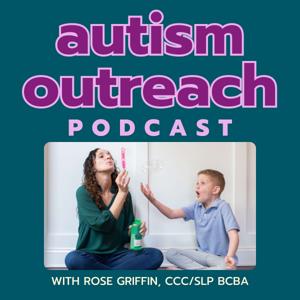


Starting preschool for both typically and non typically developing students is a big step, and there are a lot of important factors to consider. Dr. Katie Walton of Ohio State University oversees the Nisonger Center, an Inclusive Preschool Program. This center works with students with and without disabilities from birth to age 5.
What is Inclusive Preschool Programming?
Inclusive in short means that it includes all students, regardless of learning needs. What this looks like can vary from practice to practice. Some schools might just incorporate all learning types and work to meet all needs and others might focus on special needs services while incorporating typically developing children. Early intervention practices, while important for specific needs, are actually best practice teaching that can benefit any and all students, especially in a preschool setting.
Assessments, Planning and Goal Setting
Planning and goal setting are essential for any classroom and any student. At the Nisonger Center they use a curriculum based assessment, APES, for daily planning for all students. Therapists and providers within the school will do individual assessments for needs and goals setting within IEP teams for students who require additional support. Additionally, important for any preschool program is a robust social and emotional skill plan. The team at Nisonger works hard to set functional goals, on what social and emotional skills look like in action, versus checking a box on a goal list. Dr. Walton also shares about the really great collaborative loop from their preschool team to public schools, for IEP goals and transition. This is such a huge benefit for school based providers and families for a full understanding of a child’s needs and abilities.
Are you a parent considering preschool programs for your child?
It can be confusing, overwhelming, and hard to know what's right when looking for a program for your preschool aged child. Dr. Walton provides some questions for parents to consider and ask their prospective programs.
An Inclusive Preschool Program has so much to offer both children with and without disabilities. Whether you’re a professional working in a preschool or a parent ready to place your child in the right school, consider the ideas we’ve discussed in today’s episode to ensure the best practices are being used for your child and their unique needs!
#autism #speechtherapy
What’s Inside:
Mentioned In This Episode:
Nisonger Center Early Learning Program
Start Communicating Today – Waitlist – ABA Speech
Help Me Find My Voice – EVERGREEN
The social setting of our world is ever-changing and developing, for autistic individuals it can be hard to understand and keep up with the skills to navigate it! Dr. Ali Arena is an SLP, BCBA who specializes in social skills. While Dr. Arena works primarily with autistic adults, she shares some great tips that can be applied across the lifespan.
As a provider, working on Social Skills requires a strong and trusting relationship with your client. Dr. Arena shares about how she has learned about her clients interests and hobbies and allowed them to be the expert in the conversation. She also reminds therapists to create connections and rapport before diving into their interests because these connections become genuine. Another tool Dr. Arena uses in her therapy are dyads, she finds peer group practice between neurodivergent individuals can be really impactful in understanding social cues and norms.
Masking is something autistic individuals in the community are really speaking out against. Dr. Arena agrees that being true to yourself and not changing are important. I reference what a previous guest had called camouflaging, as a tool to follow societal rules. Sometimes as an adult, you just need to know how to talk to your boss or your professor in college. Following social rules can be necessary for autistic adults and that's where Dr. Arena comes in. Her clients come to her to repair social communication, either for work, relationships, or other problems they might be having. It’s not masking but rather building, learning, and refining new skills.
From focusing on REALISTIC social situations for all ages to helping autistic adults with romantic relationships, Dr. Arena has some great tips for therapists, parents, and any professional working with autistic individuals on social skills. You can find out more about her at her website or on Instagram.
#autism #speechtherapy
What’s Inside:
Mentioned In This Episode:
Dr.Ali - Connection Creator (@connectingwithali) on Instagram
Ali Arena Communications: Home
ABA Speech: Home
Start Communicating Today – Waitlist – ABA Speech
Help Me Find My Voice – EVERGREEN – ABA Speech
Use coupon code SUNNYSALE75 and save $75 off Start Communicating Today and $75 off Help Me Find My Voice. Offer ends July 31st.
Have you ever felt like an assessment didn’t truly tell the story of your child? Shellie Bader is an SLP with a really incredible and valuable career. Today she is sharing all about Dynamic Assessment and how we as Speech Therapists can use this to enrich and drive speech therapy.
Oftentimes, formal and informal assessments are not comprehensive enough to determine the “story of the child”. Dynamic Assessment is a qualitative assessment we are able to use, to get the bigger picture. It is an alternative or supplemental assessment, with a method that provides the ability to understand what a student can learn. This tool can help determine whether a child has a learning difference or a learning disorder, and how a child learns and is specifically helpful with students who use English as a second language or have other special circumstances.
Where do you start with intervention when it seems like everything should be a goal? Along with Dynamic Assessment comes a Mediated Learning Experience. In which the therapist picks a skill that is relevant or important to the child. This learning potential observation occurs over one session, so the therapist can determine the abilities of the child within the learning process.
When completing a Mediated Learning Experience, the information collected can drive you directly to the creation of IEP goals. Through working on a skill, the therapist will actually be able to see the prompts that are successful, the supports needed, the targets a student struggles with, and how the skill should be scaffolded.
A Dynamic Assessment and a Mediated Learning Experience is another tool for your SLP tool belt to help determine how a student learns specific skills while always working on meaningful, functional skills for the student and their independence. If you’re interested in finding out more or talking with Shellie Bader, you can reach her via LinkedIn or email!
#autism #speectherapy
What’s Inside:
Mentioned In This Episode:
Shellie Bader, M.A., CCC-SLP - LinkedIn
[email protected]
ABA Speech: Home
Start Communicating Today – Waitlist – ABA Speech
Help Me Find My Voice – EVERGREEN – ABA Speech
To receive 75$ OFF BOTH of these courses in the month of JULY, use code SUNNYSALE75.
Happy Summer!! I am excited to announce that we are hosting a SALE for the month of July on our courses, Start Communicating Today and Help Me Find My Voice.
These are CEU courses with ASHA and ACE approval for SLPs and BCBAs. Summer is the perfect time to take advantage of your free time and get the tools to help your autistic learners from toddlers, preschool, and school age.
Start Communicating Today is a 5 hour course for toddler and preschool aged learners. Get confident in your abilities to help your learner use their voice. In this course you will find support and research backed tools for assessments, IEP goal setting, structuring therapy and so much more.
Help Me Find My Voice is a 5 hour course for school age learners. Working with this age can be overwhelming and intimidating. In this course you will find the tools for success all in one place, with support for assessments, IEP goal setting and meeting structure, engaging therapy plans, and even AAC support.
The purchase of both of these courses include 3 month access to the 5 hour course, research backed tools, and printables. As well as ASHA reporting and CEUs.
To receive 75$ OFF BOTH of these courses in the month of JULY, use code SUNNYSALE75.
I cannot wait to see you in the courses!
What’s Inside:
Mentioned In This Episode:
SALE CODE: SUNNYSALE75
Start Communicating Today – Waitlist – ABA Speech
Help Me Find My Voice – EVERGREEN – ABA Speech
ABA Speech: Home
Is your learner difficult to engage? Are you not sure where to start? Is your learner not communicating? Knowing where to start can be stressful!!!
I am here to help with my top 5 strategies to get your autistic learner communicating today!
Strategy 1: Create a Fun Atmosphere
Present a toy the child will enjoy. Play with the toy and use simple language.
(play dough, cars, musical toys, mini objects, etc.)
Strategy 2: Observe
What does your learner like to do? How is your learner currently communicating?
(Make notes about their likes, and dislikes. Is your learner vocalizing, using pictures, pointing, pulling to an item, etc.?)
Strategy 3: Engage in Shared Activities
Connection before communication
(Reading a book, singing a song, playing with toys)
Strategy 4: Create a Positive Atmosphere
Positive Vibes Only: Use simple language, do not bombard your learner with questions.
(“Wow, I see a truck!” Vs. “What is that? What color is that”)
Strategy 5: Remain Flexible
What you planned may look different than how it actually happens. Adapt the skill to following the learner's lead.
Now you can rest easy because that starting point is not out of reach! If you want to learn more including all about assessments, goal setting, therapy structure, tools and resources, join my toddler and preschool course: Start Communicating Today!
#autism #speechtherapy
What’s Inside:
Mentioned In This Episode:
ABA Speech: Home
Start Communicating Today
I first found Calonda Henry on TikTok, where she shares tons of great tips and information for parents and professionals. Calonda is a Florida based SLP where she owns a certified Woman and Minority owned practice, Broad Horizons Speech Therapy. With summer here, many learners are not receiving their school based speech and language services and parents may want to know how to help.
As parents, we want to do the very best for our child and it can feel overwhelming and intimidating to need to "carryover therapy" on your own in the summer. Calonda reminds families that speech and language practice can be generalized in your everyday environment, and can be free, easy and very natural. You don't have to plan the perfect table activity to get really enriching practice for your child.
In everyday activities and simple interactions, there are so many opportunities to practice general or specific speech goals.
The most important tip: Interact together, at the end of the day interaction with your child is so powerful for practicing all of their speech and language goals. Play games, ask questions, read books, talk about your activities or meals. This creates a low demand setting where your child can generalize their speech and language goals while having fun.
#autism #speechtherapy
What’s Inside:
Mentioned In This Episode:
Broad Horizons Speech Therapy (@broadhorizonsspeech) TikTok
Broad Horizons Speech Therapy - Instagram
Broad Horizons Speech Therapy
Speech, Language, and Education Parent Support Group of Florida
Meet Calonda Henry of Broad Horizons Speech Therapy
ABA Speech: Home
Dr. Trina Spencer has been a Board Certified Behavior Analyst for the last 21 years and is currently a Fulbright Scholar at the Center for Augmentative and Alternative Communication in South Africa. Today, she shares about her career journey, and all of the incredible and inspiring work she is doing in the field. Dr. Spencer's goal is to encourage research-practitioner partnerships, interprofessional collaboration, and anti-ableist practices.
On the day of our recording, Dr. Spencer was celebrating the launch of ECHO Autism - South Africa. ECHO Autism is a virtual learning network of providers offering real-time access to autism and behavioral experts. This advisory board of Echo Autism is the first on the continent of Africa.
Among her research and fascinating work, she has designed instructional tools. Story Champs is a multi-tiered system of language instruction used in a variety of educational settings across several countries. This structured program provides robust teaching procedures that allow for use in one on one settings as well as small or large groups. Story Champs includes 65 lessons that scale from preschool to 3rd grade. Goals in this system include story retelling, personal stories, fictional stories, writing personal stories, and answering WH questions but the scope and skills included with this instruction are vast! Social academic language is promoted throughout the instruction as well as in use in the reading opportunities taken straight from the learner's social studies and science curriculum.
The CUBED Assessment is a free downloadable comprehensive assessment that works great with story champs but can also be used and accessed independently of that program as well.
"The CUBED is a family of screening and progress monitoring tools that accurately, reliably, and efficiently measure decoding, language comprehension, and their product, reading. There are two main subtests of the CUBED – The Dynamic Decoding Measures and the Narrative Language Measures, which together measure 18 targets." - Language Dynamics Group
I am so excited to follow along with all the AMAZING work Dr. Spencer is doing and will continue to do in the field. Be sure to check out all the amazing linked resources she shared today to purchase Story Champs, download CUBED, and so many more freebies!
#autism #speechtherapy
What’s Inside:
Mentioned In This Episode:
Trina’s Tool Box
Language Dynamics Group
Northern Speech Services
ABA Speech: Home
With the traditional school year coming to an end, SLPs and parents may be wondering how you can support your learners' communication throughout the summer months. I was so excited when I happened upon Bridget’s, from Speech Therapy Talk, blog post all about summer speech activities! She is on today’s episode to share 11 fun, easy, and affordable ways to get outside, enjoy the summer, AND practice communication skills. Whether you’re continuing speech therapy through the summer in a private setting, a school SLP looking for ideas to share with families, or a parent ready to continue the work from speech therapy at home this summer, these are GREAT tips that both you and your learner will be sure to enjoy!
These are activities that just SCREAM summer to me. Many of these tools are free, lying around your therapy room or house, or very affordable! The great thing about these activities is the scope for practicing varying skills is huge, you can apply almost any skill or goal to these activities and have fun doing it! If you want to learn more about Bridget, her ideas, and resources, you can visit the Speech Therapy Talk website!
#speechtherapy #autism
What’s Inside:
Mentioned In This Episode:
Speech Therapy Talk
Speech Therapy Talk Membership
ABA Speech: Home
It can often be intimidating to get started and understand working with students with complex communication needs. Dr. David Rehfeld is a dual certified, SLP and BCBA and an assistant professor who joins me today to discuss the importance of support to students using AAC and their caregivers.
The individuals who spend the most time with a client need to have the most buy-in when it comes to effectively using AAC. Dr. Rehfeld encourages this support with Caregiver Coaching. Caregivers are any of the people your client spends more time with than you, parents, guardians, teachers, and one on one support staff. The goal of Caregiver Coaching is to minimize perceived effort to make the most impact. Providers working with caregivers often have ideas of “easy” ways to integrate the AAC device into routines but should consider unique needs and preferences that assimilate into their existing life.
Caregiver Coaching is provided using the Behavior Skills Training Model. BST is evidence based practice to provide instruction to facilitate success of skill mastery. Dr. Rehfeld explains it in four phases.
Phase One - Understand: What are we working on? Why is it important?
Phase Two - Model: Show and demonstrate the skill.
Phase Three - Observe: Encourage and provide opportunities to practice.
Phase Four - Feedback: What are you doing well? What can you improve on?
When you’re helping someone with AAC, you’re not just helping one student but you’re helping all of the future AAC users this person works with in the future. Keep in mind the importance of rapport, and positive reinforcement by providing praise when you see caregivers doing the right things!
Dr. Rehfeld is active in working with students aspiring to work in the speech pathology field. You can find him at the many conferences he attends or speaks at. Dr. Rehfeld encourages others in the field to attend conferences, seek out resources, and keep adding as many tools to their belt to help their clients as they can.
#speechtheraphy #autism
What’s Inside:
Mentioned In This Episode:
Start Communicating Today Live - ABA Speech
ABA Speech: Home
Many times, assessments and standardized tests don’t tell the whole story of the learner. So, what do you do when you’re overwhelmed with where to start with a younger nonspeaking or autistic learner. When I first started my career I remember being discouraged at times and with a lack of the resources available unlike what we have today, I had to find the information myself and blaze that trail. Today I want to share how I get started with these learners, to help them find their voice and start communicating today.
Top 8 Foundational skills for young autistic learners:
1. Joint Attention - There is power in shared activities, a time that generates spontaneous communication. Both the therapist and the learner in an activity surrounding Literacy, Music, or Play. Check out the episode for my list of favorites!
2. Imitation - Keep it fun and functional by practicing during play. The key is playing with similar items in a way that the child will want to repeat. For example, role-play with a baby doll.
3. Requesting - Work on meaningful words that can make communication powerful for a student's real life. Specific requesting skills teach students that communicating can get them something!
4. Matching - There are so many great skills that come along with matching like scanning and engagement. I share a bit about how I use my favorite resource and modify matching games to work with the students' level.
5. Play - Play routines and leisure skills are SO important. Work on playing with fun games, shape sorting, and building around their language level.
6. Following One-Step Directions - This is critical not only in school but at home. Be sure to think about your kids and how their communication impacts their day outside of the therapy room. Examples: “Put your coat on” “Stand by the door” etc.
7. Labeling - Students should be comfortable talking about things in their environment. Be aware of your students' level and chronological age, is it appropriate to use flashcards? Or is it important to work on it during play?
8. Fill in the Blank - “Ready…Set….___” This skill starts with, “I say something, you say something”, which opens the door for so much communication, like asking and answering questions!
All of my advice today comes from my experience in private practice, where I am afforded the opportunity to work one on one. Be sure to take into account all of your circumstances, therapy opportunities, and resources when planning to individualize these skills to your students. If you have questions or want to know more about my favorite resources discussed in today’s episode, you can always contact me at ABA Speech.
#ABASpeechTherapy #Autism
What’s Inside:
Mentioned In This Episode:
Start Communicating Today Live - ABA Speech
ABA Speech: Home
From the publisher's feed
Join Rose Griffin, a dedicated Speech Therapist and BCBA from ABA SPEECH, as she shares her compassionate approach to supporting the communication needs of autistic individuals. With 20 years of…
This podcast is a resource for professionals and parents alike, offering practical strategies that honor each person's unique communication style. Rose covers a wide range of topics, including how to recognize and support autistic communication from an early age, the distinctions between autism and speech differences, and effective, respectful approaches to fostering communication, whether a child is non-speaking, minimally speaking, or verbal.
Through a mix of interviews and solo episodes, Rose explores how to enhance meaningful connections, address challenges with empathy, and celebrate the strengths of autistic individuals. Whether you're a parent, therapist, or educator, you'll find valuable insights and actionable advice to create supportive environments that empower communication and honor neurodiversity.
Hit subscribe and learn more at www.abaspeech.org.

7,683 Listeners

11,950 Listeners

626 Listeners
9,093 Listeners

25,787 Listeners
4,759 Listeners

46,879 Listeners
1,346 Listeners

625 Listeners
422 Listeners

15,404 Listeners

29,200 Listeners
59 Listeners

19,209 Listeners

10,193 Listeners