
Sign up to save your podcasts
Or

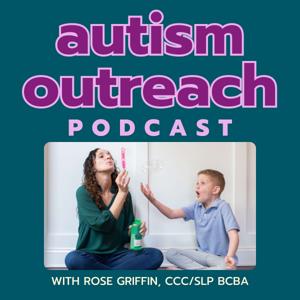


I love hearing from autistic individuals in the field who have first-hand experience with the challenges and reality of diagnosis and therapy. Carly Millis Jalowiec is the Education Assistant at Milestones Autism Resources, today she shares with me her journey to her own autism diagnosis as an adult. Carly provides great insight into the difficulty of diagnosing autism in females and why providers and clinicians have an outdated idea of autism.
Autism in girls is unfortunately too often missed. Carly explains that in the infancy of autism research was focused primarily on white boys with a narrow view of symptoms and presentations. Providers often only find a diagnosis in those with the same profile while social conditioning and traditional gender expectations create varied presentations for autism. Boys will often present autism symptoms in a very outward way while girls will typically internalize symptoms and characteristics.
Carly talks about how arriving at her adult diagnosis leans a lot into her lifelong masking and camouflaging. Masking is a really important topic in the autism field today because so many individuals want and deserve to be honored as themselves. Carly explains how masking can help individuals fit into the world and get through the day but can really hurt themselves internally. She herself says she doesn’t know where she ends and the mask begins. There is an importance to learning to navigate the neurotypical world but not at the expense of losing yourself.
This is where clinicians and providers come in. Social Skills instruction often leads therapy in the direction of hiding or changing an autistic individual with unrealistic goals. Carly stresses the importance of setting goals that do not change the individual or try to “remove the autism” because that simply won’t work. Goals and skills should revolve around redefining what success looks like for each individual in a way that honors their true self.
Research and understanding of autism have changed in such a rapid way, more than any other field. So it is SO important that we have these important, nuanced conversations to increase awareness. You can find Carly on LinkedIn and check out Milestones online for autism resources and information!
#autism #speectherapy
What’s Inside:
Mentioned In This Episode:
Carly Millis Jalowiec - LinkedIn
Milestones Autism Resources
ABA Speech
Wow! I can't believe we are here… episode 100! In honor of this milestone, we are flipping the script with my friend and mentor, Lisa Chattler, interviewing me.
Going back to the VERY beginning, I had no idea what I wanted to be, so my mom gave me a career test my senior year and it actually revealed my ideal profession as a speech therapist. I really didn't know a lot about the career so I shadowed a friend of the family who was an SLP and that day I just knew it was perfect for me, so I declared my major and never looked back. Now I've been an SLP for 20 years.
Lisa asks some great questions about the learners, mentors, resources, and paths that lead to where I am today: dual certified as a BCBA and SLP, operating an online business, offering courses and webinars, and hosting the Autism Outreach Podcast. And I get to share those important decisions and people who have shaped my experience.
Since I was a kid, I've always been in trouble because I was turned sideways in my chair talking away. That is one of the reasons I love this podcast; not only do I get to talk and have great conversations but I get to do so with experts in the field that I really admire. I am happy to have this opportunity and keep spreading the word about autism, SLPs, BCBAs, and ABA through the show and my online courses.
Thanks for being a listener, and just know your dedication to the field by listening is so important!
#autism #speectherapy
What’s Inside:
Mentioned In This Episode:
ABA Speech
Kristen Colyer is a BCBA and the Director of Children’s Services at The Infinity Center for Behavior Services. She joined me today to discuss Early Intervention and ABA for young children.
When you first get that autism diagnosis, beginning Early Intervention and ABA services is the first step for support for many parents and their child. Kristen shares what that looks like at The Infinity Center. Because we are working with young children, most often with limited or no communication, parents are the best reporters. The first step is a parent interview to gain as much insight and knowledge of the child. Next, the child will join for an additional interview with the parent. Finally, the BCBA and the child will engage in play therapy. During this time the BCBA will observe and complete assessments. The Infinity Center most commonly uses the VB-MAPP and depending on the skills and communication level of the child may administer other assessments such as the Essential 8 or social skills assessments. This process from the parent interview to the play observation could span a couple of days.
Support does not end with the child. In many cases insurance covers parent training. The Infinity Center offers parent support and twice-monthly parent training. In these trainings, they cover what’s happening in therapy, therapy goals, and how therapy activities can translate to at-home activities. Additionally, because play therapy can be oddly tricky, the center offers shadowing, training, support, and natural environment protocol practice for their staff.
Learning and receiving therapy through play is so important and really effective. Kristen shares a few of her favorite and popular toys for therapy sessions. She says children often gravitate towards cause and effect play, favorites for these include the Melissa and Doug Wooden Ball Tower and the classic Jack in the Box. They also play Mr. Potato Head and the Shoebox game, based on BCBA Mary Barbera’s book and courses.
The Infinity Center for Behavior Services is based in Maryland, if you’re in the area or would like to learn more you can check them out on social media or visit their website.
#autism #speectherapy
What’s Inside:
Mentioned In This Episode:
Infinity Center ABA
Infinity Center for Behavior Services - Home | Facebook
Announcing The 2nd Annual Autism Connection Conference held in collaboration with The Autism Helper.
Join us on December 3rd for an exciting, fun, and knowledge-packed conference. The event will run from 8:30 AM to 4:30 PM EST with a break for lunch. Autism Connection features 5 amazing sessions created with SLPs, Special Education teachers, General Education teachers, and BCBAs in mind.
Join our LIVE session or replay the recorded event available three days later until December 31st. When you participate you are eligible to receive a general certificate, ASHA CEUs, and ACE Provider credit.
This conference features 5 sessions to help support YOU in the classroom and therapy room:
Be sure to get registered for this awesome virtual conference! We can’t wait to see you at Autism Connection on December 3rd!
#autism #speectherapy
What’s Inside:
Mentioned In This Episode:
ABA Speech
Register for The Autism Connection Conference
Rachel Torrance is a BCBA, License intervention specialist, on the board at Milestones Autism Resources, and a Consultant working with parents, school districts, and private agencies to advocate appropriate services and achieve desirable outcomes. Rachel also happens to be my business partner at Supervision Academy, a virtual resource for attaining supervision hours to become a certified BCBA.
Becoming a BCBA requires coursework (as a master’s program or post-master’s), Hours, Supervision, Observations, Feedback, Formal Exam, and more. Supervision for a traditional path requires 2000 hours directly supervised by an experienced BCBA or group of BCBAs.
At Supervision Academy we know becoming a BCBA is hard work and stressful, and finding a supervisor can be nearly impossible at times. We offer a virtual group of supervisors providing clinical expertise, behavior skills training, guidance, feedback, and more. Additionally, we strive to provide robust supervision, tailoring your experience to your career goals.
When finding a supervisor for this very important piece of your certification we encourage you to cover all of your bases. Rachel suggests asking and considering these questions when interviewing supervisors.
Please note that all information provided in this episode is current as of November 2022. If you’re interested in learning more about Rachel Torrance and her work you can check out her consulting website, as well as visit the Supervision Academy page to find out how we can help you with supervision to become a BCBA!
#autism #speectherapy
What’s Inside:
Mentioned In This Episode:
Behavioral and Educational Expert Services
Supervision Academy
Parents, have you ever been in a situation where you're fighting with your child's school to get your child the services they deserve and are entitled to? Catherine Michael has spent more than 20 years working with families on designing success for special needs children. She is a managing partner at the law firm Connell Michael Kerr as well as the founder of Coffee with Catherine, which offers classes and resources for families of children with special needs.
A Free Appropriate Education
Every child in America is entitled to a free appropriate education. This means the support, services, accommodations, and environment that they have been evaluated for and determined to need for their educational success. The Individual Disabilities Education Act, outlines federally what special needs students are required to receive within schools. Many states have even codified and extended these laws into their own state statutes to give more rights to these families.
Educational Due Process
Due Process does not create damage, the goal of this action is to resolve and settle on the necessary support and services for a child as quickly as possible. As soon as the Educational Due Process is filed, a school has 15 days to come to a resolution with the family. If a resolution is not met then an Administrative Hearing will take place. This hearing is an informal relaxed hearing often taking place in a school, where the burden of proof lies on the parents. Catherine discusses the obstacles to the qualifications of the Hearing Officers for these settings and how they can negatively affect the outcome.
If you're a professional or parent seeking to learn more about Special Education Law check out the resources at Coffee with Catherine. Additionally, if you're located in Indiana, Michigan, Ohio, Pennsylvania, or Alaska and need legal assistance pertaining to special education, reach out via the Connell Michael Kerr, LLP website.
What’s Inside:
Mentioned In This Episode:
Coffee with Catherine
Connell Michael Kerr, LLP
As an SLP-BCBA, collaboration is a really important part of my work. Julianne Trudeau is an SLP and Director of Speech Services at Bierman Autism Center. This center grew from a small in-home provider to a clinic-based therapy center with 17 locations across the country. Bierman operates a Collaborative Service Model in which BCBAs, SLPs, and OTs work together to best serve the child.
I've shared many stories in the past about the difficulty I've both seen and experienced with the collaboration between SLPs and BCBAs. Julianne uses an analogy, I love. BCBAs and SLPs are like a married couple, they may not always see eye to eye but they have the same goal at heart. This goal is in the best interest of the child. In collaborating together, BCBAs and SLPs can take a bit from each other to become better, more informed professionals and make the child the most successful as possible at the same time.
Bierman Autism Center increases the success of their collaborative service model by embedding opportunities into the schedule. Providers have embedded meetings for communication and collaboration for their cases. They also schedule weekly clinical staff meetings, monthly center staff meetings, and quarterly meetings for centers across the region. Bierman also embeds collaborative training opportunities for staff and parents.
Intake a Bierman begins with a family tour led by the center director. During this time services, goals, and collaborative ideas are discussed with the family. This visit will be followed up with an initial assessment and the parents will be provided the opportunity to have their child's ABA supplemented with service from other center providers such as SLPs and OTs. When a family chooses to participate in a collaborative service, each department will assess the child and collaborate and touch base on overlapping areas and goals.
You can find out more about Bierman Autism Centers at their website or on social media.
What’s Inside:
Mentioned In This Episode:
Bierman Autism Centers
Autumn Ziemba was working as a news anchor for Fox 8 News when her son received his autism diagnosis. Through her family journey and support in the autism community, Autumn has shifted careers to become the Communications and Content Manager for Milestones Autism Resources.
As a mother of two, Autumn knew what to expect for typical development in her young children. When her youngest started showing signs of regression, loss of speech, disinterest in typical play, and others around her began to notice too, it was time for an evaluation. With the support of her family’s pediatrician, her son was able to receive a diagnosis at age 2 and a half. This was in 2017 and the times were different when it came to support, resources, and services. Her son started with play-based ABA and speech therapy for one hour a week, not nearly enough. To add to their hardship, just three months post-diagnosis her son was diagnosed with Leukemia. Their focus had to shift from early intervention to cancer treatment. After the early days and weeks of treatment, their family was able to bring back ABA therapy and other services. Now at 7 years old, Autumn's son is a Leukemia-Survivor and attending school in a special needs classroom with great support from their school district.
As a parent who has been through so much with her son and her family, Autumn’s biggest advice to professionals, providers, teachers, and anyone working with autism families is to have empathy. For her empathy, compassion, and understanding goes a long way. I’ve seen firsthand professionals and other parties be less than supportive of families with questions, and agendas. But Autumn reminds us that parents are coming in with only their children’s best interest at heart, and it's important to understand that.
For families just beginning their autism journey whether pre or post-diagnosis: Do not fear the diagnosis. Autumn shares that while a concrete diagnosis can feel scary, it can actually open up doors to resources, services, and support that you wouldn't otherwise have. Take each day as it comes, and remember not every approach will work for every child. Meet your child in the middle and allow them to be a part of their own team!
If you’d like to find out more about Autumn Ziemba you can find her family's autism story online, as well as her contact information on the Milestones website.
What’s Inside:
Mentioned In This Episode:
Milestones.org
I haven’t done a solo show in a while and I am excited today to share my 10 strategies to increase student engagement. I had a client, let’s call him Adam for today, and when I started working with him, he did not communicate or even engage at all. I would bring different toys and objects to try to get his attention through play-based learning but we would just take a toy and leave. About after 4 sessions with him, his parents started asking me when am I going to use a more structure approach and really work on his communication skills. Truthfully, I felt defeated and anxious.
But at 20 plus years into my career already, I have done so much research about joint attention and how valuable this is to ABA and Speech Therapy. On our 5th session, I brought Mini Objects in a bag and although Adam’s engagement was still fleeting then, he picked up a toy form the bag and it was a shoe. Adam exclaims, “Shoe!” and we were all so excited because that was his first word during his sessions! It was in this moment that I realized that Adam has started his journey with communication and when we realize that these small steps every session matter, it opens up a path for spontaneous communication. So today, I share and break down my top 10 tips I applied to help increase Adam’s engagement in therapy.
Every student is different so with these strategies, you really need to be creative and discern what works for your student at the moment. What works for one student may or may not work for another. If you have a student in mind that you want to help start communicating, these strategies will really be beneficial to improving your relationships with your students and increasing their learner engagement. For more tips and information on helping students with communicating, check out our ASHA approved 5-hour course, Start Communicating Today.
#autism #speectherapy
What’s Inside:
Mentioned in this Episode:
ABA Speech
Start Communicating Today Course
I love this power statement: “If you don’t believe in ABA, it’s like you don’t believe in breathing.” It’s a really impactful tidbit from my chat with Dr. Joanne Gerenser, SLP and Executive Director of the Eden II Programs. Dr. Gereneser and I discuss the importance of ABA in the field, as well as what that means for collaborating with other professionals; having SLPs and BCBAs work together with ABA to serve students with autism, especially those with challenging behavior.
There are some professionals and parents in the field that just really don’t understand what ABA is. There can be a lot of mean-spirited, negative, information online about ABA depending on where you’re looking. When you really look at it and understand the professionals working in the ABA field and the help it can provide to the autism community with serious learning and behavior challenges, you will see just how important it is.
When it comes to collaboration, you can’t paint every BCBA with the same brush just the same as SLPs. The worst therapists are not representative of the entire field and you cannot walk into an interaction with telling the other professional what to do; It erodes the professional relationship.
Dr. Gerenser’s techniques for communicating with hesitant professionals:
You can find out more about Eden II and Dr. Joanne Gerenser, visit Eden II Programs online.
#autism #speectherapy
What’s Inside:
Mentioned In This Episode:
Home - Eden II Programs (eden2.org)
ABA Speech: Home
Register for the free SLP in an ABA Setting Mentorship webinar
From the publisher's feed
Join Rose Griffin, a dedicated Speech Therapist and BCBA from ABA SPEECH, as she shares her compassionate approach to supporting the communication needs of autistic individuals. With 20 years of…
This podcast is a resource for professionals and parents alike, offering practical strategies that honor each person's unique communication style. Rose covers a wide range of topics, including how to recognize and support autistic communication from an early age, the distinctions between autism and speech differences, and effective, respectful approaches to fostering communication, whether a child is non-speaking, minimally speaking, or verbal.
Through a mix of interviews and solo episodes, Rose explores how to enhance meaningful connections, address challenges with empathy, and celebrate the strengths of autistic individuals. Whether you're a parent, therapist, or educator, you'll find valuable insights and actionable advice to create supportive environments that empower communication and honor neurodiversity.
Hit subscribe and learn more at www.abaspeech.org.

7,683 Listeners

11,950 Listeners

626 Listeners
9,093 Listeners

25,787 Listeners

4,759 Listeners

46,879 Listeners
1,346 Listeners

625 Listeners

422 Listeners

15,404 Listeners

29,200 Listeners
59 Listeners

19,209 Listeners

10,193 Listeners