
Sign up to save your podcasts
Or



Whether you are a seasoned professional, parent, or brand new to the field, IEP meetings are a reality when it comes to school based settings. With over 20 years of experience, I have 5 top tips to keep you positive, prepared, and confident no matter the tone of the meeting.
If you ever need extra support, whether you’re a parent or professional, I am here, and you can book a coaching call with me. Not every IEP meeting will be warm and fuzzy, but we can live in a world where we do not dread them!
#autism #speectherapy
What’s Inside:
Mentioned In This Episode:
Autism Outreach Podcast - Episode 54: Autism Assessments
Book a coaching call with Rose
Get Your Free Autism Toolbox
One of my big goals with ABA Speech and The Autism Outreach Podcast is to disseminate information to help professionals stay in touch with the latest research and information in our field. When the article, Examining Core Vocabulary with Language Development for Early Symbolic Communicators, written by Dr. Allison Bean and Dr. Bethany Frick showed up in a professional Facebook group, I knew I had to know more.
Let’s first start by breaking down the definition of the vocabulary discussed in this article and today’s episode. Core Vocabulary is made up of 200–400 words that occur frequently across individuals, settings, and contexts - pronouns, verbs, auxiliary verbs, prepositions, and determiners (it, more, that, is).
Fringe Vocabulary is all the other words specific to an individual or activity - mostly nouns.
In their research, Dr. Bean and Dr. Semmler examined 7 core vocabulary lists, looking at the composition of the list, what portion were nouns/verbs/etc and when they are acquired under typical development. They found the lists to very well match the definitions in our field, and the majority of words were acquired by typical language learners from ages 25 - 66 months.
As we discuss the findings from their research, we consider how practitioners are choosing, using, and teaching words to AAC learners. AAC is still critical language development, just with a different modality. It is crucial to continue to use your clinical expertise and training in language development as you are choosing words and teaching your AAC users.
At some point in time, every single SLP will encounter a learner who uses AAC. How are you developing their language? How are you choosing meaningful words specific to the learner?
Dr. Bean and Dr. Semmler get to the heart of these important questions and have a great discussion about this important research!
#autism #speechtherapy
What’s Inside:
Mentioned In This Episode:
Thank you to our sponsor LINGGO. For more information, visit www.linggo.com or contact [email protected]
Allison F. Bean | Department of Speech and Hearing Science (osu.edu)
ABA Speech: Learn About Current ASHA and ACE CEUs
When you are post-certification and become a practitioner, it can be difficult to stay in touch with the latest research. Dr. Amber Valentino, Chief Clinical Officer at Trumpet Behavioral Health, discusses some of the ways to break beyond the barriers of research as a clinician and make ABA research more accessible.
Dr. Valentino wrote a paper with her colleague, Jessica Juanico, on the barriers to research for practitioners who had a real desire to continue research during their field careers. This was the inspiration for her book, Applied Behavior Analysis Research Made Easy: A Handbook for Practitioners Conducting Research Post-Certification. Dr. Valentino expresses the importance and place for field research that looks different, may be less structured, and embraces the mess that is everyday clinic work.
I’ve set a goal for myself to read three journal articles a week because learning and disseminating information are important to me. Dr. Valentino shares some ways she recommends creating digestible goals to consume research, like “lit in a min” and time blocking.
We also talk a bit about public speaking. Whether you are live on socials, a podcast, an IEP, or a parent meeting, speaking can be nerve wracking. She says to prepare, practice, and know your audience. That is the best way to soothe your nerves and nail your talk!
You can find out more about Dr. Amber Valentino and her work by visiting the website for Trumpet Behavioral Health or checking out her personal website, Behavioral-Mom.
#autism #speechtherapy
What’s Inside:
Mentioned In This Episode:
Behavior Mom
Trumpet Behavioral Health
ABA Speech: Learn About Current ASHA and ACE CEUs
Thank you to our sponsor LINGGO. For more information, visit www.linggo.com or contact [email protected]
Have you ever met a provider, with a “Sit down! Do your work! Kids need to listen!” mentality? Jennifer Posey is a BCBA and adjunct professor at Endicott College. In this episode, she shares about her new tool, the Joy Index, which is currently in the research and peer review process.
The Joy Index is a tool that measures assent, autonomy, embedded choice, and relationship building. It involves 32 indicators with yes or no answers that can be used by parents and professionals. As providers, our goal is to have a positive impact, but there are those who have raised concerns about the practice of ABA. This tool is to keep those concerns in check and ensure we are creating a joyful experience in therapy.
Honor the learner, follow their lead, provide choice in play materials and instruction, these are all parts of the dance between instructor and child to create a meaningful interaction.
The Joy Index is currently under peer review, so stay tuned for future information on this incredible tool. Contact Jennifer Posey via email and look out for her at upcoming conferences this year.
#autism #speechtherapy
What’s Inside:
Mentioned In This Episode:
[email protected]
ABA Speech: Learn About Current ASHA and ACE CEUs
Thank you to our sponsor LINGGO. For more information, visit www.linggo.com or contact [email protected].
Don’t Wait! That’s the advice from Zulekha Williams when it comes to taking action for concerns with your child’s development. I met Zulekha over on TikTok; she is a great mom who is fighting for the needs of her children and sharing her journey along the way.
As a member of the helping profession, Zulekha wasted no time when it came to getting support for her son when she started noticing early signs of autism. Before his diagnosis, she was seeing signs like delayed motor skills, no eye tracking, limited awareness, no sense of danger, and no speech. She immediately started speech and other therapies before completing the M-CHAT on her own and bringing it to her doctor.
Alongside speech therapy for her speech delayed 2-year-old, Zulekha has quite the journey securing the right therapy and services for her sons. Between ABA therapy, speech therapy, telehealth, school, and even issues with allowing AAC in the school, she had to seek out the help of another TikTok creator, The IEP Strategist. If you’re having similar experiences when it comes to speech services or AAC, check out the Communication Bill of Rights on ASHA.
During our conversation, you can hear the passion Zulekha has for her children. Her story and tips for services and creating communication with your children are such an inspiration for any family!
#autism #speectherapy
What’s Inside:
Mentioned In This Episode:
Communication Bill of Rights
Zulekha Williams on TikTok
ABA Speech: Learn About Current ASHA and ACE CEUs
“In all communication, aim first to understand”. This is the first bullet from Leanne Page’s Parent Training Checklist. Leanne is a BCBA, parent coach, author, continuing ed provider, and mom of 2. In this episode, she is sharing some impactful points on this step to step guide for Compassionate Parent Training.
Did you know that a study showed just 40 seconds of compassion from a doctor drastically improved patient outcomes? Oftentimes communications with parents can occur only when problems arise or to update goals and IEPS but Parent Training is actually a monthly service usually covered by insurance. Not only can this provide better client outcomes but it can impact and support the whole family.
Leanne uses thoughtful and clever tips in this checklist to dance the fine line of communication, covering goals and meeting them where they are at. Find yourself having trouble getting through a conversation with a parent. Use a pause wisely and remember, WAIT - Why Am I Talking? This gives you both a chance to reset.
With Parenting with ABA, Leannae offers membership and CEUs through monthly training and book studies covering empathy, compassion, and other trauma information resources based on ABA research. You can find out more about her and Compassionate Parent Training through her website!
#autism #speechtherapy
What’s Inside:
Mentioned In This Episode:
Parenting with ABA
ABA Speech: Learn About Current ASHA and ACE CEUs
We all know collaboration can be tricky when it comes to working across many fields of expertise, especially with a shared tool like AAC. Today I am delighted to have Barb Weber as my guest. Barb is an SLP, BCBA, author, and AAC specialist.
When it comes to AAC, especially considering the differences in AAC training for SLPs and BCBAs, navigating collaborating can be hard. Barb emphasizes the importance of matching the AAC device to the skills and relevant activities of the user. She also notes that the person whose voice it is and their close circle should be involved in the decision-making process. Functional and socially relevant vocabulary should be prioritized, taking into account different perspectives from the SLP, BCBA, teacher, and family.
There is a fine line between collaborating and “too many cooks in the kitchen”. Barbs asks the question; whose device is it? It is crucial to manage the device with agreed-upon procedures and involve one programmer who considers the communication and thoughts of all providers. But the most essential piece is to remember who we are serving, always supporting and honoring the user's needs.
Difficult conversations are part of the process, Barb actually calls this an important skill for therapy providers. She recommends that providers learn how to say hard things to ensure they are providing the best possible care. Negativity can circulate in areas of collaboration, but you can combat that by always talking to everybody and building opportunities with different perspectives.
Our conversation might help your collaboration go smoothly and even avoid disagreements, but if they do happen consider these tips:
This was great information from Barb who is a member of ASHA’s SIG 12. I hope these tips can help you in your practice and collaborating with other providers on your journey to help your learners!
#autism #speectherapy
What’s Inside:
Mentioned In This Episode:
Special Interest Group 12, Augmentative and Alternative Communication
ABA Speech: Learn About Current ASHA and ACE CEUs
In this conversation with Pediatric SLP Cindy Watson, you can just see the passion she has for helping young learners communicate and find their voice.
When Cindy first receives a new Early Intervention case she calls on the parent to talk through the reasons and concerns that led them there and another simple but IMPACTFUL thing…what does the child like? These things establish rapport and give Cindy the tools to enter the first Early Intervention session as she calls “the fun aunt.”
Cindy’s top favorite toys and tools for initiating play and communication are among my own with Bubbles, Books, Blocks, and other open-ended toys. Arkansas where Cindy’s center, Children’s Therapy TEAM is a bagless state which encourages therapists to enter homes with no outside resources and take advantage of the child’s natural environment so that parents can keep up the work outside of therapy.
When assessing new toddlers for Early Intervention Cindy starts out with play, observation, and conversations with caregivers. For formal assessments, she uses the Preschool Language Scale and the Rossetti Infant Toddler Language Scale.
Cindy shares my view on the importance and power of communication and shares a few key focuses she thinks therapists and families at home should consider when working on speech:
Cause and effect communication
Reinforcing language
Gestures
Joint attention
Building on milestones
Not only does Cindy do incredible work with young children in Early Intervention, but her center also has a really amazing mentorship program for their therapists to give them the tools and confidence to do their best work. You can find out more about Cindy and The Children’s Therapy Team on their website and Facebook.
#autism #speectherapy
What’s Inside:
Mentioned In This Episode:
Children’s Therapy TEAM
Children's Therapy Team on Facebook
[email protected]
ABA Speech: Learn About Current ASHA and ACE CEUs
I am speaking with Rachel Archambault, the PTSD SLP. Rachel was present on Valentine's day 2018, when a mass shooting occurred in her workplace, Marjory Stoneman Douglas High School in Parkland Florida. This experience led her to curate and cultivate resources for her trauma-affected students, and provide therapy with Trauma Informed Care.
Trauma Informed Care hallmarks on: Realizing trauma is present, Recognizing the effects, Responding to the trauma and its effects, and avoiding Retraumatization. Rachel uses the 6 pillars of Trauma Informed Care to guide her approach:
Safety
Choice
Collaborating and Mutuality
Trust and Transparency
Empowerment
Cultural, Historical, and Gender Issues
During our discussion, Rachel provides situations and insights that can guide your care to ensure no student is at risk of trigger or re-traumatization. Whether they were a part of a traumatizing national event or a smaller personal trauma, all trauma is equal and every person deserves to be protected. With her advice today, it is clear that this initiative takes a mindset shift that has benefits to everyone you come in contact with.
For more information check out the resources Rachel provided in today’s episode along with finding her on her Instagram @PTSD.SLP.
#autism #speectherapy
What’s Inside:
Mentioned In This Episode:
What Happened to You?: Conversations on Trauma, Resilience, and Healing
Trauma Informed
PTSD Resources for SLPs | Facebook
Rachel A. | The SLP W/ PTSD - Instagram
ABA Speech: Learn About Current ASHA and ACE CEUs
When it comes to supporting students using AAC devices… Are you Intimidated? Overwhelmed? Unsure? Unprepared? In this episode, I am digging into my tool belt of 21+ years of experience and sharing my top 5 strategies to use to support autistic learners using AAC devices!
Know this Document -> The Communication Bill of Rights! Be aware of this empowering document and print out and even share it with the people in your learner's orbit. Listen in for some specific and important rights for our learners and their voice.
Understand the Device: Sounds simple? Maybe, but there will often be *new to you* technology and programs. Take the initiative and the time to learn it and understand! You need to be an expert so you can help not only your learner but the others involved in their care. Seek out AAC experts in your district, find online tutorials, and get educated by company representatives!
Model Using the Device: Everyone in our learners' environment needs to understand that the device is absolutely essential. Model for other teachers and therapists so all providers can be aware and help your learner. Show how the device can be used across the day.
Train Others: People shouldn’t be afraid of AAC devices. It’s a big part of your responsibility to make sure everyone is educated about a device, its rights, and how to use it. Tie it into compliance with the IEP. Try fitting it into PD, training days, or late start days!
Keep Generalization in Mind: How is this important in a larger school environment? At home? In the community? This skill is important enough to take time to work on because it moves beyond the therapy room and will last across environments and lifespans.
Help me reach my goal of making sure ALL autistic learners have a voice! Like, share, and leave a review on this podcast!
#autism #speectherapy
What’s Inside:
Mentioned In This Episode:
Episode 108: The Power of No with Lisa Wallace
Social skills game for mixed groups - ABA Speech
Boom Cards: Social Skills- Let's Talk: Visual Conversation
ABA Speech: Learn About Current ASHA and ACE CEUs
From the publisher's feed
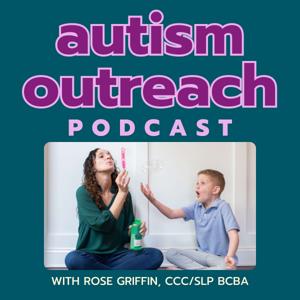
Join Rose Griffin, a dedicated Speech Therapist and BCBA from ABA SPEECH, as she shares her compassionate approach to supporting the communication needs of autistic individuals. With 20 years of…
This podcast is a resource for professionals and parents alike, offering practical strategies that honor each person's unique communication style. Rose covers a wide range of topics, including how to recognize and support autistic communication from an early age, the distinctions between autism and speech differences, and effective, respectful approaches to fostering communication, whether a child is non-speaking, minimally speaking, or verbal.
Through a mix of interviews and solo episodes, Rose explores how to enhance meaningful connections, address challenges with empathy, and celebrate the strengths of autistic individuals. Whether you're a parent, therapist, or educator, you'll find valuable insights and actionable advice to create supportive environments that empower communication and honor neurodiversity.
Hit subscribe and learn more at www.abaspeech.org.

7,679 Listeners

11,965 Listeners
626 Listeners
9,086 Listeners

25,789 Listeners
4,765 Listeners

46,916 Listeners
1,345 Listeners

624 Listeners

422 Listeners

15,413 Listeners

29,207 Listeners
60 Listeners

19,273 Listeners

10,167 Listeners