
Sign up to save your podcasts
Or

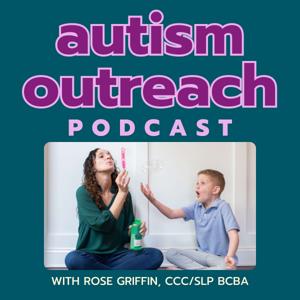


Dr. Sarah Frampton, an assistant professor at the University of Nebraska - Omaha joins me today as we discuss her work with Matrix Training. Dr. Frampton also refers to it as Matrix “Planning”, this is a generative approach to therapy that can help learners acquire new skills and improve their communication.
Matrix Training involves arranging words in a matrix so that some multi-word phrases are taught directly, while others emerge through indirect teaching. This approach involves creating a table of related targets and components and then moving forward with training and probing. The key benefit of this approach is the ability to identify and prevent faulty stimulus control in tact training.
Age is not a barrier to using Matrix Training because it is based on a solid foundation. This approach is best suited for learners who are acquiring single-component tacts and listening skills, with a provider who has found a teaching style and process that works best for them. Learners who will find Matrix Training most effective are typically at Level 2 of the VB-Mapp or around 18 to 30 months developmentally.
The basics of Matrix Training are simply selecting targets, teaching targets, and then assessing targets. There are no restrictions on how to use and teach with Matrix Training, and it can be embedded into a naturalistic teaching context or any other context that works best for the student.
Dr. Frampton emphasizes that Matrix Training is a systematic and science-based tool that can be incredibly effective for therapy planning. When done well, therapy sessions can even look and feel like play.
#autism #speectherapy
What’s Inside:
Mentioned In This Episode:
Sarah Frampton | Department of Psychology | University of Nebraska Omaha
ABA Speech: Learn About Current ASHA and ACE CEUs
Dr. Dana Battaglia, SLP, and Dr. Mary McDonald, BCBA, have been working together and collaborating throughout their career. Collaboration in the two fields is slowly making progress but there is still a lot of polarity for a lot of professionals.
They rely on their strong commitment to science and evidence-based practice to guide their collaboration.
Dr. McDonald references the Ethics Code of Behavior Analysis codes, 2.10, 3.01, and 3.06.
2.10 Collaborating with Colleagues
Behavior analysts collaborate with colleagues from their own and other professions in the best interests of clients and stakeholders. Behavior analysts address conflicts by compromising when possible and always prioritizing the best interests of the client. Behavior analysts document all actions taken in these circumstances and their eventual outcomes.
3.01 Responsibility to Clients
Behavior analysts act in the best interest of clients, taking appropriate steps to support clients' rights, maximize benefits, and do no harm. They are also knowledgeable about and comply with applicable laws and regulations related to mandated reporting requirements.
3.06 Consulting with Other Providers
Behavior analysts arrange for appropriate consultation with and referrals to other providers in the best interests of their clients, with appropriate informed consent, and in compliance with applicable requirements (e.g., laws, regulations, contracts, organization, and funder policies).
The bottom line is to ask yourself, what is in the best interest of the client. When you don't know what you don't know and you have access to a professional with the knowledge and skills needed for your case, it is important to have humility, stick to the science, and consult them.
Dr. Battaglia and Dr. McDonald's collaboration across their professions maximize their outcomes and increase the benefit of the client. They share some strategies and tips to help other SLPs and BCBAs open to collaboration and see the same great results.
#autism #speectherapy
What’s Inside:
Mentioned In This Episode:
Dr. Mary McDonald
[email protected]
Dana Battaglia, Ph.D. (@Dana_Battaglia1) / Twitter
Eden II Programs
ABA Speech: Learn About Current ASHA and ACE CEUs
If you succeed, I succeed. That really culminates in the importance of SLP and BCBA collaboration, but as we've discussed on the show in the past…it can still be really challenging.
Lynn Dudek, owner of ASD SLP, and a fellow SLP-BCBA "unicorn". She shares her experiences in the field with stories coming from the late 80s and early 90s that dive into the history and changes we've seen in the SLP, BCBA, and autism fields. A pivotal moment in her career was a "dream dinner party" as I joke, where she picked the brains of Dr. Vince Carbone and Dr. Patrick McGreevy. Throughout her career as an SLP and eventually, as a BCBA, she was faced with the opportunity to work and collaborate with other BCBAs and SLPs.
Lynn shares somewhat of a case study of a collaboration interaction that really went well on the topic of verbal imitation. This concept with Echoics can be a touchy subject between the fields, but because the BCBA Lynn was working with was open to understanding Lynn's expertise on speech development, they were able to agree and move forward for the better of the learner.
Common Challenges for Collaboration:
-Understanding the role and expertise of the professional…who really "knows best?"
-The language barrier… academic language and terms between the two professions can differ greatly
Positive Strategies for Collaboration:
-Be open: create an open line of communication, you are both well-educated, trained professionals with specific expertise.
-Demystify the language: when possible use plain language that everyone can understand, or explicitly explain academic terms
-Pair first: we always talk about "pairing first" with our learners… take the time to pair with the other professional. Make a connection and show interest, it can smooth the edges of future disagreements.
When we work together we can do such amazing things, not just for the child but for the professionals on the team.
#autism #speectherapy
What’s Inside:
Mentioned In This Episode:
[email protected]
ABA Speech: Learn About Current ASHA and ACE CEUs
No. No, thank you. I don’t want to. I don’t like this. These are important statements that communicate that you do not want something to happen. In this episode, Lisa Wallace an SLP who has worked with young children with autism and their families for over 25 years talks about this important yet overlooked skill of communicating “no.”
No may look like a variety of things depending on the activity and the child’s communication level. Clear signals might be verbally saying no, giving back or throwing an item, running away, crying, and in some cases severe problem behaviors. Other more subtle symptoms might be withdrawal, the closing of eyes, turning away, and disengagement.
Effective communication of “no” should be a goal for every child, regardless of how they are currently communicating it. To assess where to start, Lisa recommends using observational informal assessment, taking notes, and talking to the caretaker. What triggers a “no” response? What does “no” mean to them? What does “no” look like to them?
Lisa talks about working towards this goal in a mildly challenging way because there often are no provided opportunities to communicate “no”. Especially, if you have a child who is happily engaged in every activity. Or alternatively, you have a child who, provoking a “no” activity might cause triggering, dangerous behavior.
Tips for “Practicing Protesting”
-Provoke in a Mildly Challenging Situation (Avoid high stakes situations)
-Set antecedents, what are going to be the causes of the “no”?
-Provide visuals, AAC, or other familiar communication tools.
-Ready to model. Show the learner what communicating “no” looks like.
-Use the correct reinforcement: Removal of antecedent.
You want the child to know and understand that when they communicate “no” or “I don’t want to” or “Not like this”, their communication is going to be validated. Do not continue doing the “no” activity in any capacity.
This is such a great topic, and one I don’t think we discuss nearly enough. Saying “no” is an important piece of communication in helping our learners find their voice.
#autism #speectherapy
What’s Inside:
Mentioned In This Episode:
ABA Speech: Learn About Current ASHA and ACE CEUs
As SLPs and BCBAs we are tasked with teaching comprehension to our learners, but do they really understand these skills? Dr. Merrill Winston joined me to discuss not only reading comprehension but comprehension in everyday life and the building block skills to be successful.
What is comprehension?
Whether you're reading a book or listening to a statement, there are 3 markers for comprehension.
Dr. Winston and I get into the nitty gritty of that last marker and talk about it when it comes to a comprehension of daily life. He says that a major prerequisite for reading comprehension is comprehending their day. You can check this by having your learner sequence, or "serieate" their day. (First I did this, then I did this, then we did that…)
With this skill, students are pulling information from the past and making a time reference. You can practice by working in smaller increments, like the last hour even.
This doesn't have to be verbal, it can be in pictures or icons as well! But, the important thing is to ask those questions!! Students may not be able to serieate their day, simply because they aren't being asked these questions.
We also talk about goal setting and realistic expectations. If you're considering setting a comprehension goal for your learner, Dr. Winston says to be sure to ask: What is the end goal? Where is this skill going to take them? Every skill you spend time on should have a goal that extends across the lifespan and opens more doors and opportunities. He even goes as far as to say that working on a goal for too long without progress is careless!
This was such a great chat with a leader in the field of ABA, and I hope you found it helpful!
#autism #speectherapy
What’s Inside:
Mentioned In This Episode:
Winston Behavioral Solutions
ABASpeechByRose - Rose Griffin - Instagram
ABA Speech: Home
ABA SPEECH Your Autism Resource
Every October I send out a survey to find out what you all are struggling with. This year the top 2 answers were Engagement and Behavior Barriers. I talk about engagement often on the show, and in this episode, I am focusing on behavior barriers.
If you’re trying to find ways to support your students who might have behavioral barriers or problem behaviors here are seven things to consider for preventing and handling these barriers:
I also recommend recording ABC data. Antecedent, Behavior, Consequence. Write down and track every occurrence of behavior and the correlating information. As time continues you will understand, notice a pattern, and begin to prevent these behaviors. I offer an ABC sheet in my course Help Me Find My Voice, but ABC sheets are readily available via web search.
Not only is this podcast meant to help you give a voice to your learners, but also helps you have the confidence to reach and support all of your autistic students. If you found this helpful please subscribe so you don’t miss more important information you can put to use in your therapy room.
#autism #speectherapy
What’s Inside:
Mentioned In This Episode:
ABASpeechByRose - Rose Griffin - Instagram
ABA Speech: Home
ABA SPEECH Your Autism Resource
I love talking about joint attention, but a lot of my ideas and strategies in my courses may feel like they are geared toward older preschool-age students. My tips today are for the youngest learners, toddlers aged 2 to 3. Joint attention is an important foundational skill and it is never too early to get started with these strategies!
3 Ways to Get Started with Joint Attention with Your Toddler Today
Books
Books are the lifeline for learning and sharing activities and time with our little ones. For these young learners, when reading use a positive, energetic voice. Try using board books and interactive books with flaps. With your own child, make a goal to embed at least 15 minutes to read and interact with a book every day!
Some of my favorites: Huggy Kissy and the Llama Llama series
Songs
Use YOUR Voice. Learn songs with motions to sing with your toddler. If toddlers aren't speaking they can join in by using the gestures and doing the motions as you sing. You can also use visuals like toys that match the song or printed visuals from my TPT store for early intervention songs.
Some of my favorites: Wheels on the Bus, 5 Little Monkeys, Happy and You Know It, Old McDonald
Play
Playing with toddlers is so fun and you never know what they will love and enjoy. Focus on not asking questions but just modeling simple language and narrating the activity.
Some of my favorites: Bubbles, Sensory Bins, Cars with Tracks
#autism #speechtherapy
What’s Inside:
Mentioned In This Episode:
Books For Speech Therapy For Toddlers
Songs for Early Intervention by ABA SPEECH | TPT
ABA Speech: Home
ABA SPEECH Your Autism Resource
We need to step back and wait so that the child has a chance to find their voice, whatever that looks like so that they can spontaneously and independently connect with us.
Dr. Jamie Hughs-Lika is a BCBA-D, an Early Start Denver Model Certified Therapist, and has been working in the field for 26 years. We discussed what you can do when social engagement is difficult with your child or students and why is it so important to work on this skill.
Social engagement and attention begin as early as infancy, with eye contact and small coos from your baby. When this isn’t present, and the pattern of limited social engagement continues, Dr. Hughs-Lika says differences in social attention are one of the first early signs of autism. Children with autism are less motivated to engage socially, and Dr. Hughs-Lika covers the three pillars of social motivation:
Social Orientation: This is responding to communication and social attention with eye contact, gestures, etc.
Social Seeking: This is initiating communication through gestures, imitation, showing toys or items, etc.
Social Maintaining: This is ‘maintaining’ a social connection through turn-taking and social reciprocity.
Dr. Hughs-Lika is also an autism mom and shares a little about her journey for connection with her son Liam. When she works with him and other children she “takes a pulse” of the interaction with these questions.
Social communication is the cornerstone of more advanced communication. Having fun, being positive, and building a personal connection with your child are important strategies for working on social engagement and communication. During our discussion, we talked about the assessments available, Dr. Hughs-Lika’s courses, and the nuance of working on this critical skill. You can find out more about her courses and other information by finding Sage Learning Systems on social media or visiting their websites.
#autism #speectherapy
What’s Inside:
Is social engagement an early sign of autism?
What are the three pillars of social motivation?
Available assessments for social skills.
Strategies and Questions to guide interactions with your child or student.
Mentioned In This Episode:
—SAGE Learning Lab
—Sage Learning Systems
—Sage Learning Systems on Facebook
—Chevalier et al article
—Fun visuals for teaching strategies
—ABA Speech: Home
—ABA SPEECH Your Autism Resource
“Rose, I am working with a student who is not engaging during therapy!”
This is a message I get week after week from my listeners! So this week I am playing back my most listened episode of 2022, number 62, all about joint attention. I go over some key strategies to not only increase attention during therapy but help your child or client on their journey to communication
These activities involve shared activities through playing with toys, singing songs, and reading books. It is okay if your student isn't ready to fully engage when you introduce these activities, note their baseline data, and move forward with goals. You will be amazed to see the transformation and excitement over these simple activities.
Toys:
Playing with toys in therapy is all about creating an interaction in a semi-structured environment. Remember to use simple language and allow for natural curiosity and play and not bombard with questions.
Examples of toys I love to use:
Literacy:
Build excitement around the book, use books with repetition, and if your kids like it try an animated voice which can be really fun.
A few books I love to keep in my therapy bag that are a great success for joint attention are,
Pete the Cat and his White Shoes, Brown Bear, The Very Hungry Caterpillar, and Chicka Chicka Boom Boom.
Music:
Students love songs, they are familiar, and create engagement. I also love to use visuals that can be just laminated pictures or little toys that match the activity of the song. It can also be engaging to sing songs that have motions for the words.
Songs I love:
It can be difficult to keep data and set goals around these abstract ideas, be sure to check out my goal bank on ABA speech. I hope you love these ideas and get use out of them in your next therapy session!
#autism #speechtherapy
What’s Inside:
Mentioned In This Episode:
IEP Goals for Students with Autism - ABA Speech
ABA Speech: Home
ABA SPEECH Your Autism Resource
Any chance to talk about collaboration, I am all about it! Janna Bedoyan and Morgan van Diepen are experienced members of the autism field. Janna is an NBCT teacher who specializes in Augmentative and Alternative Communication and Morgan is a BCBA and autism specialist. As I talk to these two today, their passion is just incredible.
Together, Janna and Morgan have just published a new book, AAC Visualized - a visual guide for AAC full of detailed pictures, examples, ideas, and strategies. The mission behind AAC Visualized is to normalize the use of AAC, advocate for acceptance and access to AAC, and empower families through AAC education. In the creation of this book, they collaborated with SLPs, Teachers, Autistic Individuals, and AAC users to get an all-encompassing view on AAC.
Janna and Morgan make it clear that it is NOT SLP versus ABA but instead there is a clear need for collaboration between the two. AAC is typically taught and used with SLPs but it's important for ABA providers to put it to use during therapy as well for these users. They share some of their tips and strategies from their book!
3 Essential Tips for ABA Providers Teaching AAC
Be sure to check out their book AAC Visualized and the "sister" book ABA Visualized. You can find Morgan and Janna on Instagram to check out all of the cool things they are doing in their field!
#autism #speectherapy
What’s Inside:
Mentioned In This Episode:
Shop AAC Visualized
AAC Specialist & Consultant (@aac.and.me) • Instagram
ABA Visualized (@abavisualized) • Instagram
ABA Speech
From the publisher's feed
Join Rose Griffin, a dedicated Speech Therapist and BCBA from ABA SPEECH, as she shares her compassionate approach to supporting the communication needs of autistic individuals. With 20 years of…
This podcast is a resource for professionals and parents alike, offering practical strategies that honor each person's unique communication style. Rose covers a wide range of topics, including how to recognize and support autistic communication from an early age, the distinctions between autism and speech differences, and effective, respectful approaches to fostering communication, whether a child is non-speaking, minimally speaking, or verbal.
Through a mix of interviews and solo episodes, Rose explores how to enhance meaningful connections, address challenges with empathy, and celebrate the strengths of autistic individuals. Whether you're a parent, therapist, or educator, you'll find valuable insights and actionable advice to create supportive environments that empower communication and honor neurodiversity.
Hit subscribe and learn more at www.abaspeech.org.

7,683 Listeners
11,950 Listeners
626 Listeners
9,093 Listeners

25,787 Listeners
4,759 Listeners

46,879 Listeners
1,346 Listeners

625 Listeners

422 Listeners

15,404 Listeners

29,200 Listeners
59 Listeners

19,209 Listeners

10,193 Listeners