
Sign up to save your podcasts
Or

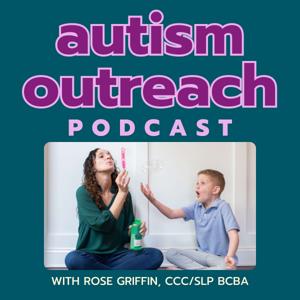


As we prepare to go back to the classroom for face-to-face education, I think it's important to talk about play and social skills for our younger students. Unstructured play time can be something students with Autism or other complex communication issues really struggle with.
Often these students do not independently engage so it's important to ask, “What can I do to help these kids engage?” As a therapist, my goal is to facilitate peer-to-peer interaction and encourage shared activity. One of the ways I do this is by implementing modified games at the end of group therapy. These games look very different from their original counterparts. This is because they are more accessible for students with Autism and other complex communication issues by eliminating the need for strategy and putting the emphasis on a shared group experience.
Modified Games
Musical Chairs
As opposed to traditional musical chairs, I never take a chair away. I give the directions, “when you hear the music you walk when it stops you sit down”. This is fun because the students are moving and you can use popular music or themed music. All you need is a device to play music like your cell phone, chairs, and the students.
Memory
Cards of all different types to play this game are usually readily available. This game can typically take an hour or more, so to cut time and make it more accessible, I remove the majority of matches. I go through and pick the matches, and put one part of the matches in a pile face down, and then line up the other part of the matches face up. This way they can see all the pictures. They take turns picking a card and finding the match. What’s great about this is that it is a game that they can definitely play at home with their parents or family too!
Simon Says
I modify this game by ALWAYS saying “Simon says”. Essentially I am the leader (Simon) and I am giving directions and demonstrating and they are following directions by imitating. This is not only great practice for leisure skills but also imitation.
GoNoodle
This is a free website with amazing dances and brain breaks. If you have a smart board, you can let students go up and pick the video. All the dances have motions to imitate and cooperate with the group, they are so fun and interactive that you’ll want to move along too!
The Grocery Store Game
I've been playing this game for 20 years, it is super fun. You write different letters of the alphabet down. The sentence starter for this game is “I bought…”. Go around the room and start with the letter and have students say what they bought with the corresponding letter, i.e. “I bought apples...I bought bananas...etc.” I have even created a resource with visuals to help students who are having difficulty recalling a word. A great thing about this is that it is also accessible to students using AAC devices.
There are a lot of things you can work on as a therapist in group settings: Greetings, engaging in the group, student engaging in a variety of tasks, expanding leisure repertoire, joining others in play, and sustained social time. All of these are accessible for students who are yet verbally communicating, up to students who are fully conversational.
I put these resources together to provide real tips and strategies to put to use to increase communication in play and social skills across all environments. I really want you to feel comfortable and ready to get to work helping your students and children. There is so much communication involved in interaction and fun that should be explored!
What's Inside:
Dual certified SLP-BCBAs are rare in our therapist community, so many providers find it very difficult when collaborating with other professionals who overlap the scope of care. I am discussing a great professional article that tackles this hot topic with my former supervisee and fellow SLP and BCBA, Eleyonzettah E. Bonilla. The article, Interprofessional Collaborative Practice Between Behavior Analysts, and Speech-Language Pathologists, is available on ABAI.
For many SLPs or BCABs, it is difficult to see when other people are doing what you are trained to do. It can often feel like you're being encroached on. This is bound to happen when many times the care requires an overlap. Eleyonzettah and I talk about how crucial it is to embrace this overlap. The article actually discusses the importance of highlighting the strengths of the different providers. When working with two providers who have knowledge about multiple different points of care, you have an advantage.
Training can be a great aspect of collaboration. When working with other providers, you can facilitate role extension and role release. While you may not ask another provider to teach a skill from scratch, you can release an extension of practicing a skill by training the other provider on what you need from the learner. We do not own these skills, the skills are there as points for teaching.
When facilitating a collaborative relationship, professionalism is key. Eleyonzettah and I both relate to having poor encounters with other professionals. We feel that many other SLP or BCBAs also encounter other professionals they do not care for, this does not mean every encounter has to be negative. It is important to keep language and communication clear and productive. When you're speaking with another provider during collaborative work, the patient should be first. You are a team with the goal of helping the learner.
Discussing this secret problem in the ABA community, Eleyonzettah and I kept coming back to a common theme. The child, learner, or patient comes first! Our job is to facilitate learning and quality of life for our learners and collaborating with other professionals can sometimes be the only way to do that!
I enjoyed this discussion with Elenyonzettah greatly and it is my hope that you found some tips or beneficial information in today’s episode that you can put into practice right away!
What's Inside:
We should inspire and not require students when on our journey to beginning communication. Anne Page emphasizes this as she joins me today to discuss her role as an Assistive Technology Lead and the importance of how we use AAC with our students.
Alternative Augmentative Communication (AAC) is a tool that can be used for students with varying needs and accesses. We discuss the wide variety of applications on the market for use as AAC. Anne gives us some points of thought for parents and professionals as they are choosing AAC for their students.
In addition to applications, we discuss the physical device used by our students. There are many AAC apps specifically designed for use with an iPad. However, there are still dedicated devices in use out there. The type of device is really important when considering the access point of the child and the insurance coverage of the device. As iPads are becoming more common as AAC, Anne has noted that some apps with heavy-duty iPad cases are now being approved via insurance.
It doesn’t have to all be high tech. There are many low tech options out there that can be used in addition to devices. These can be great to overcome the barriers AAC can have such as use in an outdoor or pool environment, a problem with the device’s battery, and so on. Anne tells us about the Core Board she created that is available free on her website!
When beginning AAC, start with preferred activities. Use AAC with things that bring your students joy. Once students are successful using their device and applications, then teaching using non-preferred activities can start.
AAC should help our students find their voice because communication is a human right. Anne highlights throughout this episode that this should be a positive experience that inspires our students. I hope you found this show informative and can put these ideas and strategies to use with the AAC users in your life!
What's Inside:
AAC is a special space that crosses over through many shared professional settings. Kate Granbois joins us on the episode today to talk about her job as an AAC specialist, the ins and outs of Augmentative Alternative Communication, and getting comfortable with the process. Kate warns about her title of “AAC Specialist”, while it's a real job and title, and she holds a lot of knowledge on this topic, it's important for many other professionals in the AAC user’s life to be empowered in this skill set as well.
The most important part of AAC is the user. The Communication Bill of Rights is a great resource and really highlights the fact that communication is a human right. So when collaborating, it's important to recognize that no one owns just one environment. The AAC user needs to be supported across all environments to remove barriers. Taking the AAC user's family and friends values into consideration is a critical and ethical piece that is crucial to the success of the user across their life. AAC is not just important for accessing curriculum in the school. There are social aspects and basic need aspects, and the environment needs to revolve around the whole user, not just the professional's therapy room.
AAC is more than just communication, it is also knowledge on equipment, vendors, the law, and documentation. Kate gives us some broad steps for getting started with AAC assessment.
Know and understand the documentation and the legal requirements.
There is never a perfect set up when it comes to therapy and AAC, but it's important to not let an AAC device disrupt therapy implementation. Kate says it's a science and an art, and it's okay for everyone’s therapy to look different. She also shares some resources for how to get more comfortable with your therapy with an AAC user and their device. At the end of the episode, Kate reminds professionals to be compassionate because everyone is coming from a different place. Our job is to help communication skills, and communication is a lot more than learning how to ask for things.
I hope that you were able to gain some new information or will utilize the resources discussed today to empower communication with your clients and better improve your therapy!
What's Inside:
The family-centered approach is a key component of therapy at Nikki McRory’s facilities, McRory Pediatric Services. Nikki is on the podcast today, sharing how she uses a transdisciplinary approach for speech therapy. She uses the Behavior Skills Training framework in her early intervention programs with both the parents and the learners.
What are the steps for Behavior Skills Training with parents?
Step One: Information
Explain what the skill you're working on is and why it is important. This can be verbal and written.
Step Two: Model
Model and discuss this skill. While demonstrating the specific skill, talk about what you're doing and provide further clarification.
Step Three: Practice
Role play with the parents to give them the foundation for the skill, but also allow them to practice with their child.
Step Four: Feedback
Be sure to let parents know what they are doing well, but also let them know what to change or improve on. Keep repeating steps 2 and 3 until they are where they need to be.
When working with parents, Nikki looks at the whole picture for the family. This means taking into account their cultural, linguistic, and social-emotional differences. Her formula to train parents is directly embedded into her early intervention programs. Every Friday, parents are pulled from the therapy to work on a new skill together with clinicians and will practice with their child in therapy the following week.
If you’re a professional feeling nervous about telling parents what to do, remember that parents are the expert on their child, but you are the expert on speech and language. You are in the best position to help parents help their children. Nikki leaves us with a special sentiment for parents about the long haul of therapy and the importance of self-care!
Be sure to check out the resources we’ve shared, I hope this has helped professionals get an idea of how to facilitate parent coaching and given some inspiration for parents to get involved in their child’s therapy!
What's Inside:
Social Skills are more than just etiquette and manners. Ashley Rose, founder and clinical director of Mission Cognition Social Skills Development Center, is here with me sharing about the importance of social skill instruction. Ashley describes social skills as the inner workings of social interaction. She takes a very individualized approach when deciding exactly what to work on by learning what exactly is making it difficult for an individual to have positive interactions with themselves or others.
Ashley’s centers provide the perfect atmosphere for individualized groups. She has three leveled groups, Group A being the developmental play group, for individuals with emerging language. Groups B and C are best suited to individuals with more language skills, and is her more signature Behavior Skill Training group.
The planning for Ashley’s groups focus on individualization. Ashley has developed 15 Global Focus Areas that she uses to target training in her groups. She has also developed an in-house assessment tool to identify these areas. For each group, she uses templates such as Group at a Glance, Student Snapshots, and Goal Sheets. The idea behind all of this is rationale, every group facilitator should be able to explain the ‘why’ behind the goals selected for any individual. The end goal for every play group, whether it be developmental play or behavior skill training, is to give the participants autonomy and allow ease of social interaction in their natural environment.
We also touch on the topic of Masking. Autistic voices are speaking out against this practice as harmful and unethical, and Ashley tells us why. At one point, the idea of teaching Masking was to help individuals with Autism reduce the appearance of self-stimulatory behavior to help them “fit in”. However, this behavior is actually a self-regulation tool. Another way Masking has been used is to teach scripting in social situations. Instead of relying on scripting, Ashley teaches language use in a more natural template. Her goal is always to give her students the most autonomy and individuality as possible.
Self-advocacy and Independence are the words of the day that Ashley leaves us with. No matter the age, it is important to give your child the tools to communicate what they want and need, but equally what they don’t want. Ashley shared some great resources today and gave some awesome tips for parents and professionals for creating ease in social situations and interactions that will affect their children or students every day.
What's Inside:
We have school-based SLP, Marisha Mets with us today. Marisha talks with us about the benefits of using language samples, her tips and tricks, as well as resources from her blog SLP Now. She talks about the origin of these resources, that many teachers and SLPs can relate with. A heavy caseload and a necessity to be efficient led Marisha in the direction she is now to share these tips with other SLPs.
We discuss the basics of what a language sample actually is, snapshots of the students' use of language in a functional manner in their natural environment. Marisha highlights that we can use many types of samples including play, conversation, story retell, story generation, expository, and persuasive. All of these samples will elicit varying levels, giving unique information on student performance according to the context.
When looking at language samples versus assessments, Marisha talks about the differences in the data. She tells us the importance of knowing not only what students can do and say but if they are making it functional. Task-based assessments can too often lead to confusion when a student can do something on paper but not in their natural environment. We share some times and places to check-in and get a look into a student's natural language function.
We talk about how language functionality is a key point in setting goals for students with autism. Students may have the words but not know how to use them. Using language samples can pinpoint this as well as set goals and targets on what we can plan for them.
Marisha also shares ideas about how to get these language samples and how to track them. She shares resources she's found along the way as well as those she's created and can be found on her blog. Marisha answers my end-of-episode question with her best advice for other SLPs!
What's Inside:
Today I have Kimberly Scanlon, licensed and certified speech-language pathologist, best-selling author, and fellow busy parent. She has written two great books in the world of speech therapy, Toddler Talks and My Toddler’s First Words. Kimberly works as a private practice speech therapist doing primarily home-based visits and she is here giving us some tips on how to build early interventions into day-to-day life.
Because Kimberly is a home-based therapist, she has less barriers in communicating with parents and families. This allows her to relate to being busy and just trying to fit that language development in.
The ideas and advice Kimberly shares today focus around these central questions:
What does your day look like? What is your typical routine? What do you like to do with your child? When is the best time of day for you to reach your child?
We discuss ways to embed language and early intervention into your routines by finding connection-building activities that don't take away from your daily life. This makes each activity symbiotic with various parents’ personalities, cultures, and what they are at a base level comfortable with.
If you’re already cooking or doing laundry, think twice about setting your child in front of a screen. Instead, think about how you could be getting them involved. We discuss how there are so many language opportunities in everything we do and our toddlers just want to be with us. Make chores fun and make them learning opportunities with these tips! Don't be afraid of this undertaking, you don't have to have them participate in the entire chore just a small part.
Kimberly leaves us with this special advice, reminding parents to do the best they can and not worrying about being perfect. Take several moments throughout the day every day to just enjoy your child, judgment, and worry-free to be fully present and enjoy the moment!
What's Inside:
Speech and language development is more than just the words being produced and children need to be emotionally supported and encouraged to communicate. Parental involvement is critical, but professionals are often so focused on the kids that they don’t notice the parents are depleted. Lindsey Nitake uses her Help Me Grow Speech social media accounts to get information out there.
Every family is different and unique and the tools we offer need to be adapted to fit with a family’s style, so listening to feedback from parents is important. Sometimes parents are overwhelmed by the wealth of information. They need help to figure out which resources will work for their child.
Social media is a great way to provide parents with educational support. It’s the most effective and efficient way to spread the information because it allows you to share resources more widely. It’s particularly useful when in-person sessions are not possible. Lindsey uses TikTok, Instagram, and YouTube to share information.
To be better professionals, we need to listen to each other and support each other as well. As a profession, we can be quite combative with each other. It gets very emotionally charged. BCBAs and SLPs may have different approaches but collaboration is important so professionals need to have a team-based mentality.
New SLPs have to learn a lot on the job. It’s really hard being a new SLP. Oftentimes, when you start working with kids, you find out that it’s not what you learned in graduate school. You need support to figure out a treatment strategy to help them. Social media is a nice way to provide mentoring.
When you’re working on communication, don’t lose sight of the bigger picture. Communication is more than just words. It’s the environment and relationships with people. You have to consider the child and their environment as a whole, and the family unit is a big part of that, which is why having parents on board is so important.
What's Inside:
From the publisher's feed
Join Rose Griffin, a dedicated Speech Therapist and BCBA from ABA SPEECH, as she shares her compassionate approach to supporting the communication needs of autistic individuals. With 20 years of…
This podcast is a resource for professionals and parents alike, offering practical strategies that honor each person's unique communication style. Rose covers a wide range of topics, including how to recognize and support autistic communication from an early age, the distinctions between autism and speech differences, and effective, respectful approaches to fostering communication, whether a child is non-speaking, minimally speaking, or verbal.
Through a mix of interviews and solo episodes, Rose explores how to enhance meaningful connections, address challenges with empathy, and celebrate the strengths of autistic individuals. Whether you're a parent, therapist, or educator, you'll find valuable insights and actionable advice to create supportive environments that empower communication and honor neurodiversity.
Hit subscribe and learn more at www.abaspeech.org.

7,684 Listeners

11,965 Listeners

625 Listeners

9,089 Listeners

25,789 Listeners
4,763 Listeners

46,901 Listeners
1,346 Listeners

625 Listeners

422 Listeners

15,409 Listeners

29,204 Listeners
59 Listeners

19,254 Listeners

10,179 Listeners