
Sign up to save your podcasts
Or

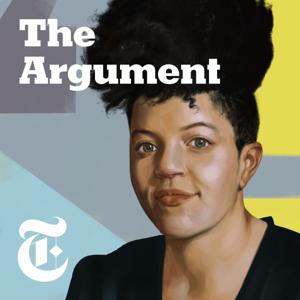


Just how much trouble is American democracy in? When we look to 2024, it’s easy to focus on the doomsday scenario: an election where legitimate results get thrown out. But our democracy has been eroding for years — and we’ve never been an equal democracy for everyone in the first place.
Host Jane Coaston discusses the state of the U.S. democracy and whether Jan. 6 was a turning point with Masha Gessen, a staff writer at The New Yorker, and Corey Robin, a political scientist at Brooklyn College.
Mentioned in this episode:
“We Won’t Know the Exact Moment When Democracy Dies” by Masha Gessen
“By Declaring Victory, Donald Trump Is Attempting An Autocratic Breakthrough” with the interview with Bálint Magyar, by Masha Gessen
“The Anatomy of Post-Communist Regimes” by Bálint Magyar
“Trump and the Trapped Country” by Corey Robin
Unlock full access to New York Times podcasts and explore everything from politics to pop culture. Subscribe today at nytimes.com/podcasts or on Apple Podcasts and Spotify.
As the days left in 2021 dwindle, you may feel that annual tug to judge this calendar year as cruelly as possible. After all, it was yet another year lived in a pandemic, on a warming planet, with teetering democracies and aspirational autocrats (tune in next week for that debate). But is it actually true? Did the world really get worse in 2021?
For this Very NYT Opinion New Year’s Eve* episode of “The Argument,” Jane Coaston called upon podcast listeners and Opinion voices like the columnists Michelle Goldberg, Farhad Manjoo and Jamelle Bouie, the editorial board member Michelle Cottle and the musician and contributing writer Tom Morello to make the case for whether the world will enter 2022 a little bit better, or a little bit worse for wear.
*close enough
Mentioned in this episode:
Unlock full access to New York Times podcasts and explore everything from politics to pop culture. Subscribe today at nytimes.com/podcasts or on Apple Podcasts and Spotify.
Last month, Kyle Rittenhouse was acquitted on all charges related to the shooting of two people at a Black Lives Matter protest in Kenosha, Wisc. Before, during and after the trial, journalists and pundits broke down the most sensational moments on the stand, and many tried to discern what Rittenhouse’s not-guilty decision meant about the country at large. People were eager to draw direct connections between the arguments used in court and the inequities that are seen in the country on a daily basis.
But is looking at the Rittenhouse trial and other high-profile cases really the best way to understand where we are as a nation?
This is a question that Sherrilyn Ifill has had to contend with during the nearly 10 years she’s led the NAACP Legal Defense and Educational Fund. Ifill oversaw the LDF as they sued the Trump administration and as the battle over voting rights has escalated over the past four years.
Jane and Ifill discuss how the LDF has navigated the role of practicing law while advocating political movements in the country. Ifill also shares why she decided to step down from the LDF next April, and what she will be working on next.
Mentioned in this episode:
Unlock full access to New York Times podcasts and explore everything from politics to pop culture. Subscribe today at nytimes.com/podcasts or on Apple Podcasts and Spotify.
With the midterms just months away and the 2024 presidential race around the corner, the press is gearing up to cover more deeply polarizing election cycles.
And how it should do that is an equally polarizing question. The media’s role in preserving — and reporting on — our democratic institutions is up for discussion.
Last week, the New York Times Opinion columnist Ross Douthat pushed back on media critics like the N.Y.U. associate professor Jay Rosen. Jay asserts that the press should strive to be “pro-truth, pro-voting, anti-racist, and aggressively pro-democracy.”
Ross disagrees, claiming that such a stance could feed more polarization.
So, this week Jane Coaston invited Ross and Jay to the show for a lively debate over how the press should cover politics in a democratic society.
Mentioned in this episode:
“Can the Press Prevent a Trump Restoration?” by Ross Douthat, published last week
“You Cannot Keep From Getting Swept up in Trump’s Agenda Without a Firm Grasp on Your Own” and “Two Paths Forward for the American Press,” by Jay Rosen, published in PressThink in May 2020 and November 2020, respectively.
Unlock full access to New York Times podcasts and explore everything from politics to pop culture. Subscribe today at nytimes.com/podcasts or on Apple Podcasts and Spotify.
A group of scholars and journalists announced last month that they were founding the University of Austin on the belief that free speech is being stifled on college campuses across America.
“The reality is that many universities no longer have an incentive to create an environment where intellectual dissent is protected and fashionable opinions are scrutinized,” wrote Pano Kanelos, the inaugural president, in the initial statement.
But the news was followed by intense scrutiny and backlash on social media as part of a longstanding debate about the state of free speech on college campuses. From students boycotting controversial guest speakers to petitions demanding the resignation of faculty members with polarizing opinions, institutions of higher education have been hotbeds of a larger conversation around censorship of speech in the country.
To debate the free speech crisis — or lack thereof — on campuses, Jane Coaston brought together Greg Lukianoff, the president and C.E.O. of the Foundation for Individual Rights in Education (FIRE), and Mark Copelovitch, a professor of political science and public affairs and the director of the Center for European Studies at the University of Wisconsin-Madison. They discuss whether the new university can address deep-rooted issues on campus or will just fall into the same “thought bubble” that plagues other institutions.
Mentioned in this episode:
“Why We Need New Colleges” by Ross Douthat in The New York Times
“It’s the University of Austin Against Everyone — Including Itself,” by Derek Robertson in Politico
“Greg Lukianoff: We Are Creating a Culture of Student Fragility,” a podcast episode of “The Bulwark”
This op-ed on the Thompson Center’s “free speech” report, by Mark Copelovitch, Jon C.W. Pevehouse and Jessica L.P. Weeks in The Cap Times
Unlock full access to New York Times podcasts and explore everything from politics to pop culture. Subscribe today at nytimes.com/podcasts or on Apple Podcasts and Spotify.
Facebook, Meta — whatever you want to call it, the tech titan has drawn a lot of ire, and not just from privacy advocates and people fighting misinformation. Antitrust regulators are sharpening their knives, too.
Forty-eight attorneys general want to slice the Big Tech giant into less-powerful pieces. They’ve joined a parallel lawsuit with the U.S. Federal Trade Commission to challenge what the agency alleges to be a monopoly engaging in illegal acquisitions. And overseas, Britain’s competition regulator has already directed Meta to sell one of its companies, the gif-sharing platform Giphy.
Meta reaches 3.6 billion monthly active users across platforms, including Instagram, WhatsApp and Facebook itself. Amid a growing techlash, how to fix Meta is a big question.
In today’s episode, Jane Coaston explores two opposing views on whether breaking up the company might help. Sarah Miller, the director of the American Economic Liberties Project, argues Meta engaged in anticompetitive practices by buying its rivals. And Tyler Cowen, an economist at George Mason University, is a champion of big business who lauds Meta as an “antimonopoly” engine.
(A full transcript of the episode will be available midday on the Times website.)
Mentioned in this episode:
Unlock full access to New York Times podcasts and explore everything from politics to pop culture. Subscribe today at nytimes.com/podcasts or on Apple Podcasts and Spotify.
It’s holiday time again, and this year feels different. Unlike the shelter-in-place aesthetic of 2020’s holiday celebrations, many people are now vaccinated and hoping to take part in the sort of family and friend events that are more reminiscent of the prepandemic time. With that warmth and community, we all may find ourselves in another seasonal tradition: getting into an argument with people over the dinner table.
Maybe it’s a longstanding rivalry with a cousin, or a nosy aunt asking about your biological clock — or perhaps the uniquely 2020-2021 disagreements over masking, vaxxing and who actually won the election. Whatever your flavor of argument, host Jane Coaston and special guest Dylan Marron are here to help. Gleaning tips and advice from Dylan’s podcast and forthcoming book of the same name, “Conversations With People Who Hate Me,” Jane and Dylan lay out how to engage empathetically with the people who disagree with you, and how to avoid classic pitfalls that keep the discussion from being productive.
Mentioned in this episode:
Unlock full access to New York Times podcasts and explore everything from politics to pop culture. Subscribe today at nytimes.com/podcasts or on Apple Podcasts and Spotify.
Asian Americans are the fastest-growing racial group in the United States, and understanding their representation in culture, politics and society is getting increasingly complex.
In the New York City mayoral election this month, the Republican candidate, Curtis Sliwa, won 44 percent of the vote in precincts where more than half of the residents are Asian, a rate higher than for any other racial group tracked. This came as a surprise, given the popular belief that Asian Americans, particularly the younger generation, are largely liberal.
One of our guests on this week’s show argues that the conversation surrounding the Asian American identity is often limited to upwardly mobile immigrants with careers in highly skilled sectors like tech and medicine. But a term as vague as “Asian American” includes everyone from an Indian lawyer to a Hmong refugee, and with that comes the complication of identifying with a phrase that is meant to define such a wide range of experiences.
Jane Coaston speaks to two Asian Americans who look at the term in different ways: the writer Jay Caspian Kang, who thinks it ignores class differences and so is meaningless, and his podcast co-host E. Tammy Kim, who believes there’s value in building political power by organizing around the identity and even across these class differences.
Mentioned in this episode:
“Time to Say Goodbye,” a podcast hosted by Jay Caspian Kang, E. Tammy Kim and Andy Liu on Asia, Asian America and life during the coronavirus pandemic
Kang’s new book, “The Loneliest Americans”
Kim’s essay “Asian America,” in The London Review of Books
“An Asian American Poet on Refusing to Take Up ‘Apologetic Space,’” on “Sway,” a New York Times Opinion podcast
Unlock full access to New York Times podcasts and explore everything from politics to pop culture. Subscribe today at nytimes.com/podcasts or on Apple Podcasts and Spotify.
It’s no wonder so many people feel helpless about averting climate catastrophe. This is the era of dire warnings from many scientists and increasing natural disasters, record-breaking temperatures and rising tides. Fossil-fuel executives testify before Congress while politicians waver on whether they’ll support urgently needed changes to make American infrastructure sustainable. Thousands of youth activists at the Glasgow climate talks this week demonstrated for action from world leaders whose words convey the seriousness of the emergency but whose actions against major carbon contributors are lacking.
But, as host Jane Coaston says, “as fun as doomerism is, doomerism doesn’t do anything.” So what is an individual to do?
Recycle? Compost? Give up meat or flying or plastic straws? Protest in the streets?
To parse which personal actions matter and which don’t, Jane is joined by the climate activist and author Genevieve Guenther, who argues that for the wealthier citizens of the world, there are real steps that can be taken right away to help fight the current and impending climate catastrophes. Guenther lists them according to one’s ability, time and resources.
Also joining the debate is the author of “The Uninhabitable Earth,” David Wallace-Wells, who argues that while individual behavior is a good start, it won’t bring the change needed; only large-scale political action will save us. In this episode, Guenther and Wallace-Wells disagree about extinction and blame, but they agree that when individual political pressure builds into an unignorable movement, once-impossible-to-imagine solutions will be the key to saving our future.
Mentioned in this episode:
Unlock full access to New York Times podcasts and explore everything from politics to pop culture. Subscribe today at nytimes.com/podcasts or on Apple Podcasts and Spotify.
On Nov. 7, most of us will fall back an hour and restart the decades-old discussion of why we shift time twice a year.
A quick reminder: In spring, we “spring forward” to Daylight Time, giving us daylight well into the evening. But this Sunday, we’ll be back to Standard Time. Which is nice for bright mornings. But it means it’s dark before dinner. The clock change is cumbersome and confusing, and only about 70 countries in the world follow it. Even in the United States there’s no cohesion around Daylight Time; Arizona and Hawaii don’t make the switch.
And it’s something politicians of all parties can agree on. Senators Marco Rubio and Ed Markey have pushed to make Daylight Time permanent. The Sunshine Protection Act was introduced in 2018, and 19 states have already passed similar legislation to pave the way for year-round daylight savings, should Congress eventually allow it. But some scientists have their reservations, given how Daylight Time affects our body clocks and sleeping patterns.
This week, Jane Coaston digs into the debate with Dustin Buehler, a lecturer at the Willamette University College of Law and general counsel for Oregon’s governor, and Dr. Joseph Takahashi, the chair of the neuroscience department at the University of Texas Southwestern Medical Center and an investigator at the Howard Hughes Medical Institute.
Mr. Buehler thinks Daylight Time should be permanent, while Dr. Takahashi says Standard Time is the way to go.
Mentioned in this episode:
“Daylight savings year-round could save lives, improve sleep and other benefits,” in The Conversation in 2019
“Why We Should Abolish Daylight Saving Time” in Michigan Medicine, March 2021
Listen to “Matters of Time,” an episode of 99% Invisible
Unlock full access to New York Times podcasts and explore everything from politics to pop culture. Subscribe today at nytimes.com/podcasts or on Apple Podcasts and Spotify.
From the publisher's feed

8,830 Listeners

6,774 Listeners

3,925 Listeners

9,181 Listeners

1,506 Listeners
2,069 Listeners

144 Listeners

111,820 Listeners

2,397 Listeners

1,520 Listeners
12,626 Listeners
309 Listeners

7,134 Listeners

5,205 Listeners

466 Listeners
51 Listeners

2,347 Listeners

380 Listeners

6,679 Listeners

5,549 Listeners

15,904 Listeners

1,500 Listeners

10,690 Listeners

1,656 Listeners

3,524 Listeners
13 Listeners

611 Listeners
87 Listeners
0 Listeners