
Sign up to save your podcasts
Or

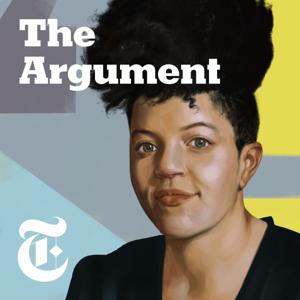


Does our culture have a true crime problem?
The genre seems ubiquitous — there’s always a new documentary to stream or a grisly podcast to binge, not to mention entire cable channels dedicated to true crime programming.
Some, including Jane Coaston, the host of “The Argument,” call themselves “obsessed” with the genre. Is that a bad thing? Does being a fan of crime storytelling inform the listener of the failures of our criminal justice system, bring exoneration to wrongfully convicted people and reveal possible dangers in the world? Or does true crime cause net harm as it twists the ways we think about punitive justice, perpetuate myths around who the typical victims of violent crimes are and convince many that their armchair sleuthing could solve a case?
Jane takes the debate around consuming and creating modern true crime content to two true crime creators: Rabia Chaudry, an attorney, the author of “Adnan’s Story” and the host of the “Undisclosed” podcast, and Sarah Weinman, a writer and editor and the author of “The Real Lolita” and the forthcoming “Scoundrel.”
Mentioned in this episode:
Amelia Tait in The Guardian, “The internet has turned us all into amateur detectives”
“Suspect,” a podcast by Wondery and Campside
Elon Green in The Appeal, “The Enduring, Pernicious Whiteness of True Crime”
Helen Rosner’s interview with Jean Murley in The New Yorker, “The Long American History of ‘Missing White Woman Syndrome’”
“In the Dark,” a podcast by American Public Media
“Murder in Alliance,” a podcast by Obsessed Network
“Through the Cracks,” a podcast by WAMU and PRX
A full transcript of the episode will be available midday Wednesday on the Times website.
Unlock full access to New York Times podcasts and explore everything from politics to pop culture. Subscribe today at nytimes.com/podcasts or on Apple Podcasts and Spotify.
Medical marijuana is now legal in more than half of the country. The cities of Denver, Seattle, Washington and Oakland, Calif., have also decriminalized psilocybin (the psychedelic element in “magic mushrooms”). Oregon went one step further, decriminalizing all drugs in small quantities, including heroin, cocaine and methamphetamine.
Attitudes toward drugs have changed considerably over the years. But the question of whether all drugs should be legalized continues to be contentious. How much have attitudes toward illegal drugs changed? And why?
This week, Jane Coaston talks to Ismail Ali, the policy and advocacy director for the Multidisciplinary Association for Psychedelic Studies, and Jonathan P. Caulkins, a professor of operations research and public policy at Carnegie Mellon University’s Heinz College, about the pros and cons of legalizing all drugs.
Mentioned in this episode:
“Is there a Case for Legalizing Heroin?” by Benjamin Wallace-Wells in The New Yorker
“The Drug-Policy Roulette” by Jonathan P. Caulkins and Michael A.C. Lee in the National Affairs Summer 2012 edition
“Michael Pollan’s ‘Trip Report,’” on The New York Times Opinion podcast “Sway”
Unlock full access to New York Times podcasts and explore everything from politics to pop culture. Subscribe today at nytimes.com/podcasts or on Apple Podcasts and Spotify.
Our immigration system is broken. So is the way we talk about it.
Most conversations about immigration come down to a yes-or-no debate. Two sides talking over each other with very little constructive and achievable propositions. That might be part of the reason that little effective reform has made its way through Congress in the past 20 years, despite calls from both Democrats and Republicans for an overhaul.
In reality, immigration is a complicated system and there’s no easy answer to the problems it entails. This week, Jane Coaston breaks down one group of approaches that could have a significant impact on individuals and families who want to enter the United States: temporary work programs.
These programs allow migrants to come to the United States to work based on the labor needs of certain industries. And because their legal status is tied to employment, workers are beholden to their bosses and the companies that hire them. Oftentimes, the companies use that power to take advantage of workers.
The guests today analyze these programs and debate whether they should be expanded without other changes or what reforms are necessary to ensure workers aren’t exploited. Michael Clemens is an economist and the director of migration, displacement and humanitarian policy at the Center for Global Development. Daniel Costa is a human rights lawyer and the director of immigration law and policy research at the Economic Policy Institute.
Mentioned in this episode:
Daniel Costa’s paper “Temporary Migrant Workers or Immigrants? The Question for U.S. Labor Migration”
Michael Clemens’s study on the Bracero program in a paper he co-wrote called “Immigration Restrictions as Active Labor Market Policy”
“Making President Trump’s Bed: A Housekeeper Without Papers” in The New York Times
“The Fixer: Visa Lottery Chronicles” by Charles Piot with Kodjo Nicolas Batema
Love listening to New York Times podcasts? Help us test a new audio product in beta and give us your thoughts to shape what it becomes. Visit nytimes.com/audio to join the beta.
Unlock full access to New York Times podcasts and explore everything from politics to pop culture. Subscribe today at nytimes.com/podcasts or on Apple Podcasts and Spotify.
Rent is soaring, but close to two-thirds of renters remain on leases because of financial reasons. In 2019, nearly 70 percent of millennials surveyed said that they could not afford to buy a home on account of rising prices, and the number of people in the United States without shelter has increased by about 30 percent in the past five years. We’re in a housing crisis.
There’s a ton of debate on how we should go about solving these issues, particularly in dense cities. People who are for building more housing units in cities argue that zoning restrictions should be reduced, which would increase the number of homes, ideally allowing supply to keep up with demand. On the other hand, some residents support strict land use regulations that prevent further development in their areas.
Today, Matt Yglesias, a D.C. resident, and Joel Kotkin, who lives in California, join host Jane Coaston to talk about the pros and cons of building more housing and single-family zoning and why moving to the suburbs isn’t the only answer. Also, the Times columnist Jamelle Bouie tells Jane about zoning policy in his city, Charlottesville, Va.
Mentioned in this episode:
“Building Housing — Lots of It — Will Lay the Foundation for a New Future” by Matt Yglesias on Vox
“In Defense of Houses” by Joel Kotkin, published in City Journal
“How Blue Cities Became So Outrageously Unaffordable,” an interview with the Vox policy reporter Jerusalem Demsas on “The Ezra Klein Show”
Unlock full access to New York Times podcasts and explore everything from politics to pop culture. Subscribe today at nytimes.com/podcasts or on Apple Podcasts and Spotify.
This episode contains strong language.
The online content-hosting platform OnlyFans declared in August that it would ban all “sexually explicit content” from its website. After immense backlash from users, the company reversed that decision just six days later.
OnlyFans isn’t the only site to come under fire for providing a platform for adult content. Pornhub and Backpage have been threatened with restrictions over child exploitation and trafficking allegations. The National Center on Sexual Exploitation filed a lawsuit against Twitter, accusing it of allowing and profiting from human trafficking.
But a big part of this conversation includes legal sex work and the rights of sex workers. The move to online work has made it possible for performers to have a direct line to their clients and to the general public. And with the onset of the Covid-19 pandemic, such sites have provided an avenue for content creators to continue earning money.
In today’s episode, Jane Coaston speaks with two women who are intimately aware of the workings of the sex industry. Jamie Rosseland is an advocate for victims and survivors of trafficking. And Cherie DeVille is a 10-year porn veteran and a contributor to The Daily Beast.
Mentioned in this episode:
“What We Can Really Learn From the OnlyFans Debacle,” by Jessica Stoya on Slate
“OnlyFans Is Not a Safe Platform for ‘Sex Work.’ It’s a Pimp,” by Catharine A. MacKinnon in New York Times Opinion
“OnlyFans and the Future of Sex Work on the Internet,” an episode on NPR’s “1A” podcast
Unlock full access to New York Times podcasts and explore everything from politics to pop culture. Subscribe today at nytimes.com/podcasts or on Apple Podcasts and Spotify.
In a special Opinion Audio bonanza, Jane Coaston, Ezra Klein (The Ezra Klein Show) and Kara Swisher (Sway) sit down to discuss what went wrong for the G.O.P. in the recall election of Gov. Gavin Newsom of California. “This was where the nationalization of politics really bit back for Republicans,” Jane says. The three hosts then debate whether the media industry’s criticism of itself does any good at all. “The media tweets like nobody’s watching,” Ezra says. Then the hosts turn to The Wall Street Journal’s revelations in “The Facebook Files” and discuss how to hold Facebook accountable. “We’re saying your tools in the hands of malevolent players are super dangerous,” Kara says, “but we have no power over them whatsoever.”
And last, Ezra, Jane and Kara offer recommendations to take you deep into history, fantasy and psychotropics.
Read more about the subjects in this episode:
Unlock full access to New York Times podcasts and explore everything from politics to pop culture. Subscribe today at nytimes.com/podcasts or on Apple Podcasts and Spotify.
It’s the start of another N.F.L. season, the time of year Americans turn on their televisions to watch their favorite teams make spectacular plays and their favorite players commit incredible acts of athleticism. But is America’s favorite pastime actually its guiltiest pleasure? Can fans ethically enjoy watching a football game?
The effects of the tackles on players’ brains is one reason you might feel guilty for watching. The injuries come on top of long-running disagreements between players and the league. How do you balance the brutality of the sport with the athleticism and beauty?
Steve Almond gave up watching football because of the values he sees it embracing. Kevin Clark watches football as part of his job as a writer and reporter at The Ringer.
Mentioned in this episode:
“Paper Lion: Confessions of a Last-String Quarterback” by George Plimpton (1966)
“Against Football: One Fan’s Reluctant Manifesto” by Steve Almond
Kevin Clark’s recent reporting at The Ringer
Unlock full access to New York Times podcasts and explore everything from politics to pop culture. Subscribe today at nytimes.com/podcasts or on Apple Podcasts and Spotify.
As the world reflects on the anniversary of Sept. 11, what does the day of the attacks — and the 20 years of war it precipitated — feel like to America’s veterans? With the Afghanistan withdrawal suddenly reclaiming attention for the “forever” wars, is the 9/11 era finally over, on the home front and in America’s foreign policy? Jane Coaston brings together Kenneth Harbaugh and Michael Washington, two friends and veterans of Operation Enduring Freedom, to discuss the pax Americana, the 9/11 roots of today’s divide in the veteran community and the political weaponization of service members’ patriotism. Harbaugh is a former Navy pilot and is a podcaster and veterans’ advocate. Washington is a former Marine and firefighter who today works as a licensed therapist for veterans and emergency workers.
Resources mentioned in this episode:
Ken Harbaugh’s podcasts, “Burn the Boats” and “Warriors in Their Own Words.”
Call, text or chat online with the Veterans Crisis Hotline.
Team Rubicon, a nonprofit that utilizes the skills and experiences of military veterans to rapidly deploy emergency response teams to disaster zones.
Find a Veterans Affairs location and explore other available benefits and services.
If you or someone you know may be considering suicide, please contact the National Suicide Prevention Lifeline at 1-800-273-8255 or the Crisis Text Line by texting HOME to 741-741. You can also visit speakingofsuicide.com/resources.
Unlock full access to New York Times podcasts and explore everything from politics to pop culture. Subscribe today at nytimes.com/podcasts or on Apple Podcasts and Spotify.
The death penalty — and the morality behind it — has long divided America. Joe Biden is the first sitting president in our nation’s history to openly oppose capital punishment. By comparison, his predecessor oversaw the executions of 13 people between July 2020 and the end of his tenure.
In light of the Department of Justice’s recent moratorium on federal executions, Jane and her guests question the morality of capital punishment through a religious lens. Elizabeth Bruenig, a staff writer at The Atlantic, is Roman Catholic and stands against it, while David French, the senior editor of The Dispatch, argues that there are situations where it is the only just form of punishment.
Mentioned in this episode:
“The Man I Saw Them Kill,” by Elizabeth Bruenig for The New York Times Opinion section in December 2020.
“Not That Innocent,” by Elizabeth Bruenig for The Atlantic in June 2021.
“The Death Penalty Helps Preserve the Dignity of Life,” by David French for National Review, published in August 2018.
(A full transcript of the episode will be available midday on the Times website.)
Unlock full access to New York Times podcasts and explore everything from politics to pop culture. Subscribe today at nytimes.com/podcasts or on Apple Podcasts and Spotify.
Requiring proof of vaccination isn’t a novel idea. Schools across the United States require students to get certain vaccinations before the age of 6. You need a yellow fever vaccine to travel to parts of Africa and South America. Now, with a global pandemic, the conversation has shifted to Covid vaccination requirements.
With little more than 50 percent of the United States fully vaccinated against Covid-19, and the Delta variant leading to increased case counts, it’s no surprise that our focus has shifted to vaccine mandates. This week, the Pfizer-BioNTech vaccine was granted approval by the Food and Drug Administration, which likely means more mandates and boosters.
Cities like New York and San Francisco already have mandates in place, for accessing indoor dining, gyms and concerts. But do these requirements really help those on the fence? Will the F.D.A.’s declaration sway the roughly 30 percent of Americans who said they’d be more likely to get the vaccine after it was fully approved? Or will it just alienate an entire population of people already hesitant to get the vaccine?
In this episode, Jane Coaston and her guests discuss the benefits and risks of vaccine mandates. Angela Rasmussen is a virologist at the Vaccine and Infectious Disease Organization (VIDO) at the University of Saskatchewan. And Marcella Tillett is the vice president of programs and partnerships at the Brooklyn Community Foundation, an organization that’s helping those in the area get vaccinated.
Mentioned in this episode:
“Do Mandatory Vaccines Violate Human Rights?” published in Quartz
“Everybody I Know Is Pissed Off” in The Atlantic, which gathers together some of the latest polling on vaccine mandates.
(A full transcript of this episode will be available midday on the Times website.)
Unlock full access to New York Times podcasts and explore everything from politics to pop culture. Subscribe today at nytimes.com/podcasts or on Apple Podcasts and Spotify.
From the publisher's feed

8,830 Listeners

6,774 Listeners

3,925 Listeners

9,181 Listeners
1,506 Listeners

2,069 Listeners

144 Listeners

111,820 Listeners

2,397 Listeners
1,520 Listeners
12,626 Listeners
309 Listeners

7,134 Listeners

5,205 Listeners

466 Listeners
51 Listeners

2,347 Listeners
380 Listeners
6,679 Listeners

5,549 Listeners

15,904 Listeners

1,500 Listeners

10,690 Listeners

1,656 Listeners

3,524 Listeners

13 Listeners

611 Listeners
87 Listeners

0 Listeners