
Sign up to save your podcasts
Or

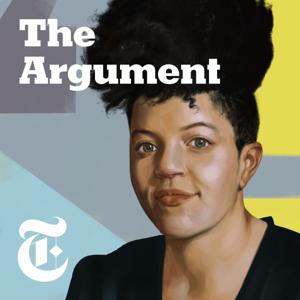


One of the strongest calls for police reform is to end a legal doctrine called qualified immunity. Advocates for change argue it would be one of the most immediate ways to hold officers more accountable for their actions. But critics say it would leave police vulnerable when they’re faced with life-threatening situations.
Qualified immunity protects government officials from some lawsuits if they violate a person’s constitutional rights in the course of their duties. If you’ve heard of police officers getting away with unconstitutional behavior and wondered how, it might have been because they had qualified immunity.
This week, Jane Coaston talks to two lawyers who strongly disagree about whether qualified immunity needs to go. Lenny Kesten is a leading defender of police officers with Brody Hardoon Perkins & Kesten, and Easha Anand is the Supreme Court and appellate counsel for the MacArthur Justice Center.
Mentioned in this episode:
“The Cops Who Killed Tony Timpa Are Unfit to Serve. But Courts Ensure They Keep Their Jobs” by James Craven at the Cato Institute
“Police Responded to His 911 Call for Help, He Died. What Happened to Tony Timpa?” in The Dallas Morning News
The decision in the Timpa v. Dillard case
“Qualified Immunity: A Debate” hosted by the Federalist Society
Unlock full access to New York Times podcasts and explore everything from politics to pop culture. Subscribe today at nytimes.com/podcasts or on Apple Podcasts and Spotify.
It’s Pride Month, which means cities across the country will be having parades and other festivities, albeit scaled-down versions. In New York and several other cities, parade organizers have said uniformed police officers may not march as a group. Organizers say the move acknowledges that a Pride march isn’t just a celebration and that it began as a statement about police violence against L.G.B.T.Q. people at the Stonewall Inn.
This week, Jane Coaston speaks to André Thomas, a co-chair of NYC Pride, which organizes the parade, and Brian Downey, a New York Police Department detective and the president of the Gay Officers Action League.
Mentioned in this episode:
Unlock full access to New York Times podcasts and explore everything from politics to pop culture. Subscribe today at nytimes.com/podcasts or on Apple Podcasts and Spotify.
Just 12.5 percent of the world has been inoculated against Covid-19. To protect every country from the pandemic, regardless of economic level, there are many approaches global leaders could take. But they have to act fast. In this state of planetary emergency, should pharmaceutical companies that make vaccines be forced to break their patents? Is that the best or fastest way to get lower-income countries to catch up with vaccination rates? Weighing the pros and cons of a vaccine intellectual property waiver with Jane Coaston this week is Rachel Silverman, a policy fellow at the Center for Global Development, and Tahir Amin, a co-founder and co-executive director of I-MAK, the Initiative for Medicines, Access & Knowledge.
Mentioned in this episode:
Unlock full access to New York Times podcasts and explore everything from politics to pop culture. Subscribe today at nytimes.com/podcasts or on Apple Podcasts and Spotify.
The clock is ticking for President Biden. He’s got a choice to make: compromise with Republicans or forgo them to push his agenda through with fellow Democrats. He has emphasized bipartisanship, but we’re now just days away from his self-imposed deadline of Memorial Day to strike a deal with Republicans on his infrastructure package. While negotiations continue, the parties are deadlocked on the size of the bill. It’s perhaps not surprising, given that this month the Senate minority leader, Mitch McConnell, said that “100 percent of our focus is on stopping this new administration.”
This week, host Jane Coaston is joined by two people who disagree on whether Biden’s push for bipartisanship is the right move. Jason Grumet is the founder and president of the Bipartisan Policy Center, and Aaron Belkin is the director of Take Back the Court, which advocates expanding the Supreme Court.
Mentioned in this episode:
The Times Opinion guest essay “You Don’t Actually Need to Reach Across the Aisle, Mr. Biden” by John Lawrence, a former chief of staff for the speaker of the House, Nancy Pelosi
The Bipartisan Policy Center’s infrastructure proposal “From Sea to Shining Sea: A Bold Bipartisan Plan to Rebuild American Infrastructure”
Jane’s podcast recommendation “Impostors: The Spy”
Unlock full access to New York Times podcasts and explore everything from politics to pop culture. Subscribe today at nytimes.com/podcasts or on Apple Podcasts and Spotify.
Who would have guessed that a school of thought from the 1970s could cause controversy in a handful of states among politicians, on school boards and in college classrooms in 2021?
Critical race theory originated as a way of examining racism within the structures of American society. But now, for some it is synonymous with school curriculums and workplace diversity training. It has also become the battleground for a new culture war between conservatives and liberals who disagree on how helpful or harmful these teachings are.
This week, Jane Coaston talks to John McWhorter, a linguist at Columbia University who has written extensively on race and language, and Michelle Goldberg, an Opinion columnist at The New York Times.
Mentioned in this episode:
“Why the Right Loves Public School Culture Wars” and “The Campaign to Cancel Wokeness” by Michelle Goldberg in The New York Times.
“How the N-Word Became Unsayable” by John McWhorter in The New York Times.
“Critical Race Theory: An Introduction” by Richard Delgado and Jean Stefancic, published in 2001.
“Faces at the Bottom of the Well” by Derrick Bell, published in 1992.
Unlock full access to New York Times podcasts and explore everything from politics to pop culture. Subscribe today at nytimes.com/podcasts or on Apple Podcasts and Spotify.
The District of Columbia can almost taste statehood. Last month, House Democrats passed a bill that would make it the 51st state. This is the second time in history that such a legislation has been passed in the House. But it’s not only a question of representation: Making D.C. a state would add two probably Democratic senators and one Democratic representative, at a time when Democrats could use all the votes they can get. And Republicans aren’t willing to give in that easily.
This week, we’re debating the future of D.C. and the trade-offs of potential statehood. Dan McLaughlin is senior writer for National Review and a former attorney. George Derek Musgrove is an associate professor of history at the University of Maryland, Baltimore County, and a co-author of “Chocolate City: A History of Race and Democracy in the Nation’s Capital.”
Mentioned in this episode:
“The District of Columbia Should Not Be a State,” by Dan McLaughlin in National Review
“The 51st State America Needs,” by George Derek Musgrove and Chris Myers Asch in The New York Times
“The 51st State?” on the “Today, Explained” podcast by Vox.
Unlock full access to New York Times podcasts and explore everything from politics to pop culture. Subscribe today at nytimes.com/podcasts or on Apple Podcasts and Spotify.
If you’re fully vaccinated, you might give President Biden an A-plus on his first 100 days. But how’s he doing on everything else?
A president’s first 100 days are considered a major milestone. Franklin D. Roosevelt came out with legislation that became part of his New Deal. Lyndon B. Johnson started a war on poverty. In the wake of the Covid-19 pandemic and Donald Trump, what can we expect from the rest of Biden’s presidency?
This week, Jane Coaston talks to two progressives who have different takeaways: Anand Giridharadas, author of The Ink newsletter and “Winners Take All: The Elite Charade of Changing the World,” and Osita Nwanevu, writer at The New Republic.
Mentioned in this episode:
“Joe Biden Isn’t Close to Being a Historic President Yet,” by Osita Nwanevu in The New Republic.
“Welcome to the New Progressive Era,” by Anand Giridharadas in The Atlantic.
Unlock full access to New York Times podcasts and explore everything from politics to pop culture. Subscribe today at nytimes.com/podcasts or on Apple Podcasts and Spotify.
Derek Chauvin has been found guilty of the murder of George Floyd. But whatever bittersweet feelings the rare outcome elicited were short-lived, since instances of police brutality compound almost daily. There’s no debate: Policing is broken in America. But how do we fix it?
To answer that question, Jane brings together a round table to debate solutions ranging from modernizing training, stronger ties between police misconduct and financial culpability, and divesting from policing to invest in community-based services.
Joining Jane is Randy Shrewsberry, a former police officer and the executive director of the Institute for Criminal Justice Training Reform; Rashawn Ray, a professor of sociology at the University of Maryland and a David M. Rubenstein fellow in governance studies at the Brookings Institution; and Ash-Lee Woodard Henderson, a leader in the Movement for Black Lives and the co-executive director of the Highlander Research and Education Center in Tennessee.
Mentioned in this episode:
Unlock full access to New York Times podcasts and explore everything from politics to pop culture. Subscribe today at nytimes.com/podcasts or on Apple Podcasts and Spotify.
President Biden has set an ambitious goal for the United States to be carbon-neutral by 2050. Achieving it means weaning the country off fossil fuels and using more alternative energy sources like solar and wind. But environmentalists disagree about whether nuclear power should be part of the mix.
Todd Larsen, executive co-director for consumer and corporate engagement at Green America and Meghan Claire Hammond, senior fellow at the Good Energy Collective, a policy research organization focusing on new nuclear technology, join Jane Coaston to debate whether nuclear power is worth the risks.
And then the Times columnist Bret Stephens joins Jane to talk about why he thinks America needs a liberal party.
Mentioned in this episode:
Share your arguments with us: We want to hear what you’re arguing about with your family, your friends and your frenemies. Leave us a voice mail message at (347) 915-4324. We may use excerpts from your audio in a future episode.
You can find transcripts (posted midday) and more episodes of "The Argument" at nytimes.com/the-argument, and you can find Jane on Twitter @janecoaston.
“The Argument” is produced by Phoebe Lett, Elisa Gutierrez and Vishakha Darbha and edited by Alison Bruzek and Paula Szuchman; fact-checking by Kate Sinclair; music and sound design by Isaac Jones.
Unlock full access to New York Times podcasts and explore everything from politics to pop culture. Subscribe today at nytimes.com/podcasts or on Apple Podcasts and Spotify.
The Supreme Court — and its post-Trump conservative majority — is currently deciding whether to take up a case that could be the final blow to Roe v. Wade. Overturning Roe, the 48-year-old decision protecting the right to an abortion in America, would leave abortion regulation up to the states. But some abortion opponents think that’s not far enough and are pushing the movement to change its focus to securing a 14th Amendment declaration of fetal personhood.
Ross Douthat wrote about the diverging anti-abortion movement and why both factions are doomed to fail as long as the movement is shackled to a Republican Party that refuses to enact public policy to help struggling families. Michelle Goldberg wrote a response column to Ross’s, claiming his argument was a fallacy. To bring their dueling columns to life, Jane Coaston brought the two writers together to debate the future of abortion protection and restriction in America.
Mentioned in this episode:
Share your arguments with us: We want to hear what you’re arguing about with your family, your friends and your frenemies. Leave us a voice mail message at (347) 915-4324. We may use excerpts from your audio in a future episode.
You can find transcripts (posted midday) and more episodes of "The Argument" at nytimes.com/the-argument, and you can find Jane on Twitter @janecoaston.
“The Argument” is produced by Phoebe Lett, Elisa Gutierrez and Vishakha Darbha and edited by Alison Bruzek and Paula Szuchman; fact-checking by Kate Sinclair; music and sound design by Isaac Jones.
Unlock full access to New York Times podcasts and explore everything from politics to pop culture. Subscribe today at nytimes.com/podcasts or on Apple Podcasts and Spotify.
From the publisher's feed

8,826 Listeners

6,774 Listeners

3,927 Listeners

9,180 Listeners

1,508 Listeners
2,069 Listeners

144 Listeners

111,821 Listeners

2,402 Listeners
1,520 Listeners
12,626 Listeners
309 Listeners

7,136 Listeners

5,205 Listeners

466 Listeners
51 Listeners

2,347 Listeners
380 Listeners

6,679 Listeners

5,549 Listeners

15,911 Listeners
1,500 Listeners

10,678 Listeners

1,646 Listeners

3,538 Listeners
13 Listeners

612 Listeners
87 Listeners
0 Listeners