
Sign up to save your podcasts
Or

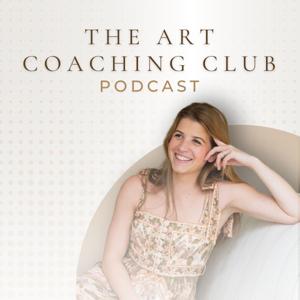


Caroline and Bex have been best friends since before they were born, literally, their moms knew each other first. So when Caroline fell in love with mahjong two and a half years ago and Bex was working as a fashion illustrator in New York doing live events for brands like Jimmy Choo and Vogue, the idea for The Gilded Shuffle wasn't some calculated market gap they spotted. It was a coffee morning, a mahjong lesson, and Caroline saying out loud that she wished more artists were designing tiles.
On this episode we get into how they turned that into an actual product line: Bex's design process for translating her flower girls and dove motifs onto a functional mahjong set without losing the rules of the game, why they spent real money on branding before they had a product to sell, and what it took to find a manufacturing partner who wouldn't cut corners on something meant to feel like an heirloom. We also talk about the unglamorous parts, tariffs, supplier communication at 2am, decision paralysis when the creative options are genuinely endless, and why working with your best friend might be the opposite of the advice everyone gives you.
If you've ever wondered what it actually takes to go from "wouldn't this be cool" to a launched, beautifully branded product, this one's for you.
Find Caroline and The Gilded Shuffle at @thegildedshuffle and thegildedshuffle.com
Find Bex at @xobecstudio
New episodes of The Art Coaching Club podcast drop every week. If this one resonated, follow along and leave a review, it helps more artists find their way here.
Hosted by Simplecast, an AdsWizz company. See pcm.adswizz.com for information about our collection and use of personal data for advertising.
Elizabeth Rees started Chasing Paper because she wanted a wallpaper company that worked for her. In this episode we talk about how she built that into a real business, and about the part of her model that makes her a genuinely interesting guest for this audience, she doesn't just sell wallpaper, she licenses other people's art onto it.
We get into what that partnership actually looks like from both sides, using her collaborations with Liz Lidgett and Meredith Kinney as real examples. We discuss growing a business, challenges that come with that, lessons learned along the way and so much more.
Find Elizabeth and Chasing Paper @chasing paper and chasingpaper.com
Hosted by Simplecast, an AdsWizz company. See pcm.adswizz.com for information about our collection and use of personal data for advertising.
* I️ misspoke when announcing the Club - spots are open from September 16th - the 24th!
Jennifer M. Walker is a St. Louis-based painter who's been selling her work for three and a half years, and in the last year has found real traction with botanicals, even though her heart still wanders toward abstract work and patterned framing. In this conversation, she walks through the actual trajectory of her career: painting quietly at home after leaving a corporate job, a studio that came with the house she and her husband bought, a two-year adoption journey that turned painting into an emotional outlet, and the local shop visit on a family walk that eventually led to her best sales weekend ever at a Round Top-style show.
We get into the stepping-stone nature of an art career, how relationships and "wasted" opportunities compound over time, and why Jennifer believes none of her past jobs or slow seasons were ever really wasted. She's candid about using ChatGPT to place her work in styled rooms for Instagram, despite her instinct to resist AI as someone who loves physical books, handmade work, and supporting other makers, and why she's landed on it as a tool that solves a real problem rather than something that cheapens what she does.
We also dig into her marketing engine: how she built an Instagram strategy around recurring content pillars (she compares it to a newspaper column), why she posts the same piece of art multiple times without guilt, and how a simple DM conversation starter turns into a commission. Jennifer talks honestly about the harder parts too: juggling four young kids with a growing business, the years it took to stop feeling like an imposter calling herself an artist, and how she sets financial and creative goals she can hold loosely.
She closes with what's ahead: new releases through the Scouted Studio this fall, a collaboration with Serena & Lily launching in September, and a show with Mended at Round Top in October.
Find Jennifer on Instagram at @jennifermwalkerart and at jennifermwalkerart.com and check out her new collection on thescoutedstudio.com.
Hosted by Simplecast, an AdsWizz company. See pcm.adswizz.com for information about our collection and use of personal data for advertising.
This is the final episode in our three-part series on working with interior designers, and it covers the part almost nobody talks about: what happens after the project ships. You landed the commission, she loved the piece, everyone's happy — and then six months go by and you haven't heard a word.
I get into why that happens (it's usually not personal, she's just busy and juggling a dozen projects) and what to do about it: building a real re-engagement strategy that lives in her inbox instead of your Instagram feed, why install photos are the best marketing lever you're not using yet, and how to stay top of mind without turning into the artist who's always pitching. I also make the case for why I think too many of us are spending four hours a week worrying about reel views instead of one hour sending three emails that would actually move the business forward. If you missed them, go back and listen to part one and part two first.
And for the extended version of today's episode — exactly how to ask for photos, usage rights, and what a follow-up cadence should look like — that's up on Paper Trail, my Substack, this week.
Doors to The Club close September 24 and won't open again until next year, so if you've been on the fence, this is your sign. learn more here.
Hosted by Simplecast, an AdsWizz company. See pcm.adswizz.com for information about our collection and use of personal data for advertising.
This Friday's replay is my conversation with Katherine Corden, a fine artist in Traverse City, Michigan, known for her expressive figures and color work, who got here by easing out of a career as a physical therapist rather than leaping. She started her art Instagram the week she graduated PT school, and eight years later, that side project has become a full-time business complete with an Anthropologie partnership, gallery representation, and licensing deals.
We talk through what she learned in Emily Jeffords' first-ever mastermind cohort, why she never discounts her original paintings, and how she runs a print business with zero inventory by printing everything to order. Katherine also shares some genuinely pinch-me moments, from her work appearing in an Architectural Digest home feature to her first public mural, plus a book cover licensing deal she was keeping mostly under wraps.
Find Katherine at katherinecorden.com and on Instagram @Katherinecorden.art, and check out her Substack, The Art Table.
Hosted by Simplecast, an AdsWizz company. See pcm.adswizz.com for information about our collection and use of personal data for advertising.
Welcome back to part two of my three-part series on working with interior designers. This one picks up after the designer has already said yes, and it's all about what happens next. I start with a story from my time at Fritz Porter, the to-the-trade studio in Charleston, and what it taught me about why the same designers kept coming back again and again: because we were easy to work with. That's the whole episode.
I get into why being easy to work with matters more than almost anything else once you've got your foot in the door, why a simple contract actually builds trust instead of scaring people off, why you should always give yourself and your client more time than you think you need, and how a real invoicing and inventory system makes you look like the professional you already are.
If you haven't heard part one, start there. I cover how to research designers and build the portfolio you'll actually send them.
And if you want the extended version of everything in this episode, subscribe to my Substack. It's free, with bonus content if you want to go deeper.
Next week I'm sharing an interview with an artist, and in two weeks I'll be back with part three, where we talk about what happens after the piece is delivered: follow-up, photography, and turning one sale into the next one. Your homework this week: get your systems in place. A way to track inventory, a real invoice, a commission contract, a policy on deposits. Do it now, even if you're not working with a designer yet, so you're ready the second someone says yes.
Hosted by Simplecast, an AdsWizz company. See pcm.adswizz.com for information about our collection and use of personal data for advertising.
This Friday's replay is my conversation with Eden Flora, an artist and registered art therapist in Oxford, Mississippi, whose collection-based approach to art has grown into a business built on teaching, licensing, and a lot of hard-won reinvestment.
Eden walks through how her fabric design degree and her master's in art therapy from Pratt both shaped how she works today, how she builds a collection around an idea she's personally sitting with, and how art licensing, something she says almost nobody talks about, has quietly become a steady source of income. We also cover why she's shifted energy away from Instagram and into her email newsletter, Studio Scoop, why she hired a marketing consultant this year, and the M&M story from a high school science class that still guides how she reinvests in her business.
Find Eden at edenwflora.com and on Instagram @edenwflora.
Hosted by Simplecast, an AdsWizz company. See pcm.adswizz.com for information about our collection and use of personal data for advertising.
This is part one of a three-part series on working with interior designers. If you have been wondering how to get your art in front of designers, where to find them, how to reach out, and what to send, this episode is your starting point. Hayley shares the memory from working with interior designer Courtney Agosti that changed how she thinks about being memorable as a vendor, why a PDF portfolio is non-negotiable, and the outreach approach that actually gets a response.
Subscribe to Paper Trail on Substack for the full written breakdown including the four sources for finding designers, the outreach template, and everything that goes in the PDF. Part two drops next Tuesday.
Hosted by Simplecast, an AdsWizz company. See pcm.adswizz.com for information about our collection and use of personal data for advertising.
This is a fan favorite replay, and if you missed it the first time, now's your chance. I sat down with Ashley Ford of Pretty Penny Accounting, who works specifically with women-owned and creative businesses, and this conversation answers nearly every financial question I had when I started my art business.
We walk through the difference between a bookkeeper and an accountant, when it's actually time to hire one, what artists can legitimately write off, why you need a separate business bank account sooner than you think, and how to make sense of sales tax, 1099s, and quarterly estimated payments without losing your mind. Ashley also reframes budgeting as a spending plan instead of a restriction, which might change how you think about your own money.
We close out with listener questions, covering how much cash to keep on hand, what to do when your revenue grows but your profit doesn't, and the easiest way to stay on top of your books if bookkeeping is your least favorite task.
Find Ashley at heyprettypenny.com and on Instagram @prettypennyaccounting.
Hosted by Simplecast, an AdsWizz company. See pcm.adswizz.com for information about our collection and use of personal data for advertising.
Season two starts with one of my favorite conversations yet, with Brynn Casey, a Georgia-based artist known for her coastal and water-inspired paintings. We talk about her years apprenticing under Brit Bass Turner, why trying oil paint after a decade in her signature style feels almost forbidden, and the marriage metaphor she uses for the seasons of a creative career, some fireworks, some grind, all worth it.
We also get practical: why Instagram doesn't convert the way it used to and what Brynn's doing about it, including a Pinterest strategy pulling 40 percent of her web traffic, how to cold-pitch interior designers, why photography should come before your website, and how she built a product ladder, from journals and calendars to prints and commissions, so there's an entry point at every budget.
Her closing advice stuck with me: stay in your lane, keep your eyes forward, and stop checking what everyone else is doing. It's the perfect way to kick off this season.
Find Brynn at brynncasey.com and on Instagram @brynnwcasey.art.
Hosted by Simplecast, an AdsWizz company. See pcm.adswizz.com for information about our collection and use of personal data for advertising.
From the publisher's feed
12,890 Listeners
880 Listeners
2,006 Listeners

3,307 Listeners

4,586 Listeners
183 Listeners

12,074 Listeners

2,211 Listeners
337 Listeners
397 Listeners
308 Listeners

814 Listeners

1,095 Listeners

456 Listeners
113 Listeners