
Sign up to save your podcasts
Or

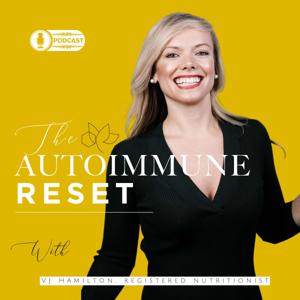


Send us Fan Mail
You’ve been given a positive ANA, raised thyroid antibodies or an anti-CCP result. After months or even years of symptoms, you might be wondering whether this is finally an explanation, whether it points to something that could develop in the future, or what you’re supposed to do with the result.
In this Friday 5 episode of The Autoimmune RESET, I walk through five autoantibody results and explain what I look for when putting them into context. I also share why my own ANA was negative when I had alopecia areata and psoriasis, and how living with unexplained joint pain in my twenties shaped the way I listen to people whose symptoms haven’t yet been explained.
The five results we cover
Some autoantibodies can appear before symptoms develop, and what they mean for you depends on the specific antibody and your wider clinical picture. If you’ve received a result you’re unsure about, take these three questions to your next appointment:
If you know someone trying to make sense of their own autoimmune blood results, please share this episode with them.
Vote for VJ
I have been nominated for a Flamingo Business Award in the Health and Wellness Warrior category. These awards recognise the impact we make through our work.
If my podcast, articles or clinical work have helped you in any way, I would be incredibly grateful for your vote:
Vote here: https://flamingobusiness.co.uk/fba-public-vote-2026
Thank you so much for your support.
Important: This episode is for educational purposes and isn't intended to diagnose the cause of your hair loss. Sudden, unexplained or significant hair loss should be medically assessed, and suspected scarring hair loss requires prompt specialist assessment.
🧘♀️ Need nervous system support?
→ I personally use and recommend SONA, a vagus nerve stimulation device clinically shown to support immune balance, inflammation, and stress recovery.
Use code VJ10 for 10% discount at checkout.
📥 New to the podcast or need a starting point?
→ Download my free The Autoimmunity Recovery Plan
— a simple guide that outlines the steps I recommend to all clients as they begin calming the immune response and rebuilding resilience.
Thanks for listening! You can join The Autoimmune Forum on Facebook or find me on Instagram @theautoimmunitynutritionist.
Send us Fan Mail
What if managing stress were not simply about trying to relax, but about improving the body’s ability to move between activation and recovery?
In this episode of The Autoimmune RESET Podcast, VJ is joined by Jane Ollis, a medical biochemist, environmental scientist and health-tech entrepreneur exploring the science of stress, neuroplasticity and the vagus nerve.
Jane shares the personal story that led her into this field and explains why she became interested in developing technology designed to support the nervous system. Together, Jane and VJ explore what the vagus nerve does, how chronic stress can affect the brain and body, and why recovery is particularly relevant for people living with chronic or autoimmune symptoms.
They also discuss the emerging use of non-invasive vagus nerve stimulation, including how stimulation through the ear may influence nervous-system activity and neuroplasticity. Jane explains how measures such as heart rate variability and sleep can offer useful insights into stress and recovery, while also recognising that responses are highly individual.
This conversation is not about eliminating stress or promising an instant nervous-system “reset.” It is about understanding your own stress response and finding practical, sustainable ways to improve your capacity to recover.
In this episode, you’ll discover:
The aim is not to avoid every source of stress. A resilient nervous system is one that can respond when necessary and then return to a state of recovery. Technology may provide additional support, but sleep, movement, relationships, self-awareness and consistent daily habits remain important foundations.
SONA (HRV-guided nervous system retraining)
A more advanced, personalised device that tracks heart rate variability (HRV) and works with your breathing patterns to retrain the nervous system over time. You can find out more here (use code VJ10 for a 10% discount).
📥 Ready for a more structured, personalised approach?
→ Apply to work with me
— we’ll create a clear, step-by-step plan tailored to your body, your symptoms, and your goals.
📥 New to the podcast or need a starting point?
→ Download my free The Autoimmunity Recovery Plan
— a simple guide that outlines the steps I recommend
The information shared in this episode is for educational purposes only and is not intended to replace medical advice. Always consult your healthcare provider.
Thanks for listening! You can join The Autoimmune Forum on Facebook or find me on Instagram @theautoimmunitynutritionist.
Send us Fan Mail
Bone health is often something we only think about later in life—but the foundations are laid much earlier.
In this Friday Five episode, VJ explores five important influences on bone health, particularly for women living with autoimmune or chronic inflammatory conditions. She explains how bone is continually being broken down and rebuilt, and why factors such as declining oestrogen, inflammation, medication, nutrition and physical activity can disrupt this balance.
You’ll also learn why corticosteroid use deserves particular attention, how protein and key micronutrients contribute to bone strength, and why walking alone may not provide all the stimulus our bones need.
This episode is not about creating fear. It is about understanding your individual risk and taking practical, proactive steps to protect your bones before problems arise.
In this episode, you’ll discover:
Strong bones are not built through one supplement or a single lifestyle change. Bone health reflects the combined effects of hormones, inflammation, medication, nutrition and movement over time. The earlier we understand our own risk factors, the more opportunity we have to act proactively.
Chapters
00:00 Why Bone Health Matters
01:07 How Bone Remodelling Works
02:01 Peak Bone Mass and the Role of Oestrogen
03:11 Autoimmune Conditions and Bone Health
05:13 How Medication Can Affect Bone Density
07:23 Nutrition for Stronger Bones
09:05 Exercise and Mechanical Loading
11:17 Understanding Your Risk and Taking Action
Vote for VJ
I have been nominated for a Flamingo Business Award in the Health and Wellness Warrior category. These awards recognise the impact we make through our work.
If my podcast, articles or clinical work have helped you in any way, I would be incredibly grateful for your vote:
Vote here: https://flamingobusiness.co.uk/fba-public-vote-2026
Thank you so much for your support.
Important: This episode is for educational purposes and isn't intended to diagnose the cause of your hair loss. Sudden, unexplained or significant hair loss should be medically assessed, and suspected scarring hair loss requires prompt specialist assessment.
🧘♀️ Need nervous system support?
→ I personally use and recommend SONA, a vagus nerve stimulation device clinically shown to support immune balance, inflammation, and stress recovery.
Use code VJ10 for 10% discount at checkout.
📥 New to the podcast or need a starting point?
→ Download my free The Autoimmunity Recovery Plan
— a simple guide that outlines the steps I recommend to all clients as they begin calming the immune response and rebuilding resilience.
Thanks for listening! You can join The Autoimmune Forum on Facebook or find me on Instagram @theautoimmunitynutritionist.
Send us Fan Mail
Have your joints started aching more as the weather has become colder?
Although some people feel that they can sense changes in temperature or atmospheric pressure through their joints, the research remains mixed. Autumn also changes far more than the weather: we may move less, spend less time outside, experience different environmental exposures and enter one of the busiest periods of the year.
In this Friday Five episode of The Autoimmune RESET Podcast, I explore five areas I would investigate when joint or tendon pain keeps returning.
This subject is personal to me. Throughout my teens and twenties, I experienced significant pain around my wrists and hands, accompanied at times by itching, swelling and growing ganglion cysts. It was presented to me as tendonitis, despite the fact that I was also living with psoriasis.
I cannot retrospectively diagnose what was happening, but I now wonder whether those apparently separate symptoms formed part of the same wider immune and inflammatory picture. I wish somebody had stepped back and asked what else was happening within my body.
In this episode, I discuss:
The five areas to investigate
This is an example of Symptom Intelligence™: not assuming that every symptom has one cause, but remaining curious enough to ask whether apparently separate symptoms may belong to the same wider story.
Persistent joint pain should not automatically be dismissed as ageing, tendonitis or the weather. If you have ongoing swelling or warmth, prolonged morning stiffness, night pain, or joint and tendon symptoms alongside psoriasis or nail changes, speak to your doctor. A hot, suddenly swollen joint—particularly with a fever or feeling unwell—requires urgent medical assessment.
Vote for VJ
I have been nominated for a Flamingo Business Award in the Health and Wellness Warrior category. These awards recognise the impact we make through our work.
If my podcast, articles or clinical work have helped you in any way, I would be incredibly grateful for your vote:
Vote here: https://flamingobusiness.co.uk/fba-public-vote-2026
Thank you so much for your support.
Important: This episode is for educational purposes and isn't intended to diagnose the cause of your hair loss. Sudden, unexplained or significant hair loss should be medically assessed, and suspected scarring hair loss requires prompt specialist assessment.
🧘♀️ Need nervous system support?
→ I personally use and recommend SONA, a vagus nerve stimulation device clinically shown to support immune balance, inflammation, and stress recovery.
Use code VJ10 for 10% discount at checkout.
📥 New to the podcast or need a starting point?
→ Download my free The Autoimmunity Recovery Plan
— a simple guide that outlines the steps I recommend to all clients as they begin calming the immune response and rebuilding resilience.
Thanks for listening! You can join The Autoimmune Forum on Facebook or find me on Instagram @theautoimmunitynutritionist.
Send us Fan Mail
Can changing the way we think influence what happens within the body?Thanks for listening! You can join The Autoimmune Forum on Facebook or find me on Instagram @theautoimmunitynutritionist.
Send us Fan Mail
September is Alopecia Awareness Month, so in this Friday Five episode of The Autoimmune RESET, I’m talking about a subject that is very close to my heart, both personally and professionally: hair loss.
Having experienced alopecia myself, and now working with women, men and children experiencing alopecia and other forms of hair loss in my clinic, I see how quickly the conversation can become focused on the hair itself.
Which shampoo should I use? Is my ferritin high enough? Should I take biotin? What can I do to make my hair grow back?
These are understandable questions. But hair loss isn't one single condition, and there are many different reasons why somebody's hair may begin shedding, thinning or disappearing in patches.
Hair loss isn't simply a cosmetic concern. Sometimes the most useful information comes when we stop looking only at the hair and start looking at the person experiencing it.
In this episode, you'll learn:
Important: This episode is for educational purposes and isn't intended to diagnose the cause of your hair loss. Sudden, unexplained or significant hair loss should be medically assessed, and suspected scarring hair loss requires prompt specialist assessment.
🧘♀️ Need nervous system support?
→ I personally use and recommend SONA, a vagus nerve stimulation device clinically shown to support immune balance, inflammation, and stress recovery.
Use code VJ10 for 10% discount at checkout.
📥 New to the podcast or need a starting point?
→ Download my free The Autoimmunity Recovery Plan
— a simple guide that outlines the steps I recommend to all clients as they begin calming the immune response and rebuilding resilience.
Thanks for listening! You can join The Autoimmune Forum on Facebook or find me on Instagram @theautoimmunitynutritionist.
Send us Fan Mail
Many of us have become so accustomed to being the capable one—the person who helps, fixes and takes responsibility—that we rarely stop to ask whether everything we are carrying is actually ours to carry.
In this episode of The Autoimmune RESET, I’m joined by Dr Rachel Morris, former GP, host of the You Are Not a Frog podcast and creator of The Shapes Toolkit.
Rachel introduces us to what she calls the responsibility trap: the gradual accumulation of responsibility without it ever being consciously or explicitly handed over. Although particularly common among healthcare professionals, it is a pattern that will resonate with anyone who feels responsible for keeping everything—and everyone—together.
We explore the three mechanisms that can keep us trapped: the silence gap, the helping reflex and the mismatch between control and responsibility. Rachel also explains why “just say no” is rarely useful advice when saying no feels like a failure of identity rather than a straightforward practical decision.
This is an important conversation about shame, boundaries, capacity and the difference between genuinely caring for others and automatically carrying responsibility for them.
In this episode, we discuss:
About Dr Rachel Morris
Dr Rachel Morris is a former GP, the host of the You Are Not a Frog podcast and the creator of The Shapes Toolkit. Her work helps healthcare professionals and other people working in high-pressure roles beat stress, set healthier boundaries and work more sustainably—without believing they simply need to become tougher or more resilient.
Connect with Rachel
Website: youarenotafrog.com
Instagram and LinkedIn: @drrachelmorris
Free Overwhelm SOS Toolkit: youarenotafrog.com/overwhelm
Beat Stress and Thrive course: The Shapes Toolkit
If this episode resonates with you, please subscribe to The Autoimmune RESET, leave a review and share it with someone who may be carrying more than is truly theirs.
📥 Ready for a more structured, personalised approach?
→ Apply to work with me
— we’ll create a clear, step-by-step plan tailored to your body, your symptoms, and your goals.
📥 New to the podcast or need a starting point?
→ Download my free The Autoimmunity Recovery Plan
— a simple guide that outlines the steps I recommend
The information shared in this episode is for educational purposes only and is not intended to replace medical advice. Always consult your healthcare provider.
Thanks for listening! You can join The Autoimmune Forum on Facebook or find me on Instagram @theautoimmunitynutritionist.
Send us Fan Mail
If you have hypothyroidism, take thyroid medication and have been told that your blood tests are “normal”, it can be incredibly frustrating to still feel exhausted.
Sometimes your thyroid function or medication does need another look, but fatigue is not specific to hypothyroidism, and your thyroid does not operate in isolation. Thyroid hormones interact with your nutrient status, gut health, stress response, sex hormones, cellular energy production and whether you are eating enough to meet the demands being placed on your body.
I remember living with chronic fatigue and hoping that an endocrinologist would prescribe levothyroxine and everything would fall back into place. Although there were issues with my thyroid, there was far more contributing to how I felt.
In this Friday Five episode of The Autoimmune RESET Podcast, I explore five areas I would investigate when someone with hypothyroidism continues to feel exhausted.
In this episode, I discuss:
If you are still exhausted, the answer may not be to focus more intensely on your thyroid. It may be time to widen the lens and consider what else has changed around the same time.
Please continue to have your thyroid appropriately monitored and treated by your doctor, and never alter prescribed thyroid medication without speaking to the clinician responsible for your care.
🧘♀️ Need nervous system support?
→ I personally use and recommend SONA, a vagus nerve stimulation device clinically shown to support immune balance, inflammation, and stress recovery.
Use code VJ10 for 10% discount at checkout.
📥 New to the podcast or need a starting point?
→ Download my free The Autoimmunity Recovery Plan
— a simple guide that outlines the steps I recommend to all clients as they begin calming the immune response and rebuilding resilience.
The information shared in this episode is for educational purposes only and is not intended to replace medical advice. Always consult your healthcare provider.
Thanks for listening! You can join The Autoimmune Forum on Facebook or find me on Instagram @theautoimmunitynutritionist.
Send us Fan Mail
What does success really mean if achieving it comes at the expense of your health?
In this episode of The Autoimmune RESET, I’m joined by business strategist and entrepreneur Lisa Johnson for an honest conversation about chronic illness, ambition and the pressure to keep going—even when your body is asking you to stop.
Lisa shares what it was like to build an extraordinarily successful business while dealing with persistent health problems and the uncertainty of not always knowing what was wrong. Despite feeling mentally motivated and capable, her body was telling a different story.
We explore why financial success does not necessarily translate into happiness or wellbeing, and how Lisa began to reconsider what “enough” looked like—not only financially, but across her work, relationships and health.
Lisa also discusses the small but significant changes she made to create a more sustainable life, the importance of asking for help and why being open about what we are experiencing can deepen relationships rather than weaken them.
This is a thoughtful conversation about recognising when the way you are living is no longer working, listening to the signals your body is sending you and finding a version of success that leaves room for your health.
In this episode, we discuss:
Key takeaway
Your body can be struggling even when your mind feels ready to keep going. Sustainable success is not simply about what you can achieve—it is also about creating a life that your health can support.
Chapters
00:00 — Introduction to Lisa Johnson and her journey
Meet Lisa and hear how her experiences with health and entrepreneurship began to intersect.
02:08 — The intersection of health and ambition
Why being mentally driven does not always mean that your body has the same capacity.
06:08 — Navigating chronic illness and business success
Lisa discusses ongoing symptoms, diagnostic uncertainty and building a highly successful business alongside chronic illness.
12:00 — Redefining success and prioritising wellbeing
Why money and achievement alone were no longer enough—and what Lisa began to prioritise instead.
17:46 — Finding balance: What is enough?
A conversation about ambition, growth and recognising when continually striving for more comes at a cost.
23:57 — The power of authenticity and vulnerability
How honesty, asking for help and allowing other people in can strengthen relationships and create meaningful support.
30:04 — Helping others transition into entrepreneurship
Lisa shares her perspective on starting a business and creating success in a more intentional and sustainable way.
Listen now to discover how Lisa began redefining success, responding differently to her body and creating space for both ambition and wellbeing.
Connect with Lisa Johnson
You can find Lisa on Instagram at @lisajohnsonstrategist, where she shares more about business, success and building a career on your own terms. Lisa personally responds to her Instagram messages, so you can also contact her there with any questions.
📥 Ready for a more structured, personalised approach?
→ Apply to work with me
— we’ll create a clear, step-by-step plan tailored to your body, your symptoms, and your goals.
📥 New to the podcast or need a starting point?
→ Download my free The Autoimmunity Recovery Plan
— a simple guide that outlines the steps I recommend
The information shared in this episode is for educational purposes only and is not intended to replace medical advice. Always consult your healthcare provider.
Thanks for listening! You can join The Autoimmune Forum on Facebook or find me on Instagram @theautoimmunitynutritionist.
Send us Fan Mail
We are constantly being told what we should be doing for our health: fasting, tracking our sleep, exercising more, cutting out certain foods, taking supplements, regulating our nervous system, improving our gut health…the list goes on.
But what happens when all those healthy habits actually start working against us?
In this episode, I explore something I see increasingly both online and in clinic: people doing all the right things for their health, yet feeling more stressed, more restricted and sometimes even worse than when they started.
I talk about why a health strategy that works brilliantly for one person may be completely wrong for another, and why even objectively “healthy” practices can become unhelpful when they stop matching what your body actually needs.
We look at everything from restrictive diets and gut health protocols to exercise, fasting, wearables and stress-management routines, and why more information doesn’t always lead to better health. In fact, sometimes the more data, rules and advice we accumulate, the further we move away from noticing our own responses.
Because your body is giving you information too.
The question is whether we are still listening to it.
In this episode, I discuss:
Resources mentioned in this episode
SONA — nervous system support
I mention SONA in this episode as one of the tools I use to support nervous system regulation and stress management.
Find out more about SONA
Use code VJ10 for a discount.
This is an affiliate link, which means I may receive a small commission if you purchase through it, at no additional cost to you.
Gut Health Test — GI Effects
If you want to understand more about what may be happening in your gut rather than continually removing foods or guessing which intervention you need, you can also explore the comprehensive gut health test I offer. It includes the functional stool test alongside analysis and interpretation of your results.
Find out more about my Gut Health Test
📥 New to the podcast or need a starting point?
→ Download my free The Autoimmunity Recovery Plan
— a simple guide that outlines the steps I recommend to all clients as they begin calming the immune response and rebuilding resilience.
The information shared in this episode is for educational purposes only and is not intended to replace medical advice. Always consult your healthcare provider.
Thanks for listening! You can join The Autoimmune Forum on Facebook or find me on Instagram @theautoimmunitynutritionist.
From the publisher's feed
VJ Hamilton is a nutritionist, scientist, and autoimmune disease expert who founded The Autoimmunity Nutritionist Clinic, a Nutritional Therapy and Functional Medicine clinic specialising in…

763 Listeners
1,857 Listeners

7,181 Listeners

1,069 Listeners
569 Listeners

3,594 Listeners

3,416 Listeners

9,103 Listeners

839 Listeners

292 Listeners

1,461 Listeners
222 Listeners

1,221 Listeners

137 Listeners
52 Listeners