
Sign up to save your podcasts
Or



“I don’t think any of us should be trying to assist a person with dementia without first walking in their shoes.” — PK Beville, Ph.D.
Have you ever wondered what it actually feels like to live with dementia? Do you find yourself struggling to understand why your loved one behaves the way they do, wishing you could see the world through their eyes- even for a moment? There’s a powerful tool that can help you do exactly this.
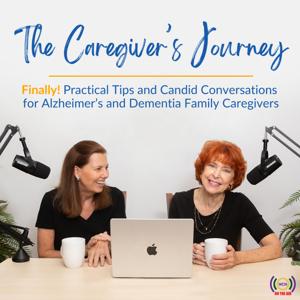
We are Sue Ryan and Nancy Treaster. As caregivers for our loved ones with Alzheimer’s and other types of dementia, we know how much empathy and understanding matter in day-to-day care. We’re sharing insights today from PK Beville, Ph.D., founder of the global nonprofit Second Wind Dreams® and inventor of the Virtual Dementia Tour, a simulation experience that has changed how nearly five million people worldwide understand and care for people living with dementia.
If you’re following along with the Navigating Dementia Caregiving Roadmap, this is part of Step Seven — educating yourself. You can find the full roadmap as an interactive page on our website at thecaregiversjourney.org. Steps one through six help you build your foundation right after a diagnosis. Steps seven through ten are about deepening your understanding, and the Virtual Dementia Tour is one of the essential resources we recommend in this phase.
Let’s explore three essential tips — from understanding what the Virtual Dementia Tour is, to applying what you learn at home, to finding one near you.
Connect with us and share your tips:
Full Show Notes
https://thecaregiversjourney.org/62-what-is-a-virtual-dementia-tour-three-essential-tips-alzheimers-and-other-dementias/
Additional Resources Mentioned
Takeaways
We shared 3 tips:
Read More in This Blog
https://thecaregiversjourney.org/62-what-is-a-virtual-dementia-tour-three-essential-tips-alzheimers-and-other-dementias-2/
WOOP is a very practical technique for anything from emotions to something on your to-do list — it can be used for many different kinds of wishes." — Donna Fedus
How many times have you been told that taking care of yourself is really important — and felt overwhelmed just thinking about it? You are not alone in this struggle, and there is a simple, evidence-based process that can help.
We are Sue Ryan and Nancy Treaster. As caregivers for our loved ones with Alzheimer's and other types of dementia, we understand how hard it can be to find time — and energy — for your own wellbeing. We are sharing insights from Donna Fedus, gerontologist and founder of Borrow My Glasses, about an evidence-based process called WOOP — yes, WOOP — and how it can help caregivers turn their wishes into reality.
Donna has been a gerontologist for 35 years and a dementia educator for nearly 20. She founded Borrow My Glasses in 2013 and has been instrumental in bringing WOOP to dementia family caregivers through a nationally funded study conducted with Yale University.
Let's explore three essential tips for putting WOOP to work in your caregiving life.
Connect with us and share your tips:
Full Show Notes
https://thecaregiversjourney.org/61-turn-your-wishes-into-reality-three-essential-tips-alzheimers-and-other-dementias-2/
Additional Resources Mentioned
Takeaways
We shared 3 tips:
Tip 1: WOOP it up
Tip 2: Hone in on your wish
Tip 3: Make it work!
Read More in This Blog
https://thecaregiversjourney.org/61-turn-your-wishes-into-reality-three-essential-tips-alzheimers-and-other-dementias/
"While we can't reverse aging, regular mental activity — these exercises, regular cognitive engagement — helps keep cognitive skills stronger for longer. It's like exercising your body." — Dr. Daniel Fenton
What if you could make small changes and have more intentional conversations with your loved one that actively stimulate their brain? You're not doing one more thing — you're simply being more deliberate about conversations you're already having and sneaking in more benefits along the way.
We are Sue Ryan and Nancy Treaster. As caregivers for our loved ones with Alzheimer's and other types of dementia, we understand how meaningful it is to find ways to help our loved ones function at their best for longer. We're sharing insights about cognitive stimulation therapy (CST) from Dr. Daniel Fenton, head of neuropsychological services at New Days, a virtual clinic specializing in care for people with mild cognitive impairment and early-stage dementia.
Let's explore three essential tips for bringing cognitive stimulation therapy into your everyday conversations at home.
Connect with us and share your tips:
Full Show Notes
https://thecaregiversjourney.org/60-use-cognitive-simulation-therapy-at-home-three-essential-tips-alzheimers-and-other-dementias/
Additional Resources Mentioned
Takeaways
We shared 3 tips:
Tip 1: Create A Simple Structure
Tip 2: Leverage These Types Of Activities
Tip 3: Don’t Forget To Wrap Up And Reflect
Read More in This Blog
https://thecaregiversjourney.org/60-three-tips-for-using-cognitive-stimulation-therapy-at-home/
As a family caregiver, you spend so much time worrying about your loved one's brain health. But what about your own? The good news is that there are real, evidence-backed steps you can take to improve your brain health and reduce your risk of cognitive decline — even in the midst of a demanding caregiving journey.
We are Sue Ryan and Nancy Treaster. As caregivers for our loved ones with Alzheimer's and other types of dementia, we know how easy it is to put yourself last. That's why we're sharing insights from Shelby Roberts, Senior Director of Public Health for the Alzheimer's Association, about protecting your brain health and reducing your risk of cognitive decline and dementia. We're sharing three tips.
Connect with us and share your tips:
Full Show Notes
https://thecaregiversjourney.org/59-protect-your-brain-health-three-essential-tips-alzheimers-and-other-dementias/
Additional Resources Mentioned
Takeaways
We shared 3 tips:
Tip 1: Learn about the 10 health habits for your brain
Tip 2: Know yourself
Tip 3: Pick a place to start
Read More in This Blog
https://thecaregiversjourney.org/59-protecting-your-brain-health-three-essential-tips-for-dementia-caregivers/
Have you ever heard of a certified senior advisor? Would you even know what you needed or how to find one? You're not alone if the answer is no — and there are clear steps you can take to get the right help at the right time.
We are Sue Ryan and Nancy Treaster. As caregivers for our loved ones with Alzheimer's and other types of dementia, we understand how overwhelming it can be to recognize when something has changed and know where to turn next. We're sharing insights from Cynthia Perthuis, principal owner of Senior Care Authority in Southwest Florida and a certified senior advisor, about finding, evaluating, and implementing solutions along the caregiving journey.
If you're following along with the Navigating Dementia Caregiving Roadmap, this aligns with Step Eight. You can find the roadmap as a downloadable digital guide on the guides page of our website, and we've also created it as an interactive page where you can click directly into each step.
Let's explore three essential tips for navigating this process — from recognizing when something is wrong, to finding the right help, to building a strategy that works for your whole family.
Connect with us and share your tips:
Full Show Notes
https://thecaregiversjourney.org/58-what-is-a-certified-senior-advisor-three-essential-tips-alzheimers-and-other-dementias/
Additional Resources Mentioned
Takeaways
We shared 3 tips:
Tip 1: Evaluate your situation
Tip 2: Reach out for help
Tip 3: Create a strategy
Read More in This Blog
https://thecaregiversjourney.org/58-what-is-a-certified-senior-advisor-three-essential-tips-alzheimers-and-other-dementias-2/
“Support groups are like lifelines — we’re around other people who are going through the same thing we are, and we know we’re not alone.” Kim Franklin
Do you wonder if support groups are right for you? Do you know how to find one that fits your needs? Are you feeling overwhelmed and isolated in your caregiving role?
We are Sue Ryan and Nancy Treaster. As caregivers for our loved ones with Alzheimer’s and other types of dementia, we’ve learned that support groups can be transformative resources on this journey. In this post, we’re sharing insights from Kim Franklin, Senior Program Manager with the Alzheimer’s Association, about how to find the right support group for you.
Support groups offer more than just information — they provide therapeutic spaces where caregivers can come together, share their frustrations, breathe, and hear from others in similar situations. Yet many caregivers resist joining groups, thinking they don’t have time, don’t need help, or feel caregiving is a private family matter that should be handled alone.
If you’re following along with the Navigating Dementia Caregiving Roadmap, this post supports Step Four, Find a support group. Let’s explore four essential tips for finding the right support group for your caregiving journey.
Connect with us and share your tips:
Full Show Notes
https://thecaregiversjourney.org/57-find-the-right-support-group-four-essential-tips-alzheimers-and-other-dementias/
Additional Resources Mentioned
Takeaways
We shared 4 tips:
Take Action: Support Groups as Self-Care
If you haven’t yet tried a support group, consider committing this month to looking for one. Keep in mind that attending a support group isn’t just about learning how to care for your loved one — it’s also a form of self-care. You’re taking care of yourself while learning valuable information and building connections with others who understand.
Resources to Get Started:
"One of the hardest parts in spousal caregiving is accepting that we're no longer just partners. We're now caregiver and care receiver. The loss of our emotional and physical partner and the emotional responsibilities we're taking on can really take an enormous toll."
Are you struggling to find balance between being a spouse and being a caregiver? Do you find yourself wondering when the shift happened—when your partner became your patient? Have you noticed yourself "forgetting to be a spouse" because you're so focused on getting the caregiving right?
We are Sue Ryan and Nancy Treaster. As caregivers for our loved ones with Alzheimer's and other types of dementia, we've experienced firsthand the complex role transition that happens when your spouse becomes your care receiver. This journey isn't a sudden switch that flips on diagnosis day—it's a slow, gradual transition that unfolds over years.
There's a moment when you realize your relationship has fundamentally changed. Your spouse, your partner, your companion—they're still there. But the person you used to bounce ideas off of can't be that person for you anymore. This transition brings unique challenges, from managing new responsibilities to redefining intimacy to letting go of promises made years ago.
Let's explore four essential tips for navigating the changing role from spouse to caregiver while preserving your relationship and your own wellbeing.
Connect with us and share your tips:
Website: https://thecaregiversjourney.org/
Donate: https://give.cornerstone.cc/thecaregiversjourney
Instagram: https://www.instagram.com/thecaregiversjourney/
Facebook: https://www.facebook.com/thecaregiversjourneys/
Linkedin: https://www.linkedin.com/in/suearmstrongryan/, https://www.linkedin.com/in/nancytreaster/
Email: [email protected], [email protected]
Full Show Notes
https://thecaregiversjourney.org/56-when-your-spouse-becomes-your-patient-alzheimers-and-other-dementias/
Additional Resources Mentioned
Support the nonprofit The Caregiver's Journey: https://give.cornerstone.cc/thecaregiversjourney
Takeaways
We shared 4 tips:
1. Find the balance in your changing role
2. Give yourself permission to get help
3. Keep connection while intimacy is redefined
4. Give yourself permission to let go of promises you made years ago.
Read More in This Blog
https://sueryansolutions.medium.com/the-changing-role-navigating-the-transition-from-spouse-to-caregiver-90acd5fde819?postPublishedType=repub
“What really helps is grounding yourself in three things: what change you’re noticing, how different it is from who this person has always been, and whether it’s getting worse over time.” — Dr. Anna Chodos
Are you concerned that your loved one is showing early signs of dementia? Do you find yourself noticing changes but unsure whether they’re significant? You’re not alone in this uncertainty, and there are clear steps you can take to address your concerns.
We are Sue Ryan and Nancy Treaster. As caregivers for our loved ones with Alzheimer’s and other types of dementia, we understand how challenging it can be to recognize early signs of dementia and know what to do next. We’re sharing insights about practical guidance for managing through those early signs of dementia from Dr. Anna Chodos, professor of medicine in geriatrics at the University of California, San Francisco, and executive director of Dementia Care Aware, and Dr. Barry Jacobs, clinical psychologist, family therapist, and co-author of the AARP Caregiver Answer Book.
Let’s explore three essential tips for recognizing early dementia signs — starting difficult conversations with your loved one and communicating effectively with healthcare providers.
Connect with us and share your tips:
Full Show Notes
https://thecaregiversjourney.org/55-is-it-an-early-sign-of-dementia-three-essential-tips-alzheimers-and-other-dementias/
Additional Resources Mentioned
Takeaways
Tip 1: Know What Signs to Look For — They’re More Than Just Memory
Tip 2: Start Early and Normalize Health Conversations
Tip 3: Plan Ahead for the Doctor’s Appointment
Read More in This Blog
https://sueryansolutions.medium.com/55-is-it-an-early-sign-of-dementia-three-essential-tips-alzheimers-and-other-dementias-5a1278aa1c2f
“An accurate early dementia diagnosis is essential. It can make a significant difference in how families navigate the diagnosis.” Esther Kane, MSN, RN
Your loved one has been diagnosed with dementia… but do you ever wonder if they’ve been diagnosed with the correct type? Do you find yourself thinking: “This diagnosis doesn’t quite fit what I’m seeing.” You’re not alone. Getting the correct diagnosis opens the right doors to support, care, and community that you might not have known existed.
We are Sue Ryan and Nancy Treaster. As caregivers for our loved ones with Alzheimer’s and other types of dementia, we’ve learned firsthand that not all dementias are the same. Understanding the specific type of dementia your loved one has ensures they’re receiving the correct medical care and helps you connect with the education, targeted support groups, and research opportunities tailored to your loved one’s specific needs.
In this post, we’re sharing insights from Esther Kane, a registered nurse and the Director of Support and Education for the Association for Frontotemporal Degeneration (AFTD). As a director of nursing in multiple memory care facilities, Esther’s entire career has been supporting and caring for individuals living with all types of dementia. In her role at AFTD, Esther works to advance early, accurate FTD diagnoses in order to improve the quality of life for those impacted by the disease.
We’re exploring five essential tips for ensuring your loved one receives the correct dementia diagnosis and how to leverage this knowledge for better care.
Full Show Notes
https://thecaregiversjourney.org/54-why-the-right-dementia-diagnosis-matters-five-essential-tips-alzheimers-and-other-dementias/
Additional Resources Mentioned
Takeaways
Tip 1: Learn More About Dementia and Push to Dig Deeper
Tip 2: Find Your Specific Diagnosis Community, Resources, and Support
Tip 3: Monitor Disease Progression and Prepare
Tip 4: Investigate Clinical Trials
Tip 5: Understand the Genetic Risk Associated with This Diagnosis
Read More in This Blog https://sueryansolutions.medium.com/53-why-the-right-dementia-diagnosis-matters-five-essential-tips-alzheimers-and-other-dementias-b6afe1179898?postPublishedType=repub
"Dementia is not just a medical journey, but it's a financial and emotional one." – Devon Banning, CFP
Are you avoiding the financial conversation with your loved one because it feels uncomfortable or overwhelming? Do you find yourself wondering how you'll afford care as your loved one's needs increase?
Are you concerned about making the right financial decisions during this challenging time?
We are Sue Ryan and Nancy Treaster. As caregivers for our loved ones with Alzheimer's and other types of dementia, we know that money is often the last conversation we want to have, but it's inevitable. We have to have it.
Today, we're sharing five essential tips for navigating the financial aspects of dementia caregiving with Devon Banning, a Certified Financial Planner with Moran Wealth Management. Devon has more than 15 years of experience across a range of roles in the financial industry, and he brings invaluable depth of experience with dementia family caregiving. He's spent the majority of his career managing financial lives for individuals and families, many of whom were suddenly thrust into the caregiving role due to dementia.
Here's what makes this conversation easier: it'll be much more manageable when we respect our loved ones' dignity, independence, and their wishes throughout all of our conversations. Today is about helping you learn options for taking your next step—options that are going to make you feel more confident without needing to have all the answers at one time.
This episode supports step three of our Navigating Dementia Caregiving Roadmap Guide: understand the financial situation. If you've been putting this conversation off, you're definitely not alone. This is an area many caregivers hesitate to step into. It's deeply personal, and it can feel intimidating—especially if we wish we'd addressed it sooner.
Connect with us and share your tips:
Website: https://thecaregiversjourney.org/
Donate: https://give.cornerstone.cc/thecaregiversjourney
Instagram: https://www.instagram.com/thecaregiversjourney/
Facebook: https://www.facebook.com/thecaregiversjourneys/
Linkedin: https://www.linkedin.com/in/suearmstrongryan/, https://www.linkedin.com/in/nancytreaster/
Email: [email protected], [email protected]
Full Show Notes
https://thecaregiversjourney.org/53-the-dementia-care-financial-conversation-five-essential-tips-alzheimers-and-other-dementias-2/
Additional Resources Mentioned
Moran Wealth Management https://moranwm.com/
Disclaimer:This podcast is for educational and informational purposes only and does not constitute investment, legal, or tax advice. The views expressed are those of the participants as of the date recorded and may change without notice. Nothing discussed should be considered a recommendation or solicitation to buy or sell any security or to engage in any particular investment strategy. Listeners should consult their own financial, legal, or tax professionals before making any financial decisions. Moran Wealth Management is an SEC-registered investment adviser. Registration does not imply a certain level of skill or training.
Support the nonprofit The Caregiver's Journey: https://give.cornerstone.cc/thecaregiversjourney
Takeaways
Get the Financial Conversation Started
Use these 8 steps to guide the conversation
Understand the different stages of financial considerations
Understand The Financial Position of Your Loved One
Consider Leveraging a Financial Planning Expert
Read More in This Blog
https://medium.com/@sueryansolutions/financial-planning-for-dementia-caregiving-five-essential-tips-edf00b98be82
From the publisher's feed
The Caregiver’s Journey podcast is an innovative and refreshing way to learn how to tackle day-to-day Alzheimer's and dementia family caregiving challenges with strength, patience, and peace…
Ranked by our users in the last 21 days

3,307 Listeners

21,048 Listeners
2,087 Listeners
2,016 Listeners
13,957 Listeners

31,730 Listeners

9,148 Listeners

27,762 Listeners

352 Listeners

1,650 Listeners

19,254 Listeners

8,463 Listeners

2,206 Listeners

216 Listeners
1,186 Listeners