
Sign up to save your podcasts
Or



Is it just another billionaires' battle of egos or does the $150 billion lawsuit that pits Elon Musk against Sam Altman go to the heart of how artificial intelligence could determine the future of humanity? We ask about the origin story of OpenAI, founded by some of Silicon Valley's leading luminaries as a non-profit organisation that would put innovation at the service of a socially responsible AI, the growing pains and fallouts that followed, leading up to the launch of ChatGPT and OpenAI's alliance with Microsoft.
Watch moreMusk vs Altman: Two tech mavericks go head to head in OpenAI trial
Is there an air of inevitability in this tale of ambition? Is it human nature that profit eventually comes before safety, particularly when investors want a return on their record sums? A ruling in California against Altman could scuttle the transformation of OpenAI from non-profit to publicly traded company.
We've seen this movie before – literally. The 2010 film "The Social Network" chronicled the ambitions and betrayals surrounding the rise of Facebook. Since then, the stakes have risen exponentially. Gone are the days when tech titans mused about effective altruism.
The big question: does the rest of the planet watch passively as the United States moves towards less, not more regulation at the dawn of an era where machines are sure to upend the way we work, think and live?
Produced by François Picard, Rebecca Gnignati, Juliette Laffont, Ilayda Habip, Guillaume Gougeon, Charles Wente.
There are those who want the US and Iran to settle, and those who want regime change. Among the latter, there's of course Israel and then there's the United Arab Emirates, who've signaled OPEC's cautious response as a reason for quitting the cartel. Is this the end of OPEC? How will its biggest producer Saudi Arabia respond? The Emirates also seem to have it in for Saudi ally Pakistan, by suddenly demanding the immediate reimbursement of a $3.5 billion loan from the cash-strapped facilitators of US-Iran mediation efforts.
How did Pakistan emerge as a central player? What are the benefits and risks when you raise your hand to facilitate dialogue between sworn enemies, particularly when one's your neighbour and the other's a global superpower that can scuttle an IMF bailout if relations sour?
At the heart of it all is the powerful chief of the military, Field Marshal Asim Munir. He knows Iran well from his time as head of intelligence and has infuriated India by ingratiating himself with Donald Trump. But what if the US president turns out to be a fair-weather friend? And can the art of the deal bring down prices at the pump for ordinary Pakistanis left reeling by the blockade in the Strait of Hormuz?
Produced by François Picard, Rebecca Gnignati, Juliette Laffont, Ilayda Habip, Charles Wente.
Call it the royal trump card: King Charles III has been dispatched to Washington on a state visit at the lowest point in the "special relationship" in at least seven decades. We ask if catering to Donald Trump's enthusiasm for the British crown can dispel the bad blood over tariffs, the war in Iran and repeated jibes by the US president to make Canada the 51st state. Canada is of course a Commonwealth member whose head of state is the same Charles III who's invited to address Congress and feted at a state dinner.
Does the successor to Queen Elizabeth II have what it takes to keep a poker face and stick to the script prepared by his prime minister? All it takes is a hot mic moment or a raised eyebrow for the media covering the four-day visit to go into overdrive.
Then there's the matter of the king's brother, the former prince Andrew, who's been criminally indicted following the same Epstein files revelations that brought down the UK ambassador to the US, Peter Mandelson.
A coincidence of the calendar has Prime Minister Keir Starmer's former chief of staff testifying on the same day back in London over the bungled vetting that led to the appointment of a former Labour Party insider whose nickname was the Prince of Darkness. Mandelson's reputation was no secret, yet he was appointed anyway. Why? To please Trump.
Produced by François Picard, Rebecca Gnignati, Juliette Laffont, Ilayda Habip, Charles Wente.
Even if it's the act of a "lone wolf", as first suggested by US President Donald Trump, Saturday night’s White House Correspondents' Dinner drama certainly did not happen in a vacuum. And just as mass shootings have become commonplace in a United States overrun by firearms, so have attempts on the lives of political figures.
Read moreSuspect in press gala shooting charged with attempted assassination of Trump
We ask about the latest targeting of the US president and the echo chambers that amplify vilification and hate, that turn adversaries into enemies, as well as a social media landscape where conspiracy theories can make a better fit than facts, both as ideology and as a business model.
In the buildup to that White House Correspondents' Dinner, all the talk was of how traditional media – already on the backfoot – would respond to all the bashing, particularly in the week that saw a mega-merger that could change the course of globally renowned news outlet CNN. But we'll never know, as the speech never happened.
Read more‘Staged’: Conspiracy theories spread online after thwarted shooting at White House press gala
Partisanship has always existed. But as the United States gets set to mark its 250th anniversary, is this time different? Is the level of verbal violence specific to a nation where gerrymandered constituencies encourage radical rhetoric? Or do more and more people globally think they're above the law?
Produced by François Picard, Rebecca Gnignati, Juliette Laffont, Ilayda Habip, Charles Wente.
How to mediate between Iran and the United States when one side wants revenge for the killing of its leader and the other's erratic messaging seems ratings-driven? Donald Trump's unilateral ceasefire declaration has brought neither side back to the bargaining table, what with more ships seized in the Strait of Hormuz and lockdown mode relaxed in Pakistan's capital for talks that may or may not resume.
We ask about US demands that can change course inside the same presidential tweet, and an unclear chain of command on both sides: why was US Vice President JD Vance flanked by Trump confidantes Jared Kushner and Steve Witkoff last time? Does it actually matter that none of those three are trained diplomats or Iran specialists?
And who's really calling the shots in an Islamic Republic that's in survival mode? On that score, what are Tehran's intentions regarding Hezbollah? Its proxy militant group in Lebanon is absent as the US State Department in Washington brokers more old school-style negotiations between the Israelis and the Lebanese.
Who's got leverage over whom and if diplomacy fails, what does escalation look like?
Produced by François Picard, Rebecca Gnignati, Juliette Laffont, Ilayda Habip, Marguerite Lacroix, Andrew Hilliar.
Will the world have enough fuel to fill the tanks and fertilise the crops? The seizure of ships by Iran is adding to global jitters as the extension of a ceasefire offers zero visibility on prospects for the planet's biggest choke point for oil and gas. Nearly two months on, the Paris-based International Energy Agency is calling it the biggest-ever energy disruption in history. We ask about prices at the pump, cancelled flights and more broadly, if oil's not flowing through the Strait of Hormuz, where to find it and what's the alternative?
Cue images of the French president who staged his Wednesday cabinet meeting in the central Allier region, where Emmanuel Macron also inaugurated a large lithium mine.
How fast can the energy transition make up for lost oil? How much of a bind is this for Europe, when harmony among the 27 rests on Russian oil flowing to eastern members through the Druzhba pipeline and when China's dominance of the battery and electric vehicle markets makes it very hard to compete?
Produced by François Picard, Rebecca Gnignati, Juliette Laffont, Ilayda Habip, Andrew Hilliar.
A container ship seized in the Gulf, a ceasefire deadline that's running out fast and plenty of bargaining table brinkmanship between the US and Iran. With the price of oil back on the rise, de-escalation would certainly offer relief to Donald Trump's constituents. So what's the plan of a US president who’s proved impulsive – at times threatening civilizational erasure, at others floating the idea of splitting the profits with Iran on a Strait of Hormuz toll for tankers? How to bargain when your opponent enjoys home field advantage and knows you don't want to put boots on the ground?
Contrary to the mantra that went viral last year, Trump does not always chicken out. He certainly proved it on February 28, when he started the war and took out Iran's supreme leader.
Not only that, but he doesn’t always seem to have a plan. We ask about erratic messaging, fresh reports of impulse decision-making inside the White House and an apparent disregard for winning hearts and minds.
Case in point: allowing Israel to continue a Gaza-style bulldozing of towns in southern Lebanon that flies in the face of Trump's objective of pursuing normalisation on Israel's northern border and a broader deal with Hezbollah patron Iran.
Produced by François Picard, Rebecca Gnignati, Juliette Laffont, Ilayda Habip, Margot Loizillon.
The new US-born pope is on his first-ever visit to Cameroon's restive English-speaking northwest, and he's not turning the other cheek. "Blessed are the peacemakers! But woe to those who manipulate religion and the very name of God for their own military, economic and political gain, dragging that which is sacred into darkness and filth," Pope Leo XIV declared on Thursday in Bamenda.
Read morePope Leo blasts 'handful of tyrants' ravaging world during Cameroon visit
The message was the same when he landed on Wednesday in Yaoundé and while it may sound like a rebuttal to a critical US president who's an ocean away, it's also first a pointed message to the leader in the room hosting Leo: 93-year-old Paul Biya, only the second head of state Cameroon has known since independence from France in 1960.
We ask our panel what makes the Bamenda leg of the pope's four-nation tour of Africa historic, about the separatist rebels who called a four-day truce during the visit, and how the Church can help in a nation where half the population is under 18 and whose politics can feel like a ticking time bomb, with zero visibility surrounding Biya's succession.
We also ask how, less than a year after succeeding Francis, this pope is faring under fire from Donald Trump and Catholic conservatives, and whether his message resonates among the faithful in an age of wars, growing inequality and artificial intelligence.
In the face of stiff competition from evangelical churches, the direction of the world's largest organised religion in the 21st century is at stake.
Produced by François Picard, Rebecca Gnignati, Juliette Laffont, Ilayda Habip, Charles Wente.
Iran is proving that missiles don't need to travel thousands of kilometres. Across the Gulf is all it takes to force the world's mightiest army to the bargaining table. Pressure on the choke point for one-fifth of the planet's oil and gas is exposing the vulnerability of Arabian Peninsula monarchies.
They'd spent decades building reputations as reliable havens of stability fuelled by an endless supply of petrodollars. We track the price of crude, the latest movement of tankers through the Strait, prospects for talks, and ask how Gulf states could rethink their alliances with Washington, particularly investments that can sometimes seem like protection money to pay for the US defence shield from Tehran and its proxies like the Houthis, who in the past already hit oil installations.
Read moreUS blockade of the Strait of Hormuz: What do the numbers show?
With Russia and now China accused of actively aiding Iran target its neighbours, where do those Gulf states turn for their defence? Are they all of the same mind when it comes to Iran?
And more broadly, can they restore the veneer of the dream destinations displayed by social media influencers who fled when the fighting started?
Produced by François Picard, Rebecca Gnignati, Juliette Laffont, Ilayda Habip, Delphine Liou.
Israeli and Lebanese envoys are appearing together on camera in the same room – that may well be a first. It's happening under the auspices of the US secretary of state in Washington. If you're rooting for peace, there's good news and bad news. The good news is that the Lebanese government's never been so vocal in calling on Iran-backed militant group Hezbollah to disarm and the US president has a real stake in reining in Israel if he wants his attempts to strike a deal with Tehran to bear fruit.
Read moreUS hails 'historic opportunity' for peace after Lebanon, Israel talks in Washington
The bad news is that the fighting continues, with Israel accused of the Gaza-style levelling of villages in southern Lebanon, and Hezbollah refusing both surrender and disarmament.
Will Israel set up for good, pushing boundaries like it did recently in neighbouring Syria? A week ago, Benjamin Netanyahu was depicted as omnipotent with outlets like The New York Times reporting on how it was he who convinced Donald Trump to attack Iran.
If that was true, is it still the case? Or was last Wednesday's daytime bombing of Beirut that killed more than 300 people too much, even for Israel's closest allies?
Produced by François Picard, Rebecca Gnignati, Juliette Laffont, Ilayda Habip, Delphine Liou.
From the publisher's feed
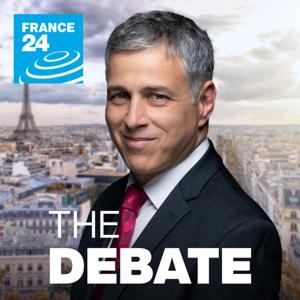
A live debate on the topic of the day, with four guests. From Monday to Thursday at 7:10pm Paris time.

7,580 Listeners

10,709 Listeners

3,369 Listeners
762 Listeners

1,046 Listeners
1,024 Listeners

1,802 Listeners
348 Listeners

4 Listeners
0 Listeners
0 Listeners
2 Listeners
1 Listeners

21 Listeners

181 Listeners

5 Listeners
0 Listeners
4 Listeners
6 Listeners
5 Listeners
39 Listeners

815 Listeners
3 Listeners
4 Listeners

5 Listeners
1 Listeners

16,143 Listeners

0 Listeners
0 Listeners

361 Listeners

0 Listeners

476 Listeners

378 Listeners