
Sign up to save your podcasts
Or

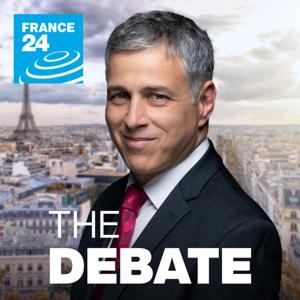


Eurosceptics may come and go, but there's only one Viktor Orban. It took 16 years and Sunday's record turnout in Hungary to vote out the seemingly unbeatable far-right leader who once boasted of building an illiberal state. Why did the far-right idol of MAGA world finally fall out of favour? And not just by a nose: "The Hungarian people didn't vote for a simple change of government, but for a complete change of regime," boasts Prime Minister-in-waiting Peter Magyar. How will the once-ally-turned-pro-EU conservative turn his constitutional supermajority into a rolling back of Orban's consolidation of power?
We ask about the task at hand and reactions abroad – starting with Russia, on which Hungary depends for its oil and gas. How to handle the Kremlin?
The sighs of relief in Brussels and Kyiv are audible, what with Budapest no longer championing a coalition of Eurosceptics that includes France's Marine Le Pen.
But it doesn't mean Hungary will always be pliant, nor that hostility from bigger powers will magically disappear.
Produced by François Picard, Rebecca Gnignati, Juliette Laffont, Ilayda Habip, Charles Wente.
A most confusing Wednesday it was. In the space of six minutes, during a single press conference, the White House spokesperson first hailed the reopening of the Strait of Hormuz, then called on Iran to reopen the world’s most oil-sensitive shipping lane. Five weeks of contradictory statements have bred wider uncertainty over the true contents of the ceasefire deal – and even who is party to it. Confusion moves markets, and in a war that has triggered the most severe energy crisis in decades, oil prices reflect that volatility: having fallen sharply on Wednesday, they have since climbed back above $100 a barrel.
And amid such turbulence, there are always those who sense an opportunity to profit.
We’ll examine who stands to gain, and how – whether this is simply smart investing, or something more troubling. With so much power concentrated in the hands of a single man, we’ll also ask whether greater scrutiny is warranted within the cabinet of Donald Trump, amid accusations that the line between national interest and personal profit may be blurring.
If it is oil producers such as Saudi Arabia and Russia, that is one thing. But what if it is the United States itself?
Produced by François Picard, Rebecca Gnignati, Juliette Laffont, Ilayda Habip, Charles Wente.
No apocalypse. Instead, an eleventh-hour ceasefire between Iran and the United States – one that is still being tested – with both sides claiming victory after five and a half weeks of war that may reshape how the world views them.
Meanwhile, there is no ceasefire in Beirut, where Israel has carried out its heaviest strikes yet on the capital, hitting multiple densely populated areas. Dozens are feared dead. Will Washington tell Israel to halt its operation against Hezbollah?
Then there is the Gulf. Even if the guns fall silent, it could take weeks – months, perhaps longer – to restore oil output to previous levels.
And finally, there is the ratcheting up of biblical rhetoric.
Faced with a regime where, for now, soldiers – not clerics – appear to hold sway, Donald Trump and his White House have issued the kind of doomsday threats more often associated with radical theocracies or rogue nuclear states. Will the world remember the threat to erase “an entire civilisation”, even if it never comes to pass?
Produced by François Picard, Rebecca Gnignati, Juliette Laffont, Ilayda Habip, Charles Wente.
Is Europe’s future on the ballot in Hungary? In Budapest, the US vice president is actively stumping for far-right incumbent Viktor Orban who trails in the polls ahead of Sunday’s general election. European politicians sometimes campaign for likeminded peers from neighbouring nations, but in this case, it is the United States openly taking aim at the bloc using the same talking points as Vladimir Putin’s Russia.
We talk about whether JD Vance’s support helps or hurts Orban in the homestretch of a race where the 62-year-old populist has made a point of holding up the European Union’s €90 billion loan to Ukraine.
We also take a look at Orban's strategy and the opposition's claim that the prime minister attempted a false flag operation in neighbouring Serbia.
More broadly, we assess how the nation of 9.5 million has fared under Orban’s 16-year rule. How has pushing Hungary as the avant garde of a white Christian anti-woke, anti-immigrant alliance served Hungary? And what is the opposition offering instead?
Produced by François Picard, Théophile Vareille, Juliette Laffont, Ilayda Habip, Charles Wente
Might is right… until it isn’t. 2026 began with US commandos seizing Venezuela’s president in a zero-casualty operation that put the rest of the world on notice. But now, Donald Trump’s first prime-time address in nearly five weeks of war is worrying markets rather than reassuring them. The US president is telling affected nations to buy more oil from him – and, if they are so concerned about energy security in the Strait of Hormuz, to go in themselves and sort it out.
How should Gulf, European and Asian allies react to this “I break it, you fix it” approach to warfare? Is it already too late to walk away? And even if Washington washes its hands of the war it started with Israel, how can a fresh ten-year cycle of instability in the Middle East be avoided?
For the United States, is this merely a passing blemish? Will the midterm elections rescue those hoping for a return to the previous world order? History suggests that, despite setbacks – from the failed 1980 hostage rescue in Iran to the insurgencies that bogged the US down in Iraq and Afghanistan – the United States has ultimately emerged undiminished as the world’s leading superpower.
But now Trump has picked a fight with an enemy that is both a state and seemingly capable of deploying insurgent tactics. Is this a turning point – the moment after which the United States of America no longer appears quite so mighty?
Produced by François Picard, Aline Bottin, Juliette Laffont, Ilayda Habip, Charles Wente.
Are we witnessing globalisation’s biggest turning point since the end of the Cold War? With Asia feeling the impact of US President Donald Trump’s war against Iran, and steadfast American allies such as the Philippines forced to declare an energy emergency, the immediate consequences are rippling through nations that manufacture much of what we buy in the West – with a boomerang effect for the rest of the world.
Will they ever view the United States in the same light again? Especially under a president who favours spheres of influence and one-on-one hard bargains over international rules and global free trade. As so-called middle powers seek alliances that reduce dependence both on the US for defence and on China for goods, we’ll hear from the French president, currently on a tour of Japan and Korea.
At the heart of it all is what quite literally fuels capitalism: energy. We’ll examine the potential short-term return of coal, and look ahead to the longer-term outlook. Will the events of the past month discourage efforts to accelerate – or even maintain – the transition to renewables? And how can countries hedge against a world that, for now, seems dangerously dependent on warring oil and gas suppliers?
Produced by François Picard, Aline Bottin, Juliette Laffont, Ilayda Habip, Charles Wente.
The Lebanese have seen it all: from civil war to the 2019 protests demanding an end to revolving-door politics; from the 2020 Beirut port explosion, which exposed the tragic consequences of nepotism, to Israel’s 2024 operation targeting its longtime foe, Hezbollah. Now Israeli ground forces have returned once again to confront the Tehran-backed group. Lebanon thus finds itself a second front in the month-long war launched against Iran.
We’ll be asking what it means to return to life in wartime: how the country is coping with 1.2 million displaced people, with UN peacekeepers killed or injured, and with the enduring question of how Lebanon can break free from half a century of armed factions acting as laws unto themselves. That outcome will depend in part on how regional powers fare in the current war. For decades, they have treated Lebanon as a vacant lot where scores are settled by proxy.
But it will also depend on the Lebanese themselves—on whether a younger generation can finally move beyond sectarian divisions and clan loyalties, and turn that ambition into lasting change.
Produced by François Picard, Rebecca Gnignati, Juliette Laffont, Ilayda Habip, Charles Wente.
What could possibly go wrong? As Donald Trump repeats threats of a Venezuela-style seizing of Tehran's oil exports and as US assault troops get in position, the price of oil is blowing past $110 a barrel, as markets take it at face value that the Pentagon is planning to make a grab for Kharg Island – the hub for nearly 90 percent of Iranian crude exports.
We ask about the pitfalls of sailing warships past the Strait of Hormuz for an invasion, the Islamic Republic's response, and how Gulf neighbours would view it all.
Since 1945, the United States has positioned itself as the Arabian Peninsula's main security guarantor. Will that still be the same when the dust settles?
Produced by François Picard, Rebecca Gnignati, Juliette Laffont, Ilayda Habip, Charles Wente.
As G7 foreign ministers root for the off-ramp in the Iran war, François Picard’s panel weighs the damage done to the region, to the world economy and to transatlantic trust. From Donald Trump's threats against NATO allies to France denying it disinvited South Africa from June's G7 summit to placate Washington, we weighs US threats… and those of Iran.
Produced by François Picard, Rebecca Gnignati, Juliette Laffont, Ilayda Habip, Charles Wente.
It's Trump's war, but is it also NATO's problem? Europeans are forced to bear the security and financial consequences of the second war on their doorstep. We see if our panel agrees with NATO Secretary General Mark Rutte, who assures it's only a matter of "a couple of weeks" before traditional allies agree to help secure the Strait of Hormuz.
Before Europeans follow a US president who started the war without consulting them into a potential quagmire, several questions arise: why should they help? Can the so-called coalition of the willing that's scrambling to help Ukraine fend off Russia's onslaught leverage US support into firm backing for Kyiv?
And what happens if Trump emerges weakened and wounded from a poorly planned campaign against Iran? Will the United States look at its traditional allies in a better light, or will he blame Europeans and turn on Ukraine?
Produced by François Picard, Rebecca Gnignati, Juliette Laffont, Ilayda Habip, Charles Wente.
From the publisher's feed
A live debate on the topic of the day, with four guests. From Monday to Thursday at 7:10pm Paris time.

7,580 Listeners

10,709 Listeners

3,369 Listeners

762 Listeners

1,046 Listeners
1,024 Listeners

1,802 Listeners

348 Listeners

4 Listeners
0 Listeners

0 Listeners

2 Listeners
1 Listeners

21 Listeners

181 Listeners

5 Listeners

0 Listeners

4 Listeners

6 Listeners

5 Listeners
39 Listeners

815 Listeners
3 Listeners
4 Listeners

5 Listeners
1 Listeners

16,143 Listeners

0 Listeners
0 Listeners

361 Listeners

0 Listeners

476 Listeners

378 Listeners