
Sign up to save your podcasts
Or



Based on Podcast App listening data
Many medical trainees are driven to medicine by their moral or religious principles — only to find that they are expected to check their principles at the patient’s door. When this happens, physicians and patients may lose the opportunity for deeper, more healing relationships.
Our guest on this episode is Dr. Farr Curlin, a hospitalist and palliative care physician at Duke University School of Medicine. Dr. Curlin holds joint appointments in the Trent Center for Bioethics, Humanities & History of Medicine and Duke Divinity School, where he studies the intersection of medicine, ethics, and religion.
From a young age, Dr. Curlin was intrigued by the moral dimensions of medicine. As a medical trainee, he began to study how the religious backgrounds of physicians inform their practice. He is the co-author of The Way of Medicine, in which he challenges the modern “provider of services” model and calls for a recovery of medicine’s spiritual foundations as a healing profession. Now, at Duke Divinity School, he spends significant time helping physicians re-center their practice around the question: “What is Good?”
Over the course of our conversation, we discuss attitudes toward religion in the medical profession and how many medical professionals worry that being openly religious may make them seem retrograde — or worse. We explore striking the balance between offering physician wisdom while respecting patient autonomy, consider whether the project of medicine makes sense when viewed through the lens of secular humanism, and reflect on how the physician attributes of humility and respect enable physicians to productively bring their full selves to the bedside, all while practicing medicine within a morally pluralistic society.
In this episode, you’ll hear about:
2:48 - Dr. Curlin’s path to medicine and what drew him to a career at the intersection of religion and medicine
19:30 - Dr. Curlin’s thoughts on why doctors often feel they cannot be openly religious
35:45 - How Dr. Curlin would change medical training to create a deeper focus on personal commitments and moral conviction
41:15 - Exploring the limitations of artificial agnosticism at the patient’s bedside
51:50 - How fostering a spiritual connection to the work of healing can mitigate burnout
Visit our website www.TheDoctorsArt.com where you can find transcripts of all episodes.
If you enjoyed this episode, please subscribe, rate, and review our show, available for free on Spotify, Apple Podcasts, or wherever you get your podcasts. If you know of a doctor, patient, or anyone working in health care who would love to explore meaning in medicine with us on the show, feel free to leave a suggestion in the comments or send an email to [email protected].
Copyright The Doctor’s Art Podcast 2025
Medical trainees spend years mastering what to do when biology fails — countless protocols, procedures, and split-second decisions. By the end, they’re primed to fix what’s broken. But what if the mandate of medicine is simpler — and more human?
Our guest on this episode is Dr. Jessica Zitter — a physician, author, and filmmaker who has spent her career at the fault line between intensive care and palliative care. Dr. Zitter was initially drawn to the technical choreography in the ICU: numbers to chase, procedures to perform. Yet, along the way, she began to notice the danger we rarely name — that in our devotion to protocol, we might drift away from the person in front of us.
Over the course of our conversation, Dr. Zitter shares personal experiences that have shaped her approach to medicine. We talk about moral injury and how it compounds: when systems push us to act against our values, care gets worse, and the hurt deepens. We talk about how bias slips in when power meets prejudice at the bedside and why chaplains — so often sidelined — can be essential guides back to the human being we’re treating. Her prescription is simple: treat patients as you’d want your own loved ones to be treated. Ask for the story. Reconstruct the person we’ve taken apart into smaller pieces.
Dr. Zitter is the author of her memoir Extreme Measures, appears in the Academy Award-nominated short film Extremis, and is the director of several documentaries, including 2025’s The Chaplain & the Doctor.
In this episode, you’ll hear about:
2:45 - Dr. Zitter’s path to a career in intensive care medicine
4:52 - A day in the life of an intensivist
17:42 - Dr. Zitter’s unexpected pivot to prioritizing palliative care in her work
26:41 - The inspiration for Dr. Zitter’s film The Chaplain and the Doctor
38:36 - How chaplaincy attends to the soul of the patient and what doctors can learn from this perspective
42:51 - Navigating internalized bias as a doctor
49:42 - Dr. Zitter’s advice for her younger self
Visit our website www.TheDoctorsArt.com where you can find transcripts of all episodes.
If you enjoyed this episode, please subscribe, rate, and review our show, available for free on Spotify, Apple Podcasts, or wherever you get your podcasts. If you know of a doctor, patient, or anyone working in health care who would love to explore meaning in medicine with us on the show, feel free to leave a suggestion in the comments or send an email to [email protected].
Copyright The Doctor’s Art Podcast 2025
Editorial Note:
This episode was recorded in December 2024, after the nomination of Robert F Kennedy Jr as Secretary of Health and Human Services had been announced but prior to his confirmation. Some comments by the podcast hosts and our guest will reflect this timing.
Elephants rarely get cancer, ants quarantine when sick, and altruistic pigs have a higher pain tolerance. In this episode, we discuss insights from the animal world that shed light on human health and wellness, as well as the power of data driven narratives in effective public health education.
Our guest is Dr. David Agus, founding CEO of the Ellison Medical Institute and professor of medicine and engineering at the University of Southern California. As a CBS news contributor and author of three New York Times best selling books on health, Dr. Agus emphasizes the need for experts who are willing to explain rather than tell.
Having experienced the politicization of public health during the pandemic, he highlights the importance of data transparency and the urgency for more physician leaders. With technological advances making data collection and analysis ever more accessible, Dr. Agus shares a vision for the future of medicine, where patients bring their own health data to the clinic and physicians act as educators guided by the values of their patients.
In this episode, you’ll hear about:
2:30 - Dr. Agus’s journey to medicine and how he found his way to focusing on preventative health and public education
6:50 - Navigating the politicized nature of public health as a public health educator
14:17 - Dr. Agus’s viewpoint on the controversial nominations of RFK Jr. and Dr. Oz
19:51 - How the education of doctor needs to change to adapt to our newly data driven world
24:20 - The current state of nutrition science and how people can make the best choices with the current data available on the topic
32:12 - The potential benefits of making big data in electronic medical records available to physicians
32:48 - The inspiration behind Dr. Agus’s new book, The Book of Animal Secrets, and what the animal kingdom can teach us as humans about living a more fulfilling and healthy life
52:11 - A vision for empowering patients with their personal medical data in the age of AI
54:31 - Dr. Agus’s advice to clinicians on supporting patients with their preventative health
Visit our website www.TheDoctorsArt.com where you can find transcripts of all episodes.
If you enjoyed this episode, please subscribe, rate, and review our show, available for free on Spotify, Apple Podcasts, or wherever you get your podcasts. If you know of a doctor, patient, or anyone working in health care who would love to explore meaning in medicine with us on the show, feel free to leave a suggestion in the comments or send an email to [email protected].
Copyright The Doctor’s Art Podcast 2025
Imagine practicing medicine not within the sterile confines of a hospital, but in the unpredictable world of city streets and shelters, where every patient encounter challenges conventional notions of care, empathy, and human dignity. We explore this reality through the extraordinary journey of Jim O'Connell, MD, whose groundbreaking work with Boston's homeless population has profoundly reshaped health care for society's most marginalized individuals.
Dr. O'Connell is the founding president of the Boston Healthcare for the Homeless Program and an assistant professor of medicine at Harvard Medical School. In this episode, Dr. O’Connell shares stories from his extensive frontline experience, detailing the unique challenges of treating patients facing complex medical and psychiatric conditions exacerbated by unstable living conditions. From addressing devastating public health crises such as AIDS and tuberculosis to establishing consistent mental health care, he provides profound insights into what makes healthcare effective for homeless populations. He also reflects on a formative early experience — being asked by nurses to wash patients feet — that deeply influenced his understanding of empathy and the essence of medical service. Through these reflections, we gain a powerful appreciation for the depth of patience, relational care, and respect required in caring for vulnerable communities.
In this episode, you’ll hear about:
2:00 - Dr. O’Connell’s unexpected path to medicine
11:34 - The distinction between a “country doctor” and a doctor who works in an academic setting
13:42 - How Dr. O’Connell began working with homeless populations
20:30 - The difficulties doctors faced in the early years of the HIV/AIDS epidemic
29:14 - Navigating the compounding challenges of access and continuity among the homeless population
37:12 - What has kept Dr. O’Connell dedicated to treating this population for 30+ years
51:24 - Dr. O’Connell’s recommendations to clinicians on how to compassionately serve the homeless
Visit our website www.TheDoctorsArt.com where you can find transcripts of all episodes.
If you enjoyed this episode, please subscribe, rate, and review our show, available for free on Spotify, Apple Podcasts, or wherever you get your podcasts. If you know of a doctor, patient, or anyone working in health care who would love to explore meaning in medicine with us on the show, feel free to leave a suggestion in the comments or send an email to [email protected].
Copyright The Doctor’s Art Podcast 2025
The relationship between physicians and the larger healthcare system is incredibly complex, raising difficult questions about patient care, advocacy, and the role of doctors in shaping public policy. In this episode, we explore these critical issues and the realities faced by healthcare providers today.
Our guest is Bruce Scott, MD, an otolaryngologist and 2024 – 2025 President of the American Medical Association (AMA). Motivated by a serious childhood injury and the life changing care he received, Dr. Scott subsequently pursued a career dedicated to surgery and health care advocacy. In this conversation, he shares his experiences as a surgeon, dealing with intricate procedures and urgent decisions, and discusses the importance of physician involvement in healthcare policy amid today's deeply polarized environment.
Dr. Scott reflects on his own path to leadership within the AMA and underscores the impact that organized medicine can have on public health, health care access, and physician well-being. He provides insights into how the AMA navigates complex political challenges, addresses physician burnout, and promotes practical solutions to administrative burdens. We also discuss emerging issues such as the responsible integration of artificial intelligence in clinical settings, rebuilding patient trust in medical expertise, and the broader implications of physician burnout and mental health.
In this episode, you’ll learn about:
2:48 - The life-changing injury that led Dr. Scott to a career as an a surgeon
14:34 - How Dr. Scott became involved with advocacy at the American Medical Association
21:27 - How the AMA’s work has been altered by the high levels of politicization around medicine
28:27 - The challenges that physicians struggle with today
32:47 - How the AMA works to maintain the public’s trust in doctors and the medical establishment
37:33 - The AMA’s plan for navigating AI integration in a way that benefits doctors, not healthcare and insurance companies
42:33 - How the AMA approaches the epidemic of physician burnout
49:14 - Dr. Scott‘s recommendations for how to get involved in policy and advocacy.
Visit our website www.TheDoctorsArt.com where you can find transcripts of all episodes.
If you enjoyed this episode, please subscribe, rate, and review our show, available for free on Spotify, Apple Podcasts, or wherever you get your podcasts. If you know of a doctor, patient, or anyone working in health care who would love to explore meaning in medicine with us on the show, feel free to leave a suggestion in the comments or send an email to [email protected].
Copyright The Doctor’s Art Podcast 2025
George Mark Children's House is a pediatric palliative care center in California that provides respite and hospice for children with serious illnesses and their families. In March 2025, we heard the personal story of the House’s director. In this episode, we have been invited on site to speak with someone whose life has been touched by the House.
Our guests are Kaitlyn, a young woman living with epilepsy, her mother Liz, and Kyle, a child life specialist. Kaitlyn has lived with seizures since she was two years old. Over the years, the condition has shaped nearly every aspect of her life, from her time in and out of hospitals to the way she relates to friends, school, and her own identity. In this conversation, she talks about what it feels like to have a seizure, what she's learned from years of living with uncertainty, and how art, humor, and relationships have helped her make sense of it all. Liz, her mother, shares what it was like to first notice something was wrong, how hard it was to find her footing in a world of medical jargon and evolving diagnoses, and what long term caregiving has taught her about patience, advocacy, and perspective.
This is not a story about overcoming illness or finding easy silver linings. It's a story about making room for a full life with joy, difficulty, grief, and connection, often all at once. And it's about the role of a place like George Mark, which offers families something rare — not just health care, but space to feel human in the midst of it all.
In this episode, you’ll hear about:
3:20 - Kaitlyn’s epilepsy experience, through both her and her mother’s eyes
14:00 - How Kaitlyn developed a positive outlook on epilepsy
16:30 - How Kaitlyn’s family found George Mark Children’s House
23:30 - The role of a child life specialist
28:15 - Supporting a child through the physical, emotional and spiritual challenges of their illness
29:56 - How epilepsy has shaped Kaitlyn’s views on life’s priorities and challenges, and how it has shaped her mother’s view of parenting
40:00 - Kyle’s perspectives on helping children and families through some of life’s toughest experiences
43:08 - The qualities that Kaitlyn feels a doctor should have to best connect with their patients
Visit our website www.TheDoctorsArt.com where you can find transcripts of all episodes.
If you enjoyed this episode, please subscribe, rate, and review our show, available for free on Spotify, Apple Podcasts, or wherever you get your podcasts. If you know of a doctor, patient, or anyone working in health care who would love to explore meaning in medicine with us on the show, feel free to leave a suggestion in the comments or send an email to [email protected].
Copyright The Doctor’s Art Podcast 2025
If you were asked to build a medical school from scratch, how would you do it? It's not a chance most of us get — but that was exactly the task given to our guest on this episode, Sharmila Makhija, MD, MBA. Dr. Makhija is a gynecologic oncologist by training, a clinician who has spent her career working with patients through some of life's most vulnerable and uncertain moments. She has also served as chair of obstetrics and gynecology at Montefiore Health System in New York, and before that, at Emory University.
Most recently, and most notably, she is Founding Dean of the new Alice Walton School of Medicine in Bentonville, Arkansas. Here, she has taken on the ambitious and deeply human task of creating a medical school that doesn't just teach medicine, but reimagines its purpose. Over the course of our conversation, Dr. Makhija shares how her parents were instrumental to helping her find meaning in medicine, how she accompanies patients through serious illnesses, and the quiet but transformative power of presence. We then hear how she got the opportunity to create a new medical school — so new, in fact, that they are matriculating their first class in July 2025 — and her vision for preparing future doctors to face the technological, societal and professional uncertainties of medicine in the coming decades.
In this episode, you’ll hear about:
2:45 - What drew Dr. Makhija to a career in medicine, and specifically to her clinical focus in gynecological oncology
11:10 - How Dr. Makhija learned how to support patients through some of the hardest moments of their lives, and her advice on guiding patients through a poor prognosis
25:22 - Dr. Makhija’s to becoming Founding Dean of the Alice Walton School of Medicine
32:00 - The school’s approach to creating a new medical curriculum
45:51 - Experiences that have surprised Dr. Makhija on her leadership journey
48:38 - How Dr. Makhija plans to equip her students to face the rapid changes that are transforming the medical field
Visit our website www.TheDoctorsArt.com where you can find transcripts of all episodes.
If you enjoyed this episode, please subscribe, rate, and review our show, available for free on Spotify, Apple Podcasts, or wherever you get your podcasts. If you know of a doctor, patient, or anyone working in health care who would love to explore meaning in medicine with us on the show, feel free to leave a suggestion in the comments or send an email to [email protected].
Copyright The Doctor’s Art Podcast 2025
What happens to the practice of medicine when machines begin to reason, summarize and even empathize — at least in the linguistic sense — better than humans do?
In this episode, we meet with Michael Howell, MD, MPH, Chief Clinical Officer at Google, to explore the seismic shifts underway in healthcare as artificial intelligence becomes more deeply embedded in clinical workflows. Dr. Howell, a pulmonary and critical care physician, has spent his career at the crossroads of clinical excellence and systems innovation. Before joining Google, he served as chief quality officer at University of Chicago Medicine. At Google, he leads the development and implementation of AI technologies intended to support scalable, safe and equitable medical care.
Over the course of our conversation, we examine what AI is and isn't. We delve into how large language models are reshaping the cognitive labor of clinicians, the implications of machines that may someday outperform humans in diagnosis, and whether there is something inherently human about healing that algorithms will never capture. Along the way, we discuss not only the promises of AI, but also its hidden dangers, ethical landmines, and the enduring question — in a future defined by ever smarter machines. What does it mean to be a good doctor?
In this episode, you’ll hear about:
2:43 - Dr. Howell’s path to medicine and eventually to becoming Chief Clinical Officer at Google
6:45 - Why examining the differences between theory and implementation of technology matters
17:35 - The evolution of AI and its clinical capabilities
26:05 - The definition of “thinking” in the age of AI
36:11 - How AI could change the landscape of healthcare on a global scale
50:26 - The ethics of using — and not using — AI in medicine
54:36 - The role of a doctor in 20 years
Visit our website www.TheDoctorsArt.com where you can find transcripts of all episodes.
If you enjoyed this episode, please subscribe, rate, and review our show, available for free on Spotify, Apple Podcasts, or wherever you get your podcasts. If you know of a doctor, patient, or anyone working in health care who would love to explore meaning in medicine with us on the show, feel free to leave a suggestion in the comments or send an email to [email protected].
Copyright The Doctor’s Art Podcast 2024
If you could be plugged into a machine that simulated the perfect experience — limitless joy, deep connection, a sense of purpose — yet you knew it wasn't real, would you choose to stay plugged in?
This isn't just a philosophical exercise. As our lives become increasingly digitized, our relationships filtered through screens, our emotions managed by algorithms, our attention parceled out to feeds and notifications, we are confronted with a deeper question: what does it mean to have an authentic experience anymore?
Our guest on this episode is Christine Rosen, a writer and cultural critic whose book The Extinction of Experience (2024) explores how the virtualization of our world is transforming not just our habits, but our inner lives. Drawing from philosophy, neuroscience, and her own reflections, Rosen examines what we lose when direct embodied experience gives way to digital mediation, whether that's our connection to the natural world, our relationships, or even our own sense of self.
The repercussions for medicine are profound. In an era where care is often delivered through screens, where patients track their bodies through apps and data, and where wellness is increasingly conflated with optimization, how do we preserve what is human in the doctor-patient relationship, and how do patients navigate their own sense of health and wholeness in a world that so often substitutes simulation for substance?
This is a conversation that cuts deep into one of the most pressing cultural currents of our time and its implications for how we connect, how we heal, and how we find meaning in being alive.
In this episode, you’ll hear about:
3:00 - How Rosen came to focus her career on the history of technology
5:51 - Why we should think proactively about the effects of technological advances on our behavior and society
11:40 - How modern technology has encouraged impatience and disconnect with other humans
27:06 - Why we should stop seeing technology as a means to “solve” or “overcome” human behavior
37:23 - The epidemic of loneliness that exists despite unprecedented levels of technological interconnectivity
45:37 - The moral challenges in our society’s attempt to end boredom, discomfort, and suffering
54:28 - How to think and act critically about the relentless march of technology
57:17 - What we can do to make our lives flourish
Visit our website www.TheDoctorsArt.com where you can find transcripts of all episodes.
If you enjoyed this episode, please subscribe, rate, and review our show, available for free on Spotify, Apple Podcasts, or wherever you get your podcasts. If you know of a doctor, patient, or anyone working in health care who would love to explore meaning in medicine with us on the show, feel free to leave a suggestion in the comments or send an email to [email protected].
Copyright The Doctor’s Art Podcast 2025
There is something uniquely haunting about many neurological diseases. These conditions often don't only affect the body — they reshape the very foundation of who we are, our memories, our personalities, our language. When the brain begins to fail, the boundary between illness and identity start to blur; the person we know begins to fade even before their life has ended.
In this episode, we are joined by John Rhee, MD, MPH, a neuro-oncologist and palliative care physician at Dana-Farber Cancer Institute and Harvard Medical School, whose work sits at the intersection of science, suffering, and the soul. He cares for patients with brain tumors and neurodegenerative diseases, conditions that challenge our deepest assumptions about selfhood, dignity, and what it means to live a meaningful life. Dr. Rhee is also the co-founder and executive director of The Hippocratic Society, a community of clinicians that aims to cultivate virtues that characterize good medical practitioners and ideals that make medicine a sacred profession.
Over the course of our conversation, we talk about suffering — not just physical pain, but the existential kind. We explore how the brain anchors our identity, how its decline confronts us with profound questions, how medical education can improve by training doctors to be more reflective in their work, why an element of spirituality remains critical to medicine, what it means to accompany someone through decline, and more.
In this episode, you’ll hear about:
3:00 - Dr. Rhee‘s path to medicine
6:30 - The general scope of focus for a neuro-oncologist
16:07 - Understanding the brain from both medical and existential perspectives
26:36 - The mission of The Hippocratic Society
40:45 - Why “virtue” is central to the focus of The Hippocratic Society
49:34 - How to get involved with The Hippocratic Society
Visit our website www.TheDoctorsArt.com where you can find transcripts of all episodes.
If you enjoyed this episode, please subscribe, rate, and review our show, available for free on Spotify, Apple Podcasts, or wherever you get your podcasts. If you know of a doctor, patient, or anyone working in health care who would love to explore meaning in medicine with us on the show, feel free to leave a suggestion in the comments or send an email to [email protected].
Copyright The Doctor’s Art Podcast 2025
From the publisher's feed
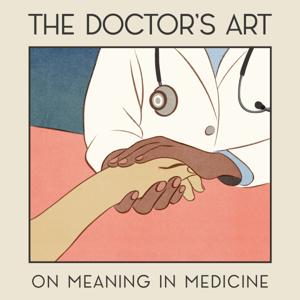
The practice of medicine–filled with moments of joy, suffering, grace, sorrow, and hope–offers a window into the human condition. Though serving as guides and companions to patients’ illness…

43,343 Listeners

817 Listeners

3,324 Listeners
694 Listeners

10,215 Listeners

12,670 Listeners

2,522 Listeners

307 Listeners

112,298 Listeners
597 Listeners
60 Listeners

7,945 Listeners

28,944 Listeners

16,246 Listeners
56 Listeners