
Sign up to save your podcasts
Or

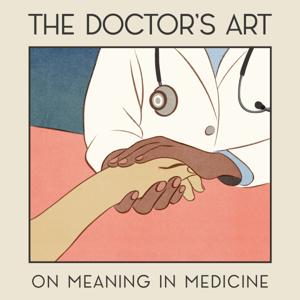


Based on Podcast App listening data
Neurosurgery is known as one of the most precise and demanding specialties in medicine. It requires absolute technical mastery in a surgical field where a millimeter’s difference can be the deciding factor between lifelong disability or a life restored. But what happens when a surgeon trained to be objective and detached experiences deep personal loss? How does it reshape the way they practice medicine?
In this episode, we are joined by Joseph “Jody” Stern, MD, a neurosurgeon and the author of Grief Connects Us: A Neurosurgeon's Lessons on Love, Loss, and Compassion (2021). His book is an honest, deep, personal reflection on how losing his sister shattered the emotional armor he had built as a surgeon — and in doing so, made him a better doctor. Over the course of this conversation,
Dr. Stern discusses the complexity of neurosurgery and what it teaches about the fragility of life; why the way we talk to patients and families matters just as much as the procedures we perform; how his own grief changed the way he approaches medicine; and the pressure in medicine to stay emotionally detached and why that might actually be harming both doctors and patients. This is a conversation that extends beyond grief. It's about how we, as doctors, patients, and people, can show up for each other in ways that truly matter.
In this episode, you’ll hear about:
2:37 - How Dr. Stern became drawn to neurosurgery and what has kept him in the field
6:00 - Dr. Stern’s quest to integrate palliative care into neurosurgery
10:06 - Why medical training often makes it hard for trainees to remember their humanistic calling
15:54 - The importance of shifting medical training to focus to more on patient-centered care
23:41 - Rethinking medicine to better honor the humanity of the patient
31:41 - Developing “emotional agility” as a physician
37:09 - The personal and professional insights that Dr. Stern experienced when he helped his sister through her battle with leukemia
47:47 - How to overcome compassion fatigue
54:15 - Dr. Stern’s advice for new clinicians
Visit our website www.TheDoctorsArt.com where you can find transcripts of all episodes.
If you enjoyed this episode, please subscribe, rate, and review our show, available for free on Spotify, Apple Podcasts, or wherever you get your podcasts. If you know of a doctor, patient, or anyone working in health care who would love to explore meaning in medicine with us on the show, feel free to leave a suggestion in the comments or send an email to [email protected].
Copyright The Doctor’s Art Podcast 2025
In medicine, we are trained to fight for life — to extend it, preserve it and restore it. But sometimes the goal shifts from curing to comforting. That, in brief, is the essence of palliative care. It compels us to ask what it means to truly care for a person at the end of life, not as a failure of medicine but as a profound act of love.
In this episode, we enter a space where time slows down, where every moment is cherished, and where medicine is tantamount to presence, dignity, and grace. George Mark Children's House in California is the first freestanding pediatric palliative care center in the United States, a place where children with serious, life-limiting conditions can spend their time in a home-like setting and live fully, where families find respite, and where end-of-life care is infused with humanity and meaning. It's a place that helps families navigate one of the hardest journeys imaginable, offering not just medical support, but also emotional and spiritual care.
Joining us is Shekinah Eliassen, CEO of George Mark Children's House, who has dedicated her life to reimagining how we care for children with complex and terminal illnesses. She opens up about how the loss of her first son drives her work to this day. We'll explore the essence of pediatric palliative care, the misconceptions, the difficult conversations, the small joys, and the profound impact of honoring life, no matter how brief. This is a conversation about medicine at its most intimate and compassionate.
In this episode, you’ll hear about:
2:53 - The family tragedy that introduced Eliassen to George Mark Children’s House
15:08 - Eliassen’s personal experience with pediatric palliative care and how her understanding has evolved
19:26 - How palliative care differs from physician aid in dying
23:21 - George Mark Children’s House’s approach to pediatric palliative care
28:09 - The importance of “savouring the moment”
37:04 - Limiting factors that currently prevent pediatric palliative care from expanding
41:44 - The role that spirituality and religion play at George Mark Children’s House
48:17 - Eliassen’s advice to her past self on how to prepare for the life-changing experience of child loss
Shekinah Eliassen can be found on Instagram at @shekinahceliassen.
Visit our website www.TheDoctorsArt.com where you can find transcripts of all episodes.
If you enjoyed this episode, please subscribe, rate, and review our show, available for free on Spotify, Apple Podcasts, or wherever you get your podcasts. If you know of a doctor, patient, or anyone working in health care who would love to explore meaning in medicine with us on the show, feel free to leave a suggestion in the comments or send an email to [email protected].
Copyright The Doctor’s Art Podcast 2025
Medicine is often framed as a meritocracy, where intelligence, hard work, and dedication dictate success. Yet, institutions of medicine are shaped by histories of exclusion, bias, and systemic inequities. And for clinicians coming from marginalized backgrounds, the journey is not just about learning the science. It's also about learning an entirely different set of rules — rules that are unspoken and unwritten, but deeply felt.
For Damon Tweedy, MD, this struggle was deeply personal. Raised in a working class, all-black neighborhood, medicine once felt worlds away. Earning a spot at Duke Medical School was a milestone, but it came with new challenges. The paradox of being both visible and invisible; of constantly proving — sometimes subtly, sometimes forcefully — that he belonged. Dr. Tweedy talks about the paradox of striving to be “twice as good,” while still being mistaken for the janitor, turning down an invitation to play golf with faculty because he simply did not know the game, and realizing that for some of his classmates, medicine was not a leap into the unknown, but simply an inheritance.
Beyond race, this episode is also about identity, resilience, and what happens when personal history collides with professional expectation. It's about how trust in medicine is built or broken not just for doctors, but for patients. Dr. Tweedy shares how his own experiences have shaped the way he interacts with patients, why he approaches conversations with more humility, and why sometimes the most important thing a doctor can do is simply acknowledge the weight that a patient carries into the exam room. Ultimately, this episode is about the search for authenticity in a system that often demands conformity.
In this episode, you’ll hear about:
3:24 - Dr. Tweedy’s path to medicine and his experience as a black first-generation college student
14:08 - How Dr. Tweedy navigates experiences of being discriminated against as a black physician
24:58 - Dr. Tweedy’s approach to navigating discriminatory experiences between patients and trainees
29:56 - Dr. Tweedy’s path to becoming a public voice regarding race and medicine
32:07 - The current approach to teaching race and medicine in medical school, and Dr. Tweedy’s thoughts on how it can be improved.
43:42 - Effectively serving patients of different racial backgrounds without falling into profiling or prejudice
48:49 - Dr. Tweedy’s advice for new medical students
Dr. Damon Tweedy is the author of Black Man in a White Coat (2016) and Facing the Unseen (2024).
Dr. Tweedy can be found on Twitter/X at @damontweedymd.
Visit our website www.TheDoctorsArt.com where you can find transcripts of all episodes.
If you enjoyed this episode, please subscribe, rate, and review our show, available for free on Spotify, Apple Podcasts, or wherever you get your podcasts. If you know of a doctor, patient, or anyone working in health care who would love to explore meaning in medicine with us on the show, feel free to leave a suggestion in the comments or send an email to [email protected].
Copyright The Doctor’s Art Podcast 2025
Physicians are trained to diagnose and treat disease, but they're not always taught how to lead. Yet in an era of increasing administrative burdens, evolving healthcare policies, and growing physician burnout, leadership skills have never been more essential. How can physicians reclaim their voices in healthcare decision making? What makes an effective physician leader in today's complex landscape?
Here to answer these questions is Peter Angood, MD, President and CEO of the American Association for Physician Leadership, an organization dedicated to empowering physicians with the tools and strategies to lead successfully. With years of experience as a trauma surgeon and a leader of patient safety at organizations ranging from The Joint Commission to the World Health Organization, Dr. Angood has thought deeply about expanding the role of physicians beyond the bedside.
Over the course of our conversation. Dr. Angood first takes us into the mind of a trauma surgeon dealing with split-second life-or-death decisions, then discusses the evolving role of physician leadership, trends that concern and excite him about modern healthcare, and concrete skills all clinicians can develop to lead meaningful changes.
In this episode, you’ll hear about:
2:23 - How Dr. Angood became drawn to a career in medicine
5:58 - The day-to-day experience of a trauma surgeon
18:39 - How Dr. Angood expanded his role beyond the operating room
21:44 - The role of the Joint Commission
23:02 - Finding the balance between patient safety, teamwork, and physician autonomy
31:37 - Dr. Angood’s leadership philosophy
41:40 - Why all physicians should be seen as leaders
43:45 - Dr. Angood’s advice for how to be successful in a leadership role
53:57 - Dr. Angood’s advice for new clinicians
Dr. Angood is the author of Inspiring Growth and Leadership in Medical Careers: Transform Healthcare as a Physician Leader (2024) and All Physicians are Leaders: Reflections on Inspiring Change Together for Better Healthcare (2020).
Visit our website www.TheDoctorsArt.com where you can find transcripts of all episodes.
If you enjoyed this episode, please subscribe, rate, and review our show, available for free on Spotify, Apple Podcasts, or wherever you get your podcasts. If you know of a doctor, patient, or anyone working in health care who would love to explore meaning in medicine with us on the show, feel free to leave a suggestion in the comments or send an email to [email protected].
Copyright The Doctor’s Art Podcast 2025
The American diet is the leading cause of death among Americans. Accumulating medical evidence now shows that poor diet not only contributes to heart disease, diabetes, and stroke, but also to cancer, Alzheimer's disease, liver disease, and much more. Despite its direct and indirect roles in causing half or more of all deaths, food is not something doctors learn about in their training, nor is it something that's emphasized enough to patients by the medical establishment.
Our guest on this episode is Michael Greger, MD, a specialist in lifestyle medicine and one of the most trusted voices in evidence based nutrition and public health. He is the internationally best selling author of How Not to Die (2015), How Not to Diet (2019), and How Not to Age (2023).
Over the course of our conversation, Dr. Greger shares his approach to healthy living, focusing on the surprising power of whole-food, largely plant-based diets in transforming our bodies at a molecular level. He discusses strategies for helping patients and ourselves achieve behavioral change and explores how our brains and palates are rewired by processed foods, how we can reverse this, the ethics of patient counseling around lifestyle interventions, why there is such a mismatch between nutrition beliefs and behaviors among physicians, and his most high-yield recommendations for starting your journey to eating well.
In this episode, you’ll hear about:
2:45 - How Dr. Greger’s grandmother’s miraculous recovery due to diet change inspired him to build a career in nutrition science
6:58 - The disconnect that exists between the American medical system and the science of nutrition
13:57 - Why nutrition education is lacking in American medical training
21:31 - Issues with compliance among patients trying to adopt a lifestyle of healthy eating
28:00 - Supporting patients who are not interested in preventative healthcare measures
35:15 - Navigating the confusing and often conflicting landscape of nutritional studies
43:20 - Whether there is a universal dietary recommendation
46:49 - Simple ways to improve your diet, starting today
Visit our website www.TheDoctorsArt.com where you can find transcripts of all episodes.
If you enjoyed this episode, please subscribe, rate, and review our show, available for free on Spotify, Apple Podcasts, or wherever you get your podcasts. If you know of a doctor, patient, or anyone working in health care who would love to explore meaning in medicine with us on the show, feel free to leave a suggestion in the comments or send an email to [email protected].
Copyright The Doctor’s Art Podcast 2024
In recent years, it has become evident that loneliness is one of the most pressing public health challenges of our time — so much so that the US Surgeon General has labeled it an epidemic with far reaching consequences. The pain of isolation doesn't merely gnaw at our sense of belonging: it undermines our physical wellbeing, erodes our mental health, and places an invisible strain on communities. In this climate of ever widening personal and cultural divides, the collective call for deeper human bonds feels both urgent and universal.
Our guest on this episode is Julia Hotz, a journalist and passionate advocate for social prescribing, the practice of directing people to community activities and social support networks as part of their health care. She is the author of the book The Connection Cure: The Prescriptive Power of Movement, Nature, Art, Service and Belonging (2024), in which she argues that whether it's group classes, volunteer opportunities, or simply forging new friendships, true well-being is as much about our social fabric as it is about physical health.
Over the course of our conversation, we discuss the psychology of isolation and loneliness, the tangible health effects of loneliness, the historical societal forces that drive humans increasingly apart, the role of social media in connecting and separating us, and how patients and physicians alike can take proactive and creative steps in making human connection an integral part of living well.
In this episode, you’ll hear about:
2:50 - What social prescribing is and how it became Hotz’ focus as a journalist
5:32 - How loneliness became a crisis in the era of social media
18:46 - The ways in which social prescribing can change the conversation between doctors and patients
28:24 - The impact that our relationships and environments have on our physiological wellbeing
38:29 - How doctors and health care systems can leverage the power of social prescribing
45:00 - How social prescribing is beginning to find its place in the American healthcare system
56:03 - How social prescribing can bring a stronger sense of meaning into the lives of both patients and doctors
To learn more about how you can get involved in the social prescribing movement, Julia recommends visiting Social Prescribing USA and socialprescribing.co.
Visit our website www.TheDoctorsArt.com where you can find transcripts of all episodes.
If you enjoyed this episode, please subscribe, rate, and review our show, available for free on Spotify, Apple Podcasts, or wherever you get your podcasts. If you know of a doctor, patient, or anyone working in health care who would love to explore meaning in medicine with us on the show, feel free to leave a suggestion in the comments or send an email to [email protected].
Copyright The Doctor’s Art Podcast 2024
We have featured many techno-optimists on this show — healthcare leaders who believe that precision medicine and emerging technologies promise to revolutionize and democratize medicine in the best of ways. But look under the glossy veneer of this optimism and we see a far more complex story, one that touches on questions of power, inequity and the troubling ways in which genetics can be wielded, intentionally or not, to shape society in potentially dangerous ways.
Our guest on this episode is James Tabery, PhD, a bioethicist, philosopher, and author of the book Tyranny of the Gene” Personalized Medicine and its Threat to Public Health (2024). Tabery gives us a tour of the rise of personalized and precision medicine, a field that promises to tailor treatments to our unique genetic profiles. Importantly, though, he highlights how the blind pursuit of these advances can distract us from larger public health challenges and exacerbate inequality. In our conversation, we explore the historical forces that have shaped modern genetics, ethical dilemmas involving the tension between patient autonomy and societal justice, and necessary guardrails around technological advances.
We hope this conversation will challenge your assumptions, whether you are a clinician, a patient, or simply someone fascinated by the ways science shapes our world.
In this episode, you’ll hear about:
3:15 - How Tabery became drawn to his work in philosophy and bioethics
5:30 - Tabery’s view on the potential perils of the constant march of scientific progress
9:34 - The ways in which his father’s early experience with precision medicine shaped Tabery’s thinking on the topic
19:33 - Examining the promises and realities of precision medicine
30:12 - Navigating the inequities caused by the exorbitant cost of precision medicine
35:29 - The challenges doctors face when approaching “financial toxicity”
40:00 - Tabery’s worries about medical genetics and AI
49:51 - How innovation be controlled in order to better align with ethical concerns
James Tabery can be found on Twitter/X at @jamestabery.
Visit our website www.TheDoctorsArt.com where you can find transcripts of all episodes.
If you enjoyed this episode, please subscribe, rate, and review our show, available for free on Spotify, Apple Podcasts, or wherever you get your podcasts. If you know of a doctor, patient, or anyone working in health care who would love to explore meaning in medicine with us on the show, feel free to leave a suggestion in the comments or send an email to [email protected].
Copyright The Doctor’s Art Podcast 2024
Life can be hard when we are sick. But even when we aren't, life can still wear us down in quiet, surprising ways. Indeed, major traumas are relatively rare, and it's the moments when too many things go wrong at once, or we are exposed to prolonged periods of stress, that we fall into a spiral of exhaustion, fatigue, burnout, and hopelessness.
Vincent Deary, PhD is an author and health psychologist who explores the mundane struggles of everyday life. His writings blend clinical insight, literary finesse and wisdom drawn from philosophy and art to illuminate how the wear and tear of life affect all of us, and how we can navigate through it all. He is the author of How We Are (2024), which explores the power of human routines and the challenges of personal change, and How We Break (2024), which delves into how individuals cope when pushed to their limits.
Over the course of our conversation, we discuss what the clinical work of health psychology looks like, what happens to our minds when we deal with stressors in life, the importance of storytelling for psychological growth, balancing self-improvement with self-acceptance, the role of constitutional luck in our search for happiness, the importance of restorative rest, how clinicians can cope with grief and guilt from their work, and more. By bringing an empathetic lens to the complexities of modern existence, Vincent helps us create a path through difficult times.
In this episode, you’ll hear about:
2:43 - What health psychology is and how Deary became drawn to this field
18:58 - Deary’s motivations for exploring the emotional toll of experiencing life in his writings
22:42 - The benefit of approaching each patient as a “case”
31:46 - Finding a balance between self-improvement and self-acceptance
38:10 - Using the bio-psycho-social model to explain our capacities for weathering stress
43:14 - Fostering a healthier perspective on work-life balance
50:55 - The importance of community and institutional support in helping people process compassion fatigue
58:05 - Strategies for connecting more deeply with patients within a clinical setting
Vincent Deary can be found on Twitter/X at @vincentdeary.
Visit our website www.TheDoctorsArt.com where you can find transcripts of all episodes.
If you enjoyed this episode, please subscribe, rate, and review our show, available for free on Spotify, Apple Podcasts, or wherever you get your podcasts. If you know of a doctor, patient, or anyone working in health care who would love to explore meaning in medicine with us on the show, feel free to leave a suggestion in the comments or send an email to [email protected].
Copyright The Doctor’s Art Podcast 2024
Variations of cryonics — the long term storage of human beings, usually at low temperatures — have long been featured in science fiction. In stories involving space travel, it’s often used as a solution for long-duration journeys. But increasingly, this is not just the stuff of fiction anymore.
The prospect of preserving ourselves, potentially indefinitely, forces us to ask some of the most profound questions we have ever faced: are we meant to transcend the boundaries of our mortal lives? What does it mean to be alive? If life can be extended, what happens to its meaning, urgency, and beauty? These questions, by turns technological, philosophical, ethical and even spiritual, are what we explore in this episode.
Ariel Zeleznikow-Johnson, PhD is a neuroscientist who studies the nature of conscious experiences to better understand how we can preserve cognitive function. His book The Future Loves You: How and Why We Should Abolish Death (2024), explores the viability of delaying death and its societal implications. Over the course of our conversation, we discuss the science of human preservation, definitions of life and death, broader questions about how we derive meaning from life, whether or not the finitude of human experience is essential to our conceptions of a well-lived life, our social contract with future generations, and more.
In this episode, you’ll hear about:
2:44 - How Dr. Zeleznikow-Johnson became interested in the future of longevity
6:00 - Dr. Zeleznikow-Johnson’s definitions of “life” and “death”
14:29 - Why Dr. Zeleznikow-Johnson thinks that believing death is inevitable is a form of “learned helplessness”
17:52 - The level of faith one would need to have in the future of technology to consent to cryosleep
24:16: - Whether the finitude of human existence is essential to its meaning
29:05 - Whether every death is an inherent tragedy
30:25 - How the limitations of the human brain could impede longevity
33:16 - The ethical dilemma that would arise due to the financial costs of this technology
36:30 - Why Dr. Zeleznikow-Johnson is confident that cryonics will be successful
46:42 - The core thesis of Dr. Zeleznikow-Johnson’s book The Future Loves You
50:15 - Whether immortality is a desirable objective
Visit our website www.TheDoctorsArt.com where you can find transcripts of all episodes.
If you enjoyed this episode, please subscribe, rate, and review our show, available for free on Spotify, Apple Podcasts, or wherever you get your podcasts. If you know of a doctor, patient, or anyone working in health care who would love to explore meaning in medicine with us on the show, feel free to leave a suggestion in the comments or send an email to [email protected].
Copyright The Doctor’s Art Podcast 2024
One of the most mysterious and frightening entities in medicine are prion diseases — rare neurodegenerative disorders that are usually infectious in nature but involve not bacteria or viruses, but proteins. Prions are misfolded proteins that can induce normal proteins to become misfolded as well, resulting in a chain reaction that leads to irreversible brain damage and death. What makes prions alarming is that they are incurable, can incubate for decades in a person's brain without symptoms, and are usually associated with 100% mortality within months to a few years.
Sonia Vallabh, PhD was a recently-married lawyer in her early career when she witnessed her mother's baffling sudden health decline and death. Her mother was ferried from hospital to hospital, yet dozens of doctors could not figure out why she was seemingly succumbing to rapidly progressive dementia at the age of 52. It wasn't until after her death that Vallabh discovered the cause was a genetic prion disease. Subsequent testing revealed that Sonia Vallabh herself had inherited the same genetic abnormality. Determined to find a solution, Vallabh and her husband Eric, a transportation engineer, decided to retrain as biomedical scientists in a race to cure her before it grew too late. The couple now leads a prion research lab at the Broad Institute at MIT and Harvard. They are also the co-founders of the nonprofit Prion Alliance.
Over the course of our conversation, Vallabh opens up about what it was like to accompany her mother in her last months of life, the psychological toll of dealing with a fatal medical mystery, how she lives each day with an awareness of how ephemeral life is, what prion diseases are and what makes them so difficult to treat, what makes her optimistic about the future of her work, and more.
In this episode, you’ll hear about:
3:23 - Vallabh’s early memories of her mother and the devastating experience that overcame her at 52 years old
16:37 - The process of grieving the loss a parent
22:32 - What prion diseases are
25:35 - How Vallabh made the decision to undergo the genetic testing that confirmed she inherited a mutation thah causes prion disease
36:27 - Vallabh’s major career change to become biomedical researchers
45:50 - Where the quest for an effective therapy for prion disease currently stands
52:08 - Vallabh’s message to listeners on how to approach life
View Sonia Vallabh’s TED Talk on her quest to cure prion disease.
Visit our website www.TheDoctorsArt.com where you can find transcripts of all episodes.
If you enjoyed this episode, please subscribe, rate, and review our show, available for free on Spotify, Apple Podcasts, or wherever you get your podcasts. If you know of a doctor, patient, or anyone working in health care who would love to explore meaning in medicine with us on the show, feel free to leave a suggestion in the comments or send an email to [email protected].
Copyright The Doctor’s Art Podcast 2024
From the publisher's feed
The practice of medicine–filled with moments of joy, suffering, grace, sorrow, and hope–offers a window into the human condition. Though serving as guides and companions to patients’ illness…

43,343 Listeners
817 Listeners

3,324 Listeners
694 Listeners

10,215 Listeners

12,670 Listeners

2,522 Listeners

307 Listeners

112,298 Listeners
597 Listeners
60 Listeners

7,945 Listeners

28,944 Listeners

16,246 Listeners
56 Listeners