
Sign up to save your podcasts
Or

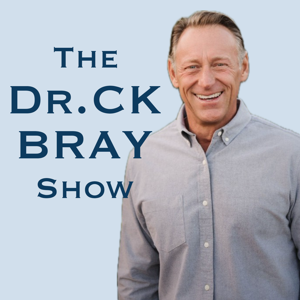


Welcome to today's episode of the Dr. CK Bray show where Dr. Bray delves into the intriguing world of neurotechnology in the workplace. You will be surprised by how brain wearables (neurotech) are changing the workplace. The global market for neurotech is growing at a compound annual rate of 12% and is expected to reach $21 billion by 2026. Wearables have already hit the workplace and Dr. Bray will be sharing where and how they are being used. Dr. Bray will unpack the advancements in neurotechnology and how they are reshaping not just our professional environments but also our roles and responsibilities within them. We'll delve into the ethical considerations it brings and the delicate balance between productivity and privacy that it challenges.
We'll explore these technologies' double-edged sword: their potential to enhance worker well-being and efficiency, contrasted with serious privacy concerns and the ethical boundaries of brain surveillance. Dr. Bray provides a comprehensive overview of this landscape, urging companies to weigh the benefits against the risks carefully. Join us as we discuss how these technologies are not just a passing trend but are setting the stage for a new norm in how we live and work.
Thanks to the fantastic March/April 2023 HBR article by Nita Farahany, "Neurotech at Work." It is a must read!
QUOTES BY DR. BRAY "A lot of the unhappiness we see at work is due to overwork." "End the meeting five to eight minutes before the hour!"
Welcome to today's episode of the Dr. CK Bray show where Dr. Bray delves into the intriguing world of neurotechnology in the workplace. You will be surprised by how brain wearables (neurotech) are changing the workplace.
Dr. Bray will unpack the advancements in neurotechnology and how they are reshaping not just our professional environments but also our roles and responsibilities within them. We'll delve into the ethical considerations it brings and the delicate balance between productivity and privacy that it challenges.
We'll explore these technologies' double-edged sword: their potential to enhance worker well-being and efficiency, contrasted with serious privacy concerns and the ethical boundaries of brain surveillance. Dr. Bray provides a comprehensive overview of this landscape, urging companies to weigh the benefits against the risks carefully. Join us as we discuss how these technologies are not just a passing trend but are setting the stage for a new norm in how we live and work.
Thanks to the fantastic March/April 2023 HBR article by Nita Farahany, "Neurotech at Work." It is a must read!
QUOTES BY DR. BRAY "Focus and attention are key in performance."
Welcome to the podcast where we delve into the art of self-sabotage – it's probably a hobby that you're really good at. In this honest podcast, Dr. Bray confesses that he is a maestro when it comes to putting roadblocks in his own path. From the mundane to the complex, self-sabotage has been his loyal companion, persistently keeping life just that bit more... interesting.
In today's episode, we're flipping the script and offering you free, top-notch tips on how to become a self-sabotage superstar. Ever find yourself meticulously analyzing decisions until you're a statue of indecision? Or maybe you're the type who's mastered the art of negative self-talk, eroding your self-esteem one critical thought at a time. And who can forget the classic move of neglecting self-care to the point of exhaustion? We'll cover these and more, including the ultimate crowd-pleasers – avoiding asking for help, dwelling on past mistakes, and the relentless pursuit of perfection. So, if you're looking to 'up' your game on self-sabotage or perhaps seeking a way out, tune in as we explore this curious human behavior with a touch of humor and a whole lot of empathy.
QUOTES BY DR. BRAY "If I can't do something perfectly there's no point in doing it at all." "Watch & listen to your brain and behavior, turn around that self-sabotage."
Imagine suddenly gaining a profound artistic ability or a knack for complex mathematics after a lifetime of having no such skills. This is the reality for individuals experiencing acquired savant syndrome, a rare and extraordinary neurological condition. It often emerges following an injury or illness that affects the brain, unlocking astonishing talents in music, art, or mathematics—talents that were previously dormant.
We are more acquainted with individuals who demonstrate brilliance in music, art, calendar calculation, mathematics, and number skills, often associated with developmental disorders like autism. What sets acquired savant syndrome apart is the sudden emergence of these skills in adulthood following specific neurological changes, damage, or illness.
In this episode, Dr. Bray discusses Acquired Savant Syndrome and shares three stories of individuals and the research behind why this may be occurring. He will also discuss how you can improve your performance and intellect by doing three simple things. Researchers are learning how incredible and often untapped the potential residing within the human mind is.
For more information, go to: "The Phenomenon of Acquired Savant Syndrome Reveals What Happens When Brain Damage Unleashes Brilliance." Psychology Today March/April 2024.
QUOTES BY DR. BRAY "That which you pay attention to you remember and you become." "Get a good night's rest." "You learn more from mistakes than from perfection."
In the latest episode of The Dr. CK Bray Show, Dr. Bray dives deeper into the realm of emotional intelligence, building upon the foundation laid in part 1. He discusses the importance of not just recognizing our emotions, but also managing them effectively and understanding the emotions of others. Drawing from insights in a Psychology Today article and his own expertise, Dr. Bray introduces four key strategies for mastering emotional self-management.
The first strategy involves pausing and mentally distancing oneself in emotionally charged situations, allowing for a shift from reactive to responsive behavior. The second strategy focuses on taking control of self-talk, recognizing and challenging negative internal dialogues. Dr. Bray also emphasizes the value of enlisting trusted partners to help recognize emotional triggers and cultivate curiosity to inhibit hasty judgments and promote empathy. Throughout the episode, listeners are encouraged to practice these strategies to enhance their emotional intelligence and self-management skills, fostering better relationships and overall well-being. ** "Emotional Intelligence." Psychology Today, March/April 2024.
Dr. CK Bray explores the evolution and importance of emotional intelligence, initially introduced by research psychologists Peter Salvi and John Mayer over three decades ago. Their groundbreaking idea that emotions play a key role in personal and professional success was eventually popularized by psychologist and writer Daniel Goldman. The concept of emotional intelligence has since gained recognition, with a growing understanding of its significance in various aspects such as relationships, decision-making, and productivity in the workplace. Dr. Bray delves into how emotional intelligence impacts mental health, social interactions, language development, and the complexity of emotions in everyday experiences.
Dr. Bray highlights the significance of emotional granularity, which involves the precise identification and naming of emotions. Research has shown that individuals with higher emotional granularity tend to have better psychological well-being and are less likely to engage in harmful coping mechanisms. By expanding one's emotional vocabulary and accurately labeling emotions, individuals can effectively manage their feelings, reduce stress, and navigate complex situations with more tailored responses. Cultivating emotional intelligence through observation, exploration, and descriptive labeling of emotions is emphasized as a valuable aspect of personal growth and overall well-being.
** "Emotional Intelligence." Psychology Today, March/April 2024.
QUOTES BY DR. BRAY "Just being aware of our emotions is never enough." "The world is exponentially more complicated today than it was even 30 years ago."
Welcome to today's episode of "The Dr. CK Bray Show," where we dive deep into the mystifying world of brain fog—a condition that's as elusive as it is debilitating.
Once just a footnote in medical texts associated with chronic illnesses like Lyme disease and chronic fatigue syndrome, the COVID-19 pandemic has thrust brain fog into the glaring spotlight, affecting millions across the globe.
Today, we're unraveling what brain fog really is: a significant cognitive burden that goes beyond the occasional memory lapse or scattered thought and becomes a substantial barrier to everyday functioning.
In this episode, we'll explore the cutting-edge research aimed at deciphering the causes and potential treatments for brain fog. Scientists are investigating several intriguing possibilities, from viral attacks on brain cells disrupting crucial energy production to unexpected factors like blood clots and gut health affecting cognitive function. We'll also discuss a groundbreaking tool developed by a team from Poland, designed to standardize the diagnosis of brain fog by categorizing its symptoms into distinct areas.
Listen up as we clear the fog on this perplexing condition, shedding light on how those affected can perhaps look forward to brighter, clearer days.
QUOTES BY DR. BRAY "Sometimes not-so-acute brain fog happens from too much noise, over working and not enough sleep."
Researchers at Washington University School of Medicine have discovered an intriguing function of neurons during sleep. They found that neurons activate in rhythmic waves to drive fluid through the brain, effectively flushing out metabolic waste and other toxins. Surfs up, and your brain gets cleaned.
This cleaning action is crucial because it helps prevent the buildup that can lead to neurodegenerative diseases such as Alzheimer's and Parkinson's.
The process of cleaning the brain, however, is complex. As we sleep, the cerebrospinal fluid that bathes the brain tissues collects debris and must navigate through a dense network of cells before it can be expelled. This study revealed that synchronized neural activity is what propels this fluid through the brain, with the waves generated by the neurons acting much like a pump.
The implications of this research are profound, particularly in our understanding and potential treatment of neurological conditions. Li-Feng Jiang-Xie, a postdoctoral researcher and the first author of the study, proposes that bolstering this natural cleaning process could be a viable strategy to delay or even prevent the onset of neurodegenerative diseases, a breakthrough that could revolutionize healthcare.
Once again, we are learning more and more about the importance of sleep and brain health, performance, and optimization.
**Published on Feb. 28th, 2014, Journal of Nature. Sleep Brainwaves Flush Brain of Waste. Li-Feng Jiang-Xie et al.
QUOTES BY DR. BRAY "We can change our attitude in less than 30 minutes with the right tools!" "When you have someone cheering you on, it's easier to believe in yourself." "Get some sleep and do some I CAN!"
Does this describe you? Despite your best efforts, you are constantly late to meetings and appointments of all kinds.
You always try to cram in one more thing before you leave.
You frequently underestimate the amount of time things take. Every task expands to fill more time than you can afford.
No matter how early you start your day, you're always racing against the clock. At the end of the day, you wonder where all the hours went.
You might be time blind! In today's episode, Dr. Bray discusses what time blindness is and some of the solutions that can quickly solve this malady. You will be surprised by what you find.
**Time Blindness: Why You're Always Late, Why You Underestimate How Long It Takes to Finish Something, and What to Do About It. Chris Guillebeau (March 20th, 2024). From Yearofmental [email protected]
QUOTES BY DR. BRAY "Allow more time for transitions, it will change your life!" "Plan rest periods to avoid the hyper-focus/burn-out cycle."
In recent years, particularly in the wake of the Covid-19 pandemic, many of us find ourselves grappling with a common dilemma: the midpoint of our careers. It's a juncture marked by a mix of emotions—unmet expectations, lingering doubts about missed opportunities, and contemplation of paths not taken. Yet, amidst these uncertainties, experts highlight an often-overlooked aspect: middle age presents a profound opportunity for growth and self-reflection. It's a pivotal moment to reassess our priorities, leverage our experiences, and chart a course that resonates with our aspirations for the latter half of our professional journey.
In today's episode, Dr. Bray will explore six pivotal questions that will help you reevaluate your career and what you want to accomplish. These questions serve as compass points, guiding us toward a clearer understanding of our career trajectory while empowering us to pursue the direction that most authentically aligns with our goals and ambitions.
QUOTES BY DR. BRAY "You are made up of a lot of different YOUs." "You have to decide how you define success."
From the publisher's feed

32,017 Listeners

1,713 Listeners

30,168 Listeners

1,516 Listeners

1,217 Listeners

1,723 Listeners

39,377 Listeners

905 Listeners
10,770 Listeners
989 Listeners

1,571 Listeners

19,273 Listeners

2,024 Listeners

15,960 Listeners
8,465 Listeners