
Sign up to save your podcasts
Or

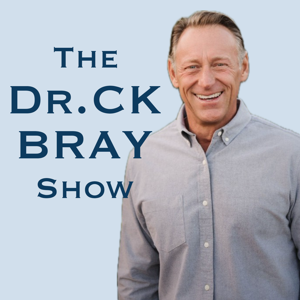


It is an amazing experience when you witness excellence. It doesn't matter whether it is in sports, music, theater, medicine, innovation or your workplace, to name a few. Recently, I attended a community concert featuring a 200-member choir, all under the direction of Juilliard-trained conductors. The performance exceeded all my expectations and was a lesson in brilliance and excellence. This encounter prompted a self-reflective question: how often do people, driven by speed over quality, miss the opportunity to create excellence?
Today's podcast delves into the neuroscience behind why we default to mediocrity, citing our brain's energy. We will also discuss how challenging our comfort zones releases neurotransmitters that boost motivation and enhance learning, suggesting a weekly practice of boundary-pushing activities. The psychological concept of cognitive dissonance is also explored as a force that drives us from complacency to aspiration, alongside the habit loop's role in forming new patterns of excellence. What an incredible way to start out 2024 by committing to excellence as a foundational resolution for the new year.
QUOTES BY DR. BRAY "Try harder, be excellent, decline mediocrity." "Our ability to try is never out of our control." "Mediocrity is a product of our comfort."
Hello, fellow strollers, saunterers, and speed-walkers! Have you ever considered that your daily walk is not just a journey for your feet but also a gala for your brain? Neuroscience and cognitive psychology have teamed up to reveal why putting one foot in front of the other is a smart move, literally! In today's episode, Dr. Bray will share information and examples from a neuroscience and cognitive psychology lens of the top six reasons you should be walking more.
Remember that walking is not just about reaching your destination; it's about enriching your mind, sparking creativity, busting stress, and enjoying friends and family. It can even help you improve at work! Your brain is begging for you to take a walk today.
QUOTES BY DR. BRAY "We should have walking meetings!" "When you walk with friends, you're less likely to not show up." "Walking isn't just about reaching your destination, it's about enriching your mind, sparking creativity, busting stress, and enjoying the company of others."
The beginning of the year is always an exciting time to think about who we are and what we want to accomplish. During the holiday season, a tragic event occurred to a member of the Adaption family that completely changed how I viewed my life and who I wanted to be in 2024. In this episode, I get a bit more personal on my goals for 2024 and how I am focusing more on "Who I Want to Be" versus "What I Want to Accomplish." I am hoping it will motivate you to rethink and revise your goals this year.
QUOTES BY DR. BRAY "When we focus on who we want to be, personal development goals are crucial for your happiness." "Knowing our values helps us navigate life more effectively and form and maintain relationships." "When we're intrinsically motivated we're more likely to persist in the face of obstacles."
In today's podcast, Dr. Bray answers the question, "Is loyalty dead?"
One of the long-lost values we rarely hear of anymore, Dr. Bray explains how loyalty is key to any relationship, whether it be a personal, romantic or a workplace relationship.
Loyalty is often considered a foundational element in developing and maintaining loving relationships. In a romantic context, loyalty can be understood as the commitment and fidelity one partner has to another. This includes emotional and physical fidelity and a commitment to supporting and prioritizing the relationship. When individuals feel secure in their partner's loyalty, it can foster feelings of love and deepen their emotional connection.
On the other hand, loyalty is not limited to romantic relationships and can also play a significant role in friendships and familial relationships. In these contexts, loyalty may be expressed as standing by a loved one during difficult times, providing support and assistance, and maintaining the relationship despite challenges. When individuals experience loyalty from friends and family, it can contribute to a sense of belonging and love, further strengthening these important social bonds. Overall, loyalty is a crucial component in developing and maintaining loving relationships across various contexts.
To learn more about loyalty, read a fantastic article that was recently published in Psychology Today called Love & Loyalty by Hara Estroff Marano. Dr. Bray references and shares the article during his podcast.
QUOTES BY DR. BRAY "Loyalty is a moral principle that needs to be talked about more." "Work should not come first." "These mundane moments of life together are the basis where trust and loyalty begin."
Every human has a longing to connect with others and build relationships. This seems especially difficult in the workplace as workload increases, hybrid work environments decrease in-person contact, and connection activities rarely occur. In this type of setting, we may feel confused about when to open up or how to ask the right kind of questions that help us get to know those we work with better. We often get stuck in the shallows of small talk.
In today's episode, Dr. Bray shares five skills for authentic communication. These five skills help you build and maintain relationships in the workplace. Research shows you are happier and more productive at work if you have friends.
To learn more go to:
**5 Skills for Authentic Communication by Elizabeth Millard. Experience Life Magazine, November/December 2023 Edition.
Today, Dr. Bray delves into the fascinating realm of social neuroscience, connection and what happens in your brain when you feel isolated or left out.
Dr. Bray will share why our brains are inherently designed for social interaction, especially during the holidays. The need to connect with others is a primary driver of human behavior, as vital as our basic needs for food or shelter. This idea is supported by neuroscientific research, showing that social connections are deeply rooted in our neural circuitry.
Dr. Bray will also discuss the impact of social pain and pleasure and the parallels between physical and social pain, illustrating how social rejection activates similar neural pathways as physical pain. This finding underscores the intense impact that social experiences can have on our wellbeing. Conversely, positive social interactions trigger pleasure centers in the brain, underlining the joy and satisfaction derived from meaningful connections.
Lastly, he will examine the implications of our social nature in various aspects of life, including education, work, and mental health. If you need some connection or more oxytocin released in your brain, you want to hear Dr. Bray's tools and tips to increase connection.
To learn more, buy Dr. Matthew Lieberman's book, "Social: Why Our Brains Are Wired to Connect."
I love to read! I often get strange looks and questions when I announce I recently finished a book. I also get interesting questions that range from Am I a speed reader? To how do I read books: audio, paperback, or on Kindle?
In today's episode, I wanted to have a book club on the rules of reading. I often think individuals don't read because of preconceived notions about reading. This podcast will be much different than you think, and you may find a desire to pick up a book, listen to a book or share your favorite book with a friend.
Thanks to Ryan Halliday of the Daily Stoic for writing a fantastic article on the rules of reading. I mixed my thoughts with his to develop a strong list of reading rules.
QUOTES BY DR. BRAY "I don't believe in speed reading. Why would I want to speed read through an absolutely fantastic book?" "Reading is better, lasts longer, and you can recall it faster, if you take notes." "Beat those books up!" "Don't just read books, re-read books!"
Neuroscience in the News! One of our favorite ongoing podcasts, Dr. Bray shares the latest and greatest research in the field of Neuroscience. This week, Dr. Bray will discuss the most recent updates on psilocybin use in the treatment of depression, anxiety, and addictions. Published in the Journal of Psychiatric Practice, a research review and update were conducted on the therapeutic use of psychedelics.
Dr. Bray also shares a new comprehensive study of over 700,000 US veterans on eight lifestyle habits that can extend your life expectancy significantly. Dr Bray reviews the eight lifestyles and also the number of years you can extend your life if you take the advice of this study.
Finally, Dr. Bray discusses creativity and how to increase your creativity on a daily basis. Published in the Creativity Research Journal findings on how creative people best use their time. Of course, this outstanding information comes from Dr. Bray's home state of Arizona.
In this week's podcast, Dr. Bray dives into the mind of a hero and answers the question, "What lays the groundwork for acts of selfless altruism?" Dr. Bray will discuss several events where, every day, normal individuals act in heroic ways, often without even having time to think. Dr. Bray also talks about how to move from self-absorption to altruism and the signs of an altruistic individual.
In a world filled with thoughts of self, the need to think of others and empathize with them in their struggles and failures is to enlarge your humanity. Learn how to take the steps to become more altruistic.
Thanks to Steve Taylor, Ph.D., and his article "The Mind of a Hero" in Psychology Today for his thoughts and research into Heros and altruism.
QUOTES BY DR. BRAY “The less time there is to deliberate, the more likely one is to have altruistic behavior.” “Empathy gives rise to altruism.” “When we have a purpose our lives become less complicated and stressful.”
From the publisher's feed

32,017 Listeners

1,713 Listeners
30,168 Listeners

1,516 Listeners

1,217 Listeners

1,723 Listeners

39,377 Listeners

905 Listeners
10,770 Listeners
989 Listeners
1,571 Listeners

19,273 Listeners

2,024 Listeners

15,960 Listeners
8,465 Listeners