
Sign up to save your podcasts
Or

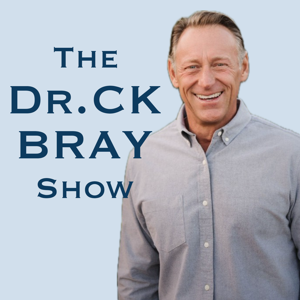


One of my first jobs was as a lifeguard at Alta Canyon Swimming Pool. To earn extra cash, I taught swim lessons. I also worked at Dry Cleaners, a yogurt shop, a pharmaceutical company, and about three other companies/careers before starting the Adaption Institute. One of my favorite things to do at the Adaption Institute when it was just starting was coaching people in their careers. I learned so much from hearing people's stories and experiences.
There is something great about getting the advice of someone who has "been there and done that." My combined experience with those of over 3,000 people I have worked with over the years has come to you in this podcast.
I read an article by Ryan Holiday, who runs the Daily Stoic website and is one of my favorite authors. His article, "37 Pieces of Career Advice I Wish I'd Known Earlier," sparked this podcast. I share some of his, my own, and the advice of those I have worked to help you out, no matter where in your career you are. I am sure you will enjoy it.
QUOTES BY DR. BRAY "Watch people. Use your eyes, not your ears." "Be the driver of your career." "Rarely does something happen faster than we think it will." "You shake the orange tree, and lemons fall out."
Depression is the most common mental health problem in the world. According to surveys, about 1 in 10 American adults will experience a major depressive episode in their lifetime. What is often not discussed is the effects of depression on relationships, both personal and professional.
In today's episode, Dr. Bray unpacks research-backed approaches for maintaining a healthy relationship with friends and family who struggle with depression.
** Thanks to Brett and Kate McKay for their article "How to Maintain a Healthy Relationship with Someone Who's Depressed published on February 20, 2024 on the "Art of Manliness Website"
**To learn more get the book "When Someone You Love is Depressed: How to Help Your Loved One Without Losing Yourself." By Laura Rosen and Xavier Francisco Amador.
QUOTES BY DR. BRAY "Learn all you can about depression." "They need to know you're there with them during the hard times." "There isn't a cure for depression."
In the realm of mental health, the importance of a good night's sleep cannot be overstated. Recent research sheds light on the vital connection between our sleep habits, the natural rhythms of our bodies, and our psychological state. The study brings to the forefront evidence that disruptions in sleep patterns and the body's internal clock — known as circadian rhythms — are not just a result of mental health challenges but may, in fact, play a role in causing and worsening these conditions.
Dr. Bray, a leading expert in the field, will delve into the implications of this groundbreaking study and explore the emerging narratives from the research and how these findings may revolutionize the approach to mental health treatments going forward.
In addition to the implications for mental health, Dr. Bray discusses another pressing issue in the modern workforce: the identification of future leaders in a remote work setting. As the corporate world continues to shift towards remote operations, traditional methods of evaluating potential leaders need to evolve. Dr. Bray will highlight the essential tools required for the effective discernment of leadership qualities from afar while also drawing attention to potential obstacles that could impede the acquisition of reliable information in this new virtual landscape.
With a shift to remote work comes a necessity for a new skill set. Identifying and nurturing these competencies will be crucial for any organization aiming to stay ahead in a rapidly changing professional environment. Dr. Bray shares insights to pave the way for developing these new paradigms in leadership and professional development.
*Sleep, Circadian Rhythm, and Mental Health. Proceedings of the National Academy of Sciences (PNAS). Feb 19th, 2024
*How to Identify Future Leaders in a Remote Environment. KORN FERRY (online article)
QUOTES BY DR. BRAY "When you sleep you need it cool and dark." "When you don't sleep, you're more likely to get triggered and angry." "Take in-person opportunities as often as you can."
It seems like we are more tired and less motivated than ever before.
We often want to "just get through the day" rather than transcend it and seek out excellence in all we do.
What's behind this ebb in energy and the increase in feeling of overwhelm and overload?
In today's podcast, Dr. Bray shares insights into your mental bandwidth. Based on an article from Brett and Kate McKay called "What Happened to Our Mental Bandwidth?" Dr. Bray discusses the changes that have occurred over the last decade that have had a large impact on your mental bandwidth and the implications to energy, behavior, and performance.
He will also share ideas (both old-school and new-fangled) to help you increase your bandwidth and understand the brain bandwidth of others.
*To read the article by Brett and Kate McKay go to https://www.artofmanliness.com/character/behavior/what-happened-to-our-mental-bandwidth/
QUOTES BY DR. BRAY "I highly recommend reading The Shallows" "Our phones are energy vampires." "Start saying NO to things; anything extra or not worth your time."
In this podcast episode, Dr. CK Bray discusses the phenomenon of "Zoom fatigue" and its impact on our brains. He explains that the visual nature of video conferences taxes our brain's resources, as almost half of our brain is devoted to processing visual information. Additionally, the constant staring at screens and prolonged eye contact during video chats can be uncomfortable and lead to misunderstandings. Dr. Bray offers suggestions to combat Zoom fatigue, such as incorporating regular phone calls instead of video conferences, modifying on-camera air time, and improving social dynamics within video conferences. He also emphasizes the importance of taking regular breaks and changing environments to reset our brains.
If you want more information, Dr. Bray highly recommends "Brain Rules for Work: The Science of Thinking Smarter in the Home and in the Office." By John Medina
QUOTES BY DR. BRAY "Video meetings are an energy suck. Sprinkle in some phone calls!" "When you're giving feedback, make sure you're on the same page." "Take breaks! You'll outperform everybody else."
Dr. CK Bray shares insights into the dynamics of group interactions, emphasizing the challenges within teams, citing factors such as in-fighting, asymmetric job distribution, and confusion about goals that hinder their effectiveness. He delves into the neuroscience behind team dynamics, highlighting the critical role of trust, which can be measured through oxytocin levels in the brain. Learn how an experiment involving oxytocin nasal spray revealed its power to foster trust among strangers, shedding light on its impact on team cohesion. Dr. Bray explores Google's Project Aristotle, underscoring the significance of psychological safety and trust in fostering high-functioning teams.
**Read John Medina's "Brain Rules for Work: The Science of Thinking Smarter in the Office and at Home." It is an excellent resource into learning more about today's topic.
QUOTES BY DR. BRAY "Go make your team better!"
Dr. Bray's "Take Your Brain to Work" offers an enlightening journey into the intricacies of our brains and how understanding their workings can revolutionize our professional lives. Dr. Bray delves into the latest neuroscientific research to uncover practical insights that can improve productivity, creativity, and communication in the workplace. Dr. Bray provides evidence-based strategies to enhance individual and team effectiveness.
Whether you're a leader looking to foster a more innovative team culture or an individual striving to achieve peak performance, Dr. Bray serves as a guide to harnessing the power of the brain for professional success.
**Read John Medina's "Brain Rules for Work: The Science of Thinking Smarter in the Office and at Home." It is an excellent resource into learning more about today's topic.
QUOTES BY DR. BRAY "What you choose to expose yourself to will profoundly affect how your brain is going to function." "Your brain doesn't know the difference between good and bad."
We want a high-paying job, but we don't want to work long hours or get the education or training needed to get that job. We want to start a new company or write a book, but we aren't willing to put in the evening hours to begin to accomplish those goals.
In today's podcast, Dr. Bray discusses two important topics. What are you willing to trade off for the goals you want to accomplish or the type of person you want to be? And what is your story or narrative about money?
Dr. Bray dives into these two topics, the impact both have in our daily lives, and how our brain perceives our goals, ambition, and definition of success. This podcast will create some discussions around the dinner table.
References: *Sunday Firesides: There are No Trade-Off-Free Options. Brett & Kate McKay. Art of Manliness podcast. 1/20/2024 *Richard Rohr Daily Meditations. The Story of Accumulation 2/6/2024
QUOTES BY DR. BRAY "Sometimes we think we have more when we actually have less."
"There is one skill that lies at the heart of any healthy person, family, school, community organization, or society: the ability to see someone else deeply and make them feel seen—to accurately know another person, to let them feel valued, heard, and understood."
In working with clients, they often wonder why they:
- Didn't get promoted - Don't have friends at work - Have bad relationships at work and at home - Don't feel understood or heard by others
In today's podcast, Dr. Bray discusses how to engage with others, which we, as humans, don't do well. All around us are people who feel invisible, unseen, and misunderstood. Dr. Bray recently read How to Know a Person, by David Brooks and wanted to share insights, tools, and knowledge to help us do better at connecting with others.
The act of seeing and understanding another person, Brooks argues, is profoundly creative: How can we look somebody in the eye and see something large in them and, in turn, see something larger in ourselves?
Dr. Bray highly recommends this as a 2024 read: How to Know a Person by David Brooks.
QUOTES BY DR. BRAY "Attention is an all-or-nothing thing." "Everyone in a conversation is facing a conflict of self-expression and inhibition."
In today's episode of "Dr. CK Bray Show," we delve into the emotional intricacies of the workplace, a space where drama often unfolds in the form of power struggles, ego clashes, and the all-too-common practice of throwing colleagues under the bus. This episode tackles a question that resonates with many: Why do we take work so personally? The discussion explores whether our jobs are simply a means to an economic end, a yardstick for societal status, a cornerstone of identity, or perhaps all three. Dr. Bray aims to dissect the reasons behind our emotional investment in our jobs and offers strategies and tools to navigate the workplace with less emotional turmoil and more resilience.
QUOTES BY DR. BRAY "When we entangle our self-worth with our work performance, every piece of feedback, everything that goes wrong feels like a personal attack." "Remind yourself that 'This feeling is not who I am'. Emotions come and go." "Treat yourself like you treat other people."
From the publisher's feed

32,017 Listeners
1,713 Listeners
30,168 Listeners

1,516 Listeners

1,217 Listeners

1,723 Listeners
39,377 Listeners

905 Listeners
10,770 Listeners
989 Listeners
1,571 Listeners

19,273 Listeners

2,024 Listeners

15,960 Listeners
8,465 Listeners