
Sign up to save your podcasts
Or



Worried they remove your nipple during a breast explant and lift? Dr. Whitfield explains why he never does — and how he preserves blood supply and sensation.In this live Q&A, Dr. Whitfield breaks down breast explant and lift surgery: when you need a lift after implant removal, how the nipple-areolar complex is repositioned without detaching it, intact capsule removal, scar planning (lollipop vs. anchor), fat transfer for volume and symmetry, and recovery without drains using hyperbaric oxygen, red light, nutrition and sleep optimization.You'll learn:- Do they remove your nipple during explant and lift?- Do you need a lift after explant? Nipple position, skin quality and volume- Scar patterns, healing timeline and symmetry expectations- Fat transfer after explant — what it can and can't do- Recovery, prep phase and why staged surgery is sometimes saferHave a question about explant, lift, or fat transfer? Drop it in the comments for a future Q&A.
Thinking about natural breast augmentation without implants? Dr. Robert Whitfield explains who is a candidate for fat transfer to the breasts, what it can and can't restore, and why preparation matters more than anything. In this episode, learn the 4 most common situations for fat transfer — after breastfeeding, with explant, delayed after explant, and natural augmentation — plus how fat is harvested, processed, and placed, recovery tips, DEXA scan testing, and myths about mammograms and PRP. Have you been told you're too thin for fat transfer? Watch this first. In This Video:- Natural breast augmentation vs implants- Fat transfer with explant and delayed fat transfer- Breastfeeding volume loss: fat vs lift- How fat harvesting and placement works- Recovery, BMI, and keeping your results- Mammograms, age, diabetes and candidacyAbout: Dr. Robert Whitfield with Aloe Skin + Body specializes in holistic breast explant and natural reconstruction.#naturalbreastaugmentation #fattransfer #breastexplant
What if the bacteria we find on breast implants aren't the whole story? Tonight I walk through my own published research — 694 explant samples profiled with next-generation sequencing — and what those results do and do not tell us about biofilm, capsular contracture, and breast implant illness.
I'm Dr. Robert Whitfield, a plastic surgeon in Austin, Texas, and first author of "Clinical Evaluation of Microbial Communities and Associated Biofilms with Breast Augmentation Failures" (Microorganisms, 2024). In this episode:
• Why biofilm is one plausible contributor to capsular contracture — and not a universal explanation
CHAPTERS
Educational only. This is not specific medical advice and does not diagnose anyone. Please take your symptoms, implant history, laboratory results, and treatment options to your own provider. If you have increasing redness, warmth, swelling, drainage, fever, or severe pain with a device in place, seek care right away.
The paper is open access in PubMed and linked on my website, along with my full publication list and Google Scholar ID.
Join me next Thursday for BIA-ALCL and breast implant–associated cancers.
#CapsularContracture #BreastImplantIllness #Biofilm #BreastImplants #DrRobertWhitfield
Why do some women with breast implants develop fatigue, brain fog, joint pain, and dry eyes — even when labs look "normal"?
In this talk, Dr. Robert Whitfield breaks down a 2024 Journal of Clinical Investigation study that found a testable biological pathway: bacterial biofilm → oxylipin 10-HOME (from oleic acid) → TH1 immune activation. This is not proof that biofilm causes every case of Breast Implant Illness (BII), but it is a coherent, testable model worth understanding.
WHAT YOU'LL LEARN:
• Why breast implants were once called "inert" and why that view is changing
• What biofilm is (and why routine cultures miss it)
• The 178-person study design: 86 BII vs 55 non-BII implant vs 37 no-implant
• Why Staphylococcus epidermidis was found in 73.3% of BII samples in sequencing subsets
• What oxylipin 10-HOME is and why it was higher in symptomatic tissue
• How 10-HOME pushed naive human CD4 T-cells toward a TH1 phenotype in the lab
• What happened when 10-HOME was given to mice (TH1 increase + fatigue-like behavior)
• Why this does NOT mean antibiotics or "biofilm detoxes" treat BII today
• What we're still missing — and what future research needs to answer
TIMESTAMPS:
00:00 - The problem medicine hasn't handled well
02:45 - Implants by the numbers: 10M worldwide, 300K/yr in the US
05:10 - From "inert" to inflammation: BIA-ALCL & capsular contracture context
08:30 - What is biofilm? The plaque-on-teeth analogy
14:20 - Inside the study: 178 participants & methods used
18:10 - Key finding: More biofilm in symptomatic capsules
21:00 - The molecule: Oleic acid → oxylipin 10-HOME
26:40 - Human tissue gene activity: TH1 & inflammatory macrophages
31:15 - Lab test: 10-HOME pushes human T-cells to TH1
36:20 - Animal model: 10-HOME in mice reproduces immune + fatigue findings
40:10 - What this means for patients & what's NOT proven yet
42:30 - Q&A: Can we test for biofilm or 10-HOME before explant?
ABOUT DR. WHITFIELD:
Dr. Robert Whitfield is a board-certified plastic surgeon and founder of Aloe Skin + Body in Austin, Texas. He specializes in breast implant illness, explant surgery, and the SHARP Method — addressing genomics, toxicity, gut health, food sensitivities, and hormones.
LINKS:
Book a Consultation: https://www.drrobertwhitfield.com
Join Dr. Rob's Circle (free live Q&A): https://drrobscircle.com
Learn about SHARP & Human Regenerator: https://www.drrobertwhitfield.com
DISCLAIMER: This video is for educational purposes only and is not medical advice. Please consult your own healthcare provider for personal medical decisions. Testing for oxylipin 10-HOME is research-only and not commercially available via Quest, Labcorp, or similar labs.
#BreastImplantIllness #BII #Biofilm
Board-certified plastic surgeon Dr. Robert Whitfield breaks down what molecular testing (PCR and next-gen sequencing) revealed in the scar tissue capsules that form around breast implants. In the largest study of its kind, 694 consecutive capsule samples were analyzed — and 29% tested positive for bacterial contamination that routine cultures often miss.
In this episode:
This is part of Dr. Whitfield's ongoing series on breast explant, breast implant illness, and holistic surgical recovery.
🔗 Community: drrobsircle.com
#breastimplantillness #breastexplant #capsularcontracture #plasticsurgery #drwhitfield
Told you're too thin for a breast fat transfer? Board-certified plastic surgeon Dr. Whitfield explains why that assessment is usually wrong — and how a natural, implant-free augmentation is possible even for lean patients.
In this episode, Dr. Whitfield breaks down how breast fat transfer actually works — prepare, harvest, process, and place — and walks through three real patient scenarios, including a live conversation with patient Jenna, who had her procedure while managing Type 1 diabetes and an autoimmune condition. If you've been told to gain 15–20 pounds or "just accept being flat," this is for you.
What you'll learn:
⚠️ This video is for education only — not medical advice or a consultation.
⏱️ Chapters:0:00 — The "too thin" myth, debunked
📲 Book a discovery call: [add your booking link]
#fatTransfer #breastFatTransfer #naturalbreastaugmentation #plasticsurgery #explant
Three of the most common — and most misunderstood — questions I get in almost every explant consultation: What does "en bloc" actually mean? Why don't I use surgical drains anymore? And what's really going on with forever chemicals, mold toxins, and heavy metals before surgery?
In this episode, I break down:
EN BLOC CAPSULECTOMY — why my goal is always an intact, sealed removal of the capsule (borrowed straight from cancer surgery margin principles), and why that matters if there's biofilm, rupture, or a degrading implant. I even walk through a real case that turned out to be lymphoma.
WHY I STOPPED USING DRAINS — I haven't routinely used a drain in an explant case in over 5 years. The real question isn't "drain or no drain" — it's why your body is making fluid in the first place. I explain the physiology (inflammation, leaky capillaries, cortisol/adrenaline response) and the pre- and post-op protocol I use instead: sleep hygiene, protein intake, nerve blocks, lymphatic massage, hyperbaric oxygen, and red light therapy.
DETOX, FOREVER CHEMICALS & HEAVY METALS — what we actually test for before surgery (PFAS, organophosphates, BPA, phthalates, glyphosate, mycotoxins, heavy metals), how common genetic detox variants like MTHFR show up in our patients, and the honest science on what you can — and can't — do about ongoing exposure.
If you're preparing for explant surgery or just want to understand the real evidence behind these decisions, this one's for you.
Learn more about my approach to explant surgery and BII: https://www.drrobertwhitfield.com/explant
Subscribe for more evidence-based breast implant illness content.
#BreastImplantIllness #ExplantSurgery #EnBlocCapsulectomy #PlasticSurgery #Detox
Three of the most common — and most misunderstood — questions I get in almost every explant consultation: What does "en bloc" actually mean? Why don't I use surgical drains anymore? And what's really going on with forever chemicals, mold toxins, and heavy metals before surgery?In this episode, I break down: EN BLOC CAPSULECTOMY — why my goal is always an intact, sealed removal of the capsule (borrowed straight from cancer surgery margin principles), and why that matters if there's biofilm, rupture, or a degrading implant. I even walk through a real case that turned out to be lymphoma. WHY I STOPPED USING DRAINS — I haven't routinely used a drain in an explant case in over 5 years. The real question isn't "drain or no drain" — it's why your body is making fluid in the first place. I explain the physiology (inflammation, leaky capillaries, cortisol/adrenaline response) and the pre- and post-op protocol I use instead: sleep hygiene, protein intake, nerve blocks, lymphatic massage, hyperbaric oxygen, and red light therapy. DETOX, FOREVER CHEMICALS & HEAVY METALS — what we actually test for before surgery (PFAS, organophosphates, BPA, phthalates, glyphosate, mycotoxins, heavy metals), how common genetic detox variants like MTHFR show up in our patients, and the honest science on what you can — and can't — do about ongoing exposure.If you're preparing for explant surgery or just want to understand the real evidence behind these decisions, this one's for you. Learn more about my approach to explant surgery and BII: https://www.drrobertwhitfield.com/explant Subscribe for more evidence-based breast implant illness content.#BreastImplantIllness #ExplantSurgery #EnBlocCapsulectomy #PlasticSurgery #Detox
Download Chapter 1 of Breast Implants, Explant Surgery, and Breast Implant Illness — FREE → https://robert-whitfield-md-pllc.myklpages.com/l/ScrLbh
📖 Grab Chapter 1 of my book completely free — it covers what breast implant illness actually is, the 3 steps I use with every patient, and a real patient story. No fluff.
→ https://robert-whitfield-md-pllc.myklpages.com/l/ScrLbh
Comment SHARP below if you want more on surgical recovery.
From the publisher's feed
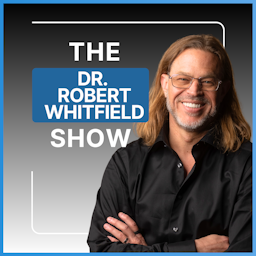
Welcome to The Dr. Robert Whitfield Show. Your trusted source for expert information on cosmetic augmentation devices and what happens when patients choose to have them taken out.
Dr. Robert Whitfield is a board-certified plastic surgeon who has performed thousands of procedures to extract these medical devices. Through candid conversations with patients, surgeons, and medical experts, he breaks down the symptoms, diagnosis, and treatment options for health complications linked to these prosthetics, along with critical information about device-associated anaplastic large cell lymphoma (BIA-ALCL) and other risks every patient deserves to understand.
Whether you're researching your options to have these devices removed, experiencing unexplained symptoms, or simply want straight answers from a surgeon who's seen it all, this is the show for you.

1,071 Listeners

7,230 Listeners

9,157 Listeners
638 Listeners
819 Listeners

131 Listeners

14,736 Listeners
1,545 Listeners
506 Listeners
290 Listeners
1,480 Listeners
1,679 Listeners

1,409 Listeners
32 Listeners
3,131 Listeners