
Sign up to save your podcasts
Or

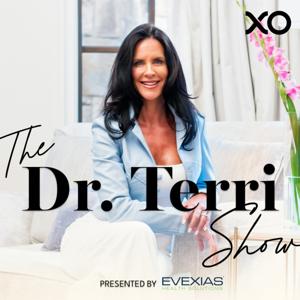


Somewhere around 40, the workouts that always worked stop working. The belly shows up, the energy drops, and the instinct is to do more. Dr. Terri sits down with Dr. Eric Fete to hear his case for the opposite: lift a little, walk a lot, eat enough, and build muscle.
Dr. Fete, DO, is a former emergency physician and the founder of Prime-X in Zanesville, Ohio. He trained at the Chicago College of Osteopathic Medicine, is certified in Age Management Medicine, and now sees patients in person and by telemedicine. He calls his approach muscle medicine.
Together they get into what myokines are and why he treats muscle as more than looks. They cover the simple routine he starts most patients on, how he talks to women about testosterone, and why he puts sleep and stress ahead of peptides and other add-ons. They also talk about the difference between sex drive and erectile function, and why touch and oxytocin belong in the conversation.
What you'll discover
Less heroic training, more sleep, and a foundation worth building on.
Presented by EVEXIAS Health Solutions
https://www.evexias.com
Connect with Dr. Terri
Connect with Dr. Eric Fete
Learn more about your ad choices. Visit megaphone.fm/adchoices
Estrogen patches have gotten hard to find, and a lot of women are being told to just wait it out. That may be the riskiest option on the table.
Dr. Terri sat down with Dr. Carrie Jones, ND, FABNE, MPH, MSCP, at a national clinician conference the same week the FDA held its public meeting on testosterone in women. Dr. Jones is a naturopathic physician and Menopause Society Certified Practitioner known as the Queen of Hormones. She was the first medical director for the DUTCH test and the first head of medical education at Rupa Health, and she now hosts the Hello Hormones podcast.
Together they cover what's really behind the patch problem, why stopping hormones suddenly carries real risk, and how many more options exist than most women (and most prescribers) realize. They take on the reputation of compounding pharmacies: what compounding actually is, where the bad press came from, and why it keeps stepping in when supply runs short. They also get practical about quality, from "research only" peptides to supplements that don't match their labels. And they explain why estrogen, progesterone, and testosterone matter for your heart, brain, and bones long after the hot flashes are handled.
What you'll discover
Presented by EVEXIAS Health Solutions
https://www.evexias.com
Connect with Dr. Terri
Learn more about your ad choices. Visit megaphone.fm/adchoices
[Special bonus episode in reaction to the FDA addressing testosterone use in women.]
For eighty years, clinicians have been using testosterone to treat women. There is still no FDA-approved testosterone product for women in the United States.
In September, the FDA convened a public workshop to examine that gap. In this conversation, recorded in the days beforehand, Dr. Terri sits down with Dr. Cassie Smith, MD, a dual board-certified endocrinologist and the founder of Modern Endocrine in Oklahoma City. Dr. Cassie trained at the Harold Hamm Diabetes Center and spent years running pharmaceutical clinical trials before building a telehealth practice that now serves patients across 45 states. She has seen the approval process from the inside, and she has opinions about it.
Together they take on what the hearing might actually accomplish, why the approval gap has persisted this long, and what it costs the women sitting in their exam rooms. They get into the money: why a hormone that pulls patients off statins, blood pressure medication, and antidepressants is not an attractive product to develop. They get into the paperwork: why testosterone sits on the controlled-substance schedule alongside opioids, what that does to access, and why a patient who forgets her prescription on vacation simply goes without. And they get into the part neither of them can let go of — that the people writing these rules have never spent a day in a clinic watching what happens when you get a woman's hormones right.
What you'll discover
Two clinicians, one hormone, and a regulatory system that has not caught up to its own evidence.
Presented by EVEXIAS Health Solutions https://www.evexias.com
Connect with Dr. Terri
--
00:00 Cold open and welcome
00:05:34 The approval gap
00:16:53 Reference ranges, dosing, and the risk of a bad rollout
00:24:41 Medical freedom and how testosterone became a controlled substance
00:39:24 Who's making these decisions, and who they're hearing from
Learn more about your ad choices. Visit megaphone.fm/adchoices
Nobody Has an SSRI Deficiency: Rethinking Postpartum Depression
A new mother comes in for one visit, gets a diagnosis, leaves with a prescription, and comes back in a month. In a lot of practices that is first-line care for postpartum depression. The problem is that nothing on the list of things that actually crashed after delivery is an antidepressant.
Dr. Terri welcomes back Dr. Johnny J. Peet, MD, a gynecologist with nearly three decades in private practice, for a conversation about what is really happening in a woman's body after a baby, and why he treats postpartum depression almost nothing like he did twenty years ago. Progesterone and estrogen fall off a cliff. Thyroid drops at the same time. Vitamin levels that were fine before pregnancy quietly slip. Add a physical recovery, real anxiety, and no sleep, and his take is that the surprising thing is how many women come through it fine.
They open with the trend Dr. Terri is seeing in her own practice, young premenopausal women asking for estrogen because it is trending online, at the same time patches are getting hard to fill.
If you have been handed a prescription and told that is the answer, this is the conversation nobody had with you.
What you'll discover:
Postpartum depression is common, it is treatable, and it is almost never one problem.
🔗 Find a provider trained in what we discussed: evexias.com
This episode is for educational purposes and is not medical advice. Specific doses, lab targets, and treatment decisions discussed here are clinician-to-clinician and should not be applied without your own provider.
**If you or someone you know is having suicidal or harmful thoughts, please immediately reach out to someone or call 1-833-TLC-MAMA**
00:00 Introduction
00:44 A Real Shift in Women's Health This Year
02:21 Estrogen Trending Online and the Patch Shortage
03:23 What the Black Box Removals Actually Changed
05:45 Receptors, Deficiency, and Mood
07:25 The Four Hormonal Stages of a Woman's Life
09:30 What Actually Causes Postpartum Depression
13:54 Testosterone After the Second Baby
15:55 Screening First, Then Treating
17:01 Partners, Family, and the Village
18:51 An SSRI Is Not First Line
20:09 Progesterone, Estrogen, and Thyroid
22:23 Thyroid, TSH, and the Depression Link
24:05 B Vitamins, Vitamin D, and the Gut
26:57 Testosterone in Women: Mood, Energy, Sex
29:05 Injectable Progesterone and Follow-Up
30:12 Why Women Don't Talk About It
Learn more about your ad choices. Visit megaphone.fm/adchoices
If you are a woman, there is a good chance someone handed you a prescription at 15 or 16 and told you almost nothing. Maybe it was for acne. Maybe it was for cramps. Nobody sat you down and explained that it does not only turn off your ability to get pregnant, it turns off the hormones that were building your brain. We have never followed a generation of women long enough to find out what happens when you start at 13 and stay on it until you are 35. We just did it, and we called it health care.
Dr. Terri sits down with Dr. Sarah Hill, a research psychologist and professor at Texas Christian University who has spent more than 20 years studying women's hormones and neuroendocrinology. She is the author of This Is Your Brain on Birth Control and The Period Brain. Her interest in the subject started personally. After more than a decade on the pill, she went off it and, within three months, felt like parts of herself were coming back online. She went to the research literature to find out why, and found a body of evidence almost nobody was talking about. This conversation covers what hormonal contraception actually shuts down, why the alternatives are less studied than most women are led to believe, and what a generation of young women walking away from it are walking toward instead.
What you'll discover:
The bottom line: We cannot make good decisions without good information. For an entire generation of women, the information was never on the table.
The Dr. Terri Show is presented by EVEXIAS Health Solutions. For more, visit: https://www.evexias.com
Connect with Dr. Terri:
Connect with Dr. Sarah Hill:
Learn more about your ad choices. Visit megaphone.fm/adchoices
Lipedema: The Painful Fat Disorder Doctors Keep Calling Obesity
You've done the diets. You've done the exercise. Maybe you've done hormone therapy, and maybe you've even tried GLP-1 medications. And the weight in your legs will not move. It hurts to be touched. It bruises for no reason. And every doctor you've asked has looked at you and told you to eat less and move your body more.
There's a name for what might be happening, and it is not obesity and it is not your willpower.
Erika Schlick spent nearly a decade being told the same thing. She had already survived a two-year fight to get diagnosed with Lyme disease. Then, after stem cell therapy, she gained more than 50 pounds that no diet, no workout, and no medication would touch. It took eight more years to get an answer: lipedema, a connective tissue and adipose disorder that affects an estimated 1 in 9 women, was first described in 1940, and is still barely taught in medical school.
In this episode she walks Dr. Terri through the hallmark signs most doctors miss, why lipedema fat behaves nothing like ordinary fat, how surgical treatment differs from cosmetic liposuction, and what it actually takes to manage the condition long term.
What you'll discover:
If you have spent years being told your legs are a discipline problem, this episode gives you the language to ask a different question.
The Dr. Terri Show is presented by EVEXIAS Health Solutions. For more, visit: https://www.evexias.com
Connect with Dr. Terri:
Connect with Erika Schlick:
Learn more about your ad choices. Visit megaphone.fm/adchoices
How Long Does It Take You to Wake Up? The Cortisol Cheater Question
You hit snooze six times. You need two cups of coffee before you can hold a conversation. Or the opposite: your eyes open at a level ten, heart already going, anxiety already running.
There is a name for what is happening, and there is a test for it.
Dr. Terri sits down with Carrie Jones, ND, FABNE, MPH, MSCP, the naturopathic physician known as the Queen of Hormones, for a conversation about the hormone testing almost nobody is ordering. Not blood. Not saliva. Urine metabolites, which show you not just how much of a hormone you have, but where it goes after your body is finished with it.
Because that turns out to be the part that matters. Estrogen can travel down three different pathways, and one of them is protective while another is genotoxic. Testosterone can convert into something far more potent, which is why some women get hair loss and jawline acne on a dose that works beautifully for someone else. Progesterone can knock one woman out in ten minutes and do almost nothing for the woman next to her on an identical dose. None of that shows up on a standard panel.
They also spend real time on cortisol, which has become the most misunderstood hormone on the internet. Dr. Carrie makes the case that we are doing to cortisol exactly what we did to estrogen after the Women's Health Initiative: blaming the messenger, missing the message, and reaching for supplements to suppress something the body is doing on purpose.
This one is for anyone who has been told their hormones are fine, or who has tried hormone therapy and quit because of side effects nobody could explain.
What you'll discover:
You are not stuck with the hormone you were dealt. You are working with a pathway, and pathways are modifiable.
The Dr. Terri Show is presented by EVEXIAS Health Solutions. For more, visit: https://www.evexias.com
Connect with Dr. Terri:
Learn more about your ad choices. Visit megaphone.fm/adchoices
Discover the truth behind nutrition myths, intuitive eating, whole foods, sugar cravings, and simple strategies for healthier, sustainable eating.
Carrots are bad. Avocados are bad. Don't eat egg yolks. Eat every two hours. Go gluten free. Detox with tea. As long as you stay under your calories, you're fine.
Every single one of those is wrong. And Dr. Terri and Elizabeth DiMeo are done watching people make themselves miserable following food advice from people who have no business giving it.
In this episode they go myth by myth through the top ten dietary rules that need to be retired — and replace each one with what the science actually says. From why a calorie is absolutely not a calorie, to why your gluten sensitivity may disappear entirely when you travel to Italy, to why organic crackers are still just crackers — this is the food conversation your patients, your family, and your social media feed desperately need.
They close with a practical breakdown of the Dirty Dozen and Clean 15 — the Environmental Working Group's ranked list of which produce you should always buy organic and which ones you don't need to worry about — plus a simple baking soda and vinegar wash that removes pesticide residue from non-organic produce when organic isn't in the budget.
Simple. Practical. No nonsense. This is what intuitive eating actually means.
What you'll discover:
Real food. Not too much. Mostly plants. The rest is noise.
The Dr. Terri Show is presented by EVEXIAS Health Solutions.
Learn more and find a provider near you at evexias.com
Connect with Dr. Terri:
CHAPTERS
00:00 — Intro & Why Food Myths Are Driving Us Crazy
Learn more about your ad choices. Visit megaphone.fm/adchoices
PCOS Is Now PMOS. What the New Name Changes About How You Get Treated
For decades, the diagnosis pointed at your ovaries. Cysts. Fertility. Birth control to regulate the cycle, and a shrug for everything else. This year, that changed. Polycystic ovary syndrome was formally renamed polyendocrine metabolic ovarian syndrome, or PMOS, in a global consensus published in The Lancet. The point was not cosmetic. It was an admission that this was never really a gynecological problem.
Dr. Terri sits down with Dr. Cassie Smith, MD, dual board-certified endocrinologist, founder of Modern Endocrine, and author of Fix Your Gut, Fix Your Hormones, recorded on location at the EVEXIAS provider training. Dr. Smith has been making this argument for years, long before the literature caught up: the insulin, the inflammation, and the gut come first. The hormones are downstream. And if you only treat the hormones, you never actually fix anything.
The conversation runs from the patient who was thin, had no cysts, had one symptom, and whose insulin nobody ever checked, all the way to what is happening right now with GLP-1s, the telehealth prescribing free-for-all, and the muscle loss almost nobody is monitoring.
If you have been told your cycles are irregular and handed a prescription, if you are thin but feel metabolically off, or if you are on a GLP-1 and wondering whether you are doing it right, this one is for you.
What you'll discover:
The rename was the easy part. Now somebody has to start treating the whole system.
The Dr. Terri Show is presented by EVEXIAS Health Solutions. For more, visit: https://www.evexias.com
Connect with Dr. Terri:
Learn more about your ad choices. Visit megaphone.fm/adchoices
Are you tired of conflicting nutrition advice on social media? One day potatoes are "bad," the next day avocados are the problem. In this episode, we cut through the noise and explain why healthy eating doesn't have to be so complicated, and why intuitive eating makes so much sense.
Dr. Terri is joined by Elizabeth DiMeo, MS, CNS, LDN, Director of Education and Clinical Nutritionist at EVEXIAS Health Solutions. A Certified Nutrition Specialist and Licensed Dietitian Nutritionist with 25 years in clinical practice — and a former chef — Elizabeth has spent her career translating nutrition science for both practitioners and patients. She's also the person who will tell you, without apology, that a potato roasted in olive oil with chives and grass-fed butter is not the enemy.
This conversation started as a rant about Instagram and turned into something more useful: an honest look at what "intuitive eating" actually means, why restriction culture has made people afraid of real food, and how clinicians should actually counsel someone who wants to change — not with a list of things to quit, but with things to add. Along the way: the three-day food log that reveals everything, the patient drinking six Big Gulps a day who became migraine-free, what cravings are really signaling, and how reference ranges quietly normalized a metabolic epidemic.
If you're overwhelmed by conflicting food advice, tired of being told everything you enjoy is killing you, or you're a clinician trying to help patients who won't follow a perfect plan — this one's for you.
What you'll discover in this episode:
Food was never supposed to be this complicated.
The Dr. Terri Show is presented by EVEXIAS Health Solutions.
Connect with Dr. Terri:
Learn more about your ad choices. Visit megaphone.fm/adchoices
From the publisher's feed
Ranked by our users in the last 21 days

4,985 Listeners
874 Listeners

64 Listeners

1,266 Listeners

159 Listeners
4,867 Listeners
9,140 Listeners

2,830 Listeners
129 Listeners
1,139 Listeners

66 Listeners

63 Listeners

29,200 Listeners
1,675 Listeners

19,209 Listeners
1,195 Listeners
216 Listeners

11 Listeners
3,141 Listeners
170 Listeners
69 Listeners