
Sign up to save your podcasts
Or

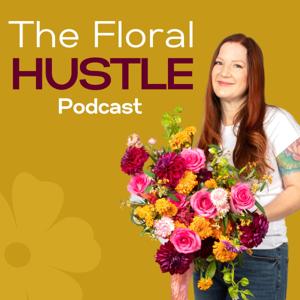


In this minisode, Jen breaks down the 10 habits she consistently sees in florists who are thriving—financially, creatively, and mentally. Inspired by Atomic Habits and grounded in real coaching conversations with florists at every stage, this episode isn’t about doing more. It’s about doing the right things consistently.
If you’ve ever wondered why some florists seem calm, confident, booked, and profitable—this episode pulls back the curtain.
In this episode, we cover:
Calm wedding days come from preparation—not talent alone. Timelines, recipes, mechanics, and labor are reviewed before flower week ever starts.
Average wedding value, labor costs, and profit margins matter. Profitable florists make decisions based on facts, not feelings.
No over-explaining. No apologizing for pricing. Clear, calm communication builds trust and authority.
Boundaries protect energy, creativity, and profitability. Saying no is a business strategy—not a failure.
Confidence is built through action. Posting, raising prices, and trying new designs all come before feeling “ready.”
Templates, workflows, and checklists reduce stress and prevent burnout when things get hectic.
Creativity is treated like a resource—not something to drain dry. Successful florists intentionally seek inspiration and avoid burnout work.
Sustainable marketing rhythms beat burnout posting cycles. Visibility comes from consistency, not volume.
Pricing, offerings, branding, and business models change as florists grow. Reflection and adaptability are key.
10. They think like CEOs, not just designers
Decisions are made with long-term sustainability, alignment, and profitability in mind—not short-term ease.
Key takeaway:
Success isn’t about working harder—it’s about building habits that support the business and life you want.
Resources & Next Steps:
Let’s connect:
DM Jen on Instagram and share:
You don’t need to change everything—just start with one habit that moves you forward.
Most florists think branding is something you do after you’re established — after the logo, the website, the luxury weddings, the polished feed.
But the truth is this: you already have a brand.
And if you don’t intentionally shape it, your clients will shape it for you.
In this episode, Jen breaks down what a brand actually is (and what it isn’t), why your behavior matters more than polish, and how you can start building a powerful, recognizable brand from any stage of business.
This isn’t about aesthetics — it’s about alignment, consistency, and becoming known for something.
In This Episode, You’ll Learn:
Key Takeaway:
A brand isn’t built in polish — it’s built in how you show up.
Your energy, tone, boundaries, and consistency are the brand.
Action Steps:
Brand is a long game — and that’s what makes it powerful.
If you’ve ever felt overwhelmed by installations (or worried something’s going to fall, shift, or turn into a full-blown stress spiral on site)… this minisode is for you.
Jen shares her go-to installation workflow (including why she builds 90% in the studio) plus the exact tools that make installs faster, safer, and way more confident.
In This Episode, We Cover:
Resources Mentioned (Links)
Want to Learn This Hands-On?
Installation Rockstar Workshop
📍 Essence Event Center — St. Paul, MN
📅 March 10–11
🎭 Theme: Old Hollywood Glamour (dirty martinis + pearls + calla lilies)
You’ll build (and photograph!) an epic portfolio:
👉 Details + tickets: http://floralceo.com/workshop
Ever feel like you’re doing “all the right things” — consults, proposals, follow-ups — and still hearing no? In this episode, Jen breaks down what happened after she received three client no’s in a row, how she audited her response times, proposal quality, tone, and energy… and how she turned that slump into four yeses (including higher-budget bookings).
This is a must-listen for wedding florists who want to book more weddings, improve their close rate, and communicate with more confidence, even when life feels heavy.
What You’ll Learn
The “Booking Slump Audit” (Steal This)
If you’re getting no’s, ask yourself:
Key Takeaways
Action Step
Pick ONE lead you’re currently nurturing and do this today:
Mentioned
Want support + structure?
If you’re ready to tighten up your sales process, raise your close rate, and book aligned clients — come hang out with us inside the Floral CEO Mastermind.
If you want 2026 to be the year you finally feel like a confident, profitable, in-control Floral CEO, this minisode is for you.
In this episode, Jeni shares five essential goals every florist should add to their goal list — whether you’re a newer business owner or a seasoned florist who wants more ease, clarity, and profitability.
These aren’t fluffy goals. They’re CEO-level goals that help you stop running your business in reactivity and start running it with intention, strategy, and confidence — without burning yourself out or losing your love for flowers.
🌿 The 5 Goals Every Floral CEO Needs in 2026
1️⃣ Schedule CEO Time (Non-Negotiable)
If you never slow down to look at your business, you’ll always be stuck reacting instead of leading.
CEO time is where clarity happens — reviewing what’s working, what’s not, and what actually feels good.
Action: Schedule a weekly CEO morning, afternoon, or full day where you work on your business, not just in it.
2️⃣ Know Your Numbers (Not Just Your Feelings)
Feelings are important — but facts create profitable decisions.
Understanding your profit margins, labor costs, and where your money is actually going allows you to refine pricing, spot leaks, and confidently grow without guessing.
Action: Make “knowing my numbers” a 2026 goal — even if you start small with one wedding or one month at a time.
3️⃣ Commit to Consistent Networking
Networking is one of the fastest ways to grow a floral business — and most florists avoid it.
When you consistently show up in rooms (or communities) where planners, venues, and industry pros already gather, you shorten the path to better clients and better opportunities.
Action: Choose one networking space and show up consistently this year.
4️⃣ Simplify One System in Your Business
Complexity creates burnout. Simplicity creates profit.
Instead of trying to overhaul everything, pick one system to refine — your inquiry process, ordering workflow, proposal system, or service offerings — and make it easier for both you and your clients.
Action: Ask: If I simplified this one thing, where would my energy open up?
5️⃣ Create Monthly Creative Inspiration
You’re not just a business owner — you’re an artist.
And when creativity dries up, burnout follows fast.
Scheduling intentional creative time keeps you inspired, excited, and emotionally connected to your work — which directly impacts your business growth.
Action: Plan one creatively fulfilling experience every month (a workshop, experiment, installation, or passion project).
💐 Why These Goals Matter
These five goals help you:
This is how you stop surviving and start leading.
🎓 Want Help Implementing These Goals?
If you’re ready for structure, accountability, and creative inspiration, join Jeni inside:
✨ **The Floral CEO Mastermind **floralceo.com/mastermind
✨ Hands-on Creative Workshops
✨ CEO strategy, planning, and support
👉 Learn more at: http://floralceo.com/workshop
👉 Or DM Jeni on Instagram to share which system you’re simplifying this year
🌸 Final Note
You don’t need more goals — you need the right goals.
These five are the foundation of a calm, profitable, aligned floral business in 2026.
You’ve got this, flower friend 💪🌷
Moving Your Floral Business Forward When Life Feels Complicated
Life doesn’t pause when you’re trying to grow a business — and as florists, we often carry more than most. Family responsibilities, grief, health challenges, world events, financial pressure, and creative burnout don’t stop just because we have goals.
In this episode of The Floral CEO Podcast, Jeni shares a deeply honest conversation about what it really looks like to keep moving your business forward when life feels overwhelming, messy, or outright hard.
This episode isn’t about hustling through burnout or pretending everything is fine. It’s about resilience, alignment, micro-momentum, and designing a business that can support you through real life — not just ideal circumstances.
✨ In This Episode, We Talk About:
🌿 Key Takeaways for Florists:
💡 Listener Reflection Questions:
🌸 Final Thoughts
Hard seasons don’t mean you’re failing.
They don’t mean you’re weak.
And they definitely don’t mean you should quit.
They mean you’re human — and capable of more than you think.
This episode is a reminder that progress doesn’t disappear just because life gets complicated. You are allowed to move forward at your own pace, in a way that honors your life and your business.
You’re stronger than this season — and I’m cheering you on.
In this episode of The Floral CEO Podcast, Jen walks you through a simple, real-world way to forecast your floral business revenue—using the bookings you already have (or want) to estimate your average wedding value, close rate, expenses, flower costs, labor, taxes, and ultimately how much you can pay yourself.
Whether you’re a newer florist or you’ve been in business for years but still feel unclear about money, this episode gives you a practical framework to stop guessing and start planning like a CEO.
What You’ll Learn (Key Takeaways)
The Framework Jen Uses (Step-by-Step)
1) Start with your funnel numbers (your real booking pipeline)
Track these numbers:
Close rate formula:
Booked weddings ÷ proposals sent = close rate
Jen’s note:
If your close rate is very high, you may be underpriced (you’re “too easy to book”).
2) Calculate your average wedding value (AOV)
Average wedding value formula:
Total booked wedding revenue ÷ number of booked weddings = AOV
This gives you a usable “planning number” even if you have a few outliers.
3) Forecast income based on your goal number of weddings
If you want to go from 8 weddings to 20, you need 12 more weddings.
Projected revenue formula:
(Goal weddings × AOV) = projected gross revenue
4) Estimate your cost of goods (flowers + supplies)
If you’re still learning sourcing/recipes, Jen recommends being conservative:
COGS formula:
Projected revenue × COGS % = flower/supply costs
5) Subtract fixed “lights-on” business expenses
These are costs like:
Fixed costs formula:
Monthly fixed expenses × 12 = annual fixed expenses
6) Add labor estimates (freelancers)
Example logic from the episode:
Labor formula:
(Hours × rate × number of days/weddings) = labor cost
7) Set aside taxes (don’t get surprised later)
Jen specifically mentions sales tax and recommends setting aside a percentage (often close to 10% in MN depending on location/rate, but use your local rate).
Tax set-aside formula:
Projected revenue × tax % = tax bucket
8) Build profit into the business (a cushion)
Profit is not “whatever is left.” It’s intentional.
Even starting with 5–7% gives you a cushion for growth:
Profit formula:
Net-after-costs × profit % = profit bucket
9) What’s left can become owner’s compensation (pay yourself)
After subtracting:
…the remainder is what you can use to pay yourself (owner’s comp), then plan for income taxes/self-employment taxes depending on your setup.
Practical Action Steps (Do This This Week)
Mentioned in This Episode
Book Recommendation
Profit First by Mike Michalowicz (Jen’s foundational framework for building profit and paying yourself consistently) https://a.co/d/1s9O2mm
Have your New Year’s resolutions already fallen apart — and it’s only January 7?
You’re not broken. You don’t lack discipline. You don’t need a new year.
You need a new approach.
In this episode of The Floral CEO Podcast, Jen breaks down why “going all-in” doesn’t work, why motivation fades fast, and how micro momentum is the missing piece between setting goals and actually achieving them.
This episode is about building sustainable success, not burning yourself out by February.
✨ What We Cover in This Episode
Why Most Goals Fail
Common mistakes that sabotage your goals:
The Real Timeline of Change
If you’ve ever felt discouraged, this will reframe everything:
True transformation happens in layers — not overnight.
Micro Momentum: The Missing Link
Micro momentum is about:
Small wins compound into big change — especially when life is busy.
Real-Life Examples of Micro Momentum
Jen shares personal examples including:
How to Make Goals Actually Happen
You’ll learn how to:
And just as important — what to remove from your plate to create space.
Identity-Based Goal Setting
Instead of asking “What do I want?” ask:
Shift from:
“I want to…”Sustainability Over Hustle
If your goals require burnout to achieve them — they’re not the right goals.
This episode reinforces:
Try This: 24-Hour Micro Momentum Challenge
Momentum starts with starting.
💐 Want More Support?
If you’re tired of winging it and ready for real accountability, strategy, and alignment:
👉 Join the Floral CEO Mastermind
This is where we:
🔗 Visit floralceo.com/mastermind
🌸 Final Thought
You don’t need more discipline.
You don’t need more motivation.
You need clarity, structure, and micro momentum.
And you are absolutely capable of building the life and business you want.
Jen announces her three upcoming floral workshops for the year:
The Installation Rockstar Intensive on March 10-11 in St. Paul, Minnesota, featuring hands-on portfolio building with an 'Old Hollywood Glamour' theme. The Business Bouquets and Branding Workshop on April 26-28 at her family farm in Denison, Minnesota, focusing on business development and branding photography; and the Floral Rockstar Retreat on August 16-18, also at her farm, offering a relaxing yet educational experience with activities like flower arranging, glamping, yoga, and more.
Each workshop includes professional photo shoots, with opportunities for portfolio building and social media content creation. Early bird pricing and payment plans are available.
Life + Business Audit: How to Create Clarity, Alignment, and Sustainable Growth
As the year winds down, it’s easy to feel reflective, overwhelmed, or unsure of what needs to change next. In this episode of The Floral CEO Podcast, Jeni walks you through a powerful life and business audit designed to help you gain clarity, reduce burnout, and intentionally shape the next chapter of your business and life.
This isn’t about judgment, shame, or “fixing” yourself.
It’s about seeing clearly, reclaiming your energy, and choosing alignment over chaos.
Why a Life + Business Audit Matters
Your business does not exist in a vacuum.
If your life feels heavy, chaotic, or unsupported, your business will eventually reflect that.
In this episode, Jeni shares why:
This audit helps you step out of reaction mode and into intentional CEO leadership.
Part 1: Where Are You Right Now?
1. Energy Audit
Take an honest look at where your energy is going — and where it’s being drained.
Rate each area on a scale of 1–10:
Anything consistently under a 5 deserves attention — not guilt.
2. Time Audit
Ask yourself:
Break your time into categories:
Then ask:
Is my time aligned with my priorities — or just my habits?
3. Money Audit
This is where many business owners avoid looking — and where clarity is most powerful.
Reflect on:
Ask the big question:
Am I building a business that supports my life — or one that requires sacrifice without return?
Part 2: What’s Not Working Anymore?
4. Tolerance Audit
Finish these sentences honestly:
What we tolerate becomes our standard.
5. Alignment Audit
Ask yourself:
Small misalignments add up over time.
6. Identity Audit
Shift from:
Ask:
Identity shifts drive behavior change.
Part 3: What Needs to Change?
7. Subtraction Before Addition
Before adding anything new, ask:
Growth doesn’t always mean more — often it means less, done better.
8. Focus Audit: The 3–Thing Rule
Choose:
Ask:
If I focused only on these, would my life and business improve?
Everything else can pause, be delegated, or simplified.
9. Support Audit
You are not meant to do this alone.
Ask:
Support might look like systems, boundaries, therapy, coaching, or community.
Part 4: How Do You Move Forward?
10. Micro-Momentum Planning
Instead of fixing everything, ask:
Small shifts create big identity changes.
11. Future You Check-In
Ask:
Your body often knows before your mind does.
12. Decision Filter Going Forward
Every opportunity should pass through:
If it’s not a clear yes, it’s a no or not right now.
Final Thoughts
You are allowed to:
Your life matters just as much as your business.
Join the Goal Planning Party 🎉
If you want support turning this clarity into action, join Jeni for the 2026 Goal Planning Party:
🗓 January 5th
⏰ 1:00 PM CST
📍 Live on Zoom
📓 Includes a guided workbook
👉 Sign Up 2026 Planning Sign Up
👉 Or comment GOAL on Instagram to sign up
From the publisher's feed
185 Listeners

20,586 Listeners
13 Listeners

33,576 Listeners

240 Listeners
181 Listeners

46,901 Listeners

389 Listeners

31 Listeners

6,173 Listeners

334 Listeners

19,254 Listeners

107 Listeners

18 Listeners

196 Listeners