
Sign up to save your podcasts
Or

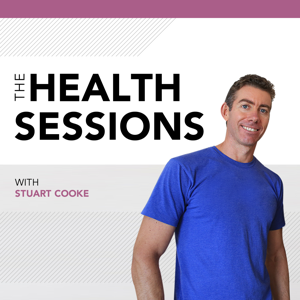


This week, I'm excited to welcome Erika Flint to the show. Erika Flint is an award-winning hypnotist, best-selling author, speaker, and a co-host of the popular podcast series Hypnosis, Etc. She is the founder of Cascade Hypnosis Center in Bellingham, WA, and the creator of the Reprogram Your Weight system. She has assisted hundreds of clients with weight loss by helping them reprogram how they think and feel. Her unique design and approach helps clients tap into their own inherent power and keep the weight off once and for all. Erika lives in Bellingham, WA, with her family including three sweet cats and a happy rescue dog who looks like an ewok and loves to play soccer...
Questions we ask in this episode:
This week I'm excited to welcome Erika Flint to the show. Erika is an award winning hypnotist and bestselling author, who uses her hypnosis techniques to train some of the best minds in the world. She founded the Cascade Hypnosis Center in 2013, to provide relief from a variety of issues, including weight loss, stress and anxiety, smoking, and many more. In this episode, we discuss the techniques involved with hypnosis, and Erika outlines the path she takes in order to get long lasting results. Over to Erika.
Stu
01:18 Hey guys, this is Stu from 180 Nutrition, and I am delighted to welcome Erika Flint to the podcast. Erika, how are you?
Erika
01:26 I am excellent, Stu. How are you doing today?
Stu: 01:28 Yeah, really good thank you. Really good. Thank you so much for sharing some of your time. First off, before we dive into the questions, I'd just love it if you could, for all of our listeners that may not be familiar with you or your work, just tell us a little bit about yourself.
01:42 Sure. Well, about seven years ago, I was a software engineer, and I was working in Silicon Valley on different software platforms and programs. And when I realized I needed something more out of my life. And I went through a really low point in my life. And through that adversity on the other side, I realized I needed to do something different. And so, this is when I found hypnosis. And now, I am a three-time bestselling author on hypnosis. I'm an award winning hypnotist, and an award-winning a hypnotherapy instructor. I have a hypnosis center here in Bellingham, Washington. We're about 90 miles north of Seattle, Washington. And, where I have four other hypnotists who work at our center. And we help people with a variety of things. Most of my time is spent teaching people how to become hypnotists. So, helping people do that, and then also helping people lose weight, and slow down on the drinking, and get rid of anxiety. Those are the three areas that I really focus on helping people with.
For more interview and transcript:
https://180nutrition.com.au/180-tv/erika-flint-interview/
This week, I'm excited to welcome Cyrus Khambatta to the show. Cyrus Khambatta received his PhD in nutritional biochemistry from the University of California at Berkeley. He started Mangoman Nutrition and Fitness in 2013 to teach people with diabetes how to measure, track, and reverse insulin resistance through plant-based nutrition and strategic exercise. Through nutrition education, exercise coaching, and his personal experience as a person with type 1 diabetes, he positively influences the lives of people with both type 1 and type 2 diabetes around the world.
Questions asked in the episode - Mainstream advice for anyone with diabetes is to follow a low-carb diet… what are your thoughts? - How does diet impact our blood sugar levels and which foods/diets are the worst offenders? - If we decide to follow a plant-based diet, would you recommend supplementing?Susie Garden has had a varied career but always with one thing in common – health and caring for people. She started off her career as a Registered Nurse and from there has held numerous healthcare related roles in the hospital, industrial and corporate sectors. She's survived two redundancies and corporate burnout and is currently absolutely committed to mentoring women and supporting their health journeys
Having worked in the 'sickness' model where illness is treated once it presents, she is convinced that the 'wellness' model is the most sustainable option moving forward. Preventing disease in our bodies with nutritious food, functional movement and connecting the body and mind, allows us to lead longer and happier lives.
Susie has founded The Wellness Clinic in Brisbane, is host of the popular podcast The Wellness Glow® and has created the transformational group online program, The Anxiety Taming Method.
Susie is now a regular contributor to One Green Planet and her work has been featured on fitandhealthytravel.com, Silent Earth and Kylie Pax's Ditch the Diet Bootcamp.
Questions asked in the episode - Where might we start when wanting to tackle anxiety? - Do certain foods feed anxiety? - How important is gut health for a calm and controlled mind? for more interview and transcript: https://180nutrition.com.au/180-tv/susie-garden-interview/Matt Chaplin is a performance coach with a focus on health and wellness. He has been working in the training arena for over twenty years. His passion and interests are driven by optimising health for the purpose of longevity. Matt combines ancestral and new age thinking and techniques to enhance his clients health and fitness journey. "What Ive learnt over the years is that being the best version of myself is more than just incorporating movement. Its a health-life wheel. Its about balance and embracing a holistic lifestyle that encompasses exercise, nutrition, sleep habits, breath work, the environment and many other factors and influences. Adapting these principles has helped me to create and develop the Health Matrix Program.Once balance comes into play, you can alleviate stress and live a life thats full and healthy and, as a result your overall life satisfaction and happiness levels increase. After all Health is for Life.
Questions we ask in this episode:
http://180nutrition.com.au/
This week, I'm excited to welcome Matt Chaplin to the show. Matt's a veteran of the fitness industry who transitioned from the pace of the city to set up a more holistic studio in Byron Bay. His vision is to promote health, wellness and optimize human performance with longevity as a constant focus. In this episode we discuss how to determine the best exercise and movement program for ourselves with so many options available.
01:09 We also dig deep into restoring the body for recovery and performance and discuss how to use our environment to optimize our health. Over to Matt.
01:21 Hey guys, this is Stu from 180 Nutrition and I am delighted to welcome Matt Chaplin to the podcast. Matt, how are you?
Matt
01:28 Good, thanks, Stu. Thank you for having me.
Stu
01:29 Matt, I'm very excited to dial in [inaudible 00:01:32] today, so really appreciative of your time. But first up, for all of those that may not be familiar with you, your work, I just wondered if you could tell us a little bit about yourself please.
Matt
01:45 So I'll go back to the start. I was born in a small country town, grew up in a small country town, which was just based around. You went to school, you played sport till it went dark, you had dinner, and you wanted to go play more sport. That was life up until I finished school. Then I moved to the big smoke of Melbourne and I originally went there to play cricket. But my body let me down really badly by the time I was 22. Shin splints, I tore muscles, osteo pubis, you name it. I was a broken man at 22 and that led me to the personal training career that I'm in now because I wanted to work out how to fix my body cause I knew I'd broken it down by training really hard push, push, push the work out.
02:34 Right. How do I fix this? So then I cut my teeth in personal training in Melbourne and I spent 20 years there.
for full transcript and interview:
https://180nutrition.com.au/180-tv/matt-chaplin-interview/
This week, I'm excited to welcome Dr. Dave Rabin to the show. Dr. David Rabin MD, PhD is the chief innovation officer, co-founder and co-inventor at Apollo Neuroscience Inc. In his role, Dr. Rabin is developing Apollo Neuroscience's IP portfolio and running clinical trials of the Apollo technology, the first scientifically-validated wearable system to improve focus, sleep and access to meditative states by delivering layered vibrations to the skin. Dr. Rabin is a board-certified psychiatrist, translational neuroscientist, inventor and has been studying the impact of chronic stress in humans for more than 10 years. He has specifically focused his research on the clinical translation of non-invasive therapies that improve mood, focus, sleep and quality of life in treatment-resistant illnesses. Dr. Rabin received his MD in medicine and a PhD in neuroscience from Albany Medical College and trained in psychiatry at Western Psychiatric Institute & Clinic at the University of Pittsburgh Medical Center.
Dr. Rabin organized the world's largest controlled study of psychedelic medicines in collaboration with colleagues at Yale, the University of Southern California, Mt. Sinai, I'Dor, Modern Spirit, and MAPS (Multidisciplinary Association of Psychedelic Studies) to determine the mechanisms of the dramatic therapeutic benefits observed following psychedelic-assisted psychotherapy in treatment-resistant mental illness. Biological specimens are being collected from the first cohort of patients diagnosed with treatment-resistant PTSD in the MAPS FDA phase 3 double-blind randomized placebo-controlled crossover trial that began in 2019.
Dr. Rabin is also the founder and executive director of the Board of Medicine, a nonprofit charity focused on improving the safety and effectiveness of medication-based treatments for patients and healthcare providers. Dr. Rabin built and led a team of expert physicians and scientists to spearhead the development of the world's first evidence-based peer-reviewed clinical guidelines for the safe use of medical cannabis and other complementary and alternative medicines. The Board of Medicine uses these guidelines to train and certify healthcare providers and industry partners, as well as to provide quality control standards for natural and unregulated medicines to support the community goals of high-quality clinical research and harm-reduction.
Dr. Rabin continues his clinical psychiatry practice providing psychiatric treatment as well as psychotherapy services to his clients and patients in California and Pennsylvania.
Questions we ask in this episode:
This week, I'm excited to welcome Dr. Dave Rabin to the show.
00:48 Dr. Rabin is a board certified psychiatrist and neuroscientist who specializes in the treatment of chronic stress. He's the co-founder of Apollo, a new wearable wellness device scientifically validated to lower stress. In this episode, we discuss how touch and vibration can positively impact HRV, that's heart rate variability, and learn how the Apollo can adapt to enhance focus recovery and sleep. Over to Dr. Rabin. Hey, guys. This is Stu from 180 Nutrition, and I'm delighted to welcome Dr. David Rabin to the podcast. Dr. Rabin, how are you?
Dave
01:29 Good, thanks. How are you, Stu? I really appreciate you having me.
Stu
01:32 I really appreciate you sharing some of your time. I know that we got lots to talk about this morning and there's a particular device that we're really intrigued in finding out a lot more about. Before we dial into that, and for all of our listeners that may not be familiar with you or your work, I'd love it if you could just tell us a little bit about yourself please.
Dave
01:53 Sure. I'm a psychiatrist and a neuroscientist. I see patients currently focused on treatment resistant, posttraumatic stress disorder, depression and anxiety, substance use disorders and chronic pain, insomnia, pretty much most mental health conditions that are worsened by stress and some of them that crossover even into physical health. That's a lot of conditions and we see a lot of overlap between those conditions in people. I was working with those patients for a while and I realized that there were a lot of commonalities between these folks that prevent them from achieving their therapeutic goals from treatment. If you have anxiety or depression, your goal of treatment is to feel less anxious and feel happier during the day and have more energy and sleep better at night.
02:41 But less than 50% in a lot of cases are getting that kind of result from their depression treatment in Western medical situations. I started to look at other techniques for how we could help people access those skills and access better sleep, better focus, better energy levels during the day, better mood, that we're starting to look into sort of where Eastern and Western medicine meet, really looking at the breathwork biofeedback and starting to look at meditation and mindfulness practices and the neuroscience of that, right, and how we've evaluated those over the years.
03:19 We know that biofeedback practices boost heart rate variability, something that we'll probably talk about a little later, and heart rate variability turns out to be really interesting, particularly in this day and age, because it is the rate of change of the heartbeat over time, which doesn't sound that interesting. But when you actually look at it more deeply, what you see is that heart rate variability is the single biggest predictor of the effect of stress on our bodies over time. It causes these imbalances in our autonomic nervous system, our stress response system, our recovery response system that prevent us from recovering effectively and then that impairs our performance down the road. Heart rate variability allows us to evaluate that.
03:58 We saw the patients you have PTSD, depression and anxiety all have low heart rate variability. People who have chronic pain, insomnia, they all have low heart rate variability almost across the board. That's really interesting because their bodies and their reports from their mouth when they talk to me would say or my colleagues would say, "I feel really stressed out. My body's always under duress, always under threat. Never feeling like it can rest, take a break, truly feel safe." All of these kinds of language was used. We developed Apollo as a strategy to help give people something that's accessible, that's a wearable technology.
04:37 It vibrates in a very gentle frequency of sound that stimulates the nervous system very much like biofeedback through our sense of touch to help balance the nervous system. We wanted to make something that was accessible and easy for people to use that could actually have realtime benefit in terms of improving our autonomic nervous system balance and helping us access high performance states, high recovery states, and meditative states more effectively.
This week, I'm excited to welcome Chris Burres. He is the co-founder of SES Research and one of the leading experts on C60, particularly in olive oil. And that's just what I want to talk with him about today, one of the coolest new compounds on the block and how its antioxidant benefits are making it one of the most sought-after products in the world.
Questions we ask in this episode:
http://180nutrition.com.au/
Stu
This week, I'm excited to welcome Chris Burres to the show. Chris is the owner of SCS Research, the first company to deliver nanomaterials and MyVitalC, which is the world's first nano-antioxidant. In this episode, we talk about the Nobel prize winning chemical that was proven to almost double the lifespan of mammals, and how he decided to make this into a household item. He's now on a mission to help people live longer, healthier, and pain-free lives. Over to Chris.
01:17 Hey guys, this is Stu from one 180 Nutrition, and I'm delighted to welcome Chris Burres to the podcast. Chris, how are you?
Chris
01:24 I am doing wonderful, Stu. I had to adjust my note from Stuart to Stu, so I can fit in on the podcast. That's what I want to do. I'm doing wonderful. I want to thank you for having me today.
Stu
01:35 Yeah, no, fantastic. Well, look, very intrigued to get into our topic, which we'll talk about in depth in a second, but first up, for everyone out there that may not be familiar with you or your work, I'd love it if you could just tell us a little bit about yourself.
Chris
01:53 Sure. So, really, we're here today to talk about a a mouthful, and that is carbon nanomaterials.
Stu
02:00 Yes.
Chris
02:00 I've been a carbon nanomaterial manufacturer since 1991. I started the company when my business partner was actually separating the materials for a Dr. Paul Chiu, at the Texas Center for Superconductivity, that's here at the university of Houston, go Cougs! And, at the time the material, was actually selling for about $6,000 a gram.
For full transcript and interview:
https://180nutrition.com.au/180-tv/chris-burres-interview/
This week we welcome Martin Silva to the show. Martin is a transformation coach, award-winning fitness model, public speaker and a personal trainer with over a decade of experience in the fitness industry. Find out how Martin's life changed when he put health before aesthetics with a clean diet and a clean lifestyle.
Questions we ask in this episode:
https://180nutrition.com.au/
Stu
This week I'm excited to welcome Martin Silva back to the show. Martin is a transformation coach, award-winning fitness model, public speaker, podcaster, the list goes on. He's a rare breed in the fitness industry as his focus is geared towards a wholistic approach, with longterm health as his main goal. In this episode we talk about the common misconceptions that he experiences time and time again in health and fitness space. We talk about eating more, not less in order to get the body you want. And also dig deeper into recovery, sleep and the importance of routines. Over to Martin.
(00:01:21):
Hey guys, this is Stu from 180 Nutrition and I am delighted to welcome back Martin Silva to the podcast. Martin, thank you so much for coming back on again. How are you mate?
Martin
(00:01:32):
My pleasure. I'm great, thanks Stu.
Stu
(00:01:34):
Well that's great. Really, really excited to connect with you today. And a couple of reasons obviously to connect with you and dial into all the knowledge that you have accrued over the years in your industry. But secondly to welcome and introduce and announce you as an ambassador to 180 Nutrition. And so thank you so much for coming on board with us. And just to give our listeners a little bit of a heads up, particularly interested in connecting with you because of a number of things that you do. Obviously you're into personal training and wholistic movement, but at a much deeper level than I see lots of other people doing it. And I'm very interested in anybody who talks about sleep and mindset and motivation as well as nutrition and movement and all the other habits out there as well.
Stu
(00:02:28):
And you apply that to yourself and your clients with a very holistic and natural route, which I think is super rare in the industry, that is tainted with toxic messages and less than authentic supplementation and substances and things like that. So really keen to welcome you onboard. Thanks for sharing some time this morning. But for anyone out there that hasn't heard of you before, it would be great for you just to tell us a little bit about yourself too.
Martin
(00:02:59):
Sure. Firstly, thank you for welcoming me on board. And it's an absolute pleasure, once again, the pleasure's all mine Stu. And yeah, just a little bit more about my background. So where do I start with this? So in terms of personal training, I have been doing this for almost 15 years now. Always juggling a few things. Doing the online coaching, I've been doing that so I've got a handful of people I coach online. I've been doing that for over five years now as well. But just to track back to when I first qualified as a trainer, back when I was like 19 years old. And prior to that I was always competitive, always play in sports from a young age, always had that competitive nature. But when I first started lifting weights properly and consistently, I first picked up a dumbbell when I was about 14 and I got really consistent with it from the age of around about 16.
(00:03:53):
And I never looked back really. I fell in love with it and it was transferred over to my rugby as well, because I was playing rugby at the time. And it just became my passion then and as I said, by three years later, then by the age of 19 I was a qualified personal trainer. So been doing it for a while and eventually then I got into bodybuilding as well. So I'm a pro level natural bodybuilder, although I've competed in Federation, I've never actually competed in a natural Federation. So just to verify that I've always competed in IFBB or WBFF and then non-tested Federation. So, because I put so much work into lifting weights and into essentially training and exercise over the years, and genetics play a part in that as well I'm not going to deny that. I can compete against the best in the world, people who are taking stuff, performance enhancing stuff, ie steroids, I'll just say the word don't know why I'm swerving around [inaudible 00:04:54].
For full interview and transcript:
This week, I'm excited to welcome Dr Will Cole. He is a leading functional-medicine expert specialising in investigating the underlying factors behind thyroid, hormone, autoimmune, digestive and brain problems. He is the author of the bestselling books Ketotarian and The Inflammation Spectrum and consults worldwide via webcam, with offices in Pittsburgh.
Questions we ask in this episode:
Stu
(00:17) Hey, this is Stu from 180 Nutrition and welcome to another episode of the Health Sessions. It's here that we connect with the world's best experts in health, wellness and human performance in an attempt to cut through the confusion around what it actually takes to achieve a long lasting health.
Now I'm sure that's something that we all strive to have. I certainly do. Before we get into the show today, you might not know that we make products too. That's right. We're into whole food nutrition and have a range of superfoods and natural supplements to help support your day. If you are curious, want to find out more, just jump over to our website. That is 180nutrition.com.au. and take a look. Okay, back to the show.
This week I'm excited to welcome Dr. Will Cole. Dr. Cole is a leading functional medicine expert specializing in investigating the underlying factors behind thyroid, hormone, auto-immune, digestive, and brain problems. He's the author of the bestselling books, Ketotarian and The Inflammation Spectrum and consults worldwide via webcam with offices in Pittsburgh. In this episode we talk about the rise in allergies, sensitivities and autoimmune conditions and the best methods to test and treat these issues. Now, the audio is a little sketchy on this conversation, but hold tight as the information Dr. Cole shares is priceless over to Dr. Cole.
Stu Hi guys, this is Stu from 180 Nutrition and I'm delighted to welcome Dr. Will Cole to the podcast. Dr. Cole, how are you?
Dr. Cole I'm doing great. How are you?
Stu Very well, thank you, and again very appreciative of your time. I know you're a super busy guy and we're going to get into what you do in a minute, but first up, for all of our listeners that may not be familiar with you, your work, your books, et cetera, I'd just love it if you can just tell us a little bit about yourself please.
Dr. Cole Yeah. So I am a functional medicine practitioner. So my day job is consulting patients around the world, via a virtual functional medicine practice. So we're consulting them via webcam. My job is to get to the root cause of why they're struggling with their health issues. So whether that's auto-immune issues or hormonal problems or digestive problems, neurological issues, my heart and passion is really to find out why they're struggling. And it's really a sacred responsibility in my opinion. It's a sacred responsibility for me at least to be a part of somebody's health journey. So yeah, I've been doing this for 11 years at this point over that, consulting patients online and my post doctoral education and training is in functional medicine, clinical nutrition. That's really what my passion is and I'm immersed in that space. Getting labs and getting super geeky and putting numbers on spreadsheets and people will have reasons of why they feel the way that they do.
And yeah, when I'm not seeing patients, I'm writing about functional medicine. So I've written articles for the past 11 years on these topics and I [inaudible 00:03:31] instructor and wellness expert for mind body green, one of the largest websites in the world for a long time. They launched shortly after that for Goop, which has been a [inaudible 00:03:42] wellness brand as well. I cohost the Goopfellas podcast, which is Gwenyth and Elise's first spinoff of the main Goop podcast with Gwenyth and Elise host the main one and my friend Seamus Mullen and I host the Goopfellas podcasts and I write books about this stuff too. So I've written Ketotarian, which is the mostly plant-based ketogenic book and The Inflammation Spectrum, my newest book. Which is about inflammation and how inflammation exists on a spectrum and all food and non-food ways, lifestyle ways to calm inflammation because it's such a commonality between so many health problems, autoimmune conditions, neurological symptoms.
For full transcript and interview:
https://180nutrition.com.au/180-tv/dr-will-cole-interview/
This week, I'm excited to welcome Dr Gurpreet Padda. A graduate of the University of Missouri-Kansas City Medical School, Dr. Padda served residencies in surgery and anesthesia. He is board certified in pain medicine, anesthesiology and age management. He also holds an MBA from St. Louis University.
He is a member the American Academy of Cosmetic Surgery, American Society for Laser Medicine and Surgery and has completed certification programs with the International Society of Cosmetogynecology in Abdominoplasty and Liposuction under local anesthesia.
Questions we ask in this episode:
http://180nutrition.com.au/
This week I'm excited to welcome Dr. Gurpreet Padda. Dr. Padda is a board-certified MD and the Medical Director of Reversing Diabetes MD. This online space features protocols designed to reverse disease in patients who are overweight or already have established prediabetes or diabetes. In this episode we talk about the secret to becoming a type 2 diabetic. We discuss common industry myths and how the Reverse Diabetes MD protocol can help address this global epidemic. Over to Dr. Padda.
Hey guys, this is Stu from 180 Nutrition and I am delighted to welcome Dr. Gurpreet Padda to the podcast. Dr Padda, how are you?
Dr Gurpreet
01:50 Excellent.
Stu
01:51 Good stuff. Well, look-
Dr Gurpreet
01:52 I appreciate being here.
Stu
01:52 Oh well look, we appreciate you sharing some of your time, especially on a late Sunday afternoon as well, so thank you for that. But first up, for all of our listeners that may not be familiar with you or your work, I would just love it if you could tell us a little bit about yourself before we get into the questions.
Dr Gurpreet
02:10 Yeah, so I'm a clinician. I actually practice medicine every single day. I see patients every single day. I started off as a physician, treating patients with extremely complex medical problems. I do interventional pain, so I see patients that have just horrendous symptoms and in my career, as I started to treat them, I realized that they had a commonality. You know, everybody talks about patients having fibromyalgia, people talk about patients having all of these symptoms, and I kept coming back to, well, what's the common root cause for all of this? Is there something that I can treat? And it seemed to be progressing. It seemed to be getting worse. I'm 55 years, I started my career 30 plus years ago, and I've seen a dramatic shift in the patient population. This is not the same population that I started with when I first started. Patients were never this heavy, patients weren't this diabetic. And now, three quarters, more than three quarters of my patients, are diabetic.
And so I'm trying to figure out, why is it that we've had this epidemic of diabetes? And what is it that we can do about it? And it brought me through a whole bunch of rabbit holes. I dug deep to figure this out. And it turns out it's been in front of us the whole time. It's the food that we're eating. We don't have an epidemic of diabetes. We have a pandemic of diabetes. If animals eat the same food that we eat, which is the standard American diet, they get the same disease. And at this point, we have rats in New York that are gigantic, that are diabetic, and they're cognitively impaired, like Alzheimer's, and they're venturing out in the daytime because they have all this growth hormone, which is insulin pumping through their bodies, they're gigantic, and their brains are defective and they're out in the daytime and they're dying. And so if you look at tourist places where you used to have thin dogs, and now thee tourist places have extremely fat dogs. You look at the monkeys at locations, the monkeys are getting huge.
And it's not that we didn't feed them before, we're feeding them something different now. And those are the kinds of the conclusions that have come about. So we know how to make somebody diabetic now, I can guarantee I can make somebody diabetic in about two weeks.
To view full interview and transcript:
https://180nutrition.com.au/?p=53463&preview=true
This week, I'm excited to welcome Jake Steiner. Jake Steiner (SHTY-nuh) is a passionate advocate for eye health with a unique perspective: that we can reverse myopia (AKA nearsightedness) naturally. After a decade of research, Jake compiled enough peer-reviewed academic data to back his hypothesis that we've been looking at myopia all wrong, that the 100-billion-dollar-per-year retail optometry industry is little more than a cash cow, that our eyes are not broken, and that myopia is reversible. He's here to share his journey from a -5 diopter prescription to perfect 20/20 vision, as well as simple tips to help you naturally regain your perfect vision.
Questions we ask in this episode:
https://180nutrition.com.au/
This week, I'm excited to welcome Jake Steiner. Jake is a stock trader and investor by day, and moonlights on myopia science, and creating awareness about the reality of human eyesight. Jake entirely eliminated his minus five diopter myopia and in the past decade, has helped over 1.2 million people reduce their dependence on corrective lenses. In this episode, we talk about the everyday practices that could be unknowingly impacting our eye health and the strategies that we can use to improve our eyesight naturally. Over to Jake.
Hey, guys. This is Stu from 180 Nutrition, and I'm delighted to welcome Jake Steiner to the podcast. Jake, how are you?
Jake
01:30 Excellent. How are you doing, Stu?
Stu
01:32 Yeah, really good. Really good. Thank you so much for connecting. I think we're going to be talking about some things today that will intrigue people and prompt curiosity, and want to find out a lot more. So really, really looking forward to this conversation. But first up, for all of our listeners that may not be familiar with you or your work, I would love it if you could just tell us a little bit about yourself.
Jake
01:57 Sure. So I am an investor and a stock trader by trade, and I deal with eyesight more as something that started as a side hobby and a personal pursuit of mine, and that somehow over the years has turned into this big thing of discussing eyesight online with tens of thousands of followers and lots of discussion about myopia and its real causes.
For full transcript and interview:
https://180nutrition.com.au/180-tv/jake-steiner-interview/
From the publisher's feed
7,181 Listeners

8,502 Listeners
3,605 Listeners
1,701 Listeners
5,115 Listeners

7,997 Listeners
1,115 Listeners
1,089 Listeners
57,607 Listeners

29,187 Listeners
583 Listeners
217 Listeners