
Sign up to save your podcasts
Or

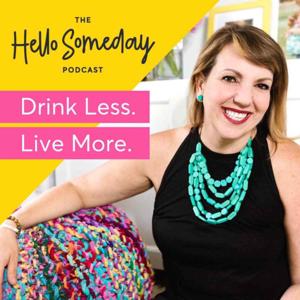


Based on Podcast App listening data
Finding your identity in sobriety can be scary for many women when they stop drinking.
For years I described myself as a “red wine girl” and drinking was essentially my favorite hobby.
I surrounded myself with other people who loved to drink so my social life, activities, favorite places, traditions and relationships were deeply intertwined with alcohol.
When I stopped drinking I didn’t know what I enjoyed without drinking.
Maz Compton, host of the Last Drinks podcast and I are here to dig into how to find your identity in sobriety.
Maz knew she had a problem with alcohol when she couldn’t stop saying yes to it, despite having a high-powered career and success in all the externally visible areas of her life.
Once she stopped drinking Maz had to figure out who she was, her interests and identity without alcohol.
For full shownotes and to access resources mentioned in this episode, head over to www.hellosomedaycoaching.com/141
Ready to drink less + live more?
If you’re ready to change your relationship with alcohol join The Sobriety Starter Kit.
It's my signature sober coaching course for busy women to help you drink less + live more.
To enroll go to www.sobrietystarterkit.com.
Grab the Free 30-Day Guide To Quitting Drinking, 30 Tips For Your First Month Alcohol-Free
Connect with Casey McGuire Davidson
To find out more about Casey and her coaching programs, head over to her website, www.hellosomedaycoaching.com
Highly Sensitive People may turn to alcohol as a tool to numb overwhelming situations or as a coping mechanism to dull strong emotions.
Alcohol has been described as a “mute button” for highly sensitive people in a world that is often too loud.
It’s estimated that 15 to 20 percent of the population are HSPs and 1 to 2% of the population are true empaths. An empath is a person who is highly sensitive to the feelings and emotions of those around them and may absorb those feelings as their own.
I asked Nikki Eisenhauer, an International Life Coach and Psychotherapist, Licensed Professional Counselor, Yoga and Meditation Teacher and the host of the wildly popular podcast, Emotional Badass, to share how to navigate the world as a highly sensitive person or empath without turning to alcohol.
For full show notes and to access resources mentioned in the episode, head to www.hellosomedaycoaching.com/140
Ready to drink less + live more?
If you’re ready to change your relationship with alcohol join The Sobriety Starter Kit.
It's my signature sober coaching course for busy women to help you drink less + live more.
To enroll go to www.sobrietystarterkit.com.
Grab the Free 30-Day Guide To Quitting Drinking, 30 Tips For Your First Month Alcohol-Free
Connect with Casey McGuire Davidson
To find out more about Casey and her coaching programs, head over to her website, www.hellosomedaycoaching.com
How can couples heal and recover from infidelity once trust in an intimate relationship has been shattered by an affair?
The first step, after the sexual acting out has stopped, is to understand and treat the betrayal trauma.
In addition to learning about and coping with infidelity, an affair, sexual acting out, pornography use or sex addiction itself, the partner who has discovered infidelity is also suffering from betrayal trauma that is often not appreciated or fully understood.
Betrayal trauma is a form of trauma experienced when there is a loss of trust between spouses or those in committed relationships due to physical adultery, an emotional affair, sex or porn addiction or other sexual behavior outside the relationship and can result in PTSD symptoms in the betrayed partner.
Marnie Breecker and Duane Osterlind, Marriage and Family Therapists and Certified Sex Addiction Therapists, are here to share how to help couples heal and recover from infidelity, sex addiction, emotional affairs and betrayal trauma.
For full shownotes and to access resources mentioned i this episode, head over to www.hellosomedaycoaching.com/139
Ready to drink less + live more?
If you’re ready to change your relationship with alcohol join The Sobriety Starter Kit.
It's my signature sober coaching course for busy women to help you drink less + live more.
To enroll go to www.sobrietystarterkit.com.
Grab the Free 30-Day Guide To Quitting Drinking, 30 Tips For Your First Month Alcohol-Free
Connect with Casey McGuire Davidson
To find out more about Casey and her coaching programs, head over to her website, www.hellosomedaycoaching.com
In early sobriety, it’s important to have tools and practices to help you overcome alcohol cravings.
It’s normal to have cravings to drink in your first few weeks without alcohol, and they’ll get less strong and frequent the further you get away from the drinking cycle.
In the beginning, alcohol cravings are driven by physical, social, emotional and habitual cues to drink.
Understanding why cravings occur, knowing your triggers and finding new activities and practices to overcome the discomfort of wanting to drink will help you develop healthier ways to manage your emotions and social situations.
I asked Mary Tilson, a certified Professional Recovery Coach (IAPRC), Yoga & Meditation Teacher and the Founder of Sun & Moon Sober Living, to come on the podcast to share the best practices and strategies to overcome alcohol cravings.
To access full show notes and resources mentioned in this episode, head to www.hellosomedaycoaching.com/138
Ready to drink less + live more?
If you’re ready to change your relationship with alcohol join The Sobriety Starter Kit.
It's my signature sober coaching course for busy women to help you drink less + live more.
To enroll go to www.sobrietystarterkit.com.
Grab the Free 30-Day Guide To Quitting Drinking, 30 Tips For Your First Month Alcohol-Free
Connect with Casey McGuire Davidson
To find out more about Casey and her coaching programs, head over to her website, www.hellosomedaycoaching.com
When you first start on your sober journey it’s hard to imagine life after drinking, much less how you’ll feel at 2 years alcohol-free.
So I asked a sober coaching client of mine, Sue Winters, to join me on the podcast to talk about quitting drinking and her life now that she’s 2 years alcohol-free. I started working with Sue in early sobriety and here’s what she told me about her drinking…
“For the past 10 years I’ve known that I was drinking too much. I’ve tried repeatedly to cut back, moderate or quit and I’ve failed every time. I’m caught in a self-destructive cycle of drinking a bottle of wine most nights of the week, not sleeping, waking up hungover, gaining weight and being unhappy”.
It’s now been two years since Sue said goodbye to that self-destructive drinking cycle and she feels like her sober adventure is only just beginning.
For full show notes and to access resources mentioned in this episode, head to www.hellosomedaycoaching.com/137
Ready to drink less + live more?
Take my FREE MASTERCLASS on Five Secrets To Taking a Break From Drinking
Sign up here to save your seat: https://hellosomedaycoaching.com/class
If you’re ready to change your relationship with alcohol join The Sobriety Starter Kit.
It's my signature sober coaching course for busy women to help you drink less + live more.
To enroll go to www.sobrietystarterkit.com.
Grab the Free 30-Day Guide To Quitting Drinking, 30 Tips For Your First Month Alcohol-Free
Connect with Casey McGuire Davidson
To find out more about Casey and her coaching programs, head over to her website, www.hellosomedaycoaching.com
Your first sober year can be awkward, challenging, empowering, tender, transformative and unsettling. Over the course of moving from your first 30 Days not drinking to completing 12 months alcohol-free you will learn to navigate events, relationships, work, parenting and joy, anger, anxiety, stress without drinking.
You’ll also move through awakenings, transitions and the seasons of the year with a new clarity and awareness of the world around you. Some people describe sobriety after a longer period of drinking as being able to see everything in technicolor.
So as you move from one week alcohol-free to 52 weeks of sobriety it helps to have a guide to ground yourself in the natural rhythms of the year and the seasons of sobriety.
My friends Kate Baily and Mandy Manners from Love Sober have created just that.
Their new book Love Your Sober Year, A Seasonal Guide To Living Alcohol-Free is an intentional guide to sobriety through each of the four seasons of the year.
For full show notes and to access resources mentioned in the episode, head to www.hellosomedaycoaching.com/136
Ready to drink less + live more?
Take my FREE MASTERCLASS on Five Secrets To Taking a Break From Drinking
Sign up here to save your seat: https://hellosomedaycoaching.com/class
If you’re ready to change your relationship with alcohol join The Sobriety Starter Kit.
It's my signature sober coaching course for busy women to help you drink less + live more.
To enroll go to www.sobrietystarterkit.com.
Grab the Free 30-Day Guide To Quitting Drinking, 30 Tips For Your First Month Alcohol-Free
Connect with Casey McGuire Davidson
To find out more about Casey and her coaching programs, head over to her website, www.hellosomedaycoaching.com
If you’re in early sobriety or are trying to stop drinking, navigating your first sober holiday season can be a challenge.
Why is it hard to get through your first sober holiday season?
Well, the holidays are not only a wonderful time of year but also a gauntlet of social, emotional and environmental triggers to drink.
I was nine months sober my first holiday season and thought that I would have no problem enjoying it alcohol-free. And still, I was surprised by the need to tap into sober support and plan around drinking events to maintain my sobriety.
Kimberly Kearns, a friend and author of the sobriety memoir On the Edge of Shattered, also had a difficult time in her first sober holiday season. Kim stopped drinking right after Thanksgiving and was only 3 weeks sober going into her first sober Hanukkah, Christmas and New Year’s Eve.
Kim and I are going to share with you all our best tips, advice and strategies to survive your first sober holiday season.
To access full show notes and resources mentioned in the episode, head over to www.hellosomedaycoaching.com/135
Ready to drink less + live more?
Take my FREE MASTERCLASS on Five Secrets To Taking a Break From Drinking
Sign up here to save your seat: https://hellosomedaycoaching.com/class
If you’re ready to change your relationship with alcohol join The Sobriety Starter Kit.
It's my signature sober coaching course for busy women to help you drink less + live more.
To enroll go to www.sobrietystarterkit.com.
Grab the Free 30-Day Guide To Quitting Drinking, 30 Tips For Your First Month Alcohol-Free
Connect with Casey McGuire Davidson
To find out more about Casey and her coaching programs, head over to her website, www.hellosomedaycoaching.com
When you’re struggling with drinking it can feel like a battle within you, between your addictive voice that tells you that you deserve to have a drink and the other voice (the one that shows up in the morning) that tells you alcohol is dragging you down and making you sick.
I call my addictive voice “Wolfie” based on the parable of The Two Wolves.
When that endless debate goes on in your head about whether you should drink or not, you might wonder, which voice wins?
Your addictive voice or the voice telling you that you need to take a break from drinking?
The answer is the one you feed.
Today Eric Zimmer, host of the incredibly popular podcast with over 30 million downloads, The One You Feed, author and behavior coach, is here to talk about what happens when you feed your addiction vs. turning towards the good wolf.
For full show notes and to access resources mentioned in this episode, head over to www.hellosomedaycoaching.com/134
Ready to drink less + live more?
Take my FREE MASTERCLASS on Five Secrets To Taking a Break From Drinking
Sign up here to save your seat: https://hellosomedaycoaching.com/class
If you’re ready to change your relationship with alcohol join The Sobriety Starter Kit.
It's my signature sober coaching course for busy women to help you drink less + live more.
To enroll go to www.sobrietystarterkit.com.
Grab the Free 30-Day Guide To Quitting Drinking, 30 Tips For Your First Month Alcohol-Free
Connect with Casey McGuire Davidson
To find out more about Casey and her coaching programs, head over to her website, www.hellosomedaycoaching.com
What are the risk factors for alcohol use disorder? Are they genetic, social, environmental or psychological?
Alcohol is the most widely misused substance in America and, according to the National Center For Drug Abuse Statistics, 1-in-10 Americans over the age of 12 qualify as having a mild, moderate or severe Alcohol Use Disorder.
So how do you get to your first year alcohol-free?
I asked Dr. Nzinga Harrison to share both the risk factors for alcohol use disorder and strategies to help people become part of the 75% of people who do recover.
Dr. Harrison is a physician with specialties in addiction medicine and psychiatry, the Chief Medical Officer and Co-Founder of Eleanor Health and co-founder of Physicians for Criminal Justice Reform. She’s spent her career focusing on stigma reduction and health equity and is an advocate for leading with empathy in addiction treatment and reframing the way we view and address addiction and the people who are dealing with substance use disorders.
For full show notes and to access resources mentioned in this episode, head to www.hellosomedaycoaching.com/133
Ready to drink less + live more?
Take my FREE MASTERCLASS on Five Secrets To Taking a Break From Drinking
Sign up here to save your seat: https://hellosomedaycoaching.com/class
If you’re ready to change your relationship with alcohol join The Sobriety Starter Kit.
It's my signature sober coaching course for busy women to help you drink less + live more.
To enroll go to www.sobrietystarterkit.com.
Grab the Free 30-Day Guide To Quitting Drinking, 30 Tips For Your First Month Alcohol-Free
Connect with Casey McGuire Davidson
To find out more about Casey and her coaching programs, head over to her website, www.hellosomedaycoaching.com
Redefining your relationship with alcohol is a learning process that requires compassion and grace for yourself.
Alcohol is the most prescribed drug in the world by friends, family and society. Many people are actively encouraged to drink by others if they are having a bad day, stressed out, out for an evening or celebrating. And it’s no surprise that nearly half of all American adults are dealing with substance abuse problems in their family.
But according to the co-author, Carrie Wilkens, PhD of the book, The Beyond Addiction Workbook for Family and Friends:Evidence-Based Skills to Help a Loved One Make Positive Change, the most effective way to treat addiction is one of the least utilized: support, kindness, and compassion.
You can address substance use disorders with evidence-based methods for improving communication, strengthening motivation to reduce or stop using substances, and practicing compassion and self-care to create the conditions for change.
To access full show notes and resources mentioned in this episode, head over to www.hellosomedaycoaching.com/132
Ready to drink less + live more?
Take my FREE MASTERCLASS on Five Secrets To Taking a Break From Drinking
Sign up here to save your seat: https://hellosomedaycoaching.com/class
If you’re ready to change your relationship with alcohol join The Sobriety Starter Kit.
It's my signature sober coaching course for busy women to help you drink less + live more.
To enroll go to www.sobrietystarterkit.com.
Grab the Free 30-Day Guide To Quitting Drinking, 30 Tips For Your First Month Alcohol-Free
Connect with Casey McGuire Davidson
To find out more about Casey and her coaching programs, head over to her website, www.hellosomedaycoaching.co
From the publisher's feed
Ranked by our users in the last 21 days
1,707 Listeners

2,212 Listeners

2,546 Listeners

432 Listeners
1,138 Listeners
1,346 Listeners

1,256 Listeners

180 Listeners

364 Listeners

1,080 Listeners

19,148 Listeners

619 Listeners
198 Listeners

220 Listeners

2,627 Listeners