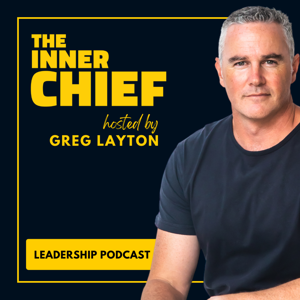
The Inner Chief

The Inner Chief

Download on the App Store

The Inner Chief episodes

  • 123. Neil Craig, AFL Coach and England Rugby High Performance Manager on High Performance Environments, Your North Star and Decision-Making Under Pressure

    In this episode, we meet Neil Craig, AFL Coach and England Rugby High Performance Manager on high performance environments, your North Star and decision-making under pressure.

    Go to: www.chiefmaker.com.au/123

    Complete your FREE Career Scorecard: www.chiefmaker.com.au/score-card

    Neil is best known as being a former Australian rules footballer and as the Head Coach of the Adelaide Crows Football Club.

    His other stints in the AFL have included being the fitness adviser at the Crows, and having various coaching roles at the Melbourne Demons, Essendon Bombers and Carlton Blues.

    Since 2017, he has been England Rugby's High Performance Manager under the head coach Eddie Jones.

    In this episode we talk about:

    • What a high performance environment is and how to create one;
    • Why knowing your North Star - your purpose and values - is critical to success;
    • How to make complex decisions under pressure; and
    • Why leadership is not about you, but all about you.
    Connecting with Neil Craig

    You can reach Neil on LinkedIn.

    Thanks to Peter Knight for recommending Neil.

    On why he has been successful
    • I think, firstly it's a passion for me. It's something I really get a lot of enjoyment out of. I don't see it as a job.
    • Secondly, athletes don't get to that level without being highly motivated, and they have a very clear picture of what they want to do. So as their coach, you have this capacity to enable people, or you help them to be the best they can possibly be. I get great satisfaction out of that and also when someone comes and asks me for help. "Help" is a pretty powerful word…"Can you help me?"
    • I also appreciate that there is this higher purpose of what sport does for people or can give to people. It is unbelievable.
    On what a high performance environment is
    • A functional high performance environment is really uncomfortable because of the daily feedback that you get as an athlete, coach or staff member. This is because of the high standards set on a daily basis that you have to meet.
    • A high performance environment is not for everyone. I often say that to athletes that this may not be for them and that's okay. The best high performance environments I've been in are not for everyone and they're very clear in their mind that they don't want to make it for everyone.
    • Once an athlete knows his or her why, that's really important because once the why's embedded it gives them the energy and the resilience they need to handle the environment. There's a lot of tough times, 'cos you don't win all the time, and you do get injured, and you do miss out on selection and you do get criticised in the public arena, and you do have contractual negotiations and you are away from your family for long periods of time, and it can be lonely, you don't get along with everyone in the environment. If I just painted the picture for you what it looks like, you might say that's not for me. But there are so many good things as well. That's why your why gives you the energy, perseverance and resilience and is so important to know it.
    On his role with England Rugby
    • First and foremost it's to be what I call a critical friend to the head coach, a guy called Eddie Jones, who coached the Wallabies back in the early 2000s. It's a lonely position and because of the nature of the chair that you sit in, it's very rare in actual fact for people to give you feedback because of the power of the chair.
    • I also do a lot of work with the senior leadership group, which I really enjoy.
    • The third part of my role is to coach the coaches. We spend all this time and resources in coaching the players when in actual fact, the people who have the biggest influence on players are the coaches. Who's giving them feedback every day?
    • I do a small bit of technical coaching in terms of the high ball, which is critical in AFL.
    • And finally, there's ensuring collaboration between all the different departments of a high performance environment. You've got a coaching department, an analytics department, logistics, sports science, strength and conditioning, medical etc. So you can just imagine the capacity for all those to collaborate, communicate, be on the same page; it doesn't always run smoothly. I, therefore, spend some time trying to maximise the working capacity of all those different environments.
    On building a high performance culture
    • This is done via a series of questions. Firstly, I want people to understand why their company or club existed . This is the higher purpose about why and why it is important. Is an English national rugby team important to England? If the answer is yes, then why is it important?
    • Then, with the head coach or CEO, I'd ask where they want to take this team or organisation. What does that look like? In reality, they are a provider of hope to create something different and better in the future.
    • The last question I would ask is when they will know they have achieved success. In sport, you'll know when the scoreboard shows you have won. But what will winning look like internally without the scoreboard? How will you know that you're progressing and when will you know that you've arrived in those areas you're measuring?
    On having mentors
    • Mentors are really important, if for no other reason that they would ask you questions about why you think that way, what you think about certain things, and why you've made that specific decision. In actual fact, rarely do they give me their opinion; it's more about them asking me questions.
    • I find that mentors just keep you balanced in your thinking and try and keep the emotion out of it because the capacity to be able to lead under adversity is a really important concept.
    On decision-making in high performance environments
    • It's important to know "what's important now" and also know "what's important in the future" as to where we're going because you've got to weigh that up sometimes.
    • As a senior coach or as a leader, you have to have calmness in your thinking and maintain stress levels at a good level, because they're complex decisions that you've got to make and think through. You've got to know what the critical information is in order to make what I call "the right decision."
    • It's more often than not the most difficult one to make because you get faced with different options. You've got the most popular decision, the safe decision, the best political decision. Very rarely are those all associated with what's the right decision, so you need to be very clear as a leader that this gets back to your philosophies and why as a leader.
    On having a coaching philosophy aka North Star
    • You've got to be really clear on your philosophy and you need to know what you value. It's also your capacity to not be black and white because there's never a perfect answer. There's case studies everywhere. There's the rugby union one at the moment with Israel Folau. It's not a black and white decision; some people think it is, but it's not.
    • Your values and your philosophy about why you do things do change over time, but they become your guiding principles, your North Star if you like. If you haven't got a well thought-out ingrained philosophy, it will be reflective of your decision-making. You'll be wishy washy. You'll actually make a decision based on the last person you spoke to.
    On why leadership is not about you, but it's all about you
    • It's not about you because there's an understanding that to get a performance, you can't create that performance as you don't do the hands-on work.
    • So you need to select good people, train those people, retain and develop those people so they don't want to leave our organisation. And why would you train these people if they want to leave? Well, why would you want to keep them if you don't train them?
    • But it is all about you because you have to create an environment where these people actually want to do the work, they're enthused to do the work and they share ideas, they collaborate and they bounce out of bed in the morning, and they want to come into this environment.
    On other lessons from his coaching journey
    • Be very careful of the spoken word because once it comes out of your mouth, you can't grab it and bring it back in again. Verbal communication is really the only tool we have as coaches to have an effect, so be very careful or be aware of the words you're using. Words can be so positive and yet in a lot of ways they can be so negative and have an effect on you.
    • I'm a great believer that success leaves clues. Go and look at the serial successful companies who have stood the test of time, because they have jumped all the hurdles and they've been able to continue to perform for long periods of time.
    On a routine that is working for him
    • I try and get up at about 5.30am and come down to my study and I spend about half an hour preparing for the day. I do some journaling, write down some key things I've got to do today, note down what my overall aims for the day are. One might say that I continually recalibrate my thinking to make it world-class.
    Books and resources mentioned in the episode

    Legacy by James Kerr

    49 min
  • 122. High Performance Teams - Part 25 - Communications

    For more info check out www.chiefmaker.com.au/122

    After 25 weeks our Our High Performance teams series now enters the final episode, finishing on Communications.

    In this episode we cover:

    • The 7 Big Things you need to communicate
      • Why you do what you do - Purpose
      • What you're going to do - Vision & Goals
      • How you're going to do it - Strategy and Tactics
      • Who is going to to do what - Role clarity
      • Your style in doing it - Values and Standards
      • Updates on progress
      • Victories & Loss
        • Victories = tell the story in great depth, give credit to the team members that nailed it
        • Losses = Talk about it, open up, inspire about the comeback
    • How often you need to communicate
    • What to do in a crisis and when setbacks hit
    • Using stories and analogy (themes)
    • A philosophy = Repetition, repetition, repetition & listen, listen, listen.

    Stay epic,

    Greg

    14 min
  • 121. Megan Macedo, Writer and Marketing Entrepreneur on Authentic Story-Telling, Knowing Yourself and Being an Artistic Entrepreneur

    In this episode, we meet Megan Macedo, writer and marketing entrepreneur on authentic story-telling, knowing yourself and being an artistic entrepreneur.

    Go to: www.chiefmaker.com.au/121

    Complete your FREE Career Scorecard: www.chiefmaker.com.au/score-card

    Megan grew up in Northern Ireland at the tail end of The Troubles, an experience that has shaped her story and career.

    She runs a marketing and storytelling consultancy in London and writes and speaks about authenticity in marketing and taking an artistic approach to business.

    She created the short film, Becoming Yourself In Your Business, and a video interview series, The Business of Self-Disclosure.

    Megan hosts workshops and retreats in the UK, Ireland and the US and has shared the stage with the likes of Jay Abraham and Perry Marshall.

    In this episode we talk about:

    • Authentic story-telling and actively being yourself in the world;
    • Using experimentation to find out who you really are and what you care about;
    • Why most of us are artistic entrepreneurs trapped in traditional corporate bodies; and
    • The fear of scaling our ambitions.
    Connecting with Megan Macedo

    You can reach Megan on LinkedIn and on her website.

    Thanks to Perry Marshall for recommending Megan.

    On what growing up during The Troubles taught her
    • We internalise the environment that we grow up in. People go through traumatic things and it changes how they interact with their family and their loved ones. It changes how children are raised. How it relates to my work is that I have this understanding, or curiosity at least, around this stuff and around Northern Ireland because I grew up in it, and I can see the stuff playing out at a cultural level. I can see it playing out at a family level. I can see it play out at an individual level.
    • Quite often, there's a whole bunch of stuff that doesn't get spoken and there is a whole side of ourselves that we don't show out in the world, and our work suffers as a result of that.
    On having a sense of identity
    • When people feel unfulfilled in their work, or they feel like something isn't quite right, I think a lot of that is because they are not letting themselves be seen in their work. I think that one of our most primal needs is to be seen and to be known.
    • Erik Erikson did a lot of the seminal work around identity formation. He talked about something called psychosocial reciprocity, which says that in order for us to have a fully mature, grounded sense of identity, it's not enough for us to know who we are on the inside; we also have to have the world respond to us as that person.
    • We have to actively be ourselves in the world. And then the world gets to see who we are and respond to that person.
    • But...most of us are in some degree of kind of misery because we keep that part of ourselves a secret. So we show up as some kind of professional persona in the world and that's who the world thinks we are.
    On the value of having an authentic story
    • If you take a load of vitamin tablets, most of it will just end up down the toilet. Your body will pass it because it doesn't recognise it as food. This is why it's better to eat the whole food. In a way, the story combined with the work that we do, are like the whole food.
    • Most of us strip our story out of our work and out of our skills, and that's what stops people seeing our value. But if you put your story back in, it's the story that makes your skills and values and talents available to people. That's what makes them connect with you and understand who you are, your context, your perspective, and then they become much more interested in what you're actually doing in your professional life.
    • And so my clients go through the process of telling their story and usually come away with this much deeper understanding of who they are and where they want to go and why they want to go there.
    On knowing yourself
    • When you're a child, you have parents or authority figures. Essentially, they give you an assigned identity, which is made up of part of their identities. They hand down these values and beliefs to you.
    • When we come of age, we're supposed to interact with different people who have different worldviews and different identities and value different things. And each experience that we have acts as a mirror and we get a glimpse at a little bit more of ourselves. So we learn what values and beliefs we agree with or disagree with.
    • Eventually, we get to a point where we have a grounded sense of self. And that identity could be exactly the same as the one you were given as a kid, or you might completely reject it. The important thing is that you have acquired it for yourself.
    • And some things you will have direct experience of and you can speak from a position of power on those. But other things you don't so you experiment and ask for help. And it's through years and years of living like that that you get to expand your field of genuine expertise and wisdom.
    • I think one of the things that people should do first is to ask themselves, "What questions do I care about?"
    On being artistic in your business and career
    • I think there are two types of entrepreneurial thinker. You have the traditional businessperson type, and they are really passionate about the game of business and the whole corporate game. And then you have the artist type entrepreneurial thinker. And they are really passionate about the actual work that they do, about building a body of work.
    • I actually think that more of us are the artist type than we think. We are trained, both in the education system and then how the working world works, to be the traditional business type, but the artist type I think makes up most of the population.
    • How artists work is that they start with some kind of curiosity or some kind of question they have about a topic that they're interested in. They'll go and research that and then they make a piece at the end of it.
    On getting away from it all
    • I will quite often go to the park for a walk for 20 minutes and then I'll pitch up in a café or a pub, and I'll write for an hour, or until I run out of steam. It's during the walk that I actually process everything and figure out what I'm going to write.
    • Something else I do is go to the cinema. I find watching films, immersing myself in someone else's work, to be very restorative, and it fires off all kinds of ideas in my head.
    On choosing a mentor
    • I think it's important to lean on mentors for advice on ideas. Get a sense of permission from them if that's what you feel like you need. Or just have a sanity check and bounce it off them. But it's really about getting that confidence to take action.
    • The reason that I went to my mentor and not some other people is because I looked at his whole life and thought, "That's a guy I could along with." A lot of the other mentors that were around at the time were workaholics.
    On the fear of the scale of our ambition
    • In order to do the things that we really want to do and have the impact that we really want to have through our work, we're going to have to show ourselves, make ourselves vulnerable, and that is terrifying.
    • Instead, focus on how you are going to take the next step today. Think about the person that you think you're going to be when you get to that goal and how you could be that person today.
    Her final message of wisdom and hope
    • I think that having the courage and willingness to share your story and your wisdom from a place of direct, lived experience is the most important thing.
    Books and resources mentioned in the episode
    • Adult Children: The Secrets of Dysfunctional Families by John and Linda Friel
    51 min
  • 120. High Performance Teams - Part 24 - Business Acumen

    For more info check out www.chiefmaker.com.au/120

    Our High Performance teams series now enters the fourth part of the Execution pillar of HP Teams: Business Acumen.

    While this is probably the least sexy trait of high performing teams, it might well be that it is the most underrated and hence single biggest indicator of results.

    So, in this episode we cover:

    • The compound effect of bad acumen and good acumen
    • Why this is often overlooked but will forever be relevant
    • The four pillars of good acumen in a team

    Stay epic,

    Greg

    15 min
  • 119. Ari Galper, the World's #1 Authority on Trust-Based Selling on Trust and Influence, Eliminating Resistance and Being a Sales Magnet Not Chaser

    In this episode, we meet Ari Galper, the World's #1 Authority on Trust-Based Selling on trust and influence, eliminating resistance and being a sales magnet not chaser.

    Go to: www.chiefmaker.com.au/119

    Complete your FREE Career Scorecard: www.chiefmaker.com.au/score-card

    Ari is the World's #1 Authority on Trust-Based Selling and is one the most expensive sales growth advisors in the world.

    He is the creator of Unlock The Game®, a completely revolutionary sales approach and has clients in over 35 countries.

    Ari has a Masters Degree in Instructional Design and is a practitioner of Aikido, a special martial art that diffuses conflict between two parties.

    Ari is based in Sydney, Australia with his wife Michelle and their two sons and daughter.

    In this episode we talk about:

    • Building trust first before anything else, so that you create influence;
    • Eliminating resistance in any communication with a prospect;
    • Why the language you use is so critical, and some practical examples of phrases to remove from your life; and
    • The myth of chasing sales, and instead becoming a sales magnet.
    Connecting with Ari

    You can reach Ari in the following ways:

    • If you're into sales conversion, check out his Unlock The Game® website;
    • If you're a consultant or business coach, then head to Trusted Authority;
    • Or if you're a CEO, check out Ari's next project, CEO Legacy Books.

    Thanks to Perry Marshall for recommending Ari.

    On eliminating rejection
    • What we discovered in our research is that rejection is triggered by certain things you say and do unknowingly that cause the other person to push back on you.
    • So that comes down to the words you say (languaging), the way you say it (delivery) and how much authority you have (positioning). Those three things are the triggers, and if you don't have one of them, you'll get rejection every single day.
    On starting with building trust, not pushing for a sale
    • Whatever you're offering to them is about a solution to their problem; if you try and sell your project by talking about the benefits of it and not addressing their issue, that is a mismatch there. It will feel like you're trying to put your agenda before theirs.
    • An example is: "Hi, my name is ... I'm with VRA, we specialise in this." That's kind of a pitch. What you'd say instead is, "I'm hoping you can help me out for a moment. I'm just giving you a call to see if you'd be open to some different ideas around ways to solve the issues you're having related to sales and project management. Would you be open to that?"
    • That's the mindset shift I talk about in the game - it's shifting away from the end goal of the sale and focusing only on trust first. If your goal is trust first, you don't talk about yourself, you talk about them. That's the whole mindset shift that I teach.
    On doing your research
    • Nowadays, you can't go fishing for their problems anymore. "Hey, how you doing? How's your business going? What problems do you have?" That used to work five years ago.
    • You should probably already have a sense of what the top three issues are that your clients deal with, so start with those.
    • You have to ask yourself what the value is to them to consider your suggestion. Make a list of all the things you offer in which they would see value.
    On the biggest lesson in his career
    • 15 years ago I was a sales manager in a software company and we launched the first online website tracking tools to collect website behaviour - it's now called Google Analytics. In the end, after what I thought was a successful sales call, I overheard them say, "We're not gonna go with him. Keep using him for more information and make sure we shop someplace else cheaper."
    • It forced me to question what I did wrong, and that became our Unlock The Game mindset premise, where our goal was to remove the pressure from the sales conversation to basically shift away from the end goal of the sale to building trust first, to make sure both you and them were fit to decide whether to proceed.
    On a better set of sales KPIs
    • Most businesses measure the sales people's performance based on certain behaviours. For instance, the numbers game, so that's how many contacts they make, how many meetings they have, how many presentations they do and how many closes do they make. But none of those issues has to do with trust, meaning there's no measurement on how good they are at building trust in the process.
    • Most salespeople are being conditioned to hunt, to kill, to bring in the money, but they ought to learn how to stop chasing, stop selling and build trust instead.
    On better languaging
    • We developed what we call Trust-Based Languaging to replace sales languaging.
    • So, I'll ask you vigorously to remove one key phrase from your vocabulary forever, and that is "follow up". By saying "follow up" you're asking, "How does this person move closer to a sale for me?"
    • Instead say, "I'm giving you a call to see if you have any feedback on our previous conversation, our proposal or on us." So, you actually go backwards, not forwards.
    • The phrase "would you be interested?" is a sales phrase, so get rid of it. Instead try, "Hey, I've got a plan that might be able to help you out, would you be open to hearing this?"

    On how to jump to the next level in your career
    • Don't focus on jumping. Find the person who's at that level and find out what value they could use that they don't have right now, and offer it to them. Just focus on the next person up who's the key player there and ask them what their challenges are and approach them with value-add.
    • Just keep problem-solving!
    On recovering a lost sale - "the magic response"
    • If you're chasing somebody and you don't hear back from them for a while, you feel like you've lost them. You know you can't chase them anymore otherwise you're going to burn the relationship with them. What you do is call them back or email them and say something to the effect of:

    "Hi John. It's Ari I hope you're doing well.

    Look, I'm not calling to move things forward at all.

    I'm just calling to first of all apologise. I hadn't heard back from you for a few weeks so it's probably me. I may have dropped the ball, I may have missed something, maybe I chased you too hard. I just want to apologise for whatever I may have done that didn't have you call me back.

    And look, I'm only calling for one reason, and that is for some feedback to improve myself in the event there are a few opportunities with other people, so I can become a better person. Would you be open to that feedback to me?"

    • The above approach helps release the pressure, but by falling on your sword, it's amazing as 95% of the time they say, "No, it's not you" and then they give you the truthful feedback you're after, or might give you another look.
    On sales myths
    • One is the whole numbers game concept. That is dead. It's not about how many contacts you make in your networks anymore, it's about how much trust you create with every single person.
    • Another one is the idea that your job is to overcome objections. But what if what they're telling you is true? So if someone says to you your price is too high, if you try to overcome the objection, you would either bring the price down or defend yourself. Instead, defuse the objection, re-engage again without risking the relationship with the sale and say, "You're absolutely right. It can be perceived as high, no doubt about that. In fact, everyone joins this at first says the exact same thing as you. Look, the last thing I want to do is try and convince you to do something you don't want to do, that's just unethical to even do that in the first place. But would you be open to re-looking at this from a different perspective, based on the topic issue we are trying to solve? Would you be open to that?"
    • And one final one is that sales messages need to be heard multiple times before a customer acts. Well, the formula is actually not based upon the number of touches, it's based on what the message is in those touches.
    On routines
    • What do you need to be working on that impacts 95% of your business? I spend a lot of time thinking about what I should be doing every day that has the biggest impact on what I do.
    • Every night I'll think about what the three things are that I need to do today to be successful. As Jeff Bezos says, "If I just make three decisions a day, I can go home."
    Final message of wisdom and hope
    • Always be open to someone else challenging your assumptions, to make sure that you know what you know, but recognise you may not know it all and always strive to be able to say that you're cutting-edge but others have been there before. So keep seeking out answers for things you may not know yet.
    45 min
  • 118. High Performance Teams - Part 23 - Optimising Risk

    For more info check out www.chiefmaker.com.au/118

    Our High Performance teams series now enters the third part of the Execution pillar of HP Teams: Optimising Risk.

    So, in this episode we cover:

    • How to optimise risk and make it a more enjoyable and aspirational process;
    • How Richard Branson uses Risk to make money; and
    • The two opposing models of risk and why it's important to use both.
    For your copy of the two Risk Management templates please email [email protected] with the subject line "Risk" and I'll send you the templates straight away so you can follow along in the podcast.

    Stay epic,

    Greg
    12 min
  • 117. Nicolette Rubinsztein, President of the Actuaries Institute and Professional Board Member on Removing Guilt, Female Confidence, and Overcoming Busyness

    In this episode, we meet Nicolette Rubinsztein, President of the Actuaries Institute and professional board member, on removing guilt, female confidence, and overcoming busyness.

    Go to: www.chiefmaker.com.au/117

    Career Scorecard: www.chiefmaker.com.au/score-card

    You can also get hold of her book, Not Guilty. All the author profits go towards her charity, Missionvale Australia.

    Nicolette is a qualified actuary and is currently a non-executive director at UniSuper and SuperEd. She has previously held senior positions in the corporate world at Colonial First State, BT Funds Management, and Towers Perrin.

    She received two awards for her contribution to superannuation policy: an inaugural FSC Industry Excellence Award and an ASFA Distinguished Service Award.

    But her proudest achievement is, without doubt, raising her three gorgeous girls.

    In this episode we talk about:

    • The resilience learnt from losing her job twice due to overnight industry changes;
    • How to balance work with motherhood without feeling guilty or putting your career on hold;
    • Why lower confidence in females has led to a lower uptake of STEM careers; and
    • Overcoming busyness as parents and the concept of "career mum staff".
    Connecting with Nicolette

    You can reach Nicolette on LinkedIn or via her website.

    Thanks to Jonathan Rubinsztein for recommending Nicolette.

    On a story from her childhood that impacted her life
    • I had come from England and it was an incredibly eye-opening experience to see what was going on in South Africa. It was full-on Apartheid: separate buses, separate beaches, separate schools, separate areas. I still find it almost traumatising. So, part of what we do now is that we've been supporting a charity in a township called Missionvale for about 15 years, and I've taken the kids now a couple of years volunteering there.
    On the guilt of raising children
    • Our generation, we were really taught, the world is your oyster, go off and do whatever you want. And I think many of us did. And then it comes to the having children bit and you realise having a career and being a mother is actually really hard, and no one really told me about how you could do both of these things. And I think the guilt comes from a work point of view because you worry that you're not delivering 100%, and it's guilt from a mother point of view that you feel guilty that you're not being the best mum possible.
    • I think the most important one is around the childcare and what role each of you is going to play in the childcare: what percentage of that child's time do you want that child to be with a parent as opposed to in some sort of care? Then you're able to work out how each of you can contribute to that. I think you would want more than half of your child's life to be with a parent.
    • The ultimate model would be actually both parents working flexibly and part-time. And if you both do the equivalent of that four days a week, it means that your child will only be in three days of care a week. I have seen more and more couples doing it.
    On life's chapters
    • My mom was a stay-at-home mom until her early 40s. She raised four children, and then she set up her own insurance broking business when she was about 42. She's still running it and she's 75! So she is a great example of focusing on one thing more than another at different phases of your life.
    • That means really being clear about what your goals are, and what's important to you at each stage of your life. When my children were young they were my number one priority and work was my second priority. A strategy is all about making trade-offs.
    • And I really think that your values become so much more apparent when you have children. It's about what values you're going to raise your children with. What do you want them to have out of life?
    On putting your career on hold
    • When I look back, I think I've effectively put my career on hold probably for about 10 years while I was having children, and actually, I've been working flexibly for the last 15 years. I feel really good about that decision. It was fantastic.
    • I talk to mums about taking a long-term perspective; what are your goals in life and what's important to you? Those old-styled goals of achievement and money and success at work are not the be-all and end-all. A lot of our happiness comes from relationships, from our family, and the search for inner peace if you like.
    On beating the busyness epidemic
    • It's a weird thing that when you say to somebody, "How are you?" "Busy." Busy is a standard response. Isn't that really worrying?
    • So, how do you counter it? There's a brilliant book called The Rushing Woman's Syndrome by Dr Libby Weaver. Credit to the author for calling it an epidemic, but it is, because she kept seeing lots and lots of people in the same mould.
    • The only antidote is to work out what's important to you and prioritising based on that.
    • The other thing that I think is a really good life skill is meditation and mindfulness because I think that really allows you to zoom out a bit and work out what you're doing and why, and just calm your life down a bit.
    • Also, I'd exercise in the morning, say 5.30am, before the children woke up.
    On confidence in women and how to gain it
    • Women's confidence can be lower than men's confidence because men have more testosterone than women; simply understanding this goes a long way to help.
    • I've just read another book - Stop Fixing Women by Kathryn Fox - and her point is that a lot of this gender diversity debate focuses too much on fixing women eg. how do you improve confidence? But there's not enough on how to improve structures within organisations and management to improve diversity.
    • Also, understand that lots of men lack confidence too; it's not something solely in women.
    • The study that I've done - qualifying as an actuary and doing an MBA - proved to me that I can do it. Getting older has made me more confident by getting more experience.
    • I also speak to my husband. I'm often amazed if I go to him and we have a chat about a business issue or whatever it may be, I'm often amazed at how different his approach is to mine.
    • Some of the common skills that many women bring to the table are empathy and being customer-centric. But another key one is risk management.
    On outsourcing your life/career mum staff
    • The message here about "career mum staff" is about dividing and conquering, and allocating responsibility.
    • Also, when it comes to outsourcing, Australian career women are very slow to take on the needed domestic help that you really need to thrive.
    • These very capable women in the workplace are hiring and firing, but when it comes to their own domestic arrangements, they don't seem proactive at setting things up.
    • I think for many successful career moms, their partner is a very important part of the equation. Not just in terms of the tasks that they do and share, but in terms of being supportive of their partner.
    On perfectionism
    • I think particularly in your early career, perfectionism is a great thing and it's often the reason why many of us are successful. But it comes with a whole load of issues and one of those is sharing the role with your partner and letting them do it their way. I think we have to drop some of those perfectionistic standards and just take a deep breath and share the workload.
    On females in STEM careers
    • This issue starts very early and girls are 25% less confident in maths than boys, despite girls being biologically as good at math as boys.
    • So why are only 33% of our fellows in the actuarial profession, female? If we look at the percentage of students at University studying actuarial, it's a third female. Then if you go right the way back to the beginning of the pipeline at school, it's also a third. Our key conclusion was that until we increase the percentage of kids doing Advanced Math, we're not going to improve gender diversity in actuaries or probably many other STEM careers.
    • One of the reasons is confidence; I'm quite optimistic because there's some research that shows that some training around a growth mindset can actually address those confidence issues.
    • Another is a gender stereotyping issue - we're really not encouraging our girls to do maths at school as a society and as a culture.
    • There is a strong message for parents of daughters about encouraging them to do those STEM subjects, particularly because the research suggests that 75% of future jobs will require STEM skills.
    Final message of wisdom and hope
    • I would like the next generation to redefine feminine leadership, which I think is a lot more about being yourself in the workplace and bringing some of those traditional female traits to the board tables and management tables. That's some of those traits that I was mentioning earlier around empathy, compassion, customer focus, team-based behaviour. I think we have a lot to offer and we should just have the confidence to be ourselves and bring those skills to the work.
    Other books mentioned in the podcast
    • Homo Deus and Sapiens - Yuval Harari
    • The Confidence Code - Katty Kay and Claire Shipman
    44 min
  • 116. High Performance Teams - Part 22 - Stakeholders

    For more info check out www.chiefmaker.com.au/116

    Our High Performance teams series now enters the second part of the Execution pillar of HP Teams: Stakeholders.

    So, in this episode we cover:

    • How one conversation saved a client $15M;
    • Why not managing stakeholders is the number one cause of project failure;
    • How it is the most important point of trust for accelerating your career.

    Stay epic,

    Greg

    17 min
  • 115. Mike Michalowicz, Serial Entrepreneur and Multiple Best-Selling Author, on the Fallacy of Success, Being Dispensable, And Why Having Nothing Is Your Biggest Asset

    In this episode, we meet Mike Michalowicz, serial entrepreneur and multiple best-selling author.

    Self-defined as a normal guy with a normal upbringing, by his 35th birthday, Mike had founded and sold two multi-million dollar companies. Confident that he had the formula to success, he became an angel investor…and proceeded to lose his entire fortune.

    Then he started all over again, driven to find better ways to grow healthy, strong companies. Among other innovative strategies, Mike created the "Profit First Formula", a way for businesses to ensure profitability from their very next deposit forward.

    Mike is now running his third million dollar venture, alongside keynote speaking and is also the author of Profit First, Surge, The Pumpkin Plan and The Toilet Paper Entrepreneur, which BusinessWeek deemed "the entrepreneur's cult classic."

    In this episode we talk about:

    • How his early success ultimately proved to be a fallacy and led to his downfall;
    • Why workaholism is not a badge of honour and must be defeated in our culture;
    • How to reframe your value in the marketplace by choosing to become dispensable instead of indispensable; and
    • Why having no cash, experience or contacts are your biggest assets when it comes to starting a business.
    Connecting with Mike

    You can find out all about Mike on his website - https://www.mikemichalowicz.com/ (or https://mikemotorbike.com).

    Thanks to Jeff Brown for recommending Mike.

    On a story from his childhood that impacted his life
    • I was typically average! It's funny, I hear stories of other people that have gone through extraordinary trauma or had some kind of awakening to their calling in their childhood, and that wasn't me. But one thing I think that was interesting, whenever my parents would talk about work, is that I had to find that one job working for that one big corporation because that's the safest way to navigate through life. And even today, they still are confused by the path of the entrepreneur. So maybe that's the thing that kind of triggered my desire to explore.
    • I think the greatest lesson I learned in lacrosse was the power of the mind. One of the necessary skills in lacrosse as a middie was to face off. When I did, I realised my thoughts were determining how successful I was on these face-offs. If I thought I could beat the person I was going against and had a plan of where I was gonna move the ball, I was wildly successful. But if I ever felt intimidated or lacked confidence, I would falter. And in business, I realised the power of thought dictates our subsequent actions.
    On why early success was his undoing
    • My first business was in IT Support and my exit was via private equity. The second business was in computer crime investigation and I was in the right place at the right time. First six months I think we did over half a million dollars. The first full year, we did around one and a half or two million. And then in the second year in business, we were on a run for seven million dollars in revenue. In the moment, I thought I was just super smart, but my company got part of the Enron trial.
    • We were racking up debt, borrowing from the banks, pulling credit lines. I think at one point when we sold the company, we maybe had a half a million dollars of debt. But it was acquired by a Fortune 500 because we were on such a fast growth trajectory, and then it started to instil in my thoughts that, "Oh, you don't need to run a business that's healthy financially. Just go all in on it. And if you do, someone somewhere will buy you."
    • This concept of grow-at-all-costs is insidious. You see on the cover of every magazine for entrepreneurs and business leaders, "Grow, grow, grow, workaholism, grind it out, push yourself." And we're not considering the health of the organisation or the health of ourselves. And I learned that the hard way, and now I'm on a mission to fix that.
    On workaholism
    • It seems the way to climb up the ladder as a leader is to outperform everyone else, to hustle and to grind out effort. That translates into workaholism. It's become a badge of honour, like "I work x number of hours." Of course the trade-off for workaholism is you've got to sacrifice your family, your interests and passions outside work.
    • Sam Walton, the founder of Wal-Mart, on his deathbed he was quoted of saying, "I blew it." Why? Well, he was surrounded by his family who didn't know him, who didn't care for him; he barely even knew his own wife. I think that's the definition of what we need to avoid.
    On being dispensible
    • Previously, I would say to my staff, "If you want to make a big salary here, if you want to achieve your vision of employment, your job is to become indispensable; if you're indispensable, I am so dependable upon you, you can dictate your own salary."
    • And then I changed, and said I want to be dispensable; if we're dispensable it means we have the ability to create the systems and structure around us where systems, technology, maybe other people can carry the workload. And therefore if we go away for a week or two because we're sick or want to take a vacation, the business hums along. I think the greatest leaders understand that.
    • What small business owners think is that if we can do more of that, it'll bring us to the levels of Amazon and Google. The whole way to get there as leaders is to extract ourselves, to find ways for the technology and for others to carry the business forward. That's the definition of an extraordinary leader.
    On rewarding truth
    • If I want to get the truth from my staff, I have to speak the truth. If I want to get loyalty, I have to give loyalty. I found that as the leader of my organisation, I always have to take the first step in a behaviour that I want. So I will be loyal to them, I will defend and protect my colleagues like they're my family. I will do everything to serve them. That's the first step to getting truth from them.
    • The second thing is I will put them in a position where they are actually rewarded for speaking the truth. So when someone says, "Mike, you made a mistake," I say, "First of all, let's give you a surprise!" Whatever it is; a bonus or a gift or just a wholehearted thank you. And then they put the truth on the table.
    On moments of doubt
    • I have doubt right now in this interview, but it's just a story in my head. A friend of mine calls it the monkey brain and a great way to navigate it is to vocalise it, wherever you are. Step two is to envision that you're driving a car and so you strap those negative monkey mind thoughts in the back seat. And you say, "Listen, you're staying back there, and I gotta move forward now. But I acknowledge that you exist."
    On how to spot the business wave worth catching
    • Pick a wave to evaluate, and then insert yourself into the community. Go to the conferences, talk with the attendees to see what the chatter is, read the magazines, listen to the podcasts.
    • Like a surfer, many waves you just let roll by. You don't pick the next wave; you evaluate the next wave and then pick the one that you can ride all the way home.
    • You can read more about these in my books Profit First and Surge.
    On why having nothing is your biggest asset
    • If you lack cash, lack experience, lack a network of contacts, lack of prospects, those are actually your biggest assets. And sadly, it holds so many people back from starting a business. So in The Toilet Paper Entrepreneur, I explore why lacking each of those is a good thing.
    • They say necessity is the mother of invention. Well, a lack of money forces innovation, to be creative, which challenges the industry norms, which is a beautiful thing.
    • The lack of experience means you don't know the rules of the industry. Therefore you become known as the business that breaks the industry norms.
    • The lack of prospects means you have to learn how to sell. If you go into a business where your friends and colleagues, they'll say, "Oh yeah, I'll buy that," and they help you get started, I know they're doing the socially appropriate thing, but they're not letting you learn early and fast and hard. It's the lack of an ability to sell in the beginning that forces you how to figure out how to sell.
    On the similarities between pumpkin farming and growth businesses
    • Within the community of pumpkin farmers, there's a very tiny faction called colossal pumpkin farmers. They grow these pumpkins that are the size of trucks. What's fascinating about them is they change the growing process only by a small percentage. So I ran the analysis in The Pumpkin Plan and sure enough, when I found colossal growth companies - companies that grow organically ridiculously fast - they have the same kind of process that they do with colossal pumpkin farming.
    • One was seed selection - colossal farmers match seeds to their soil content and the climate they're in; growth businesses exploit their uniqueness in a community that resonates with it.
    • Another was discipline - colossal farmers cut away weak pumpkins regularly; what I found in these businesses was the best leaders were phenomenal at removing distraction. The best leaders were disciplined in turning down opportunities, and the weakest people, while the businesses that struggled actually took on the most opportunity. It takes the word "no" to grow.
    • If we're not willing to immediately stop everything we're doing and abandon everything immediately to take on this new task, it's not important enough and we have to say no to it.
    On the routine that makes the most difference
    • I love two moments about exercise: right before I exercise, I love the idea, there's like a dopamine release of how I'm gonna feel after I'm done. I don't like doing the activity, but I do like the end, the feeling that inspires. Those two moments of excitement sandwich the actual effort.
    Final message of wisdom and hope
    • Every human on our planet is going through a life experience that is not better or worse than anyone else. It's just different. We're all in this brother and sisterhood and all have something to learn from each other.

    This episode is sponsored by UnrushedExperiences.com

    Unrushed Experiences is: Sydney's premium degustation of the senses event for overworked professionals to undo the damage of busy. We believe that the world is drowning in speed and starving for stillness. The 7-course degustation menu with wine and beverages, accompanied with live world-class musicians, performers and Q&A with special guest storytellers aims to help attendees unwind and be fully present for a night. It's on a Saturday evening on the 11th of May at renowned restaurant No.1 Bent Street By Mike in the Sydney CBD. For listeners use the buy one ticket get one free promo offer at checkout. The code is: ONEFREE www.unrushedexperiences.com
    51 min
  • 114. High Performance Teams - Part 21 - Operating Rhythm

    For more info check out www.chiefmaker.com.au/114

    Our High Performance teams series now enters the final HP Teams pillar: Execution. So far the pillars we've covered are Mission, People, Culture and Tools, and so now we delve into where it can all go pear-shaped and the wheels can come off.

    So, in this episode we cover part 1 of this pillar, Operating Rhythm:

    • How to find the drumbeat of your team;
    • How it keeps everyone focused and united;
    • Why it creates time to do all the right thinking required;
    • How an operating rhythm makes everyone highly effective with their time.

    This episode is brought to you by: Unrushed Experiences: Sydney's premium degustation of the senses event for overworked professionals to undo the damage of busy.

    It's on a Saturday evening on the 11th of May at renowned restaurant No.1 Bent Street By Mike in the Sydney CBD.

    For listeners of the podcast, use this code to get the buy one ticket get one free promo offer at checkout:

    ONEFREE

    www.unrushedexperiences.com

    Stay epic,

    Greg

    15 min

About The Inner Chief

From the publisher's feed

The Inner Chief is a leadership podcast for managers and leaders who want to accelerate their career and build high performing teams. Every episode is dedicated to helping leaders rise above the pressure of work to establish a more meaningful career and life. Through a series of CEO interviews and minisodes, listeners are guided through practical leadership strategies, executive performance habits, career tips and business advice.

More shows like The Inner Chief

Property Investment Podcast Network by Momentum Media

Property Investment Podcast Network

14 Listeners

Mamamia Out Loud by Mamamia Podcasts

Mamamia Out Loud

565 Listeners

Politics Now by ABC Australia

Politics Now

87 Listeners

Investopoly by Stuart Wemyss & Campbell Wallace

Investopoly

13 Listeners

If You're Listening by ABC Australia

If You're Listening

309 Listeners

Equity Mates Investing Podcast by Equity Mates Media

Equity Mates Investing Podcast

72 Listeners

How I Work by Amantha Imber

How I Work

126 Listeners

The Morning Edition by The Age and Sydney Morning Herald

The Morning Edition

70 Listeners

No Bullsh!t Leadership by Martin G Moore

No Bullsh!t Leadership

126 Listeners

The Imperfects by The Imperfects

The Imperfects

395 Listeners

The Money Café with Alan Kohler by Intelligent Investor

The Money Café with Alan Kohler

50 Listeners

Straight Talk with Mark Bouris by Mentored.com.au

Straight Talk with Mark Bouris

326 Listeners

Chanticleer by Australian Financial Review

Chanticleer

23 Listeners

UNEMPLOYABLE by Unemployable Media

UNEMPLOYABLE

12 Listeners

Shaped by Trent Cotchin by Stitch Up

Shaped by Trent Cotchin

17 Listeners