
Sign up to save your podcasts
Or

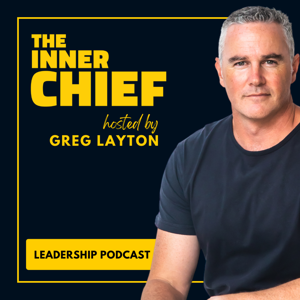


In this episode, we meet George Hunt, the Chief Information Officer (CIO) of Sydney Water.
George is a recognised technology leader within the global utility sector. He has a successful track record in implementing technology infrastructure to support increasing customer expectations, challenging regulatory outcomes and corporate business goals.
He has held roles as a Global Consulting Partner at Wipro Digital in the UK and CIO for Wessex Water.
George completed a four year technical apprenticeship in a major engineering company, and has a Bachelor of Engineering from Birmingham University, UK and a Master of Information Systems from Kingston University, London, UK.
Connecting with GeorgeYou can connect with George Hunt on LinkedIn.
On a story from his childhood that impacted his life
Go ahead and listen to George's colleague, Kevin Young, our very first Inner Chief Podcast episode!
For more info check out www.chiefmaker.com.au/112
Our High performance teams series now enters part 20 and we enter the final part of our pillar on Tools. So far we've covered Scoreboards and Metrics, Hardware and Systems, Processes and Frameworks and IP.
So, in this episode we cover Partnerships:
Stay epic,
Greg
In this episode we meet Ram Castillo.
Ram is an award-winning Design Director, Author, Blogger, top-ranking Podcaster and international Speaker.
For 13+ years he's been working for global agencies including Ogilvy & Mather, DDB, JWT and McCann Worldgroup on clients such as Audi, McDonald's, Qantas, Coca-Cola, Telstra, Google and The Louis Vuitton Group.
He is the author of two best selling books and has been featured in HOW magazine, Herman Miller, deFrost*, AIGA.org and Apple.
Since 2012, he's been providing expert advice for emerging designers and creatives to be employed, and those that are established – to reach their next level, via GiantThinkers.com and has recently launched Unrushed Experiences.
ADVICE FROM HIS MOTHER & ACCELERATING YOUR CAREER AND GROWTH
she just put her hand on my shoulder and said, "Look, whatever you want to do, just remember to dream big. Dream really, really big."
I remember going back from my first USA speaking tour, when I launched my first book, How To Get a Job as a Designer. When I got back, the first thing she said to me ... and I was gone for three months ... And she hadn't seen me. So the folks came and greeted me at the airport. But she said, "how does it feel? How does it feel climbing up that mountain?" And I said, "feels pretty good, Mum." And she said, "Well, make sure you come back down and share to everyone what you found."
This the best way in; to get your foot in the door, and the principle I've really applied is in order to take a forward step sometimes you really need to take a side step. And I've been taking many side steps.
Patience. In a world where it can feel like we're not getting anywhere. I have been embedded, through my parents, that belief that you should really take your time and enjoy what it is you need to learn at this moment. Someone once told me that although it might be a painful experience ... or maybe painful might be a bit extreme of a word ... but you want something so bad. One of my mentor's once told me that maybe you're not moving forward because you've not learnt a lesson you're meant to learn yet. And that's something that's really stuck by me; enjoying what you really need to learn, even if it's uncomfortable, even if it makes you sort of squeamish or gives you anxiety, because ... The way my Mum put it was, look at all the great masterpieces in the world. They were all carved from some block of stone or solid nothingness. And could you imagine if we are that thing. Could you imagine how painful those chips are? Being carved into masterpieces? We're getting chipped away.
And I know that might seem very broad strokes, top-line but it is really these guiding principles that I've been able to really adopt and embrace. On a hyper-practical level, I just work my arse off, mate. I really, really do.
I think when I say work hard, I mean, like, when you feel ... it's the old Schwarzenegger thing, isn't it? It's like Pumping Iron, where he said, when you think you've got nothing left in the tank, it's the extra three reps that actually get you from good to great. Or average to champion.
I also value relationships, and I think that has grown into equity in itself
Education, so it's important because some people are like, "do I need a Bachelor's degree?" Well, from my experience in design specifically ... but again, transferrable principles ... research what is the bare minimum that you need. What is the bare minimum that you need, from an education credibility point of view, that will allow you to work in that trade.
And so many people need to really remove themselves from this whole, "university is the only way," thing because it's not.
ON DESIGN
Now I really push myself to learn social dynamics and social interaction and really through design ... human centred design ... that technology is reverse engineering human behaviour and outcomes whether it's in the commercial space or not. That for me I've also tried to apply to myself.
Ram Castillo: In knowing more about people, which in turn as helped be become, hopefully, a better leader, and a better communicator, and a better creative in that we're not ever meant to assume, we're meant to absorb. We're meant to come up with our hypothesis that is really informed ... not just by data ...but qualitative data as well, not just quantitative data I mean.
HOW TO GET MENTORS AND THE BEST ADVICE HE EVER GOT
I interviewed the likes of Kelly Slater, 11 times world surf champion, exactly that ... I slid into his Instagram DM's. But could you imagine, even if they say no, there's going to be someone who's going to answer on some platform available, where that person's active. And if you're feeling stuck, or you really are stuck, you don't have to go at it alone. You can scope, whether it's locally or globally, someone, or a few people, who can give you a nudge into helping you see the blind spots and kind of the guesswork to succeed faster.
Russell James. He is the main photographer for Victoria's Secret. He is also a fellow Aussie, and one thing he shared with me was ... we spoke at a conference together in Margaret River and we've since been quite good friends ... and he said, "don't let the highs take you too high. And don't let the lows take you too low."
Debbie Millman. She's very iconic in the design world. She actually has had the first ever design podcast in the world, 12 years ago now or more, fifteen maybe. She's based in New York and she runs the Masters of Design Programme at the New York, or is it the Sydney Visual Arts Design School there. And she said the longer it takes, the longer it will last and the more you'll be prepared for the success, when it comes. So I'll say that again. She said that the longer it takes, the longer it will last and the more you'll be prepared for the success, when it comes.
I find that we often dream big and we want so many things for ourself. But then there's this five second window, where logic kicks in, and rationale kicks in. And then it goes, "Nah!" And if you miss that window, and you don't act on that window, so much of what your heart is screaming for, won't ever come into fruition. But the long and the short of it is, we live in a world where you can be whatever the hell you want to be, and you don't need permission from anybody at all. You just need to give things a go and understand, based on these things that I've said, that I've shared from my mentors, it allows you to just a, back yourself. But also, if it doesn't work out, it doesn't work out and that's okay. That's okay.
ON LEADING CREATIVES
I think one of the biggest challenges is balancing creativity with a business mind. Because also, part two, is what kind of creativity are we talking about? Some, and I've quickly had to learn this myself you know, dreaming me big into thinking I would be designing to change the world. Well, the reality is, commercially, much of the time, 90% of the work you'll be doing is probably ... if you're a designer anyway, or in the field of any type of marketing or communications ... is going to likely be for either finance, automotive, insurance, something that you're not entirely passionate about
The main thing, for me, has been understanding ... Starting from the top, where we have to look through the lens of human needs. So, no matter if you're a leader in the creative field or not, everyone ... all your employees, at some version ... would like some recognition, acknowledgement, feeling of community, a sense of belonging.
So understanding that, as a top-line thing, is important because it leads to the next thing, which I strongly advise, and it's the best way to motivates people; and it's to find what already motivates them. Hugely important because finding the right people for the right job ... or the right task ... often, I've seen, doesn't align.
So many leaders in the creative field, they might find that okay, this person is great on paper and then, on the interview, failed to ask the question, "what really lights you up?" What really motivates you and is it okay that you will be doing ... and let's say doesn't. Let's say there's a disconnect with the person's answer; and putting it out there, good old radical candour style ... you won't be doing that here. Like, what else motivates you? Do you ...just say it ... do you just need this for the money? Do you just need this for experience? To get something under your resume?
It's just so important to find the real motivations in people, because if you try to sugarcoat it and say "yeah, yeah, we're highly creative here," and you don't give that person the opportunity, the briefs and the jobs and the projects are actually not that bloody creative. Or worse, you're giving junior work to a senior; doing bloody roll out work that is not stimulating for this creative person, that's a problem.
But I always encourage you to have projects also on the side. Or explore, whether it's going on your own night photography group, or you're building something from wood because you always wanted to and did a woodwork shop class. Or literally pick up your paintbrushes again and paint just like you did when you were a kid. I mean, all of these things I should probably do, to be honest.
But yeah, it is just distinguishing the two, because, we're talking off air a bit, Greg, but you know, the problems that a lot of leadership, certain leaders might have with creatives, is that their brain is actually wired to pushing boundaries and imagining a world that doesn't exist yet.
So, you're conflicting any time that you restrain a creative, they're actually going, "fuck that. I'm not going to do that." Like you're limiting what's possible.
And so it's important to give them the space to express their idea, to listen intently, help them feel that they've been heard. But also influence the outcome, if it's not to their liking, by informing them that here are the circumstances that are not allowing us to proceed with that type of idea. It's a great idea. However, dot, dot, dot.
UNRUSHED EXPERIENCES
Unrushed Experiences. As you said, it's a premium degustation of the senses, for overworked professionals to undo the damage of busy.
Those that feel they may be drowning in speed, and starving for stillness. It is literally a seven-course degustation menu for the next one that's coming up on the 11th of May, here in Sydney, at renowned restaurant Number One Bench Street by Mike. He's crafted the seven-course degustation meal with wine and beverages and live music performers from a violin and cello duo who played for Sydney's Symphony Orchestra and Australian Orchestra to Roshani Priddis, who's been on Idol and X-Factor. James Blunt calls her a deep, dark and soulful songwriter. To Q and A's with special guests
FINAL MESSAGE OF WISDOM AND HOPE
Really simply, I'd say to lead with generosity and to follow with care. That's it.
For more info check out www.chiefmaker.com.au/110
Our High performance teams series now enters part 19 and we enter part 4 of our pillar on Tools. So far we've covered Scoreboards and Metrics, Hardware and Systems and Processes.
IN THIS EPISODE WE COVER FRAMEWORKS AND IP
"You don't need to be a genius or a visionary, or even a college graduate for that matter, to be successful. You just need framework and a dream." – Michael Dell
Stay epic,
Greg
In this episode we meet Perry Marshall.
Perry Marshall is endorsed in FORBES and INC Magazine, and is one of the most expensive business consultants in the world.
He founded the $5 million Evolution 2.0 Prize, with judges from Harvard, Oxford and MIT. The prize aims to solve the biggest mystery in biology.
His reinvention of the Pareto Principle is published in Harvard Business Review. NASA's Jet Propulsion Labs at the California Institute of Technology uses his 80/20 Curve as a productivity tool.
His Google AdWords book laid the foundations for the $100 billion Pay Per Click industry, and techniques he pioneered are standard best practices. Ultimate Guide to Google AdWords is the world's best selling book on internet advertising.
He's consulted in over 300 industries and served as an expert witness for marketing and Google AdWords litigation. Perry has a degree in Electrical Engineering and lives in Chicago.
For more info check out www.chiefmaker.com.au/108
Our High performance teams series has reached part 18 and today we look at part 3 of our pillar on Tools, namely Systems and Processes.
So far under this section, we've covered Scoreboards and Metrics and how you need to measure what you want to manage if you want to keep pushing the dial on performance. We then moved to Hardware and Collateral that your people have at their disposal to do their jobs.
In this episode, I outline:
Why do we need systems and processes?
If you are in a leadership position and you're finding that maybe growth has stalled or going backwards, or you're having to put out fires all the time and you just can't seem to get to the bottom of what is wrong with what is happening in the team, it's fairly likely that the systems and processes that you've got in your team (if you have any!) can be improved.
The hardest thing about this is that you either don't know the next move or have no confidence in any of your options. So many things are going wrong, you're on the back foot, and as a result, you're second-guessing yourself frequently.
Edwards Deming, an expert on process excellence, had this to say: "If you can't describe what you're doing as a process, you do not know what you're doing."
It's a pretty big statement, but it's so true! Sometimes we get so caught up in the doing that we haven't actually worked out what process we're following. Or there are small parts of the process that you've never really documented and this might be the root cause of some major error or system degradation.
By getting process excellence correct and in place, you can make the work of your people easier and more effective. Furthermore, you will have a lot more clarity on the points of failure, whether they are a systems or people issue, and by refining these, you will naturally improve performance.
Therefore, this pillar of Tools is really about giving you confidence in decision-making and doing so with accuracy.
So how do we go about this? Let's look at 5 ways.
Step 1: Look at the pain points of your businessBy doing this, you'll find that there are certain areas where there are consistent breakdowns of performance (eg. slow turnaround times or delivery quality). Look at the way the team operates, map out the processes, do time and motion studies if you need to.
It doesn't matter what department you're in, you will have systems and processes and you'll, therefore, have performance issues. My advice is to have a read of a great book called The Goal, by Eliyahu Goldratt and Jeff Cox.
The whole global movement of lean six sigma and lean manufacturing is based on process excellence and getting the right systems and processes to work together. It is incredibly powerful and can make an enormous difference. At the very least, go and learn about business process management.
Step 2: Optimise your current systems and processesIf you're looking to do a system replacement or overhaul, you'll need to get familiar with your current platforms and their effectiveness and efficiency. Firstly, optimise them to the nth degree to a point where you can say, "There's no point optimising any further. We know the system processes, we know all the process maps that go with it and we've done everything we can to improve. This particular part of our business is now optimised."
Once you've done that, only then can you make the decision about a new system or process. You'll then need to perform a cost-benefit analysis to uncover whether it is worth it, especially if you have to pitch to an investment committee.
Step 3: Make a business case for a new systemRemember, your goal as a leader is to develop a great track record of making the right calls on these sorts of issues. If you can hand-on-heart say you've done all the correct analysis and optimisations, you will then have the credibility to win over the decision-makers.
You'll be able to confidently say, "We've got to the point where we really can't improve much more unless there's a new system going in. This is going to cost this much and this is the benefit it will give us from a service delivery timing and a cost perspective, and this is what it will mean for the bottom line of the organisation."
As I've alluded to in a previous minisode, the organisation you work for will likely be measured against their return on capital expenditure. So don't take systems and processes lightly; it's a wonderful skill to obtain and develop. And when you get it right, you can lead any team in any industry or profession.
It can also unite the team behind improving and getting things better; the right system or process can release people and give them the freedom to do their job within a framework that helps your team - and therefore the organisation - achieve their strategic objectives.
Stay epic,
Greg
In this episode we meet Rob Patterson
Rob Patterson is a senior Executive with extensive experience in the leadership and significant growth of national professional service firms.
Rob is the former COO of HWL Ebsworth Rob where he played a key role overseeing the metamorphosis of a small Melbourne Based Legal Practice (40 employees, Turnover $3m) into a National Commercial Law firm of over 600 people and turnover in excess of $150M. Now Australia's largest firm by partner numbers.
Rob then joined Macpherson Kelley as COO and led a similar transformation there and is now the Managing Director of the Parkins Lane Consulting Group which focuses on creating and executing on strategy, growth and marketing for professional Services firms.
Outside of work he is a keen surfer, grows Sangiovese vines, has an amazing partner Kim and is the proud father of Abbey who is just embarking on her own professional career.
For more info check out www.chiefmaker.com.au/106
Our High performance teams series has reached part 17 and today we look at part 2 of our pillar on Tools, namely Hardware and Collateral.
Last week we spoke about Scoreboards and Metrics and how you need to measure what you want to manage if you want to understand what success looks like in your business, and keep pushing the dial on performance.
But today, we explore the hardware and collateral that your people have at their disposal to do their jobs. This includes their phones, computers, tools, machinery, equipment, sales, brochures, sales decks, business cards, all this kind of equipment.
In this episode, I outline:
In most organisations, people are often blaming their performance on their hardware or their collateral. The problem comes if you create a situation where their hardware gives them an out, it will allow them to take the victim mentality and puts you in a difficult position.
So take some careful consideration, because the challenge is that you can often find yourself sitting there thinking, "Maybe I need to invest a lot more in hardware because it's a hardware issue; people don't have the right equipment to do their job."
But in reality, the hardware and equipment is fine; it's the culture or the attitude that your people have. This is when it becomes really hard to work out what the root cause is, because you don't want to under-invest and you certainly don't want to over-invest either!
What happens when your team has the correct equipment?The right equipment can make a person feel 10-foot tall and bulletproof in doing their job. They can really feel supported. They can feel like they're a valuable member of the team. It gives them confidence.
Some equipment can be game-changing for effectiveness: you can reduce long turnaround times or service delivery, or save time on operational processes.
However, it's not all roses. What can happen is that over time, workers get complacent and having the right tools could lead to social loafing, so you've got to be a little bit careful. You don't want to let them get lazy and make the equipment do all the work. So, it's really about striking the correct balance.
How Metrics and Hardware are alignedI want to tell you a quick story about where this can go wrong when you under-invest. This is a somewhat extreme example, but it's worth it to make a point. Quite a few years ago, I was working with an organisation that sent teams right out into the desert to do particular jobs. What happened was these teams would go out for about two to three weeks at a time. They'd be in a camp, working on a particular job and they'd move around a bit doing this particular work. These are frontline professionals that did their work, but they were under fairly extreme pressure to hit time and cost targets.
So, in order to achieve the outcome, what one or two of the project leaders ended up doing was, in their costings for the job, they would put in that they were going to have a portaloo and shower facility on site. Perfectly reasonable. But...they never actually bought it, so the project actually would come in under budget and look good! This is a perfect example of when a metric can drive poor behaviour.
The project managers were actually treating their people like animals and in turn, they acted like animals (this wording came directly from someone involved in the organisation). So, if you treat your people poorly by giving them poor or no hardware, what happens is they don't turn up as their contribution or expertise doesn't feel valued.
Now, let's turn that on its head and think about professional organisations, particularly sporting organisations; the players turn up with the right equipment, they look sharp in tracksuits, they look like a unit and they're ready to do their job like a pro.
Happy workplace environment, happy life!The fact is, hardware and collateral can have a huge psychological effect on your people, and when they have good equipment, they even start to do things like making sure their working environment looks better and cleaner. And then they start to take care of their work, and this attitude of quality starts to come through in your people.
I worked for an organisation where they had shift turnovers where one mechanic would come in and replace another mechanic who was working on aeroplanes. At the end of each shift, the outgoing mechanic was given 10 minutes to clean up the area, put all the tools in the right place and make everything absolutely perfect and sparkling clean for the next mechanic.
It really played such an important role in the respect amongst the staff, in the quality of work and in the workmanship. This is the effect that a really good quality set of tools and equipment can have on your people.
How do I get the correct balance of hardware and collateral, and investment?This is the real trick. First and foremost, you have to go back to the work we did in the first five sessions on high performance teams around your mission; this was your vision, your values, and your strategy.
If within that you have identified that you need to invest more in equipment and the hardware and collateral for your people, then now is the time to do so. If you're getting a lot of complaints about the quality of equipment, if you're seeing people disregard or disrespect their equipment, you might sense it is the time to make a move.
You need to do a real cost-benefit analysis here. Any listed company is measured in the market on their return on capital expenditure. It is a key metric of whether or not shareholders or major investors will invest within that organisation.
So as a leader, your job is to make sure that any capital you expend has a very good return and you need to do that analysis carefully. If you're not sure how to do it, go and work with the Finance team and make sure that you are providing really solid evidence for the case for more expenditure.
But don't spend it wildly. Spend it first on the one or two things that will move the dial the most on achieving your vision and your strategy. Remember, as a Chief, you're after a good Track Record here that supports the organisation you work for; if you end up investing a load of capital that gets no return, it doesn't do you nor the organisation any favours.
What if we can't spend more money?If the decision - based on your analysis and business cash flow - is not to invest more, then go back to the team and explain why. Get them involved in a process whereby they start to take greater care for the tools they have. Give them that extra time to clean things up, give them time to improve the quality of their hardware.
If they've got an old laptop that's rubbish, try just get it cleaned up. Maybe get it slightly upgraded, rather than a full replacement. Get some software that can make them run faster and be less cluttered.
Make the new equipment a special moment in timeA common pitfall is when an organisation or a leader invests a stack of money on new equipment and then they hold it over the employees by saying, "Here's new equipment. Now you have to improve your performance to justify the expense!"
Well, that's just a condescending bribe and all that results in is people thinking that the leader has just given them what they've always needed to do the work being demanded of them properly, but never gotten. And to make it worse, now they're being told to improve?!
The key takeaway here is that as a Chief, the reason you're investing in hardware and collateral is to lift the spirit of your people; if they haven't had the tools and collateral to do the job before and it's made their life harder, tell them you're sorry, but now you're really happy that you can give them new equipment to do their job. Tell them they deserve to have it; make them feel special.
Think of when a parent gives their child their first-ever boots to play football, or their favourite tennis shoes for their first game of tennis. How much excitement does the kid have?! Well, I know we're not all going to feel the excitement a 10-year old kid feels when they get their first bit of sporting equipment, but that's okay. The principle here is to make people feel special. Recognise them when you are investing in hardware and collateral for them. If you're investing to increase performance, the tools alone should provide most of that uplift.
After the new collateral comes in and all the new hardware is rolled out or the new equipment is handed out, engage the team to buy into the numbers by going back to the previous episode on scoreboards and metrics. Once these two are aligned, so will the cultural transformation of the team be.
Stay epic,
Greg
In this episode we meet Laura Gasner Otting. Laura has empowered thousands through her speaking engagements and inspirational writing, including her newest book, Limitless: How to Ignore Everybody, Carve your Own Path, and Live Your Best Life.
Laura's 25-year resume is defined by her entrepreneurial edge. She served as a Presidential Appointee in Bill Clinton's White House, helping shape AmeriCorps; Was founder and President of the highly successful Nonprofit Professionals Advisory Group, which placed nonprofit executives around the world.
Through her own commitment to give back, Laura has helped build a local Montessori school, co-founded a women's philanthropic initiative, advised a start-up national women's PAC, grew a citizen-leadership development program, and completed three charity-inspired marathons—projects emblematic of her passions and values.
Laura is both an experience CEO and Guru and her advice around success and reaching your limitless potential is practical and inspiring.
In this episode we talk about:
Key Quotes from Natalie Speers
Why she does what she does:
On Living with Purpose and Consonance:
If you want to live a life of consequence, no matter how you define it, you have to live a life of consonance, where everything is aligned, where it's in flow, where as I mentioned, the what you do match the who you are. So this book really came out of the 20 years of interviewing thousands of people, and my own story of making specific changes, so that I could live a life that really felt like it mattered to me.
And I think that that's this purpose fallacy that we have, that purpose is for someone else, it's some other time after you've made your money. It's for the people who wear the white hats or who are okay living in poverty
I looked up the word purpose in an actual dictionary. And the word purpose means the reason for which something exists. And that's it. There's no picture of Mother Teresa. There's no friend wagging their judgmental finger at you. Your purpose is just the reason why you're here, and your purpose may be curing cancer. Your purpose may be feeding the poor. Your purpose may be administering alms to the unwashed masses. But your purpose might also be getting yourself out of debt, or building a business, or buying a Maserati and a beach house. Your purpose is just your purpose.
The first thing I do in the book, is I want to get rid of this idea that calling and purpose has to be writ large and lofty, and that it can only belong to people in the non-profit sector, because frankly, most of them are feeling just as untethered and unmoored as the rest of us.
And I think we also have this idea that ambition is a bad thing. Just like we get purpose wrong. I think we get ambition wrong too. We sort of hide it under this guise of faux humility, because that's, of course, more socially acceptable, right? Quote unquote, hashtag humble brag and all of that. And I do think that if there is a cause that you care about or there are people who you love, and if making the most amount of money or giving yourself a bigger megaphone or putting yourself on a bigger platform will help to advance that cause or help those people, I think it's not ambition. I think it's your responsibility.
How to find your purpose
think about a time when you were at your very best. You were firing on all cylinders. You were making it rain. You were closing a deal. You were getting a standing ovation, or maybe you were having a small, quiet moment with a loved one. Maybe you were ... difficult situation in private. There are moments where you know, you're just, everything that's in you, everything that you bring to the world, has been called upon in that moment. And then those are really your fundamental states of leadership.
Think about those moments and to write down the energy that they're using, the muscles that they're using, whether they're in public or in private. How are they moving their body? How are they using their mind? And to write down some of the adjectives that describe that. Pin them to a lock screen on your phone or on your rear view mirror or on your new bathroom or something. And to spend as much time as you can living into that person
Some Pitfalls to Finding Purpose
as long as we don't fall into hustle porn. The whole hustle, hustle, hustle. When I was interviewing people, I would get candidates. They would say things like, "Well, I sent out 800 press releases." And they'd be really proud of that. And I'd be like, "All right, great. Did any of the press releases result in an article in the paper of the guy who runs the committee in Congress who determines whether or not this issue comes up for a vote?" Hmm. And if they did, then that press release matters. And the other 799 were useless, right? But if none of them did, well, then it doesn't matter. There's busy and there's impact.
On Defining Your Own Success
I turned around one day and I went, "Well, okay, I made it to the top. But the top of what? Is this actually where I want to be?" And so I filled in all those checkboxes along the path and I got to where I was supposed to. I collected all the gold stars. I ran on the treadmill. And then I looked around one day and I'm like, "All right, well, success just means running faster?" If I have more clients and I have more revenue and I have more projects, that just means I have more. But am I actually making more profit? Am I actually maximising impact in the world? Am I actually maximising the flexibility I have in my life? Or do I just have more of the stress? Am I just running faster to keep the treadmill going? I got to the top, the top of what?
all along our path, there are people who insert their own definitions into our world. And if we don't fall for that, frankly, we fall for Instagram and Facebook and social media, where we've got these beautiful, flaxen-haired, beach-waved beauties looking out over the sand dunes telling us to, "Follow our passion." And that, "You'll be happy when." "Live life perfectly in balance." And I think that's all nonsense
So it's not until we stop and we say, "Well, what do I actually care about? What would make me happy?" That we get rid of everyone else and we say, "Screw the Joneses and their happy little shiny, beautiful, Facebook families." And we say, "What's my own definition?" And rather than leaning in to everyone else's, we figure out our own and we lean into that
On Finding Your Leadership Voice and Defining Your Own Success:
We have to figure out who we are when we're at our very best. And stop trying to emulate other people's voices. And it wasn't until those staff members became confident in who they were and the voice that they had, that they could live into that voice.
Because I believe that confidence doesn't come from having big dreams. I think that we have this idea that if we can dream it, we can do it. That's just not true. I could dream that I could be the Queen of England all day long, but nobody's bringing me tea and crumpets at 3:00 PM.
I didn't run those marathons eventually, because I dreamed it in the beginning and because I could dream that I could do it. I just started doing. And I put one foot in front of the other. When I put one foot in front of the other and my pants didn't light on fire, I started demonstrating competence. And when I started demonstrating competence, I began to have confidence that I could dream bigger and bigger.
And I think finding our personal voice of leadership comes from stepping into those moments where we try to do things that are hard, and we figure out what we're made of. And I think that it's so key to how we grow as individuals
Now, life is really short. We don't have a lot of time on earth, and frankly, we're going to spend 80,000 of those hours of our lives working. So it's time to not be, I'll be happy when, but to figure out how to be happy now.
I'm on this all-out crusade to get people to stop asking, "How can I help?" And create these band aids, and ask the question, "What needs to happen?" Because when somebody comes to you with a problem and they tell you all about it and you say, "How can I help?" They give you busy work. But if they tell you all about it and you say, "What needs to happen for you to feel successful?" Then suddenly they go, "Oh, well, actually I need to do this. I need to do that. Maybe if you could help me think through this problem, then I'm all set." And suddenly, their lack of planning, their anxiety, their emergency, doesn't become your problem. You just help facilitate for them the solution, the pathway that they need to take
At every age and every life stage, we're going to be sitting on different seats on the bus. But we want to pick them. I think that's something that's part of who we are. We've climbed out of the primordial sludge because we had agency. We had plans. We had ambition. I think if you don't allow people to find their own solutions, then they're not going to be of solution to you. You can't be insatiably hungry for someone else's goal. It's got to be your goal. Because you're not going to do the work, you're not going to grind, you're going to do what needs to be done in the dark hours where no one sees, where it's exhausting, where you'd much rather just be sitting on the couch and watching TV. But if it's not your goal, then you're not incentivized to get there
And so, the whole idea around the book Limitless, is that we are so limited by everyone else's definitions of success and everyone else's expectations that we've lost ourselves in those limits. The reason I want people to define their own success and define their own goals is because they will be so hungry and so driven for those, that they will, in fact, be limitless
A final message of wisdom and hope:
My final message of wisdom and hope is to ask people to live on the edge of their incompetence. I think that we spend so much time being paid and praised and promoted for doing the things that we do well, for living in the centres of our excellence, that we don't spend enough time taking risks and putting one toe over that edge of incompetence and doing things we haven't yet done to figure out what else we're made of.
LINKS:
From the publisher's feed

14 Listeners

565 Listeners

87 Listeners

13 Listeners

309 Listeners

72 Listeners
126 Listeners

70 Listeners

126 Listeners

395 Listeners

50 Listeners

326 Listeners

23 Listeners
12 Listeners
17 Listeners