The Mike Hosking Breakfast

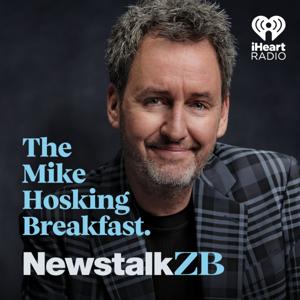
The Mike Hosking Breakfast

By Newstalk ZBNews
Download on the App Store
  • Favorites

    295

    Followers

  • Typical duration

    4 min

    per episode

  • If it hooks

    63%

    finish an episode

Based on Podcast App listening data

The Mike Hosking Breakfast episodes

  • Commentary Box: Andrew Saville and Guy Heveldt wrap the weekend in sport
    The 2020 Grand Final saw a stunning start with a penalty try awarded just four minutes into the game as the Melbourne Storm drew first blood before going on to beat Penrith 26-20.
    Getting the ball in good field position after a Panthers mistake, the Storm went wide.
    Winger Josh Addo-Carr was tackled but passed the ball back on the inside to his centre Justin Olam who dived for the corner — but referee Gerard Sutton sent the call up as a no try.
    The bunker checked the sideline and then saw the ball dislodged by the knee of Panther Tyrone May, who kicked out with his leg in an effort to stop the try.
    The more the bunker official Steve Chiddy looked at the play, the more the commentators on Channel 9 started to point to it being a potential penalty try.
    It is illegal for a defender to kick the ball out of a rival's grasp with their feet because it is deemed dangerous play.
    The bunker sent it back as a penalty try — the first penalty try in a Grand Final since 2013.
    "Tyrone May has used the foot to kick the ball out of the possession of Justin Olam. In our opinion, we believe a try would have been scored," Chiddy said.
    The Panthers immediately protested with captain James Tamou told by Sutton "He can't kick at it with a foot, mate. He believes he kicks at the ball."
    Phil Gould called the decision "incredible", clearly disagreeing with the call.
    "I don't know what Tyrone May could have done any differently there," Gould said.
    "It is not what I would call indiscriminate kicking but the referee ruled he's played at the ball with his foot.
    "That is a stunning start to this game. Stunning."
    But while social media was somewhat divided, the main sentiment was that it was a good call.
    The news went from bad to worse for Panthers, who went to hit straight back.
    The Panthers were pushing hard towards the Storm line when it appeared Josh Mansour went over in the corner.
    But it was called back when Stephen Crichton was called for an obstruction.
    As the game went on, nothing appeared to be going the Panthers' way with the Storm rolling on to a 22-0 lead at the break.
    The Storm would go up 26-0 before the Panthers clawed their way back in dramatic fashion - scoring the last four tries of the match after a series of controversial calls went against the Storm.
    The first allowed Isaah Yeo to set up a try after running around his own teammate in a clear obstruction.
    The second saw halfback Jahrome Hughes sent to the sin bin with nine minutes left on the clock after the NRL Bunker ruled he had performed a professional foul by taking out Villiame Kikau.
    With the Storm reduced to 12 - and then 11 - men at the death, the Panthers very nearly pinched it.
    But the Storm showed their class to endure the onslaught and emerge with a famous grand final triumph.
    The tension also got the better of Storm coach Craig Bellamy, who was caught on camera in a coaches' box meltdown in the dying seconds.
    Shortly after Nathan Cleary scored to make it 26-20, Bellamy blew his top.
    The Channel 9 cameras panned to his coaches' box where the seasoned mentor could be seen shouting furiously before walking to the back of the room and sticking the boot into a chair.
    Andrew McMurtry for news.com.au
    12 min
  • David Moger: Funeral industry welcomes review to ensure grieving families have more rights
    The Funeral Directors Association has welcomed the review to give grieving families more rights when funerals go wrong.
    High-profile mistakes include Christchurch mother Michelle Bishop chasing a funeral home because her daughter wasn't embalmed properly.
    Association CEO David Moger told Mike Hosking, new entrants with no qualifications or standards are entering the industry.
    He said literally anyone can sign a form, set up a Facebook account, buy a car and be in business.
    Moger said they won't give a meaningful farewell.
    The Health Ministry review closes at end of month.
    LISTEN ABOVE
    4 min
  • Catherine Field: French doctor warns his country has 'lost control' of virus
    A French doctor warned Monday that his country has “lost control of the epidemic,” a day after health authorities reported more than 52,000 new coronavirus cases as nations across Europe enact more sweeping restrictions to try to slow surging infection rates.
    Spain — the first European country to surpass 1 million confirmed COVID-19 cases — declared a state of emergency Sunday that included a nationwide overnight curfew, a cap of six people on social gatherings and possible travel bans in and out of the hardest-hit regions.
    The effect was clear on Barcelona's famed Las Ramblas promenade, which was deserted Sunday night when it normally would have been teeming with people.
    In two major Italian cities, people took to the streets amid a pushback from small sections of society to new restrictions. On Friday, demonstrators in Naples protested a locally imposed 11 p.m. to 5 a.m. curfew and clashed with police. On Saturday night, far-right and neo-fascist groups led a similar protest in Rome against a curfew. Another protest is planned for Tuesday in Milan.
    Dr. Jean-François Delfraissy, president of the scientific council that advises the French government on the virus, said the country is in a “very difficult, even critical situation."
    "There probably are more than 50,000 new cases every day. Our estimate at the Scientific Council is closer to 100,000 – twice as many,” Delfraissy told RTL radio. “Between those who aren’t tested and asymptomatic patients, we’re close to that number of cases. This means the virus is spreading extremely fast.”
    France declared a state of emergency earlier this month and has been imposing more and more restrictions since September to try to ease the pressure on France’s hospitals, where COVID-19 patients occupy more than half of all ICU beds.
    Dr. Eric Caumes, head of the infections and tropical diseases department at Paris’ Pitie-Salpetriere Hospital, said the country needs to lock down again.
    “We lost control of the epidemic but that doesn’t date from yesterday,” he said on broadcaster Franceinfo. “We lost control of the epidemic several weeks ago already.”
    Europe’s confirmed death toll has surpassed 250,000 according to a count by Johns Hopkins University, which puts the global toll at more than 1.1 million.
    A senior World Health Organization official said national lockdowns could be avoided if people are willing to make sacrifices.
    Maria Van Kerkhove, WHO’s technical lead on COVID-19, said she hoped countries would use other tools to stop transmission, including strengthening their surveillance, testing and contact tracing systems.
    “We can avoid national lockdowns,” Van Kerkhove said. She said people should take personal responsibility for everyday decisions, like whether or not they should go to crowded places, avoiding closed settings and postponing social gatherings.
    Italy, the first country in the West to get slammed by COVID-19, took new measures over the weekend to try to rein in the new outbreak, ordering restaurants and bars closed by 6 p.m., and shutting down gyms, pools and movie theaters.
    The measures, which took effect Monday, also require high schools to transition to at least 75% distance learning while letting younger students remain in classrooms. Indoor and outdoor gatherings, including those for religious reasons, are barred, and the government is strongly recommending people avoid having house guests and traveling in the country except for work, health or other necessities.
    The new restrictions sent Rome resident Matteo Serba to the city's Villa Borghese for a run Monday.
    “I used to go to gym. Now jogging in the park is the alternative," Serba said. "Unfortunately, we have no other alternatives but coming here. It’s sad but we have been asked to do it and we comply with the rules.”
    Italy has been registering around 20,000 new confirmed infections per day and health authorities have warned that...

    5 min
  • Deidre Shea: How the teacher shortage is dramatically reducing post Covid-19
    Flight attendant Melissa Ezekiela always knew she'd return to teaching one day - she just didn't expect it would be this year.
    Like many other former teachers who have moved into different careers, the 40-year-old has found herself back in the classroom after being made redundant when the border closed in March.
    It's something that has come as a blessing for the profession which has seen the pre-Covid teacher shortage reduce dramatically.
    Ezekiela, who had been working as an Air New Zealand flight attendant for five years, is one of hundreds of New Zealanders who are returning to teaching from other jobs or from overseas, or deciding to train as new teachers, since the Covid recession hit.
    Statistics NZ says schoolteachers was the biggest single occupational group of returning Kiwis from April to August, accounting for 816 of the 13,303 NZ citizens who came home in those five months.
    Secondary Principals Association president Deidre Shea said the turnaround from pre-Covid teacher shortages was "exciting".
    "Many of my colleagues and I have experiences with people applying who, if it hadn't been for the events of this year, probably wouldn't have been returning to teaching," she said.
    Council of Deans of Education chair Professor Letitia Fickel said applications to enrol for teacher training next year have also jumped - by 36 per cent at her university, Canterbury, where applications have doubled in three years from 510 at this time in 2017 to 836 at this time last year, and 1139 today.
    "Many of those expressing interest in the undergraduate programmes would be first-in-family to university and a bit more seasoned people - not 18 years old, they might be late 20s to early 40s," she said.
    "They are often mothers who have decided to go into teaching after having children, or people who have left the private sector doing other jobs and have figured out that they are more than capable of doing university-level study."
    Ezekiela, a mother of two, worked as a teacher aide before training as a teacher, then decided to become a flight attendant after several years teaching.
    "A friend of mine I had been to university with left teaching and flew with Air NZ and she encouraged me to do the same," said the mother-of-two.
    "It was always something I wanted to do from a young age, and I thought if I'm going to do it I need to do it now.
    "I loved it. When you love people, it's a good job for you. I genuinely enjoyed working with adults."
    Over five years she worked her way up to training the new crew and doing all the checks before takeoff and landing on domestic, trans-Tasman and Pacific Island flights.
    "I knew that at some stage in the future I would come back to teaching, it was always an option for me," she said.
    "But at that time, it wouldn't have occurred to me, because I loved my job. Air NZ is a great company to work for, they look after you."
    Then Covid hit. At first, it meant wearing masks and social distancing, which upset the ability to interact with passengers that had made the job enjoyable.
    When the border closed to all except NZ citizens on March 19, Air NZ made about 900 cabin crew redundant. Ezekiela opted to go on a "furlough" list, becoming redundant in July but available to be called back if needed.
    Meanwhile, she applied for a job as a teacher of new entrants at Stanhope Rd School in Mt Wellington - the same school where she once worked as a teacher aide.
    Principal Zane Wilson couldn't believe his luck.
    "It's really hard to get experienced teachers for a new entrant class in Term 3. Most people who apply are first-year teachers, and you don't want someone fresh out of school for new entrants," he said.
    Equally, Ezekiela "felt very lucky that after being out of it for five years there was a school that was willing to take a chance on me". She started on July 20.
    "At first, I have to say it was a little bit of...

    3 min
  • Rod Liddle on Britain's Covid restrictions, school meals and suspected tanker hijack
    Seven stowaways seized when British naval special forces stormed an oil tanker in the English Channel have been arrested on suspicion of hijacking, police said Monday.
    Hampshire Police said the men, believed to be from Nigeria, were being held at several police stations on suspicion of “seizing or exercising control of a ship by use of threats or force.” They have not been charged.
    Police said the 22 crew members of the Nave Andromeda were “safe and well” after the raid, which unfolded after darkness fell on Sunday. Special Boat Service commandos were lowered by rope from helicopters onto the tanker, whose crew had locked themselves in a secure part of the ship known as the citadel. Within minutes, the stowaways were in custody.
    Maritime tracking websites showed the ship reached port in Southampton, on England’s south coast, early Monday.
    Police said officers were speaking to crew members to determine exactly what had happened.
    The ship had left Lagos, Nigeria, on Oct. 6 and had been due to dock in Southampton on Sunday morning.
    Navios Tanker Management, which operates the Liberian-registered vessel, said the ship’s master became “concerned for the safety of the crew due to the increasingly hostile behavior of the stowaways.” A 10-hour standoff ensued as the tanker circled an area a few miles southeast of the Isle of Wight, south of Southampton.
    “I think this has got all the hallmarks of a situation where a number of stowaways are seeking political asylum, presumably in the U.K.," said Bob Sanguinetti, chief executive of the U.K. Chamber of Shipping. “At some stage they got aggressive.”
    “Clearly no one knew at the time how aggressive they were, whether they were armed or not, what their motives were, because there will have been confusion at that stage,” he said.
    The coast guard scrambled helicopters to the scene, and authorities imposed a three-mile exclusion zone around the vessel. Suspecting a hijacking, Defense Secretary Ben Wallace and Home Secretary Priti Patel authorized military action, the U.K. government said.
    The Special Boat Service is the elite maritime counter-terrorism unit of the Royal Navy, and the government never comments directly on its actions.
    Prime Minister Boris Johnson said he couldn't comment on “operational details.”
    “Both police and armed forces did a fantastic job and I thank them very, very much for what they did to keep our shores safe,” he said.
    6 min
  • Chris Tennent-Brown: Investor confidence remains negative despite strong markets
    A strong housing market and stability in the share market has helped investor confidence bounce off an all-time low but it remains in negative territory.
    Net investor confidence rose 14 points in the three months to September from a record low of -25 per cent in the June quarter, according to research by ASB.
    But it is still below zero at a net -11 per cent meaning more people think the return on their investments will get worse than better in the coming year.
    Chris Tennent-Brown, ASB senior economist, said there were a number of factors affecting investor sentiment as a whole.
    "There is so much uncertainty at the moment, which is causing a lot of volatility for investments like shares, KiwiSaver and managed funds."
    He said confidence had recovered significantly in the past quarter thanks to a stabilising sharemarket and the better than expected housing market.
    The NZX 50 benchmark index hit a fresh high on October 14 and bounced back strongly from the big drop it saw in March as the world headed into the global pandemic.
    While predictions of a plummet in house prices have not materialised.
    Tennent-Brown said going into the March lockdown many economists and government agencies forecast a material housing market correction to accompany New Zealand's deepest economic recession in decades.
    "We were less pessimistic with our prediction of a 6 per cent fall in prices, but some were suggesting house price declines well into double-digits."
    ASB economists are now predicting an annual house price rise of 12 per cent in the year to June 2021.
    "Fast forward a few months and national house prices have bounced back to fresh record highs," Tennent-Brown said.
    The resurgence in confidence was mainly driven by those outside of Auckland, where confidence increased from -23 per cent to -7 per cent, compared with Auckland where the increase was a more muted -19 per cent, up from -27 per cent in the June quarter.
    Aucklanders are back to believing rental property will give them the best bang for their buck with it rising from around 15 per cent to 24 per cent in the September quarter to overtake their own home.
    Outside of Auckland people still believed their own home would give them the best return on their investment while confidence in rental property investment dropped slightly but remained high and shares rose slightly.
    "In the regions we have seen a slight dip in expectations for housing – both rental and own home – whereas in Auckland we have seen expectations lift, resulting in a net unchanged result across the country."
    Tennent-Brown said the factors influencing Auckland's housing market, which include increasing demand and a more positive than expected outlook for the labour market, mean house prices are likely to continue climbing in Auckland.
    "We expect to see this reflected in coming quarters in terms of investor confidence. But we don't think the gains will be focused on Auckland – prices across the country should garner support from the combination of low interest rates and the economic recovery."
    KiwiSaver was seen as giving the best return for a bank product although it has fallen back a way from the March quarter when it hit a high.
    Tennent-Brown attributed the mood shift to the swings in members' balances over the year, with record high KiwiSaver returns in 2019 boosting confidence in the first quarter of the year, and Covid uncertainty and falling fund balances contributing to the decline in the second two quarters.
    "It's been a volatile year for sharemarkets, and that's flowed through to investments like KiwiSaver. But hopefully people have stuck with their long-term strategies and seen a decent recovery in KiwiSaver balances over the past six months," he said.
    3 min
  • Mike's Minute: Still plenty of unanswered economic questions
    If you want to feel good about life in this country right now, read Tony Alexander's piece over the weekend.
    He's one of my favourite economists. He paints a solid, if not rosy, picture over what's supposedly going on. Spending is good, spending intention is good, confidence is rising, housing is through the roof, even aspects of commercial property have good demand.
    That will lead to a shortage of skills as job numbers rise. People are into building homes, which means demand for land, demand for planners, architects, builders, plumbers, suppliers of stuff those people use and install, and so it goes.
    So, it's all good then?
    Well, explain the CPI, the Consumer Price Index, or inflation. There isn't any. Well, there is a bit, 1.7 percent. but they're looking for over two percent.
    Inflation, in really simple terms, means growth and demand. You don't want too much, but you don't want too little. We have too little, which then led in reportage to the question, does the Reserve Bank need to print a bit more money? Do they have to introduce the funding for lending programme sooner? Do they need to go negative on the interest rates?
    But last week before we left for the long weekend ,there was talk of LVRs. Why? Because we were borrowing too much for housing.
    If the bank needs to stoke the economy with more money or lower interest rates, doesn’t that mean we are going to borrow even more? And if we do, what are we spending it on? Where is the so-called inflation going to come from? And on the bigger side of the equation, when is all this borrowed money getting paid back?
    Is Tony Alexander right? And we can have closed borders but a decent economy? Or is the CPI right and a few people do well, while others go nowhere fast and ultimately there is no real growth? And what does the Reserve Bank do if the tools they have aren't working? Or are they working too well, but in the wrong areas? Ah, the problem of blunt instruments.
    Seems hard to believe that a country built on tourism and farms has one of those income streams crippled for the foreseeable future, and things somehow carry on. Is every unemployed hotel worker really going to build roads?
    I can't help but think a lot of what we think is happening is a guess, a lot of what we hear by way of predictions is hope as much as knowledge.
    I think for all we think we know, there is a hell of a lot more we don’t.
    3 min
  • Scott Dixon on winning his sixth IndyCar title and racing with compatriot Scott McLaughlin
    Scott Dixon's relishing the prospect of another Kiwi on the IndyCar circuit.
    Dixon clinched a sixth championship title in the season-finale in Florida with compatriot Scott McLaughlin racing the class for the first time.
    The three-time Supercars champion crashed out on the the 47th lap while sitting 17th.
    Dixon told Mike Hosking McLaughlin did well under the circumstances.
    "It was a tough order for him to come into the last race when everybody is already up to speed, especially with the restricted time on track."
    Dixon says it's great to have another Kiwi to race with.
    "McLaughlin did a fantastic job in practise. Once he gets some time, he will be a beast and huge talent."
    LISTEN ABOVE
    7 min
  • Steve Price: Melbourne lockdown to end on October 28
    Victorian Premier Daniel Andrews has announced "now is the time to open up", with lockdown finally coming to an end in Melbourne at midnight tomorrow.
    In a statement, Andrews confirmed the long-awaited news, with Melbourne set to move onto its Third Step.
    "Under the Third Step, and from 11.59pm tomorrow, Melbourne will move from 'stay home' to 'stay safe', with no more restrictions on the reasons to leave home," the Premier said.
    The 25km limit will, however, remain in place – as will the border between regional Victoria and metropolitan Melbourne.
    "Fundamentally, this belongs to every single Victorian, every single Victorian who has followed the rules, stayed the course, worked with me and my team, to bring this second wave to an end," Andrews told reporters.
    From tomorrow, cafes and restaurants will reopen, as will all retail, beauty and personal services.
    Andrews also announced from November 8 further changes will come – including the 25km travel limit being lifted and the border between regional Victoria and metropolitan Melbourne.
    On Monday, Victoria recorded no new Covid-19 cases or deaths for the first time since June.
    What will change from 11:59pm tomorrow night in Melbourne
    • All retail will open
    • Restaurants, cafes and bars will reopen with 50 people allowed to dine outdoors and 20 indoors
    • Beauty, personal services and tattooing – provided Melburnians are wearing a mask – will reopen
    • Outdoor community sport for under 18 and outdoor non-contact sport for adults will recommence
    • Four reasons to leave home will be removed
    • Outdoor gatherings remain at maximum of 10 people
    • Weddings will increase to maximum of 10 people
    • Funerals will increase to a maximum of 20 mourners
    • Religious gatherings indoors will have a maximum of 10 people inside plus one faith leader, and outside a maximum of 20 people plus one faith leader
    What will change from 11:59pm on Sunday, November 8 in Melbourne
    • The 25km travel limit will be removed
    • The border between regional Victoria and metropolitan Melbourne will be removed and "the state will be one again"
    • Gyms and fitness studios will open in Melbourne with a maximum of 20 people per space, one person per eight square metres
    • Restaurants, cafes and bars will move to an outdoor maximum of 70 people (one person per 2sqm) and 40 people indoors (10 people per space)
    • Religious gatherings will increase to 50 people outdoors and 20 people indoors• Funerals will move indoors with maximum of 20 mourners and outdoors with a maximum of 50 mourners
    • Indoor community sport, non-contact sport for 18 can recommence
    4 min

About The Mike Hosking Breakfast

From the publisher's feed

Open your mind to the world with New Zealand’s number one breakfast radio show.

Without question, as New Zealand’s number one talk host, Mike Hosking sets the day’s agenda.

The sharpest…

Best of The Mike Hosking Breakfast

Ranked by our users in the last 21 days

More shows like The Mike Hosking Breakfast

Test Match Special by BBC Radio 5 Live

Test Match Special

210 Listeners

Sky Sports Cricket Podcast by Sky Sports

Sky Sports Cricket Podcast

118 Listeners

Gone By Lunchtime by The Spinoff

Gone By Lunchtime

30 Listeners

Australian True Crime by Bravecasting

Australian True Crime

1,219 Listeners

Saturday Morning with Jack Tame by Newstalk ZB

Saturday Morning with Jack Tame

1 Listeners

Heather du Plessis-Allan Drive by Newstalk ZB

Heather du Plessis-Allan Drive

11 Listeners

Early Edition with Ryan Bridge by Newstalk ZB

Early Edition with Ryan Bridge

2 Listeners

Weekend Sport with Jason Pine by Newstalk ZB

Weekend Sport with Jason Pine

4 Listeners

The Weekend Collective by Newstalk ZB

The Weekend Collective

2 Listeners

The Re-Wrap by Newstalk ZB

The Re-Wrap

2 Listeners

The Leighton Smith Podcast by Newstalk ZB

The Leighton Smith Podcast

80 Listeners

Smart Money by Newstalk ZB

Smart Money

2 Listeners

Matt Heath & Tyler Adams Afternoons by Newstalk ZB

Matt Heath & Tyler Adams Afternoons

0 Listeners

The OneRoof Radio Show by Newstalk ZB

The OneRoof Radio Show

5 Listeners

Kerre Woodham Mornings Podcast by Newstalk ZB

Kerre Woodham Mornings Podcast

1 Listeners

A Captain's Cup by Radio Sport

A Captain's Cup

1 Listeners

Between Two Beers Podcast by Steven Holloway & Seamus Marten

Between Two Beers Podcast

151 Listeners

The High Performance Podcast by High Performance

The High Performance Podcast

579 Listeners

I Catch Killers with Gary Jubelin by News.com.au

I Catch Killers with Gary Jubelin

532 Listeners

Newstalk ZB ANZAC Centenary Tribute by Newstalk ZB

Newstalk ZB ANZAC Centenary Tribute

0 Listeners

Election 2026: The Front Bench by Newstalk ZB

Election 2026: The Front Bench

0 Listeners

On The Front Foot by Newstalk ZB

On The Front Foot

4 Listeners

Holiday Breakfast by Newstalk ZB

Holiday Breakfast

0 Listeners

The Superior Sailor Series by Newstalk ZB

The Superior Sailor Series

0 Listeners

Rugby Direct by Newstalk ZB

Rugby Direct

6 Listeners

The Dom Harvey Podcast by Dom Harvey

The Dom Harvey Podcast

80 Listeners

Secrets We Keep by LiSTNR

Secrets We Keep

78 Listeners

Motive & Method by Tapt Media

Motive & Method

87 Listeners

The Big League Podcast by Newstalk ZB

The Big League Podcast

1 Listeners

All Sport Breakfast Canterbury by NewstalkZB

All Sport Breakfast Canterbury

0 Listeners

News Fix by Newstalk ZB

News Fix

0 Listeners

Football Fever by Newstalk ZB

Football Fever

0 Listeners

Sports Fix by Newstalk ZB

Sports Fix

2 Listeners

Great Chats with Francesca Rudkin by Newstalk ZB

Great Chats with Francesca Rudkin

0 Listeners

In My Day by Newstalk ZB

In My Day

0 Listeners