
Sign up to save your podcasts
Or

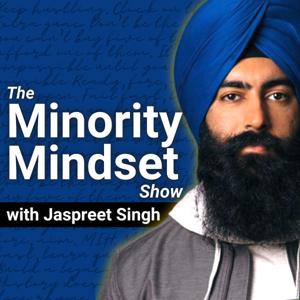


Based on Podcast App listening data
"Higher interest rates tend to pop the bubble."
This episode responds to the headlines that Ray Dalio and other experts are warning rising interest rates could tip the economy into a recession. He explains that the Fed has raised rates once this year, with more hikes likely at its October 28th and December meetings, and why that makes the recession question worth examining closely.
Jaspreet Singh walks through the five most recent rate-hiking cycles and what happened to stocks and the economy during and after each one. He then covers why private equity and private credit are showing early stress, and how he uses always be buying, market shifts, and market crashes to stay calm and keep building wealth.
In this episode, you'll learn:
Keywords: interest rates, rate hikes, recession, Ray Dalio, Federal Reserve, private equity, private credit, stock market, always be buying, market shifts
✅ Join Market Briefs (my newsletter for investors) free!
"The new driver of inflation is artificial intelligence."
This episode shares three takeaways from a meeting his head of investing research attended with Fed Governor Barr: higher interest rates are likely coming in 2026, lower inflation may be further away than many expect, and artificial intelligence is now adding to inflation instead of reducing it. He explains why this is a shift from the Federal Reserve's earlier view that AI would push prices down.
Jaspreet Singh walks through how this contrasts with the White House, where President Trump is encouraging AI companies to police themselves under a moral accord while competing with China for AI leadership. He then covers how interest rates and money printing affect investors, and the framework he uses to build and accelerate wealth through any of it.
In this episode, you'll learn:
Keywords: Federal Reserve, interest rates, inflation, artificial intelligence, AI regulation, China AI race, national debt, always be buying, market shifts, investing
✅ Grab a FREE copy of my ebook ABB: Always Be Buying here:
"This office building in Chicago sold for $68 million 10 years ago. Today, it sold for $4 million."
This episode breaks down why commercial real estate is cracking across the country, with office buildings selling at 80 to 90 percent discounts as more than $1 trillion in commercial loans readjust at today's much higher interest rates. He explains why these properties are valued on the income they generate rather than sentiment, and why falling occupancy combined with rising costs is pushing many buildings underwater.
Jaspreet Singh walks through a real world example showing how a building's value can collapse when its net operating income falls, and then turns to the housing market to explain why it's under pressure but hasn't cracked the way commercial real estate has.
In this episode, you'll learn:
Keywords: commercial real estate, office building crash, mortgage rates, housing affordability, net operating income, cap rate, interest rates, real estate investing, national debt, Federal Reserve
✅ Grab a FREE copy of my ebook ABB: Always Be Buying here:
"Gold now has a new competitor for a safe haven investment which is treasuries."
This episode breaks down why gold prices fell even after President Trump rejected a deal to reopen the Strait of Hormuz and oil prices jumped back up, a reaction that runs opposite to how gold usually behaves during bad economic news. He explains why investors moved into Treasuries instead, and why that shift signals a bigger change in how money is looking for safety in this economy.
Jaspreet Singh walks through why Treasury yields hitting their highest levels in more than two decades matters far beyond the bond market, touching the national debt, mortgage rates, car loans, and credit card rates, and what the Federal Reserve's expected rate hikes in October and December could mean next.
In this episode, you'll learn:
Keywords: gold prices, Treasury yields, safe haven investment, national debt, Federal Reserve, interest rates, mortgage rates, Strait of Hormuz, oil prices, investing
✅ Grab a FREE copy of my ebook ABB: Always Be Buying here:
"Gold now has a new competitor for a safe haven investment which is treasuries."
This episode breaks down why gold prices fell even after President Trump rejected a deal to reopen the Strait of Hormuz and oil prices jumped back up, a reaction that runs opposite to how gold usually behaves during bad economic news. He explains why investors moved into Treasuries instead, and why that shift signals a bigger change in how money is looking for safety in this economy.
Jaspreet Singh walks through why Treasury yields hitting their highest levels in more than two decades matters far beyond the bond market, touching the national debt, mortgage rates, car loans, and credit card rates, and what the Federal Reserve's expected rate hikes in October and December could mean next.
In this episode, you'll learn:
Keywords: gold prices, Treasury yields, safe haven investment, national debt, Federal Reserve, interest rates, mortgage rates, Strait of Hormuz, oil prices, investing
✅ Register for my investing Workshop & get Market Briefs as a bonus:
"The Trump administration wants to see Bitcoin prices explode."
This episode breaks down why the US government is building a strategic Bitcoin reserve of more than 300,000 coins, and why Treasury Secretary Scott Bessent wants the United States to become the world leader in crypto. He explains the irony at the center of it: Bitcoin was created to help people move away from the dollar, but the government is now using it to strengthen the dollar and its own balance sheet.
Jaspreet Singh walks through how the reserve was built from seized Bitcoin rather than tax dollars, why a stronger government balance sheet could justify borrowing even more against the $40 trillion national debt, and the risks that come with Bitcoin's volatility and the government's growing influence over it.
In this episode, you'll learn:
Keywords: Bitcoin, strategic Bitcoin reserve, cryptocurrency, national debt, dollar devaluation, Scott Bessent, government balance sheet, debasement trade, volatility, investing
✅ Register for my investing Workshop & get Market Briefs as a bonus:
"Emotions are the enemy of profits."
This episode breaks down a new S&P Global report showing the US economy growing at its fastest pace since right after the pandemic, driven by corporate profits up almost 29% year over year. He explains why that boom hasn't translated into calm markets, with the Federal Reserve raising interest rates, Treasury yields hitting two decade highs, and gas prices up nearly 30% in a year.
Jaspreet Singh walks through why stocks and bonds have been falling together instead of moving in their usual opposite directions, what that says about investors shifting money into Treasuries, and the three ways he thinks about building wealth through any market environment.
In this episode, you'll learn:
Keywords: economic growth, corporate profits, Federal Reserve, Treasury yields, bond market, inflation, interest rates, stock market volatility, investing strategy, market shifts
✅ Register for my investing Workshop & get Market Briefs as a bonus:
"It's official. The Federal Reserve Bank wants to reset our economy, starting with the United States dollar."
This episode breaks down why the Federal Reserve Bank and the Trump administration have split apart on economic priorities, with the Fed now committing to fight inflation even if it means slowing the economy, while President Trump keeps pushing to stimulate growth. He explains how the pandemic era of money printing and zero interest rates set up this conflict, and why the war in the Middle East has made it worse.
Jaspreet Singh walks through why the US national debt has now outgrown the economy for the first time since World War II, the four options the government has to deal with that debt, and why cracks are forming in private equity and private credit as interest rates stay higher than firms expected.
In this episode, you'll learn:
Keywords: Federal Reserve, national debt, inflation, quantitative easing, debt to GDP, private equity, private credit, interest rates, dollar devaluation, investing
✅ Register for my investing Workshop & get Market Briefs as a bonus:
"Panic leads to overselling leads to opportunity leads to profit."
This episode breaks down why President Trump is pushing back hard against AI leaders like Anthropic's Dario Amodei, OpenAI's Sam Altman, and Elon Musk after they warned that AI development needs to slow down. He explains why the White House is treating the AI race with China as existential, and why an internal White House letter has reportedly warned that a bursting AI bubble could cause serious economic pain.
Jaspreet Singh walks through the three reasons the government wants the US to win the AI race, why so many everyday investors are more exposed to AI than they realize through the S&P 500 and target date funds, and why understanding market cycles matters more than trying to predict when a downturn hits.
In this episode, you'll learn:
Keywords: AI bubble, artificial intelligence, national debt, China AI race, S&P 500 concentration, market downturns, target date funds, dollar devaluation, energy production, investing
✅ Register for my investing Workshop & get Market Briefs as a bonus:
"That way you can find investment opportunities to help you build wealth regardless of what the Federal Reserve Bank does."
This episode breaks down why the Federal Reserve Bank could either raise or cut interest rates in 2026, and lays out the case for both directions instead of picking a side. He explains why the Fed weighs a dual mandate of inflation and jobs, and why understanding where money moves under each scenario matters more than guessing which one happens.
Jaspreet Singh walks through three reasons rates could go higher (inflation, the oil and tariff shock, and a hawkish Fed chairman) and three reasons they could go lower (a weakening job market, a frozen housing market, and an expensive national debt), then covers specific ETF examples for each direction so listeners can think through where opportunity lives either way.
In this episode, you'll learn:
Keywords: Federal Reserve, interest rates, Kevin Warsh, inflation, national debt, dividend stocks, real estate investing, Treasury yields, small cap stocks, investing
✅ Register for my investing Workshop & get Market Briefs as a bonus:
From the publisher's feed
Ranked by our users in the last 21 days

3,836 Listeners

1,580 Listeners

21,048 Listeners
578 Listeners
4,705 Listeners
2,294 Listeners

8,527 Listeners

3,060 Listeners

4,095 Listeners

27,762 Listeners

1,430 Listeners
915 Listeners

499 Listeners
838 Listeners
931 Listeners