
Sign up to save your podcasts
Or

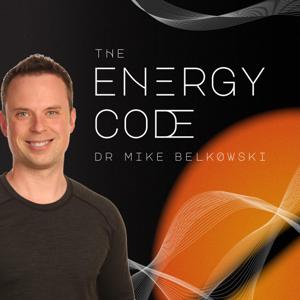

In this foundational episode of The Energy Code, Dr. Mike Belkowski challenges the conventional multivitamin and introduces Vitamin M, BioLight’s most advanced mitochondrial supplement to date.
Traditional multivitamins were designed to prevent deficiency diseases — not to optimize energy, cognition, resilience, or longevity. Dr. Mike explains why many formulas rely on inexpensive nutrient forms, token doses, competing ingredients, and labels with no unifying biological purpose. Vitamin M takes the opposite approach, beginning with one central question: What does a mitochondrion actually need to produce energy and remain resilient?
The episode walks through the formula ingredient by ingredient, organizing Vitamin M into four coordinated systems: replenishing NAD and cellular energy currency, supplying the cofactors required to produce ATP, reinforcing antioxidant defenses, and supporting methylation, DNA repair, and homocysteine management.
Featuring NMN, niacinamide, ubiquinol, active B vitamins, alpha-lipoic acid, taurine, glycine, trace minerals, TMG, and folinic acid, Vitamin M is designed to support sustained cellular energy without caffeine or stimulants. This is not another kitchen-sink multivitamin — it is a coordinated mitochondrial system built from the ground up.
(Educational content only, not medical advice.)
-
Key Quotes From Dr. Mike:
“Americans spend somewhere north of eight billion dollars a year on multivitamins.”
“Calling these multivitamins expensive urine might actually be too generous.”
“You are only as young as your mitochondria.”
"Mitochondrial health isn't another wellness trend — it's the foundation beneath every wellness trend."
“What does a mitochondrion actually need to make energy and stay resilient? Vitamin M starts with a single question and works backward to the ingredients, forms, and doses.”
"Every ingredient should have a job. Every job should support the same mission."
"Every ingredient in Vitamin M was selected because the mitochondria actually need it — not because the label needed it."
"Mitochondrial health isn't another wellness trend—it's the foundation beneath every wellness trend."
-
Key Points
⚡ Conventional multivitamins were created to prevent deficiency diseases such as scurvy, beriberi, pellagra, and rickets—not to optimize energy or longevity.
⚡ Recommended daily allowances represent minimum deficiency-prevention levels, not necessarily optimal amounts for cellular performance.
⚡ Many traditional multivitamins use inexpensive or inactive forms that the body must convert before they can be utilized.
⚡ Common examples include folic acid instead of bioactive folate, cyanocobalamin instead of active B12, and poorly absorbed mineral oxides.
⚡ Kitchen-sink formulas often contain dozens of ingredients at doses too small to produce meaningful biochemical effects.
⚡ Certain nutrients may also compete for absorption when packed together without an intentional design.
⚡ The central problem with most multivitamins is that they lack a biological thesis or clearly defined system they are built to support.
⚡ Physical energy is fundamentally ATP, and approximately 90–95% of ATP is produced by the mitochondria.
⚡ Mitochondria also regulate hormones, calcium signaling, cellular cleanup, heat production, redox signaling, and programmed cell death.
⚡ Caffeine does not create energy; it temporarily blocks the brain’s perception of fatigue.
⚡ Vitamin M is stimulant-free and is designed to support the machinery that actually produces cellular energy.
⚡ The formula addresses four age-related mitochondrial challenges: declining NAD, inefficient electron transport, weakened mitochondrial quality control, and disrupted methylation.
⚡ Team 1 supports cellular energy currency with NMN and niacinamide to replenish and recycle NAD.
⚡ Team 2 supports ATP production with ubiquinol, active riboflavin, thiamine, pantothenic acid, and mitochondrial adenosylcobalamin.
⚡ Ubiquinol acts both as an electron carrier in the respiratory chain and as a membrane-protective antioxidant.
⚡ Riboflavin supports FAD and FMN, molecules physically required by complexes I and II of the electron transport chain.
⚡ Thiamine helps convert pyruvate into acetyl-CoA, allowing carbohydrate-derived fuel to enter the Krebs cycle.
⚡ Pantothenic acid is required to produce coenzyme A, the carrier that transports fuel from carbohydrates, fats, and proteins.
⚡ Adenosylcobalamin is the mitochondrial form of B12 and helps additional fats and amino acids enter cellular energy pathways.
⚡ Team 3 protects the mitochondrial machinery with alpha-lipoic acid, taurine, glycine, selenium, manganese, and copper.
⚡ Alpha-lipoic acid helps regenerate other antioxidants while also supporting critical Krebs-cycle enzymes.
⚡ Taurine supports mitochondrial membranes, electron-transport proteins, cellular resilience, and healthy aging pathways.
⚡ Glycine supplies a frequently limiting building block for glutathione, the body’s master endogenous antioxidant.
⚡ Selenium, manganese, and copper are required for antioxidant enzymes and mitochondrial respiratory function.
⚡ Team 4 supports methylation and cellular maintenance with TMG, folinic acid, P5P, B12, and glycine.
⚡ Supporting NAD increases methylation demand, so Vitamin M intentionally includes methyl donors and cofactors to replenish that system.
⚡ The formula uses bioavailable forms — including ubiquinol, folinic acid, P5P, adenosylcobalamin, and chelated minerals — rather than inexpensive precursors.
⚡ Vitamin M is designed as two capsules twice daily to provide smoother availability throughout the day.
⚡ Vitamin M pairs naturally with urolithin A for mitophagy and with red light therapy for complementary internal and external mitochondrial support.
-
Episode timeline
00:00–02:25 — Introduction to the launch of Vitamin M and why mitochondrial wellness is foundational to health and longevity
02:27–04:10 — The multivitamin paradox: billions spent annually with underwhelming long-term results
04:11–06:25 — Why multivitamins were created to prevent deficiency diseases—not to optimize vitality, cognition, or aging
06:26–07:34 — The “expensive urine” problem and why wasted nutrients are only part of the issue
07:35–08:56 — Failure 1: Cheap, inactive, or poorly absorbed nutrient forms
08:57–09:37 — Failure 2: Kitchen-sink formulas with token doses and competing nutrients
09:38–10:50 — Failure 3: No biological thesis, target, blueprint, or coordinated system
10:51–13:49 — Why the mitochondria are the correct target for energy, resilience, signaling, and longevity
13:51–15:32 — Caffeine is a loan; ATP is income: stimulation versus genuine cellular energy production
15:33–16:39 — What declines with age: NAD, electron-transport efficiency, mitochondrial cleanup, and methylation
16:40–18:21 — Introduction to Vitamin M and its four coordinated ingredient teams
18:22–21:30 — Team 1: NMN, NAD production, sirtuins, DNA repair, insulin sensitivity, and cellular energy currency
21:32–23:17 — Niacinamide and the NAD salvage pathway: recycling the energy currency already spent
23:19–26:35 — Team 2 begins: ubiquinol, electron transfer, ATP synthase, membrane protection, and CoQ10 biology
26:36–28:01 — Active vitamin B2, FAD, FMN, complexes I and II, and glutathione regeneration
28:03–29:13 — Vitamin B1 as the gateway that allows carbohydrate fuel to enter the Krebs cycle
29:14–30:18 — Vitamin B5 and coenzyme A as the universal fuel-delivery system
30:18–31:29 — Adenosylcobalamin: the mitochondrial form of B12 and expanded fuel utilization
31:31–34:01 — Team 3 begins: oxidative stress, alpha-lipoic acid, antioxidant recycling, and Krebs-cycle support
34:02–35:59 — Taurine, mitochondrial stability, healthy aging, exercise, and cellular resilience
36:01–37:29 — Glycine, glutathione production, oxidative stress, sleep, collagen, and aging
37:31–39:19 — Selenium, manganese, copper, antioxidant enzymes, complex IV, and chelated mineral forms
39:21–41:09 — Team 4: methylation, gene regulation, neurotransmitters, homocysteine, and increased demand from NAD support
41:10–42:00 — TMG as a methyl donor and its role in SAM-e and homocysteine metabolism
42:02–43:00 — Folinic acid, bioactive folate, DNA synthesis, repair, and the one-carbon cycle
43:01–44:23 — P5P, trans-sulfuration, neurotransmitters, glutathione, and the complete methylation system
44:25–47:09 — The full formula: four coordinated teams, synergy, bioavailable forms, and why Vitamin M differs from a conventional multivitamin
47:10–48:51 — Practical use, split dosing, stimulant-free energy, expected experience, and stacking with BioLithin
48:52–49:36 — Vitamin M and red light therapy: “light from the outside, fuel from the inside”
49:37–50:44 — Closing message: moving beyond deficiency prevention toward intentional mitochondrial optimization
-
Dr. Mike's #1 recommendations:
Deuterium depleted water: Litewater (code: DRMIKE)
-
Stay up-to-date on social media:
Dr. Mike Belkowski:
BioLight Labs:
Website
BioLight:
Website
YouTube
 View all episodes
 By Dr. Mike Belkowski

4.8
124124 ratings
In this foundational episode of The Energy Code, Dr. Mike Belkowski challenges the conventional multivitamin and introduces Vitamin M, BioLight’s most advanced mitochondrial supplement to date.
Traditional multivitamins were designed to prevent deficiency diseases — not to optimize energy, cognition, resilience, or longevity. Dr. Mike explains why many formulas rely on inexpensive nutrient forms, token doses, competing ingredients, and labels with no unifying biological purpose. Vitamin M takes the opposite approach, beginning with one central question: What does a mitochondrion actually need to produce energy and remain resilient?
The episode walks through the formula ingredient by ingredient, organizing Vitamin M into four coordinated systems: replenishing NAD and cellular energy currency, supplying the cofactors required to produce ATP, reinforcing antioxidant defenses, and supporting methylation, DNA repair, and homocysteine management.
Featuring NMN, niacinamide, ubiquinol, active B vitamins, alpha-lipoic acid, taurine, glycine, trace minerals, TMG, and folinic acid, Vitamin M is designed to support sustained cellular energy without caffeine or stimulants. This is not another kitchen-sink multivitamin — it is a coordinated mitochondrial system built from the ground up.
(Educational content only, not medical advice.)
-
Key Quotes From Dr. Mike:
“Americans spend somewhere north of eight billion dollars a year on multivitamins.”
“Calling these multivitamins expensive urine might actually be too generous.”
“You are only as young as your mitochondria.”
"Mitochondrial health isn't another wellness trend — it's the foundation beneath every wellness trend."
“What does a mitochondrion actually need to make energy and stay resilient? Vitamin M starts with a single question and works backward to the ingredients, forms, and doses.”
"Every ingredient should have a job. Every job should support the same mission."
"Every ingredient in Vitamin M was selected because the mitochondria actually need it — not because the label needed it."
"Mitochondrial health isn't another wellness trend—it's the foundation beneath every wellness trend."
-
Key Points
⚡ Conventional multivitamins were created to prevent deficiency diseases such as scurvy, beriberi, pellagra, and rickets—not to optimize energy or longevity.
⚡ Recommended daily allowances represent minimum deficiency-prevention levels, not necessarily optimal amounts for cellular performance.
⚡ Many traditional multivitamins use inexpensive or inactive forms that the body must convert before they can be utilized.
⚡ Common examples include folic acid instead of bioactive folate, cyanocobalamin instead of active B12, and poorly absorbed mineral oxides.
⚡ Kitchen-sink formulas often contain dozens of ingredients at doses too small to produce meaningful biochemical effects.
⚡ Certain nutrients may also compete for absorption when packed together without an intentional design.
⚡ The central problem with most multivitamins is that they lack a biological thesis or clearly defined system they are built to support.
⚡ Physical energy is fundamentally ATP, and approximately 90–95% of ATP is produced by the mitochondria.
⚡ Mitochondria also regulate hormones, calcium signaling, cellular cleanup, heat production, redox signaling, and programmed cell death.
⚡ Caffeine does not create energy; it temporarily blocks the brain’s perception of fatigue.
⚡ Vitamin M is stimulant-free and is designed to support the machinery that actually produces cellular energy.
⚡ The formula addresses four age-related mitochondrial challenges: declining NAD, inefficient electron transport, weakened mitochondrial quality control, and disrupted methylation.
⚡ Team 1 supports cellular energy currency with NMN and niacinamide to replenish and recycle NAD.
⚡ Team 2 supports ATP production with ubiquinol, active riboflavin, thiamine, pantothenic acid, and mitochondrial adenosylcobalamin.
⚡ Ubiquinol acts both as an electron carrier in the respiratory chain and as a membrane-protective antioxidant.
⚡ Riboflavin supports FAD and FMN, molecules physically required by complexes I and II of the electron transport chain.
⚡ Thiamine helps convert pyruvate into acetyl-CoA, allowing carbohydrate-derived fuel to enter the Krebs cycle.
⚡ Pantothenic acid is required to produce coenzyme A, the carrier that transports fuel from carbohydrates, fats, and proteins.
⚡ Adenosylcobalamin is the mitochondrial form of B12 and helps additional fats and amino acids enter cellular energy pathways.
⚡ Team 3 protects the mitochondrial machinery with alpha-lipoic acid, taurine, glycine, selenium, manganese, and copper.
⚡ Alpha-lipoic acid helps regenerate other antioxidants while also supporting critical Krebs-cycle enzymes.
⚡ Taurine supports mitochondrial membranes, electron-transport proteins, cellular resilience, and healthy aging pathways.
⚡ Glycine supplies a frequently limiting building block for glutathione, the body’s master endogenous antioxidant.
⚡ Selenium, manganese, and copper are required for antioxidant enzymes and mitochondrial respiratory function.
⚡ Team 4 supports methylation and cellular maintenance with TMG, folinic acid, P5P, B12, and glycine.
⚡ Supporting NAD increases methylation demand, so Vitamin M intentionally includes methyl donors and cofactors to replenish that system.
⚡ The formula uses bioavailable forms — including ubiquinol, folinic acid, P5P, adenosylcobalamin, and chelated minerals — rather than inexpensive precursors.
⚡ Vitamin M is designed as two capsules twice daily to provide smoother availability throughout the day.
⚡ Vitamin M pairs naturally with urolithin A for mitophagy and with red light therapy for complementary internal and external mitochondrial support.
-
Episode timeline
00:00–02:25 — Introduction to the launch of Vitamin M and why mitochondrial wellness is foundational to health and longevity
02:27–04:10 — The multivitamin paradox: billions spent annually with underwhelming long-term results
04:11–06:25 — Why multivitamins were created to prevent deficiency diseases—not to optimize vitality, cognition, or aging
06:26–07:34 — The “expensive urine” problem and why wasted nutrients are only part of the issue
07:35–08:56 — Failure 1: Cheap, inactive, or poorly absorbed nutrient forms
08:57–09:37 — Failure 2: Kitchen-sink formulas with token doses and competing nutrients
09:38–10:50 — Failure 3: No biological thesis, target, blueprint, or coordinated system
10:51–13:49 — Why the mitochondria are the correct target for energy, resilience, signaling, and longevity
13:51–15:32 — Caffeine is a loan; ATP is income: stimulation versus genuine cellular energy production
15:33–16:39 — What declines with age: NAD, electron-transport efficiency, mitochondrial cleanup, and methylation
16:40–18:21 — Introduction to Vitamin M and its four coordinated ingredient teams
18:22–21:30 — Team 1: NMN, NAD production, sirtuins, DNA repair, insulin sensitivity, and cellular energy currency
21:32–23:17 — Niacinamide and the NAD salvage pathway: recycling the energy currency already spent
23:19–26:35 — Team 2 begins: ubiquinol, electron transfer, ATP synthase, membrane protection, and CoQ10 biology
26:36–28:01 — Active vitamin B2, FAD, FMN, complexes I and II, and glutathione regeneration
28:03–29:13 — Vitamin B1 as the gateway that allows carbohydrate fuel to enter the Krebs cycle
29:14–30:18 — Vitamin B5 and coenzyme A as the universal fuel-delivery system
30:18–31:29 — Adenosylcobalamin: the mitochondrial form of B12 and expanded fuel utilization
31:31–34:01 — Team 3 begins: oxidative stress, alpha-lipoic acid, antioxidant recycling, and Krebs-cycle support
34:02–35:59 — Taurine, mitochondrial stability, healthy aging, exercise, and cellular resilience
36:01–37:29 — Glycine, glutathione production, oxidative stress, sleep, collagen, and aging
37:31–39:19 — Selenium, manganese, copper, antioxidant enzymes, complex IV, and chelated mineral forms
39:21–41:09 — Team 4: methylation, gene regulation, neurotransmitters, homocysteine, and increased demand from NAD support
41:10–42:00 — TMG as a methyl donor and its role in SAM-e and homocysteine metabolism
42:02–43:00 — Folinic acid, bioactive folate, DNA synthesis, repair, and the one-carbon cycle
43:01–44:23 — P5P, trans-sulfuration, neurotransmitters, glutathione, and the complete methylation system
44:25–47:09 — The full formula: four coordinated teams, synergy, bioavailable forms, and why Vitamin M differs from a conventional multivitamin
47:10–48:51 — Practical use, split dosing, stimulant-free energy, expected experience, and stacking with BioLithin
48:52–49:36 — Vitamin M and red light therapy: “light from the outside, fuel from the inside”
49:37–50:44 — Closing message: moving beyond deficiency prevention toward intentional mitochondrial optimization
-
Dr. Mike's #1 recommendations:
Deuterium depleted water: Litewater (code: DRMIKE)
-
Stay up-to-date on social media:
Dr. Mike Belkowski:
BioLight Labs:
Website
BioLight:
Website
YouTube

770 Listeners
364 Listeners
7,205 Listeners

4,986 Listeners
717 Listeners

1,705 Listeners

4,872 Listeners

3,457 Listeners

9,231 Listeners

142 Listeners
1,096 Listeners
1,781 Listeners
840 Listeners
516 Listeners
292 Listeners