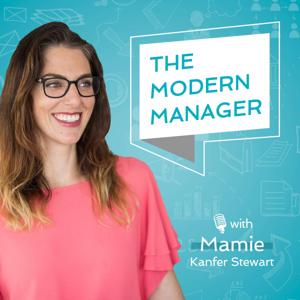
The Modern Manager

The Modern Manager

Download on the App Store
  • Favorites

    164

    Followers

  • Typical duration

    29 min

    per episode

Based on Podcast App listening data

The Modern Manager episodes

  • 172: Change Behavior and Build Better Habits with Parneet Pal

    So often we *know* we should change and even *commit* to changing, yet when the time comes to follow through, we fall back into old habits. We all have behaviors we’d like to change, but as managers, we’re also responsible for supporting our team members to develop the behaviors that will help them be most successful. If changing ourselves is so hard, how are we ever going to succeed in helping others change?


    Today’s guest is Parneet Pal. Parneet is a Harvard- and Columbia-trained physician working at the intersection of lifestyle medicine, technology and behavior change. An educator and science communicator, she applies her subject matter expertise to optimize human health and its impact on business leadership and planetary wellbeing. As Chief Science Officer at Wisdom Labs, she focuses on solving for stress, burnout and loneliness in the workplace.


    Parneet and I talk about behavior change. We get into the brain science, motivation, and lots of tips for how to follow through on new behaviors or habits even when it feels so hard. And of course we talk about what you can do as a manager to help your team members change their behavior.


    Members of The Modern Manager get my “lessons learned” document on behavior change and habit formation. These are my personal notes that I capture as I’m reading articles or books and listening to podcasts. Get it when you join the Modern Manager community at www.themodernmanager.com/join.


    Subscribe to my newsletter to get episodes, articles and free mini-guides delivered to your inbox. 


    Read the related blog article: The Secret To Making Changes That Stick


    KEEP UP WITH PARNEET
    LinkedIn: https://www.linkedin.com/in/parneetpal/ 
    Twitter: https://twitter.com/parneet_pal


    Key Takeaways:

    • We are creatures of habit. Only 10% of our daily actions are conscious decisions. 
    • To encourage change, we need to align our subconscious and conscious thoughts, teach necessary skills, and create a supportive environment.  
    • Incentives of safety, connection, reward, and/or self-identity will motivate our brains to try new behaviors. We need to remind ourselves of the deeper motivations. 
    • Consider what incentives you have for your team changing and ask what motivates your team to change.
    • Mindfulness is another tool to align subconscious and conscious thoughts. In a stressful moment, become aware of your breath, body, emotions, and thoughts. Then consider how to react in a way that will benefit everyone. 
    • Burnout is mostly an organizational, not an individual issue. 
    • The six factors that lead to burnout are unreasonable workload, insufficient rewards and appreciation, inadequate autonomy, lack of fairness, lack of community, and misalignment of personal values and team culture. 
    • 34 min
    • 171: Tap Into the Power of Sparketypes with Jonathan Fields

      Do you ever wonder why some people love a complex challenge while others find it exhausting? Or maybe you’ve discovered that certain activities put you into a state of flow in which you’re completely immersed and lose track of time. When we understand the motivations and activities that we are innately wired for, we are able to use that information to design our lives in ways that make us more fulfilled and productive. This “DNA-level wiring” is called your Sparketype.


      Today’s guest is Jonathan Fields. Jonathan hosts one of the top-ranked podcasts in the world, Good Life Project®, where he shares powerful stories, conversations, and resources, on a mission to help listeners live more meaningful and inspired lives. The podcast has been featured in The Wall Street Journal, O Magazine, Apple’s iconic annual product event and more. Jonathan is also the founder and CEO of Spark Endeavors, a research initiative focused on helping individuals and organizations reclaim work as a source of purpose, energy, meaning, and possibility. His book, SPARKED: Discover Your Unique Imprint for Work That Makes You Come Alive was just released and the book delivers an important message in a time when many people are emerging from the pandemic and seeking out new work that will both challenge and fulfill them.


      Jonathan and I talk about what the various Sparketypes are and how knowing yours, or your team members, can help make work, and life, more fulfilling. 


      Members of the Modern Manager get my guide to talking about Sparketypes with your team. Get it when you join at www.themodernmanager.com/join.


      Subscribe to my newsletter to get episodes, articles and free mini-guides delivered to your inbox. 


      Read the related blog article: The 10 Sparketypes That Every Manager Needs to Support


      KEEP UP WITH JONATHAN

      Website: https://sparketype.com/ and https://www.jonathanfields.com/

      Twitter: https://twitter.com/jonathanfields

      LinkedIn: https://www.linkedin.com/in/jonathanfields1/

      Book: https://sparketype.com/book/#order


      Key Takeaways:

      • “Sparketypes” are the “DNA-level drivers” of action that set us on fire by most deeply fulfilling and energizing us. There are ten different Sparkatypes.
      • A Maven gets super excited to learn just for learning’s sake. 
      • A Maker loves manifesting ideas physically, digitally, or experientially.
      • A Scientist is thrilled to puzzle over a difficult, burning problem.
      • An Essentialist strives to create elegant order from chaos. 
      • A Performer wants to animate and energize every opportunity. 
      • A Warrior thrives on gathering people and leading them from Point A to Point B.
      • A Sage loves to awaken insights in other people.
      • An Advisor gets pumped by mentoring others and helping them grow.
      • An Advocate is animated by standing up for ideas, individuals, or communities.
      • A Nurturer lives to elevate and take care of others.
      • When we are doing activities in alignment with our Sparketype, we experience meaning, purpose, flow, energy, and actualization. 
      • Your Sparketype does not determine what job you should have. Instead, it can help you identify tasks or activities within any role that tap into your innate drivers.
      • We can use hobbies or side hustles as a way to energize us from our Sparkatypes. This is often refueling and will help us get our other work done.
      • When we work from our Sparkatype, we act differently and people respond to us differently. 
      • Anyone can succeed in their roles more by capitalizing on their specific strengths. 
      • Successful leaders can have any of the Sparkatypes, not just Warrior or Advisor. 
      • Additional Resources:

        • Take the free Sparketype Assessment: https://sparketype.com/sparketest/
        • 34 min
        • 170: How to Hire Great People

          One of a manager’s most important jobs is to build their team. But hiring is often difficult and exhausting. And, it can feel like taking a shot in the dark because even with resume screens, interviews and reference checks, it’s impossible to really know how a person will be as a colleague.

          Today’s episode is about hiring great people. In addition to looking for the right fit for the role, there are a few competencies that I always look for when hiring because if the person has these, it makes everything else so much easier.

          The full episode guide includes interview guides for the three critical skills to help you better assess a candidate. Get it when you join the Modern Manager community or purchase the full guide at www.themodernmanager.com/shop.  


          Get the free mini-guide at themodernnmanager.com/miniguides


          Subscribe to my newsletter to get episodes, articles and free mini-guides delivered to your inbox. 


          Read the related blog article: The Top Three Things To Look For When Hiring.


          Key Takeaways:

          • In addition to hiring for values fit and skill fit, the top three behaviors to look for are (1) knowledge of self, (2) learning orientation, and (3) a “how might we” attitude. 
          • Knowledge of self involves knowing your strengths, weaknesses and under what conditions you succeed; awareness of how you show up to others; and regular reflection on your behavior in order to improve. 
          • Managing someone with high self-awareness allows you to partner with them by providing the context, support and assignments that will set them up to excel. 
          • Growth-oriented employees seek feedback and appreciate the opportunity to improve, making it easier to give them feedback.
          • It is easier to manage someone who wants to grow and develop because you can trust them to take on new tasks knowing they will ask for help if they need it.
          • Employees who know their preferred learning style are able to more quickly integrate new knowledge or skills. 
          • Proactive problem solvers have a “how might we” attitude and are able to figure out solutions  without relying on you to solve all their problems.
          • It’s easier to partner with someone who sees setbacks as opportunities to be creative and find new solutions rather than getting stuck in what won't work.
          • Additional Resources:

            • Episode 20: Lessons From A Real Life Manager With Rick Kiley
            • Good to Great by Jim Collins
            • 11 min
            • 169: From Inclusion to Belonging with Josh Saterman

              Organizations are increasingly investing in Diversity, Equity, and Inclusion programs. As managers, we can take it a step further to truly create a sense of belonging. In short: Diversity is who is on the team. Equity is a sense of fairness for how the team functions. Inclusion is whether everyone is invited to engage. But Belonging is the eng game - it’s the experience our team members feel when DEI is working. 

              Today’s guest is Josh Saterman. Josh is the CEO and co-founder of Saterman Connect. Saterman Connect supports organizations facing culture evolution by empowering leaders to unlock the power of their people to unleash their full business potential. Saterman Connect specializes in leadership development, professional coaching, communication strategies and always has a lens that's focused on diversity, equity, inclusion, and belonging. Josh was a senior executive in the world of retail holding several different leadership positions before launching Saterman Connect in 2019.

              We talk about moving beyond diversity, equity and inclusion to belonging - why we need to add this additional concept and how managers can truly cultivate belonging in their teams.

              Josh has offered to hold a special 1:1 Get Connected Experience for members of the Modern manager. This is an exclusive event where you will join other members, and myself, for a facilitated session that offers the opportunity to network, interact, and explore your dimensions of diversity, all in a fun and engaging 60-min program. This will happen on September 23rd, 2021 at 5pm Eastern. To attend the event, become a member of the Modern Manager community.


              Subscribe to my newsletter to get episodes, articles and free mini-guides delivered to your inbox. 


              Read the related blog article: Why DEI Is Now DEIB (And What Managers Need To Do About It)


              KEEP UP WITH JOSH

              Website: www.SatermanConnect.com

              LinkedIn: www.linkedin.com/in/joshsaterman/

              Instagram: @satermaconnect


              Key Takeaways:

              • DEI practices should always lead to a sense of belonging (DEIB). 
              • Belonging is feeling like you can show up as your full self and share your unique voice. It is built by an environment of trust and listening. 
              • Employees who feel belonging feel like they are co-creators of the workplace experience rather than just passengers along for the ride. The organization or culture feels like it represents them.
              • To empower your team to speak up, create diversity councils or forums to regularly discuss how to create a more inclusive workplace (policies, procedures, norms, etc). 
              • Talk about issues of diversity, equity and inclusion by sharing stories rather than ideologies. This allows people from opposing viewpoints to hear each other’s perspectives and develop empathy. 
              • Don’t take feedback personally or employees won’t want to speak up. Thank them for the input and reflect on what you can learn from it. 
              • Cultivating a growth mindset environment will encourage everyone (including managers) to share, listen, learn, and change. 
              • Do your own research about your employee’s cultural background on Google without asking them to educate you. 
              • Understand that each employee relates to their culture as an individual. When they ask for time off for a cultural reason, have a conversation to learn more about why that day is significant to them. 
              • Everyone has a story to share. Diversity, Equity, Inclusion, and Belonging is an issue that affects us all and includes all of us feeling like we truly belong. 
              • 33 min
              • 168: Optimize Your Team’s Productivity with Erin Jewell

                Becoming more productive can feel like a never ending pursuit. Yet, many of us are constantly in search of the newest tool, hack or system that will help us make the most of our time. As managers, we are also responsible for helping our team members optimize their performance. According to today’s guest, the surprising truth about productivity is that it’s all about clarity, focus, and rest.


                Today’s guest is Erinn Jewell. Erin is a Thrive Global Top 10 Coach of 2021, an Executive Mindset and Performance Growth Coach, an International Speaker and a Professor of Leadership at Villanova University. She has over 20 years of leadership experience in the healthcare sector at fortune 500 companies like Pfizer, Boston Scientific, and Medtronic, and was the founder of her own healthcare Start-Up. 


                As a global director, Erin was responsible for 80 million in revenue and managed 200 direct and indirect reports. Along the way, she developed multiple strategies on how to optimize team performance. As a coach, Erin is passionate about empowering leaders to get the most out of their teams so they can achieve the results they deserve.


                Erin and I talk about how to increase the productivity of your team. What productivity is, the connection between biology and productivity, goals, stress and so much more.


                Erin is offering a free 1:1 consult to members to help them discover the tools to put your WHY into your WORK and get your team the results they deserve. As an additional bonus, you get my favorite productivity hacks guide where I share my go-to tools and practices that I rely on to help me be most productive. Get them both when you join the Modern Manager community at www.themodernmanager.com/join


                Subscribe to my newsletter to get episodes, articles and free mini-guides delivered to your inbox. 


                Read the related blog article: Teach Your Team To Work Less And Produce More


                KEEP UP WITH ERIN

                Website: https://erinjewellconsulting.com/

                Facebook: https://www.facebook.com/erinjewellcoaching
                Instagram: https://www.instagram.com/erinjewellconsulting/

                LinkedIn: https://www.linkedin.com/in/erinjewellgerst/


                Key Takeaways:

                • Stress is good in that it helps us focus. We just need to take breaks to rest and digest between stressful events in order not to burnout. 
                • Know how you operate best; are you an Event (task oriented) or Clock (time of day oriented) person? A morning person or night owl? 
                • Multitasking can reduce your productivity by 28%. Our brains need to focus on one thing. 
                • The higher an employee’s Meaning Quotient or sense of purpose, the more productive they are. 
                • Productivity requires clear goals because in order to be productive you must be moving towards your goals. 
                • Divide your tasks into 3 Buckets: work that is (1) directly related, (2)  indirectly related, and (3) not at all related to your goals. 
                • Highly successful people spend time taking care of themselves so they can focus and put energy into accomplishing their goals. 
                • Have a group meeting with your team to discuss how everyone views productivity and share ideas for how to optimize productivity. 
                • Have your team track how they spend their time according to the 3 Buckets over the course of 3 days. Discuss the results and brainstorm ways they could change how they spend their time to be more productive.
                • 32 min
                • 167: Cultivate a Culture of Love with Mohammad Anwar and Frank Danna

                  Love in the workplace may seem like a big no-no, but when applied to the organization’s culture, it’s surprisingly appropriate. A culture of love puts people first which is not only good for morale and engagement, it’s also good for the bottom line.


                  Today’s guests are Mohammad Anwar and Frank Danna.  Mohammad and Frank are co-authors of the Wall Street Journal Bestselling book Love as a Business Strategy. Mohammad is the CEO of Softway and in his spare time, he enjoys fitness, watching college sports, and butchering American idioms.


                  Frank is Director of Culture at Softway and in his spare time, he writes children’s books, makes silly videos, and also enjoys fitness.


                  Frank, Mohammad and I talk about the idea of love in business. What love is, why it matters, what they learned applying love as a strategy in their own work, and how you can adopt a similar approach.


                  Five members of The Modern Manager get a free copy of their book Love as a Business Strategy. Get 50% off additional copies until September 7, 2021. Learn more about membership and join at www.themodernmanager.com/join


                  Subscribe to my newsletter to get episodes, articles and free mini-guides delivered to your inbox. 


                  Read the related blog article: Lessons For Managers From Love As A Business Strategy


                  KEEP UP WITH MOHAMMAD AND FRANK

                  Book: https://www.loveasabusinessstrategy.com/
                  LinkedIn - Mohammad: https://www.linkedin.com/in/manwarsoftway/
                  LinkedIn - Frank: https://www.linkedin.com/in/frankdanna/
                  Website: https://www.softway.com/
                  Seneca Leaders: https://www.softway.com/events


                  Key Takeaways:

                  • Love as a business strategy works when we maximize profits by prioritizing our people. To do this, we need to create a culture of love based on six pillars. 
                  • The first pillar is inclusion; making sure everyone has a voice and seat at the table. Inclusion of both visible (like race and gender) and invisible (like educational background and personality) diversity elements is critical. 
                  • The second pillar is empathy; putting yourself in someone else’s shoes. It is a skill that can be practiced and developed, not a trait. 
                  • The third pillar is vulnerability; taking ownership for your mistakes. This leads to greater trust. 
                  • The fourth pillar is (unpredictive) trust; believing our staff can handle what they haven’t yet tried. 
                  • The fifth pillar is empowerment; setting up your staff for success so they can own their projects and succeed. 
                  • The sixth pillar is forgiveness; letting go of the past. Without a culture of forgiveness, we will feel wronged, lash out, and create divisions and cliques. 
                  • Leading a culture of love requires introspection. Reflection is thinking about what actions you could do differently. Introspection questions your mindset itself and asks why you feel the way you or how you could interpret things differently. 
                  • Empathetic leaders are better than sympathetic leaders, because they not only acknowledge the pain, they get involved in collaborative problem-solving.
                  • 40 min
                  • 166: Engage in Healthy, Productive Conflict

                    Every team experiences conflict at some point. Therefore, the question is not if or when, but how the conflict will unfold. Managers play an essential role in guiding the team’s ability to engage in healthy, productive conflict so that the team gets stronger and the work is better.

                    Today's episode is the second in a two part series about conflict. In this episode, I’ll get into the difference between productive and unproductive conflict, how to deal with conflict in healthy ways, and tips for how to get your team to confront conflict head on. In episode 162, I explained the five conflict styles and how they can be beneficial or not. 

                    The full episode guide includes sample norms for dealing with conflict as well as additional guidance for helping your team engage in healthy, productive conflict. Get it when you join the Modern Manager community or purchase the full guide at www.themodernmanager.com/shop.  


                    Get the free mini-guide at www.themodernmanager.com/miniguides.


                    Subscribe to my newsletter to get episodes, articles and free mini-guides delivered to your inbox. 


                    Read the related blog article: How To Effectively Manage Conflict At Work


                    Key Takeaways:

                    • Teams that prioritize productive conflict and use a healthy approach become better and closer. Unhealthy, unproductive conflict slows down teams and worsens relationships.
                    • Productive conflict makes the work better. Unproductive conflict is a distraction.
                    • A healthy approach to conflict is grounded in trust and respect, and addresses the conflict head on. An unhealthy approach ignores the conflict or addresses it with ill will. 
                    • Trust and respect are necessary for teams to feel safe sharing diverse perspectives and coming up with collaborative solutions. 
                    • Teams need to learn which problems to focus on and which to let go of. 
                    • Don’t try to “win” the argument. Go in with a curiosity mindset to learn about others’ perspectives and to explain your own.
                    • If conflict is too heated, people won’t listen to each other and will become defensive or silent. Reflect on your own emotions and take a break to calm down if needed.
                    • Have a team discussion on Ground Rules For Conflict by identifying 3-5 behaviors for what a healthy approach to conflict looks like. Post the Ground Rules behaviors somewhere visible in the office and refer to them when conflicts arise.
                    • Decide whether to address conflict at meetings or individually, educate your team to recognize unhealthy conflict, and identify what skills your team needs more of. 
                    • Additional Resources:

                      • Episode 162: The 5 Approaches To Dealing With Conflict At Work
                      • Episode 76: Bring Team Values to Life
                      • 15 min
                      • 165: Have More Fun at Work with Dr. Bob Nelson and Mario Tamayo

                        Do you enjoy working? Would you say you have fun at your job? Unfortunately, most of us associate work with stress rather than fun. But fun at work doesn't need to be a rarity. Teams that incorporate fun and recognition boost morale, engagement and retention. And fun comes in many forms, so it’s possible to increase the fun without beer, ping pong tables, or karaoke.

                        Today’s guests are Dr. Bob Nelson and Mario Tamayo. Dr. Bob is considered the leading advocate for employee recognition and engagement worldwide. He has worked with 80 percent of the Fortune 500 and presented on six continents. He has been featured extensively in the national and international media including The New York Times, The Wall Street Journal, CNN, CBS 60 Minutes, MSNBC, ABC, PBS and NPR about how best to motivate today’s employees.

                        He has sold over 5 million books, including 1501 Ways to Reward Employees, 1001 Ways to Energize Employees, The Management Bible, 1001 Ways to Engage Employees, Managing For Dummies, and his latest book: Work Made Fun Gets Done! Easy Ways to Boost Energy, Morale, and Results.

                        Mario Tamayo is a Principal of the Tamayo Group, Inc., a no-nonsense, no-frills consulting firm specializing in leadership and organizational performance. With extensive experience in the human performance and organization development field, Mario has been training, coaching, and consulting with individuals and teams in leadership and communication skills since the late 1970s. 

                        The three of us talk about how to have fun at work. Why fun is important, what fun really is in the context of work, and ideas for how to incorporate fun into various work settings. Get ready to have some fun!

                        Members of The Modern Manager get a free copy of the book Work Made Fun Gets Done! Easy Ways to Boost Energy, Morale, and Results. Get your copy when you join the Modern Manager community.


                        Subscribe to my newsletter to get episodes, articles and free mini-guides delivered to your inbox. 

                        KEEP UP WITH DR. BOB AND MARIO
                        Website: www.drbobnelson.com
                        LinkedIn: www.linkedin.com/in/drbobnelson
                        Website: https://tamayogroup.com/
                        LinkedIn: https://www.linkedin.com/in/mario-tamayo-809b7791
                        Book: https://www.amazon.com/Work-Made-Fun-Gets-Done/dp/1523092351


                        Read the related blog article: What “Having Fun at Work” Really Means in 2021


                        Key Takeaways:

                        • 85% of employees feel overworked and underappreciated.  
                        • Create “Daily Fun Habits” like rewards for unexciting tasks and “Fun Lists” in addition to “To-Do Lists” to be sure to include at least one enjoyable activity each day.
                        • People have different opinions about what is fun. Ask your team what they want to do with an online poll and scheduling options. 
                        • Create a “Fun Committee” responsible for planning fun events for the whole team, department or organization.. The most effective fun events at work are often low or no cost.
                        • The Greatest Management Principle In The World  is: what gets recognized gets repeated (and done even better). Recognition is crucial for people to feel valued at work. 
                        • Send out a survey asking how your team likes to be recognized. Do praise rounds where everyone shares what they like about a colleague. Seeing ourselves as others see us is a moving experience
                        • You can program fun into virtual meetings with things like sharing photos of favorite vacations, doing home tours, or pet intros. 
                        • You can assign “praise buddies” for virtual staff so that each person notices and shares the good that another does with the team. 
                        • Additional Resources:

                          • Episode 153: Humble Inquiry with Edgar and Peter Schein
                          • 37 min
                          • 164: How to Effectively Partner with HR with Tracee Hunt

                            HR is an often misunderstood business function. HR can do a lot more than the obvious work policies, employee benefits, and performance issues. Yet not enough managers  take advantage of the support and partnership that HR offers.


                            Today’s guest is Tracee Hunt. Tracee is the Owner & CEO of Total HR Solutions, LLC. With over 25 years of experience in the field of Human Resources, her responsibilities have spanned all facets of HR to include the transformation of entire HR functions, as well as leading the charge in reshaping the culture of the organizations that she has worked with and for. Recently, she authored her first book “Silent Overcomer” which conveys her life’s journey and how the power of reframing was integral in turning life traumas into life triumphs.


                            Tracee and I talk about how managers can engage with HR as a partner rather than a resource to call upon only when there are problems, and how this partnership can help enable your team members to show up as the best version of themselves. 


                            Members of The Modern Manager can get 1 of 3 copies of Tracee’s book Silent Overcomer in which she shares her own story of turning trauma into triumphs and offers lessons and insights she’s learned along the way. To be eligible, join the Modern Manager community.


                            Subscribe to my newsletter to get episodes, articles and free mini-guides delivered to your inbox. 


                            Read the related blog article: 5 Ways To Use HR You Probably Never Considered


                            KEEP UP WITH TRACEE:

                            Website: www.traceelhunt.com

                            Facebook: Tracee L. Hunt

                            LinkedIn: Tracee Hunt

                            Twitter: @tracee_hunt


                            Key Takeaways:

                            • HR is more than transactional. Instead of working with HR in a reactive way, only when there are problems, proactively build a strategic partnership that continually supports you and your team.
                            • HR is meant to be a “change agent” that navigates change with managers and employees to realize goals. 
                            • HR can strategize how to create safe spaces that give employees the confidence to share their life’s experiences and career aspirations with you. 
                            • HR can help craft mission statements and ensure consistency of culture throughout different teams in organization. 
                            • HR can coach managers to grow their employees’ skills and conduct effective performance reviews.
                            • HR can collaborate on “Employee Value Proposition” documents for recruitment to explain why someone would prefer this organization over others.
                            • HR can strategize methods of supporting teams so that each person is able to bring their “best” not their “whole” self to work. 
                            • 29 min
                            • 163: (In)Civility in the Workplace with Robin Rosenberg

                              Everyone deserves to work in a respectful environment but what does that really mean? Unfortunately, incivility in the workplace is not uncommon. Whether it’s aimed at a specific person or more generally disrespectful behavior, incivility can sour any team dynamic. It’s a manager's responsibility to foster civility which can transform an employee's daily experience. 


                              Today’s guest is Robin Rosenberg. Robin is the CEO and Founder of Live in Their World, a company that uses, in part, virtual reality to address issues of bias and incivility and upskill employees for respectful engagement. Robin is a clinical psychologist and is board certified in clinical psychology by the American Board of Professional Psychology, and a Fellow of the American Academy of Clinical Psychology. She has taught psychology classes at Harvard University and Lesley University.


                              Robin has combined her interest in immersive technologies with her coaching and clinical experiences to foster in employees a deeper understanding of how and why other people may feel slighted or marginalized, and how to approach such interactions differently.


                              Robin and I talk about civility and incivility in the workplace, the difference between general disrespect and microaggressions, and how to respond when you notice disrespectful behavior on your team.


                              Members get Robin’s Best Practices for Giving and Receiving Feedback. To become a member go to themodernmanager.com/join. If you work for a government or nonprofit agency, you get 20% off any membership level.


                              Subscribe to my newsletter to get episodes, articles and free mini-guides delivered to your inbox. 


                              KEEP UP WITH ROBIN

                              Website: www.liveintheirworld.com

                              Twitter: @LiveNTheirWorld

                              LinkedIn: https://www.linkedin.com/company/29341962

                              Read the related blog article: How Managers Can Encourage Greater Civility In the Workplace 

                              Key Takeaways:

                              • Civility is about thinking how your words and actions can impact others, and adjusting your behavior accordingly.
                              • “Theory of Mind” are stories we make up of how other people will hear and respond to something we say or do.
                              • Understanding the need to monitor yourself is not a new concept for marginalized people but is for others. 
                              • Incivility is low level, frequent acts of disrespect, including interrupting and cracking hurtful jokes. 
                              • Microaggressions are disrespectful behaviors based on one’s personal group identity.
                              • Take turns at meetings being the “process person” taking note of problematic behavior and helping the group act more effectively and respectfully.
                              • Decide as a team what respectful behavior looks like and put these guidelines on every agenda. 
                              • Support employees who complain about disrespectful behavior and ask if/how they want you to be involved.
                              • Bring in the offender and ask how they experienced the situation. If they apologize, brainstorm how to support them in the future. If they refuse to change, get HR involved. 
                              • Check in with your colleague if you notice disrespectful behavior directed toward them. 


                              [email protected]

                              31 min

                            About The Modern Manager

                            From the publisher's feed

                            Practical management skills you can use this week. Host Mamie Kanfer Stewart helps managers close the gap between knowing what good management looks like and actually doing it.

                            Best of The Modern Manager

                            Ranked by our users in the last 21 days

                            More shows like The Modern Manager

                            The Look & Sound of Leadership by Essential Communications - Tom Henschel

                            The Look & Sound of Leadership

                            1,157 Listeners

                            Coaching for Leaders by Dave Stachowiak

                            Coaching for Leaders

                            1,460 Listeners

                            Modern Mentor by QuickAndDirtyTips.com

                            Modern Mentor

                            688 Listeners

                            How to Be Awesome at Your Job by How to be Awesome at Your Job

                            How to Be Awesome at Your Job

                            1,022 Listeners

                            7 Minute Leadership by Paul Falavolito

                            7 Minute Leadership

                            93 Listeners

                            Radical Candor: Communication at Work by Kim Scott & Jason Rosoff

                            Radical Candor: Communication at Work

                            705 Listeners

                            Speak Up: Develop Your Executive Presence & Leadership Communication Style by Laura Camacho

                            Speak Up: Develop Your Executive Presence & Leadership Communication Style

                            97 Listeners

                            Maxwell Leadership Executive Podcast by John Maxwell

                            Maxwell Leadership Executive Podcast

                            376 Listeners

                            No Bullsh!t Leadership by Martin G Moore

                            No Bullsh!t Leadership

                            126 Listeners

                            Leadership Without Losing Your Soul: Master Communication and Management Skills to Boost Productivity, Teamwork, and Ease Overwhelm by David Dye, President Let's Grow Leaders

                            Leadership Without Losing Your Soul: Master Communication and Management Skills to Boost Productivity, Teamwork, and Ease Overwhelm

                            35 Listeners

                            The Anxious Achiever by Morra Aarons-Mele

                            The Anxious Achiever

                            562 Listeners

                            Take Command: A Leadership Podcast by Dale Carnegie Flagship Podcast, Joe Hart

                            Take Command: A Leadership Podcast

                            119 Listeners

                            Coaching Real Leaders by Muriel Wilkins

                            Coaching Real Leaders

                            674 Listeners

                            HBR On Strategy by Harvard Business Review

                            HBR On Strategy

                            80 Listeners

                            HBR On Leadership by Harvard Business Review

                            HBR On Leadership

                            160 Listeners