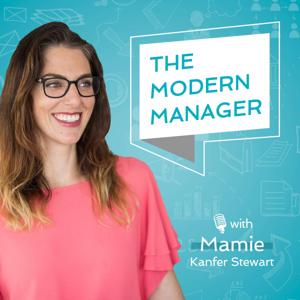
The Modern Manager

The Modern Manager

Download on the App Store
  • Favorites

    164

    Followers

  • Typical duration

    29 min

    per episode

Based on Podcast App listening data

The Modern Manager episodes

  • 152: Managing Up with Dee Ann Turner

    Most often, when we think about managing, we think about our direct reports. Yet, our boss plays a critical role in our success. Learning to manage up can help make your work experience easier while enabling everyone to win.

    In this episode I speak with Dee Ann Turner. Dee Ann is a 35-year veteran in identifying, selecting, and growing talent. She has unparalleled insight and experience in talent acquisition, career and leadership development, and organizational culture. Author and speaker, Dee Ann is the former vice president of talent for Chick-fil-A, where she helped shape the company's historically remarkable culture. 

    Dee Ann and I talk about managing up - what it is, what it looks like in action, how to talk to your team members about “managing you”, and what not to do that can get you into trouble.

    Get the chance to win a copy of Crush Your Career when you become a member of The Modern Manager. Learn more and join at www.themodernmanager.com/join.


    Subscribe to my newsletter to get episodes, articles and free mini-guides delivered to your inbox. 


    Read the related blog article: Three Ways to Manage Up


    KEEP UP WITH DEE ANN

    Instagram:https://www.instagram.com/deeannturner/

    LinkedIn:https://www.linkedin.com/in/deeannturner/

    Amazon Link to Crush Your Career: https://www.amazon.com/Crush-Your-Career-Interview-Launch/dp/0801094372

    Crush Your Career Landing Page: https://www.crushyourcareerbook.com


    Key Takeaways:

    • Managing up means helping the people above us manage us better.
    • Go into performance reviews ready to share the story of your past year’s successes, responsibilities acquired, and skills learned to help him assess you better. 
    • Present innovative ideas through questions rather than statements as a way of getting heard. Don’t worry about who gets the credit; when the boss or team wins, you win. 
    • Effect the culture beyond your team by first focusing on your team’s culture. When your team succeeds, your boss will want to know the secret of your culture and may incorporate it into the larger culture. 
    • Ask your boss their preferences for communication styles and modalities whether it’s email, voice notes, or texts. Work in the way that best suits them. 
    • Don’t let your boss be surprised. Don’t corner him publicly when he’s not ready to discuss an idea, and keep him in the loop immediately if you make an important mistake. 

    [email protected]

    32 min
  • 151: How to Hire for Values Fit (Not Culture Fit) with Bretton Putter

    No one wants to be part of a team where they don’t feel like they fit in. But hiring for ‘culture fit’ has lots of unintended consequences. So how do we hire great people who will thrive within our team or organization without relying on ‘that good feeling you got during the interview’?

    Today’s guest is Bretton Putter. Brett is an expert in company culture development who is consulted by companies and leaders worldwide to help design, develop and build high-performing cultures. He is the CEO of CultureGene, a culture leadership software and services platform. Prior to founding CultureGene Brett spent 16 years as the Managing Partner of a leading executive search firm based in London working with startups and high-growth companies in the UK, Europe and USA. In 2018 he published his first book, Culture Decks Decoded and his second book Own Your Culture: How to Define, Embed and Manage your Company Culture in September 2020.

    Brett and I talk about how to hire and onboard a new team member who will contribute to and thrive within your organizational culture. We talk about whether there is such a thing as culture fit, how to hire for values fit and what to do if your company or team doesn’t have explicit values, and what onboarding is really all about.

    Get 15% off on the CultureGene culture development program, plus a free PDF copy of the book Culture Decks Decoded and a PDF of chapter 5 'The Interview Process' from the new book Own Your Culture when you become a member at themodernmanager.com/join. Plus, 5 community members will receive a complimentary culture consultancy call to discuss how to build or strengthen their culture or adapt to remote or hybrid work. (Available to the first five members to claim this call).


    Subscribe to my newsletter to get episodes, articles and free mini-guides delivered to your inbox. 


    Read the related blog article:  Don’t Hire for Culture Fit. Hire For Values Fit.


    KEEP UP WITH BRETT

    Website: https://www.culturegene.ai/

    LinkedIn: https://www.linkedin.com/in/brettonputter/

    Twitter: https://twitter.com/BrettonPutter


    Key Takeaways:

    • Don’t hire for culture-fit, hire for values-fit. 
    • Hiring based on culture relies on gut instinct and personal preference versus what we believe in and how we want to operate. 
    • To figure out your team’s values, have your team create a list of what they believe is important to the team. Narrow the list down to no more than 6 core values. Be explicit about what behaviors you expect from each of those values. 
    • When interviewing, ask the interviewee to tell a story about when they exemplified one of your team’s core behaviors. Ask follow-up questions to dig deeper to understand their story, the context and their approach to the value. The more vivid and believable the story, the more the candidate lives those values. 
    • Use the job description, interview process, and onboarding as a way to educate the candidate on your team culture and values. 
    • Start onboarding a new hire 30 days before their start date. Send a series of emails and videos that start to build trust and relationships with the new hire’s team mates before he begins working.
    • We don’t need to be in person to communicate our values. Use opportunities such as team meetings to demonstrate your values in action, by showcasing stories of team members exemplifying a team value. 


    Additional Resources:

    • Episode 72: Align Your Team By Creating Shared Values + Guide to Episode 72
    • Episode 76: Bring Team Values to Life + Guide to Episode 76

    [email protected]

    32 min
  • 150: Diversity, Equity, Inclusion and Allyship

    We often hear companies talk about investing in diversity, equity, and inclusion (DEI). But what do those terms really mean? And how can we as managers support DEI regardless of how our organization is approaching it?

    In this episode, I share my definitions of diversity, equity and inclusion, and allyship. I explain some of the fundamentals so you can cultivate an inclusive and equitable environment in which all team members thrive.

    The full episode guide includes sample agendas and activities to help your team redesign its email practices. Get it when you join the Modern Manager community or purchase the full guide atwww.mamieks.com/store.  


    Get the free mini-guide at www.mamieks.com/miniguides.


    Subscribe to my newsletter to get episodes, articles and free mini-guides delivered to your inbox. 


    Read the related blog article: How Managers Can Advance Diversity, Equity, and Inclusion In The Workplace


    Key Takeaways:

    • All the ways that individuals differ can be considered an aspect of diversity. Diversity can be visible or invisible, things we’re born with or acquired over time, and inherent in us or by association.  
    • Diversity is also about how specific groups of people have been privileged or marginalized historically and across cultures.
    • Intersectionality describes how the complex parts of a person come together in ways that compound privilege or marginalization.
    • Equity is about removing barriers to full participation, correcting for systemic obstacles, and providing everyone a truly fair opportunity.
    • Inclusion is about creating an environment where people feel comfortable to be their authentic self without feeling like they need to code-switch or adjust to fit in.
    • Being an ally is about taking on the struggles of the oppressed as your own. Its an ongoing journey that includes making mistakes and learning from them.
    • When someone speaks up to let you know your actions or behaviors are not inclusive or equitable, respond as an ally would by centering the impacted, listening and learning, apologizing even though you didn’t intend it, and stopping the pattern. 
    • Feelings of guilt, defensiveness, anger and conflict avoidance can lead us to respond in unhelpful ways, including centering yourself, denying that other’s experiences are different from your own, derailing, refusing to center the impacted, tone policing, victim blaming, and withdrawing. 
    • Be grateful for the learning opportunities and stay engaged, even when being an ally is hard.
    • Pay attention to things like who speaks first during meetings, who gets credit for ideas, who you invest time and energy in developing, and who you turn to for help.  


    Additional Resources:

    • Kimberlé Crenshaw TED talk on Intersectionality 
    • A huge thank you to Amelie Lamont for her incredible Guide to Allyship https://guidetoallyship.com/
    • Episode 89: Growing into an Inclusive Leader with Jennfier Brown
    • Episode 123: Addressing Race and Bias in the Workplace with Aaron Samuels
    • Episode 143: How to Support People of Color at Work with Omolara Uwemedimo

    [email protected]

    18 min
  • 149: Planning a (Virtual) Team Retreat with Seth Linden

    With the end of COVID coming into sight, now is an ideal time to plan for a team retreat that can help people reconnect after a long year of physical distancing or isolation. Whether you’re able to gather in person or limited to a virtual retreat due to COVID or geography, taking time to focus on relationships and team purpose can inspire and refuel us in powerful ways. 

    In this episode I speak with Seth Linden. Seth is the founder and principal of Gather Consulting, where he advises philanthropists, foundations and nonprofits at the intersections of education, leadership, and community. He has a teaching credential and bartending credential - both of which come in handy while building community.

    Seth and I talk about how to design and lead an effective and engaging team gathering or retreat whether in person or virtually. 

    The full episode guide includes key areas to consider when planning an in-person or virtual retreat, along with ideas for activities to build relationships and how to make the retreat extra special. Get it when you join the Modern Manager community or purchase the full guide at www.themodernmanager.com/shop.  


    Get free episode mini-guides at www.themodernmanager.com/miniguides.


    Subscribe to my newsletter to get episodes, articles and free mini-guides delivered to your inbox. 


    Read the related blog article: How to Design a Retreat Your Team Will Love


    KEEP UP WITH SETH

    • Website: www.gatherconsulting.org
    • Newsletter: https://www.gatherconsulting.org/newsletter


    Key Takeaways:

    • Be really clear about what the purpose of the retreat is so that you can align the agenda with it. 
    • Co-create the agenda; ask your team what they want to get out of the retreat and design the agenda together. 
    • Set the tone and intentions of a safe space by having the leader be honest and open from the beginning. 
    • Set equity of voice as a value from the beginning to encourage louder voices to make room, quieter people to speak up, and to recognize publically the importance of including historically marginalized voices. 
    • To help people feel more comfortable opening up, set a casual dress code, use outdoor settings to lighten the mood, and offer “walking workshops”. 
    • Choose team-building activities like karaoke and ropes courses if it aligns with your purpose and is something the participants are comfortable with. 
    • Consider mailing or providing ‘goodie bags’ that contain little gifts that make the event feel special.
    • Set up accountability partners after the retreat to help people carry their learnings forward. 


    Additional Resources:

    • Book: The Art of Gathering by Priya Parker
    • Book: The Power of Ritual by Casper ter Kuile
    • Book: Emergent Strategy by Adrienne Maree Brown

    [email protected]

    32 min
  • 148: Spark Motivation and Maximize Impact with Matt Granados

    It can be hard enough to motivate yourself sometimes, let alone your team members. But great managers know how to tap into a person’s internal motivations in ways that maximize impact without the need for external carrots or sticks.

    Today’s guest is Matt Granados. Matt has spent his life as an entrepreneur so when he was told by a fortune 100 Company that the system he used to manage his life (personal and professional) was the answer to their biggest personal problem that EVERY company will eventually face, Matt decided it was time to start Life Pulse Inc to share how he connects Intention with Structure to ensure an individuals desired results. Matt has worked with organizations such as Twitter, Google, and the United States Air Force to individuals looking to just get more out of each day!

    Matt and I talk about internal vs external motivation, how to motivate yourself and others, the root of what motivates us, how to design your life around your motivations and desires, how to talk to your team members to help them be more intentional and tap into their internal motivators, and so much more.  

    Members of the Modern Manager community get a free 30 minute consult and custom program based on your answer.  Also anyone who has the consultation will get the discounted LP Planner. Get this guest bonus when you join the Modern Manager community.  


    Subscribe to my newsletter to get episodes, articles and free mini-guides delivered to your inbox. 


    Read the related blog article: The 3 Questions You Need To Ask Your Team Every Week


    KEEP UP WITH MATT

    • Website: www.LifePulseInc.com
    • Instagram: @lifepulseinc
    • YouTube:  https://www.youtube.com/channel/UCPNc15l_7JB8-aziMAnLPsA


    Key Takeaways:

    • Motivation is a mindset. External motivation comes from fear or love. To tap into internal motivation, you need to connect what you want with what that person wants. 
    • Most of us don’t actually know what we truly want. Take time to pause and reflect on what really matters in order to generate your list of desires. Consider creating a SWOT analysis of your life.
    • Often there are small changes or actions we could do now that will help us live our desires in the moment, generating greater fulfillment.
    • In order to tap into the internal motivations of our colleagues, we need to understand who they are and what matters to them. 
    • Ask three questions weekly: (1) What Are You Focused On This Week?, (2) What Are You Grateful For?, (3) What Are You Working Towards?
    • These three questions help you understand the greater context of your colleague’s life while not getting too personal. 
    • Knowing your teammates’ long and short term goals allows you to understand where they want to go and therefore how to help them in the present. 
    • Have your team review their previous week’s successes and struggles by asking themselves how they grew (1) Internally - their mind, (2) Physically - their body, (3) Relationally - their connections, and (4) Professionally - their career.
    • Make three to-do lists of what you (1) want to get done, (2) need to get done, and (3) is most important to get done. Encourage your colleagues to do the same. 
    • Managers inspire their teams by role modeling. It’s important to check in with yourself weekly on your intentions and make time for activities central to your life’s purpose into your schedule. 


    Additional Resources:

    • Motivation Catalysts test: www.LifePulseInc.com/MCA

    [email protected]

    33 min
  • 147: Prevent And Recover From Burnout With Kristen Knowles

    At this moment, we’re more than a year into the pandemic. Many of us have become accustomed to the added stress of living in isolation, not taking real vacations, not having the outlets of fun we used to have. This, combined with our intense workloads and home lives, with the promise of this all being over in just a few more months, is wearing many of us down. Burnout is nothing new, but if people struggled with burnout pre-pandemic, it seems even more prevalent now. 

    In this episode, I speak with Kristen Knowles. Kristen is a 13x award-winning leadership expert with over a decade of experience in leading HR and leadership development for top global companies in Tech, Healthcare, and Startups. Her passion is helping organizations create brave cultures and working with leaders to overcome burnout and lead from purpose. She is the CEO of Brave Leaders Group, a full-suite leadership firm that specializes in offering transformational leadership and organizational development services that create brave cultures with practical application that you can immediately start implementing to see results. She offers a unique opportunity to implement strategies that create empowering cultures and breaks apart our previous ideas of leadership to create brave leaders that will mark history and change the narrative for leadership going forward. 

    Kristen and I talk about the stages of burnout, how to avoid it and what to do if you find yourself out of alignment and heading into burnout. Kristen also shares tips with how to talk to your team to help them avoid burnout.


    Get 20% off the Brave Leadership course when you join the Modern Manager community. Purchase full episode guides at www.themodernmanager.com/shop.  


    Subscribe to my newsletter to get episodes, articles and free mini-guides delivered to your inbox. 


    Read the related blog article: How To Stop Burnout From Burning You And Your Team


    KEEP UP WITH KRISTEN

    Website: https://www.kristenknowles.co/

    LinkedIn:  https://www.linkedin.com/in/kristen-pinkston-knowles/

    Clubhouse: @kristenknowles

    Instagram: @kristenpinkstonknowles

    Brave Leadership Course:  https://mailchi.mp/98a9ae4346da/brave-leadership-program


    Key Takeaways:

    • Burnout is often a result of being disconnected from your purpose. 
    • There are four stages to burnout. (1) You are excited about the new work. Then your energy wanes and you start to feel irritable. (2) You start to be irritated by small things that otherwise wouldn’t bother you. (3) You feel stuck and overwhelmed and might have trouble sleeping. (4) You experience tremendous difficulty coping and getting work done. 
    • Purpose isn’t about achieving something. It’s the “why” of your life, your overarching guidepost for living. 
    • To help overcome and avoid burnout, identify what feels in and out of alignment in your life. Find time and space in your schedule to do things you care about. Create an action plan for how you want to show up better.
    • We need jobs that fit with our working style, strengths, and personality. We can only keep up a working style that doesn’t fit with us for about six months before we experience burnout. 
    • To help your team members align themselves with their purpose, give them autonomy to figure out how to complete tasks in the way that works best for them. 
    • Have a conversation with your team about their 80/20. What are the 20% of things that they are doing in their role that are best suited to their strengths? Think about how to eliminate, delegate, or manage the other 80% of their tasks. 
    • Learn about your team members’ individual purposes and how they can align with the company’s purpose. 


    Additional Resources:

    • The Sparketype Assessment - help find your purpose
    • Episode 47: Managing Stress and Avoiding Burnout 

    [email protected]

    34 min
  • 146: Preparing For A Productive Meeting

    Most people think of meetings as an event - the time we’re gathered together in a physical or virtual room. But meetings are actually a cycle that consists of three phases - before, during and after. Too often meetings are unproductive due to a lack of proper preparation by both the meeting leader and participants. Yet, by spending a few minutes designing a thoughtful agenda, developing appropriate prework, and communicating clearly with your meeting participants, you can transform the entire meeting experience. 

    In this episode, I walk through what to do before a meeting to prepare yourself and your colleagues for a productive conversation.

    The full episode guide includes my meeting agenda template, tips for writing a desired outcome, and how to design and communicate pre-work. Get it when you join the Modern Manager community or purchase the full guide at www.themodernmanager.com/shop.  


    Get the free mini-guide at www.themodernmanager.com/miniguides.


    Subscribe to my newsletter to get episodes, articles and free mini-guides delivered to your inbox. 


    Read the related blog article: How to Prepare Yourself and Others For A Productive Meeting


    Key Takeaways:

    • Preparing yourself and your meeting participants will help create a more productive meeting.
    • The most important element of any meeting is the desired outcome: what will the meeting achieve?
    • The more specific the desired outcome, the easier it will be to plan the agenda and facilitate the conversation to accomplish that goal.
    • Consider what people need to know, what they can think about, or what they can do prior to entering the meeting that will prepare people for a more productive and efficient conversation.
    • Pre-work can be reading or listening to an article, video or podcast, a document, voice or video message.
    • Pre-work can be reflecting on specific questions or generating ideas ahead of time.
    • Pre-work can be completing a worksheet, answering questions, contributing to a shared online document.
    • Sometimes you may need to produce a document, record a voice message or video presentation in order to share important information in the optimal format prior to the meeting.
    • When you assign prework, be sure to include clear instructions that explain (1) why you have assigned this pre-work or how it will help the meeting, (2) what specifically people should do, (3) how long it will take and (4) when it needs to be done by.
    • Share the agenda and pre-work with enough time for meeting participants to review and complete any actions.


    Additional Resources:

    • Episode 33: Do You Really Need That Meeting?
    • Book: Momentum: Creating Effective, Engaging, and Enjoyable Meetings

    [email protected]

    14 min
  • 145: Communication Beyond Email, Slack and Zoom with Josh Little

    Our modes of communication have grown seemingly exponentially over the past few decades. From email to texting, Slack to Zoom, we’re communicating faster than ever before. Yet, even with the combination of tools at our disposal, there are still moments when none of them are quite right. 

    While you might be thinking, oh no, not another communications app, consider this: We have yet to harness the power of video in asynchronous communications at work. It’s grown in popularity for social connecting so consider how it might enhance your existing communications to build relationships and move work forward.

    Today’s guest is Josh Little. Josh is the founder of four tech companies–Maestro, Bloomfire, Qzzr, and Volley–that have collectively been used by hundreds of millions of people. His work has been featured in Tech Crunch, Mashable, Entrepreneur, Inc., and Forbes. With two successful exits and a third pending, he’s currently on a mission to save the working world from death-by-meetings with his fourth creation, Volley.

    Josh and I talk about how to connect with your team using video messaging. We talk about how to make our communications more effective, efficient and inclusive, plus more good stuff. 

    Members of The Modern Manager get my guide to team communication tools. In it, I share my approach and tips for which apps are best suited to which types of communication needs. Get it when you join the Modern Manager community or purchase the guide at www.themodernmanager.com/shop.  


    Subscribe to my newsletter to get episodes, articles and free mini-guides delivered to your inbox. 


    Read the related blog article:  Why Email and Zoom Are Hurting Our Teams And What Else To Use


    KEEP UP WITH JOSH

    Website: https://www.volleyapp.com/


    Key Takeaways:

    • Historically, asynchronous communications are written like email and text is; we read and respond at any time.
    • Historically, synchronous communications are meetings; we need to be present with each other at the same time to communicate.
    • The Volley app offers a unique opportunity for asynchronous, video communication. 
    • The problem with communicating via text and email is that it wastes a lot of time. The average person types 19 words per minute but can speak 150 words per minute. 
    • We lose about 93% of the communication that comes from voice, tone and body language. This often  leads to miscommunications or the need for many back-and-forth messages.
    • In person or Zoom meetings require us to set aside chunks or our day and disrupt our ability to get into deep work. 
    • Asynchronous communications allow people time to think before responding which can lead to greater engagement from introverts and deeper thinking overall. 
    • Teams using Volley have experienced a strengthening in relationships and more “water-cooler” type talk. 
    • Managers have also used Volley with individuals on their team which has enabled more natural conversations to unfold, leading to continued alignment and faster speed of work.
    • Different work tech apps serve different purposes. Slack is good for simple information sharing. Zoom or in-person meetings are best for emotionally charged topics, complex discussion, as well as weekly team meetings. 
    • Introduce Volley to your team as an experiment. Try it out for one topic to get your team excited about what it has to offer instead of demanding a transition onto the platform as the new way to work. 


    Additional Resources:

    • Episode 45: Invest in Meaningful One-on-Ones

    [email protected]

    31 min
  • 144: Optimal Decision-Making With Timothy Yen

    Many people struggle to make decisions when we have competing interests. It can be hard to navigate the needs of various stakeholders along with our own emotions and desires. Instead of getting lost in confusion, we need a step by step approach that facilitates us to think through the different dimensions and discover the solution that creates a win-win-win.

    Today’s guest is Timothy Yen. Tim is a psychologist with a Doctorate in Clinical Psychology and emphasis in executive consultation. He is the author of "Choose Better: The Optimal Decision-Making Framework”. He practices in the San Francisco Bay area and leads conferences and retreats around the globe. Between his years in private practice and another eight years as a Mental Health Staff Sergeant in the US Army, he’s empowered hundreds of individuals, families, organizations, and teams to develop authentic relationships and grow into their best selves.

    Tim and I talk about how to make optimal decisions. We get into why we make poor decisions, or worse, are indecisive, and how to apply Tim’s framework to help you and your team members make better decisions every time.


    Get the Optimal Decision-making Framework Checklist when you join the Modern Manager community.


    Subscribe to my newsletter to get episodes, articles and free mini-guides delivered to your inbox. 


    Register for Managing by Personality: www.themodernmanager.com/courses/personality


    Read the related blog article: The Four Step Process To Making Better Decisions.


    KEEP UP WITH TIMOTHY

    Website: www.timyen.com

    Instagram: https://www.instagram.com/choosebetterconsulting/

    Facebook: https://www.facebook.com/timothyyenpsyd

    LinkedIn: https://www.linkedin.com/in/timkyen/


    Key Takeaways:

    • An optimal decision is one that reflects your values while also meeting the needs of everyone involved.
    • There are four core pillars to optimal decision-making: (1) your emotions; (2) your values; (3) others’ values;  and (4) reality constraints.
    • Pillar Number One: What emotions come up when you are making a tough decision? Reflect on both what you feel and why you are feeling this way. 
    • Pillar Number Two: What are your values? Consider what is important to you and what outcomes you would like to see based upon these values. 
    • Pillar Number Three: What does your team (or other stakeholders) want? Ask people about their values, desires and ideas if you’re not sure. 
    • Team members from different cultural backgrounds come with different expectations. Ask your team where they got their values from to get to know them better and gain greater insight into what they want. 
    • Pillar Number Four: What are the reality constraints? What factors - like your manager’s expectations or budget constraints - affect your decision? 
    • Balance competing interests and values while staying true to yourself. Build trust by listening to your team’s ideas while accommodating your manager’s expectations.


    Additional Resources:

    • Episode 124: How to Make Better Decisions
    • Episode 88: Models and Methods of Decision-Making

    [email protected]

    32 min
  • 143: How to Support People of Color at Work with Dr. Omolara Uwemedimo

    Diversity, equity and inclusion trainings are unfortunately often aimed at helping white people understand unconscious bias, microaggressions and managing white fragility. While these are important aspects of any company’s DEI journey, it’s important to also attend to the needs and experience of people of color, who have experienced the impact of these.

    Today’s guest Dr. Omolara Uwemedimo. Omolara is a physician and success strategist who works with women professionals to rediscover their purpose, prevent burnout, and achieve their vision - without resorting to struggle or sacrifice.

    Omolara and I talk about her approach to providing the space and support for people of color to do their own work while us white folks do our needed work. 

    Omolara has provided access to the replay of her masterclass: How To Have Courageous Conversations. In it, you learn to begin building the confidence to communicate with key stakeholders, foster relationships and get what you need. To get access become a member of The Modern Manager community at themodernmanager.com/join/


    Subscribe to my newsletter to get episodes, articles and free mini-guides delivered to your inbox. 


    Read the related blog article: What Diversity Training Is Getting Wrong: 4 Ways To Help POC At Work


    KEEP UP WITH OMOLARA 

    • Website: http://www.melaninmedicinemotherhood.com/ 
    • Podcast: http://www.melaninmedicinemotherhood.com/podcast 
    • Instagram: https://www.instagram.com/melaninmedicinemotherhood 
    • LinkedIn: https://www.linkedin.com/in/omolaramd/ 
    • Twitter: https://www.twitter.com/dromolara 
    • YouTube:  https://www.youtube.com/channel/UCmEztKcqxoN-6REC4oMETqg/videos


    Key Takeaways:

    • “Code switching” is when a person of color feels pressure to change how they naturally communicate in order to make their colleagues feel more comfortable. This causes a great psychological burden.
    • In a large organization, managers can create an employee resource group (an affinity group) for people to speak with people who have a shared experience about vulnerable or sensitive issues. 
    • In a small organization, encourage employees to connect with community organizations that gather people from a shared industry, race or gender such as black women in tech. 
    • Team diversity discussions and training often focus on discovering what white people have done wrong and improving the awareness, mindset and behavior of white people. While this is important, it’s not enough.
    • Create space for recovery for employees of color who live with the trauma of these issues. 
    • POC often spend a lot of energy at work proving they are not negative stereotypes. 
    • Set up employees of color with sponsorship and mentorship opportunities to gain support from leaders in their field who can help them feel more comfortable in showing up as themselves. 
    • Meet one-on-one with employees of color to share strategies for success. Discuss the mission and vision of the company and how it applies to that individual’s own goals and values. Follow through with a strategy of what they can do to lead to promotions and leadership opportunities that POC don’t often get. 
    • If you are a POC managing a mostly white team, be open about how implicit biases about your capabilities as a person of color might affect your colleagues. Demonstrate that you want a workplace with open communication and courageous conversation.


    Additional Resources:

    • Episode 123: Addressing Race and Bias in the Workplace with Aaron Samuels

    [email protected]

    33 min

About The Modern Manager

From the publisher's feed

Practical management skills you can use this week. Host Mamie Kanfer Stewart helps managers close the gap between knowing what good management looks like and actually doing it.

Best of The Modern Manager

Ranked by our users in the last 21 days

More shows like The Modern Manager

The Look & Sound of Leadership by Essential Communications - Tom Henschel

The Look & Sound of Leadership

1,157 Listeners

Coaching for Leaders by Dave Stachowiak

Coaching for Leaders

1,460 Listeners

Modern Mentor by QuickAndDirtyTips.com

Modern Mentor

688 Listeners

How to Be Awesome at Your Job by How to be Awesome at Your Job

How to Be Awesome at Your Job

1,022 Listeners

7 Minute Leadership by Paul Falavolito

7 Minute Leadership

93 Listeners

Radical Candor: Communication at Work by Kim Scott & Jason Rosoff

Radical Candor: Communication at Work

705 Listeners

Speak Up: Develop Your Executive Presence & Leadership Communication Style by Laura Camacho

Speak Up: Develop Your Executive Presence & Leadership Communication Style

97 Listeners

Maxwell Leadership Executive Podcast by John Maxwell

Maxwell Leadership Executive Podcast

376 Listeners

No Bullsh!t Leadership by Martin G Moore

No Bullsh!t Leadership

126 Listeners

Leadership Without Losing Your Soul: Master Communication and Management Skills to Boost Productivity, Teamwork, and Ease Overwhelm by David Dye, President Let's Grow Leaders

Leadership Without Losing Your Soul: Master Communication and Management Skills to Boost Productivity, Teamwork, and Ease Overwhelm

35 Listeners

The Anxious Achiever by Morra Aarons-Mele

The Anxious Achiever

562 Listeners

Take Command: A Leadership Podcast by Dale Carnegie Flagship Podcast, Joe Hart

Take Command: A Leadership Podcast

119 Listeners

Coaching Real Leaders by Muriel Wilkins

Coaching Real Leaders

674 Listeners

HBR On Strategy by Harvard Business Review

HBR On Strategy

80 Listeners

HBR On Leadership by Harvard Business Review

HBR On Leadership

160 Listeners