The Modern Manager

The Modern Manager

Download on the App Store
  • Favorites

    164

    Followers

  • Typical duration

    29 min

    per episode

Based on Podcast App listening data

The Modern Manager episodes

  • 162: Five Approaches to Dealing with Conflict

    Conflict exists wherever there are humans in relationship to one another. It’s a natural part of teamwork and therefore dealing with conflict is an essential aspect of any manager's role. When address well, conflict can be a source of strength for a team, leading to better ideas and stronger relationships. When address poorly, or not at all, conflict can undermine even the best of us.

    Today's episode is the first in a two part series about conflict. In this episode, I’ll walk through conflict styles and how they can be beneficial or not.  In episode 166, I’ll get into the difference between productive and unproductive conflict, how to deal with conflict in healthy ways, and tips for how to get your team to confront conflict head on.

    The full episode guide includes an overview of each conflict style and what they’re best used for as well as a sample agenda to guide your team through the conflict identification process. Get it when you join the Modern Manager community or purchase the full guide at www.themodernmanager.com/shop.  

    Get the free mini-guide at www.themodernmanager.com/miniguides.

    Read the related blog article: The 5 Approaches To Dealing With Conflict At Work.

    Key Takeaways:

    • The five conflict resolution approaches are accommodating, avoidance, competing, compromise, and collaboration. 
    • Accommodate when the outcome is unimportant or when disagreeing is not worth the energy. 
    • Accommodating develops trust and avoids insignificant conflicts but may build resentment. Never accommodate for large, important issues. 
    • Avoidance can give people time and space to get into a better headspace before addressing the conflict. Sometimes conflicts will naturally resolve themselves. 
    • Avoiding the conflict may make the problem worse, undermine your role as leader, and create a culture where conflict festers.
    • Compromise is a lose-lose approach that tends to make both parties unhappy. 
    • Compromise when you’re short on time and need to come up with a solution quickly. 
    • In a competing approach, any compromises or alternatives are rejected..
    • Competing is useful when you step in and make the call, but may make your team feel bulldozed and unheard.
    • Collaboration is a win-win approach of  hearing everyone’s viewpoint and deciding on a solution together.
    • Collaboration is time-consuming yet is the best for building relationships and creating effective solutions. 
    • Reflect as a team on your individual go-to conflict resolution styles and identify the best approach for common workplace conflicts. 

    [email protected]

    13 min
  • 161: Unleash the Potential of English Language Learners with Katie Nielson

    In the US, we often take English language skills as a given. But for the millions of immigrants, refugees and foreign language speakers, English can be a barrier to contributing their best and reaching their potential at work. As managers, we have the opportunity to support our language learning colleagues which in turn give us access to greater talent pools while simultaneously enabling people to thrive inside and outside of work. 


    Today’s guest is Katie Nielson. Katie is the founder and Chief Education Officer of Voxy EnGen, a public benefit company that leverages proprietary technology to deliver high-quality, needs-based English instruction to immigrants and refugees. Voxy EnGen rapidly gives language learners the tools they need to advocate for themselves and their families and improve their economic outcomes. Katie has dedicated her career to making language learning more accessible and effective using innovative technology and research-based best practices. She earned her PhD in SLA from the University of Maryland in 2013, and she holds ten patents on the technology she designed to deliver language learning at scale.


    Katie and I talk about the challenges and opportunities that often exist when working with colleagues who are still developing their English language skills, how to better engage and support these colleagues, and how to distinguish what English skills are truly needed so you can unleash the potential of each person regardless of their current level of English proficiency. 


    As a special guest bonus for five members, Katie has generously offered 30 minutes of personalized consulting on how to make their organization, product, or workplace more welcoming to speakers of other languages, whether those speakers are clients, employees, consultants, or the community at large. To be eligible, you must be a member. Learn more and join at www.themodernmanager.com/join.


    Subscribe to my newsletter to get episodes, articles and free mini-guides delivered to your inbox. 


    Read the related blog article: How to Support English Language Learners In The Workplace


    KEEP UP WITH KATIE

    Website: www.voxyengen.com

    LinkedIn: https://www.linkedin.com/in/katienielson/


    Key Takeaways:

    • To work on Diversity, Equity, and Inclusion, we need to include supporting immigrants and refugees in gaining the English language skills they need to thrive.
    • In the US, we meet the needs of a mere 4% of adult English language learners. This means we’re leaving a lot of talent untapped.
    • Language is often taught wrong. It needs to be relevant and experiential. Employees should learn from real examples of people talking with managers, doing customer service, and reading through employee manuals, to get the specific English they need for the workplace. 
    • The hiring process can be full of bias, like hesitating to hire someone with an accent because they are harder to understand or foreign degrees might not feel as “familiar” or “acceptable”. 
    • Consider whether specific degrees or credentials are really necessary or whether they may be prohibiting you from tapping a wider talent pool and building a diverse workforce. 
    • Consider your responsibility in improving communication. Slow down when speaking to help the other person understand you better or ask them to repeat themselves indicating you value what they have to say and want to be sure you’ve understood them.
    • Ask what they feel their strengths and weaknesses are and what areas of English language they need support in. 
    • There are four skills to fluency, which includes the receptive skills of listening and reading and the productive skills of speaking and writing. Someone may be fluent in some areas and not in others, and not all skills are critical for each role.

    [email protected]

    29 min
  • 160: Develop a People Strategy with Andrew Bartlow

    You’re probably familiar with the terms business strategy or product strategy, but what about people strategy? Shouldn’t we be as thoughtful about how we approach expanding our teams as we are with how we grow organizations and develop new products?

    In this episode, I speak with Andrew Bartlow, founder, and managing partner at Series B Consulting. Andrew has 25 years of Human Resources and Talent Management experience at organizations across a wide spectrum of sizes, maturity stages, and industries. He is the co-author of “Scaling for Success: People Priorities for High Growth Organizations,” has a master’s degree from the top program in his field, and has been CECP, SPHR, Six Sigma, and executive coaching certified.

    Andrew and I talk about how to develop a people strategy - how to prioritize the most important work and focus your team structure and roles on doing that work so you’re investing in the right people doing the right activities at the right time in the organization’s life cycle. 


    As a guest bonus, members of the Modern Manager community can get a free 25-minute “coach-sulting” session with Andrew to get advice and recommendations on your people strategy, scaling, or culture development. To be eligible, you must be a member - join the Modern Manager community today.


    Subscribe to my newsletter to get episodes, articles and free mini-guides delivered to your inbox. 


    Read the related blog article: Align Your People With Your Priorities.


    KEEP UP WITH ANDREW

    Website: https://www.peopleleaderaccelerator.com/

    LinkedIn: linkedin.com/in/bartlow https://www.seriesbconsulting.com/
    Book:
    Scaling for Success: People Priorities for High-Growth Organizations


    Key Takeaways:

    • Your team needs to ruthlessly prioritize their top three goals that will make the biggest impact. You can move three things a mile or thirty things an inch. 
    • Like a waterfall, your team’s actions, culture, and hiring processes should all flow from those top three goals. 
    • To determine the highest priorities, use a  (1) bottom-up approach to decide as a team the top three things to move your organization forward or (2) a top-down approach where you decide the top three goals on your own and invite your team to ask questions and raise concerns until everyone is on the same page. 
    • If someone, including you, want to add another goal, negotiate what to remove. 
    • Check in with your critical stakeholders e.g. senior management, other departments or investors, to make sure they are in agreement about the top three goals. 
    • Hire and add new roles in alignment with your goals. Consider if it’s possible to promote from within, especially if you invest in a bit of professional development, or if you need to hire from the outside.
    • Use a portfolio approach of sometimes hiring from within and sometimes from without. If you always hire from without, you will discourage your team by not providing growth or advancement opportunities. If you always hire from within, you may not get the talent you need. 
    • Resist promoting just because someone has been there the longest. Don’t stick with your team just because it’s comfortable. As the needs for various roles change, be transparent while also treating people with generosity.
    • Pay attention to the spans and layers your structure is creating. A span is the number of direct reports a manager has. Layers are the number of managers managing managers.
    • A manager can handle a span of up to 20 in simple, similar roles and a span of 4-6 when dealing with more complicated, diverse roles. 
    • More layers make communication, efficiency, and connection more challenging. Each manager needs to find the “Goldilocks” level of spans and layers that works for them. 

    Additional Resources:

    • Patrick Lencioni - 6 Critical Questions

    [email protected]

    33 min
  • 159: Experience Managerial Greatness with Steph Richter

    I’m in the process of writing my second book on what it means to be a modern manager. The process of writing this book included interviewing dozens of people about their great manager in search of themes, practices and habits from the best managers. Instead of talking to the managers, I spoke with the direct reports to hear what their manager did that made them appreciate working for this person. 


    In this episode I share the recording of one of these book interviews. After speaking with Steph, I was so energized and wanted everyone I talked to to feel this way about their manager. Steph Richter loves helping others & creating an impact! Through her work as the Director of Operations, Culture Coach & Life Coach In-Training at The Perk, she is lucky enough to do those two things everyday. She is passionate about embracing a growth mindset & seeking discomfort, and enjoys big-picture, futuristic thinking, planning & always tying things back to ‘WHY’.


    Share your experience with a great manager at www.managerialgreatness.com


    Members of The Modern Manager get The Perk’s How To Assess Employee Emotional Wellness Guide which includes their Survey template & simple 4-step process to survey your employees, assess their emotional wellness, & get the information you need to make the best decisions & provide the right support for your employees. And, the first 10 members to request it will also get A free 60-minute lunch & learn for you & your team facilitated by one of The Perk’s coaches! To get the free guide and be eligible for the lunch & learn, join the Modern Manager community.


    Subscribe to my newsletter to get episodes, articles and free mini-guides delivered to your inbox. 


    Read the related blog article: How To Form A Strong Relationship With Your Employee


    KEEP UP WITH STEPH

    Website: https://www.choosetheperk.com

    Steph’s LinkedIn: https://www.linkedin.com/in/steph-richter/

    Leah’s LinkedIn: https://www.linkedin.com/in/leah-roe/


    Key Takeaways:

    • Have one-on-one meetings to learn about your employees beyond their to-do lists. Learn what they are excited about in their lives and look for ways to incorporate this into their work experience. 
    • Celebrate not just the financial wins but the “small wins” with your staff, like finishing a job well. 
    • Establish communication norms up front so everyone is clear about expectations for using email, chat, etc.
    • Pay for professional development opportunities for your employees to grow in exchange for commitment to working for a specific amount of time. This investment in them pays back as they are more invested in you.
    • Encourage your employee to ask questions by assuming responsibility for their confusion rather than blaming them. 
    • Compliment your staff daily by authentically noticing specific things they are doing well. 
    • Normalize two-way feedback and vulnerability by addressing conflict head on and being transparent. 
    • Don’t make your work relationship hierarchical; make them feel like a collaborative partner rather than working “below” you.

    [email protected]

    34 min
  • 158: Discover Your Optimal Work

    There is something magical that happens when you do work you love that also taps into your talents. In a perfect world, everyone would spend all of their work time doing these activities. In reality, we also have other responsibilities. This is where the optimal work zone come in.

    In this episode, I talk about how you and your team members can discover your optimal work - those things that you enjoy, tap your talents, and only you can do as part of your role. Because, when people spend the majority of their work time doing their optimal work, the productivity goes up, the positive atmosphere increases, and everyone just feels better.

    The full episode guide includes worksheets to help you identify your optimal work zone, tasks that can be delegated, and areas to invest in personal development, along with activities to support your team to optimize your collective work. Get it when you join the Modern Manager community or purchase the full guide at www.themodernmanager.com/shop.  

    Get the free mini-guide at www.mamieks.com/miniguides.

    Subscribe to my newsletter to get episodes, articles and free mini-guides delivered to your inbox. 


    Read the related blog article: Prioritize Working in Your Zone of Genius.


    Key Takeaways:

    • In the book The Big Leap, Gay Hendricks describes four zones (1) The zone of incompetence, (2) the zone of competence, (3) the zone of excellence, and (4) the zone of genius.
    • Most people spend too much time in the zone of competence when these are activities that could be delegated.
    • Working in your zone of excellence and genius are great for different reasons. Excellence is things we are acknowledge for and highly talented (but don’t always enjoy) whereas Genius are tasks we enjoy and excel at.
    • Sometimes, a zone of genius does not align with your work responsibilities. It’s great to seek outside activities that put you into a state of flow.
    • Your optimal work is the overlap between things you’re good at, things you enjoy, and tasks or responsibilities specific to you or your role.
    • Delegate as much as you can that falls outside this venn diagram, especially tasks that are in your zone of competence and that are not unique to your role.
    • Encourage your team members to identify their optimal work and look for opportunities to shift responsibilities so that people can spend more time doing work that aligns with their talent and interests.

    Additional Resources:

    • The Modern Manager’s Guide to Effective Delegation
    • The Big Leap, by Gay Hendricks

    [email protected]

    12 min
  • 157: Positive Thinking + Positive Action with David R. Ibarra

    While it may seem obvious, we are in control of our thoughts. Yet too often we let our thoughts control us. By taking control of your thinking and focusing on holding a positive state of mind, you can radically transform your life and those of your team members. But to be clear, it’s not just a way of thinking. To truly embrace this positive state of mind and all the good it can unleash requires taking action and sticking with it.  

    Today’s guest is David R. Ibarra. David is a leadership consultant, speaker, and author of the new book, Stop Drifting: Become the Switch Master of Your Own Thought & Pivot to Positive. After spending most of his childhood in foster care, David started his first business at 28 years old, beginning an entrepreneurial career that spans the hospitality, automotive, and leadership consulting industries. He is the founder of eLeaderTech, IBG, David Ibarra Enterprises and the Think and Grow Rich Institute – Latin America. Taking what he’s learned and through the creation of his patented performance management system, David has implemented the Cycle of Success in his own life to creatively combine his business, community, and civic interests.

    David and I talk about what it takes to actually make changes in your life and how to get your team to change their habits in order to get what they want. These are lessons he’s captured in his book Stop Drifting. He shares how the brain works, why positive thinking isn’t just woo-woo, how to start to control your thoughts and how to talk with your team about all this. 

    Members can get one of ten copies of David’s book for free. To become a member go to www.themodernmanager.com/join


    Subscribe to my newsletter to get episodes, articles and free mini-guides delivered to your inbox. 


    Read the related blog article: How To Use Positive Thinking To Transform Your Team


    KEEP UP WITH DAVID

    Website - https://stopdrifting.com/

    Facebook- https://www.facebook.com/DavidIbarraStopDrifting

    Instagram - https://www.instagram.com/david.r.ibarra/

    Twitter - https://twitter.com/davidibarra

    Book (Goodreads) - https://www.goodreads.com/book/show/56280331-stop-drifting

    Book (Amazon) - https://www.amazon.com/Stop-Drifting-Become-Thought-Positive-ebook/dp/B08SP6KCKP/


    Key Takeaways:

    • You are in control of your thoughts. When we think positively, we come up with better solutions and attract more people to work with us. 
    • 80% of our thinking happens in our subconscious, with only 15% coming to conscious awareness. The remaining 5% is our imagination, which uses our emotions to move thoughts from the subconscious to the conscious. 
    • Spend one day monitoring your thoughts, tallying the positives and negatives. Look at the final results. Don’t be surprised if they are as high as 80% negative. The goal is for them to become 80% positive. 
    • Negative and positive states of mind can’t exist at the same time. To quickly shift gears, think of things that make you happy. This automatically starts generating positive emotions. 
    • Ask yourself what you want and what you need to achieve it. Get help from colleagues or outside the organization to reach those goals.
    • Know your team’s individual talents so that they can each contribute meaningfully to the whole. 
    • Ask what your team member’s greater dreams are. Make it your mission to help them achieve those dreams, inside and outside of your organization.
    • Coaching helps a team member execute a specific task. Mentoring helps them live the life they want to live. 
    • 31 min
    • 156: Giving and Receiving Feedback with Karen Weeks

      Almost everyone universally dislikes giving and receiving feedback. No matter how experienced you are, feedback can still cause anxiety, defensiveness, frustration, disappointment, guilt and many more unpleasant emotions. Yet, feedback is a critical element to professional growth and cultivating a healthy workplace. Learning how to give, and receive, feedback without the emotional toll can be a game changer for managers.  

      Today’s guest is Karen Weeks. Karen’s purpose is helping organizations build amazing cultures while guiding individuals to find fulfillment in their careers. Currently, she’s the Senior Vice President of People at Ordergroove. Karen is also a career coach, award-winning people & culture advisor, speaker, published author, and podcast host.

      Karen and I talk about all things feedback. How to prepare to give feedback so the conversation goes as smoothly as possible, how to role model and make feedback part of your regular management practice, how to move from feedback to solutions for the future, and so much more.

      As a special guest bonus, members of the Modern Manager can get one of five copies of Karen’s book Setting the Stage: A Guide to Preparing for any Feedback Conversation. To be eligible to get this guest bonus, and all the other guest bonuses, become a member by going to themodernmanager.com/join/


      Subscribe to my newsletter to get episodes, articles and free mini-guides delivered to your inbox. 

      Read the related blog article: How To Create A Culture Of Feedback At Work


      KEEP UP WITH KAREN:

      Book: Setting the Stage

      Website: https://www.karendweeks.com
      LinkedIn: https://www.linkedin.com/in/karen-d-weeks-sphr-ms-5965775/
      Twitter: @career_changers
      Facebook Group: https://www.facebook.com/groups/337551064291579
      Instagram: @career_changers_kdw
      Podcast: Getting Off the Hamster Wheel - Finding Joy, Fulfillment & Success in Your Career
      Youtube:
      https://www.youtube.com/channel/UC640S1XJWcb2Ynu9Xk0GcHQ/featured?view_as=subscriber 


      Key Takeaways:

      • For many managers, giving feedback is hard no matter how advanced you are in your career. 
      • Feedback is not always straightforward. It can rely on perceptions or interpretations, and feel very personal.
      • Create a schedule of consistent monthly or weekly times for sharing feedback with your team members. This will help reduce the anxiety about feedback conversations while building a trusting culture of personal development.
      • Gather all the data you can before giving feedback. Reflect on the situation more broadly. Is this a new or pattern of behavior? Have you addressed it before?
      • During the feedback meeting, lead with questions instead of assumptions. How did they feel about their performance? What is their perspective? Get a sense of their own awareness of the situation or problematic behavior.
      • Learn about each person’s individual motivations by asking directly or doing staff personality tests. Tie feedback to whether their performance is helping or hurting those goals. 
      • Role-model taking feedback well by staying calm and responding with gratitude for the opportunity to learn. Ask for feedback on your own performance regularly. 
      • If things get too heated, it’s okay to take a breather and regroup later that day or the next, after people have had the chance to calm down and reflect more.
      • Feedback conversations should always include at least initial thinking on how to improve going forward. Explore options for training and support to help your teammate overcome a challenge or learn a new skill. 
      • Ask if there is anything you can do differently to make the situation better going forward. 
      • Let the person know that you are giving them feedback because you care about them and believe feedback is a critical component to growth. Acknowledge that it may be hard to hear, but that you value the person which is why you are sharing it.

      [email protected]

      34 min
    • 155: Turn Your Team Into Gold with Steven Cardinale

      If you’ve ever been part of a truly great team, it can feel like a bit of magic. It’s not easy for a group to find their rhythm and work seamlessly together. High performance, innovative ideas, and making an impact don’t happen by chance. But with the right approach and a bit of alchemy, your team can feel like gold.

      Today’s guest is Steven Cardinale. Steven is a seasoned software entrepreneur and executive. He has more than 20 years of business and technology experience, including founding and running CID Management, a Healthcare Cost Control company that he grew to become one of the largest players in the space before his successful exit in 2015. Steven has consulted as a business management and technology strategist for organizations including Eli Lilly, Janus Funds, IBM, PricewaterhouseCoopers, and the J. Paul Getty Museum. He is known for his unique perspective to leadership innovation and entrepreneurship.

      We talk about the lessons from his book Synaptic Alchemy. What this concept is all about, how to know thyself, how to get everyone on your team to better understand themselves and each other, and his three step process for turning ideas into gold.

      Members of the Modern Manager get The Synaptic Alchemy Sneak Peek which provides an in depth overview of the book for free, and free access to The Synaptic Alchemy course launching in June 2021 when you purchase the book. Become a member at themodernmanager.com/join. 

      Subscribe to my newsletter to get episodes, articles and free mini-guides delivered to your inbox. 


      Read the related blog article: How to Turn Your Team Into Gold 


      KEEP UP WITH STEVEN

      Website: https://www.synapticalchemy.com/

      Book: Synaptic Alchemy: The Art & Science of Turning Ideas into Gold


      Key Takeaways:

      • Synaptic alchemy in the physical world is about turning lead into gold. In the management world, it’s about turning groups of people and ideas into gold. 
      • Help your team understand their internal strengths and how it affects the way they collaborate and operate in the workplace by taking personality tests as a group. 
      • Make time for each person to share the insights about their preferences and personality so that you can understand and support each other. 
      • To turn team ideas into gold, destroy an old rule and replace it with a new one. 
      • Ask “what are we doing and why are we doing it?” to examine what isn’t working or what could be done differently and brainstorm new ways. 
      • Create a safe space for your team to innovate by instilling questioning and taking risks as organizational values. 
      • Generate team mottos or soundbites that can regularly be referenced and that reinforce this culture of questioning assumptions. 
      • Additional Resources:

        • Myers-Briggs
        • The Big Five
        • Episode 14: Personality and Preferences with Rob Toomey
        • Typecoach sessions with Mamie
        • 33 min
        • 154: The Differential of Managing Managers

          So much of managing people is the same because humans have the same fundamental needs and desires. It’s important for all managers to provide appropriate levels of autonomy, foster their team’s professional growth, and support their people by providing guidance and helping to remove roadblocks. But as you move up in the hierarchy, there are a few important nuances that can help you better focus your time and energy. 

          The full episode guide includes an infographic of the differences between managers and senior managers, along with suggested practices for shifting into the mindset of a senior manager, leading skip-level meetings, and more. Get it when you join the Modern Manager community or purchase the full guide at www.themodernmanager.com/shop.  


          Get the free mini-guide at www.mamieks.com/miniguides.


          Read the related blog article:  How Do You Manage Managers?


          Key Takeaways:

          • The majority of managing people is the same no matter what level of management you’re in. 
          • There are three primary areas in which a senior manager’s role will be different from a manager’s role and these are: (1) driving towards big picture results, (2) cultivating the manager’s management capability, and (3) clarifying guidelines.
          • As senior management, you will be looking at things from a higher perch and trying to see how day to day activities flow towards the overall goals of the organization. 
          • Focus on setting clear vision, goals and strategy. Then enhance the thinking of your managers without getting into the details.
          • Provide plenty of autonomy to allow your managers and their team members to develop and execute on workplans.
          • As a rule of thumb, spend as much time investing in your people as you do overseeing the work.
          • If you haven’t invested in building culture, spent time talking about values, or elevated the importance of upholding desired behaviors, it's unlikely that your managers will either.
          • Role model the behavior you want your managers to do with their team members. Ask for their input, provide straightforward feedback, offer praise and gratitude. 
          • Build relationships with your managers’ direct reports so you can better support your manager to develop their people.
          • Show your managers’ direct reports that you respect and trust their manager (your direct report) by asking for their input and treating them like a partner when in meetings together. 

          [email protected]

          17 min
        • 153: Humble Inquiry with Edgar and Peter Schein

          Too often we are knowers instead of learners. Yet as knowers, we close down conversations, dis-incentivize sharing information or perspectives, and risk the health of our team and organization. To be a learner requires us to accept that we don’t know everything and, just as important, that our team members often know more than we do. When we cultivate a relationship based on caring and curiosity, we foster psychological safety and much more.

          In this episode, I speak with father and son duo, Edgar and Peter Schein. Ed is Professor Emeritus of the Massachusetts Institute of Technology Sloan School of Management. He is one of the original scholar-practitioners in the fields of organizational psychology and organizational development. He may be best known for first expanding our understanding of organizational culture. His books, including Process Consultation, Organizational Culture and Leadership, Helping, Humble Consulting and Humble Leadership are translated and published worldwide and his consulting and coaching has transformed leadership since the 1970s. His latest work, Humble Inquiry 2nd Edition, co-authored with his son Peter, is an international best seller. 

          Peter is the co-founder and COO of OCLI.org. Prior to his role there, Peter was a strategy and corporate development executive at large and small technology companies in Silicon Valley. He is co-author of The Corporate Culture Survival Guide 3rd Edition, Humble Leadership, the 5th Edition of Organizational Culture and Leadership, and the 2nd Edition of Humble Inquiry.

          The three of us talk about Humble Inquiry - what it is, why it’s important, and how to do it effectively. We talk about the humble component and the inquiry component, and how together, they are a magical combination that every manager and team can benefit from.

          Get one of 10 signed copies of the book Humble Consulting if you’re a member of the Modern Manager community. This book is particularly focused at client-facing roles and consultants, but the lessons are applicable even beyond those. To get a copy, you need to be a member and one of the first 10 people to request it.  Join the Modern Manager community -- employees of government and nonpforit organizations get 20% off any membership level.

          Subscribe to my newsletter to get episodes, articles and free mini-guides delivered to your inbox. 


          Read the related blog article: The Simple Brilliance of the “Humble Inquiry” Approach


          KEEP UP WITH EDGAR AND PETER SCHEIN

          Website: www.ocli.org 

          LinkedIn: https://www.linkedin.com/in/peteraschein/

          Book: Humble Inquiry: The Gentle Art of Asking Instead of Telling 


          Key Takeaways:

          • The “Humble Inquiry” approach is a way of reacting to situations at work by asking versus telling your team what to do. 
          • Begin with the mindset that you can’t know everything therefore, have much to gain by caring about your team members and their perspectives.
          • Foster a deep curiosity to learn from people around you. 
          • Ask open ended questions without presuming to know the answer. Continue to ask questions that explore further instead of jumping to conclusions too early.
          • Practice deep listening by focusing on their response without interjecting your own thoughts. 
          • Reward people for being open by listening to and incorporating their ideas, and by thanking them for sharing even if you disagree. 
          • If you respond with judgement, anger or dismissiveness, people may fear being open and honest with you again. This leads to destructive behavior, such as hiding mistakes and not mentioning problems, which is harmful to teams and organizations. 
          • If your team gets stuck, shift from the content of your discussion into the process. Ask questions like “Are we making progress?” and “Are we relating to each other well?” 
          • When we build trust and openness using Humble Inquiry, we build psychological safety which leads to positive, healthy workplaces. 


          Additional Resources:

          • Episode 42: Deep Listening with Oscar Trimboli

          [email protected]

          34 min

        About The Modern Manager

        From the publisher's feed

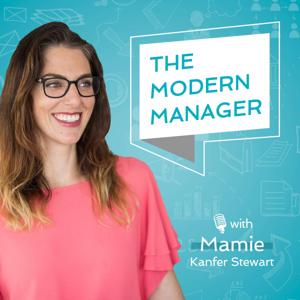
        Practical management skills you can use this week. Host Mamie Kanfer Stewart helps managers close the gap between knowing what good management looks like and actually doing it.

        Best of The Modern Manager

        Ranked by our users in the last 21 days

        More shows like The Modern Manager

        The Look & Sound of Leadership by Essential Communications - Tom Henschel

        The Look & Sound of Leadership

        1,157 Listeners

        Coaching for Leaders by Dave Stachowiak

        Coaching for Leaders

        1,460 Listeners

        Modern Mentor by QuickAndDirtyTips.com

        Modern Mentor

        688 Listeners

        How to Be Awesome at Your Job by How to be Awesome at Your Job

        How to Be Awesome at Your Job

        1,022 Listeners

        7 Minute Leadership by Paul Falavolito

        7 Minute Leadership

        93 Listeners

        Radical Candor: Communication at Work by Kim Scott & Jason Rosoff

        Radical Candor: Communication at Work

        705 Listeners

        Speak Up: Develop Your Executive Presence & Leadership Communication Style by Laura Camacho

        Speak Up: Develop Your Executive Presence & Leadership Communication Style

        97 Listeners

        Maxwell Leadership Executive Podcast by John Maxwell

        Maxwell Leadership Executive Podcast

        376 Listeners

        No Bullsh!t Leadership by Martin G Moore

        No Bullsh!t Leadership

        126 Listeners

        Leadership Without Losing Your Soul: Master Communication and Management Skills to Boost Productivity, Teamwork, and Ease Overwhelm by David Dye, President Let's Grow Leaders

        Leadership Without Losing Your Soul: Master Communication and Management Skills to Boost Productivity, Teamwork, and Ease Overwhelm

        35 Listeners

        The Anxious Achiever by Morra Aarons-Mele

        The Anxious Achiever

        562 Listeners

        Take Command: A Leadership Podcast by Dale Carnegie Flagship Podcast, Joe Hart

        Take Command: A Leadership Podcast

        119 Listeners

        Coaching Real Leaders by Muriel Wilkins

        Coaching Real Leaders

        674 Listeners

        HBR On Strategy by Harvard Business Review

        HBR On Strategy

        80 Listeners

        HBR On Leadership by Harvard Business Review

        HBR On Leadership

        160 Listeners