
Sign up to save your podcasts
Or

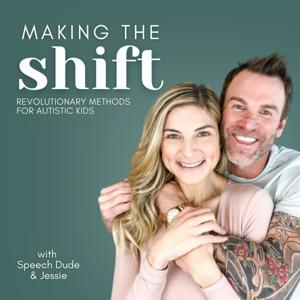


Want to learn how to target social goals without promoting masking?
Join Jessie + Chris for a free 90 minute masterclass where they'll share how to work on inferencing, self-advocacy, perspective taking, conversation skills and more!
https://www.neuroaffirm.com/social-skills-masterclass
Building rapport is important...but rapport isn’t the end goal. It’s the beginning of the therapeutic relationship.
In this episode, I’m breaking down the difference between rapport and the therapeutic relationship and exploring an idea that can completely shift the way we think about therapy: the therapist is part of the intervention.
We’ll talk about what it actually means for a child to experience us as safe, trustworthy, responsive, and attuned - and why autonomy, flexibility, and repair matter just as much as having a “good connection.”
I’ll also introduce therapeutic use of self: intentionally adapting your presence, energy, voice, pacing, body language, expectations, and responsiveness based on what a particular child needs from you.
In this episode, you’ll learn:
If you want to attend the upcoming training: Ready, Set, Connect: The Roadmap to Better Engagement & Communication - then click here to become a paid subscriber on Substack to join this training (plus trainings every month!) https://substack.com/@sensoryslp
And for Chris's upcoming AI Webinar, click here: https://www.speechdude.com/ai-for-slps-webinar-reg-aug-2026
Ready to actually start making progress with your autistic clients?
I'm going to show you steps you can take to build regulation, engagement and motivation in a live training on Substack.
Click here to join Substack as a paid subscriber and get access to this training plus my full training archive: https://substack.com/@sensoryslp
Are screens good or bad for autistic kids? Why are transitions away from the iPad so difficult? And what does the research actually say about screen time and autism?
In this live discussion, pediatric speech-language pathologists Jessie & Chris Wenger explores the complex relationship between screen time, sensory regulation, and autism—without the guilt or fear-based messaging.
We cover why screens can feel incredibly regulating for many autistic children, why ending screen time can trigger intense dysregulation, and how to create healthier, more successful screen time routines while supporting your child's nervous system.
In this episode, you'll learn:
Whether you're a parent, speech-language pathologist (SLP), occupational therapist (OT), educator, or caregiver, this conversation will help you better understand why autistic kids often rely on screens as a regulation tool and how to support them through challenging transitions.
On this episode, Jessie covers the biggest sensory mistakes SLPs make!
This episode was the Pre-Party for our free training, the Sensory Intensive for SLPs.
While the Sensory Intensive has ended, you can check out our other sensory trainings for SLPs here: Sensory Training for SLPs
Anxiety is incredibly common in autistic people. But what if we're asking the wrong question? Instead of asking, "How do we reduce anxiety?" maybe we should be asking, "What is this anxiety trying to tell us?"
In this episode, we'll explore why anxiety shows up so often alongside autism and why many traditional approaches miss the mark.
You'll learn:
On this episode, you'll learn:
Want to learn more about the approach I use to build regulation, connection & communication? Then check out my best selling book, Ready Set Connect.
And when you order the book, you also get some amazing high value bonuses to go with it…absolutely FREE (!!)...including:
Click here to grab the book & bonuses: www.readysetconnectbook.com
Fast track your session progress with my Top Tips for Parent Coaching Webinar!
If you want to learn how to:
Then click below to grab my Top Tips for Parent Coaching webinar:
https://www.sensoryslp.com/offers/eLNGNSHV/checkout
Join me on Substack here! https://substack.com/@sensoryslp
If building therapy around relationship, safety, and connection resonates with you, and you want to go deeper… Join me on Substack as a paid subscriber to get access to my Ready Set Connect Book Club Kit, which includes:
🎧 Ready Set Connect Audiobook - narrated by me so you can listen on the go.
📘 Ready Set Connect Guidebook - a practical workbook designed to help you apply the concepts from each chapter as you read.
🚀 Communication Accelerator - my best strategies for supporting communication development in autistic kids.
Join me here: https://substack.com/@sensoryslp
Check out Jessie's full Sensory Based Routines Training on her Substack: https://sensoryslp.substack.com/p/engaging-the-most-difficult-to-engage?utm_campaign=post&utm_medium=web&triedRedirect=true
Many SLPs are taught that routines are a cornerstone of language development, especially for younger autistic children. But routines designed for neurotypical children often fall short because autistic kids present with differences in joint attention, focus, and how they process sensory input.
On this live show, we’ll break down why typical routines can fail, how to honor a child’s autonomy and interests, and why meeting sensory needs is just as critical as engagement and communication.
Want more on Sensory-Based Routines? Check out the latest on Substack: https://substack.com/@sensoryslp
From the publisher's feed
3,638 Listeners
10,138 Listeners

19,042 Listeners

16,627 Listeners
414 Listeners

3,380 Listeners
437 Listeners
235 Listeners

423 Listeners

61,795 Listeners
247 Listeners
4,496 Listeners
41,382 Listeners

19,163 Listeners
118 Listeners