
Sign up to save your podcasts
Or



In this episode, we break down the real difference between cytogens and cytomaxes in a way that actually makes sense. Both work at the cellular level, but they do completely different things. One focuses on signaling, regulation, and guiding cells back to optimal function, while the other is all about boosting output, energy, and performance. We walk through how each one works, why people confuse them, when to use one over the other, and how combining both can create a smarter, more effective approach to longevity, recovery, and overall cellular health.
What if aging isn’t just about getting older, but about your cells forgetting how to function properly? In this episode, we break down bioregulators in a way that actually makes sense—what they are, how they work, and why they’re becoming a major focus in the world of longevity, recovery, and performance. You’ll learn how these small peptide chains may help regulate gene expression, support specific organs, and restore balance at the cellular level instead of just masking symptoms. We also cover the difference between bioregulators and traditional peptides, what people are using them for, and what to realistically expect. If you’re interested in anti-aging, optimization, or just understanding what’s next in advanced health science, this is one you don’t want to miss.
In this episode, we break down P21, one of the most talked-about neuropeptides in the research space, and what makes it so unique. You’ll learn how it works at the cellular level to increase BDNF and nerve growth factor, support neurogenesis, reduce oxidative stress, and help clear harmful amyloid buildup in the brain. We walk through how P21 fits into the bigger picture of cognitive health, aging, and brain resilience, and how it compares to other peptides like Semax and Selank. Whether you’re focused on memory, mental clarity, or long-term brain support, this episode gives you a clear, science-backed understanding of what P21 is doing and why it’s getting so much attention.
In this episode, we explore ovarian health through a deeper, cellular lens and break down how peptides may support the systems that drive hormone balance, egg quality, and overall reproductive function. Instead of focusing on quick fixes, this conversation connects the dots between mitochondrial health, inflammation, blood flow, and the brain-ovary communication loop. You’ll learn how peptides like MOTS-c, SS-31, BPC-157, KPV, and kisspeptin are being discussed in relation to energy production, tissue support, and hormonal signaling, along with how metabolic health and cellular aging play a role in ovarian function. This is a clear, easy-to-follow explanation designed to help you understand what’s happening beneath the surface so you can make more informed decisions about your health journey.
In this episode, we break down how peptides may support fertility by working with your body’s natural signaling systems instead of forcing outcomes. You’ll learn how fertility really works at a deeper level, from brain-to-hormone communication to mitochondrial health, inflammation, and cellular energy. We walk through key peptides people explore for both female and male fertility, including those that influence hormone signaling, improve egg and sperm quality, and support overall reproductive function. This episode also covers realistic expectations, timing, and why foundational factors like hydration, sleep, and stress matter just as much as anything else. If you want a clear, science-based understanding of how peptides fit into fertility support, this is a must-listen.
In this episode, we break down one of the most overlooked parts of any peptide or reconstitution process—the bacteriostatic water you choose. Not all bac water is created equal, and small differences in quality, sterility, preservatives, and handling can have a big impact on stability, consistency, and overall outcomes. We walk through what bacteriostatic water actually is, why benzyl alcohol matters, how manufacturing standards affect reliability, and the risks of cutting corners on something most people ignore. If you want tighter control, better consistency, and fewer unknowns in your process, this is a conversation you don’t want to skip.
What if fat loss wasn’t just about eating less, but also about burning more at the same time? In this episode, we break down retatrutide, one of the most talked about compounds right now, and why it’s getting so much attention. You’ll learn how it works as a triple agonist targeting GLP-1, GIP, and glucagon receptors, and what that actually means for appetite, energy expenditure, and overall metabolic function. We also dive into how it compares to other well-known options, what the early research is showing, and the real-world considerations people aren’t talking about enough. If you want a clear, no-hype explanation of what makes retatrutide different and why it could represent a major shift in how we approach metabolism, this episode is for you.
Can peptides actually influence your genes and reverse aging, or is that just hype? In this episode, we break down the real connection between peptides and epigenetics in a simple, honest way. You’ll learn how gene expression actually works, how peptides act as signaling molecules, and why the idea of “turning back time” isn’t as straightforward as it sounds. This is a grounded look at what’s really happening inside the body, what peptides can and can’t do, and how to think about longevity without getting caught up in unrealistic expectations.
Peptides are everywhere right now, but is social media helping or hurting the space? In this episode, we break down how fast-moving trends, oversimplified claims, and viral content are shaping the way people view and use peptides. From unrealistic expectations to misinformation and stacking without understanding, we talk about what’s actually going on behind the scenes. This is a real conversation about hype versus reality, how to filter what you’re seeing online, and how to approach peptides in a smarter, more informed way.
In this episode, we break down receptor saturation in a way that actually makes sense and why more isn’t always better when it comes to signaling compounds. You’ll learn how receptors work, what happens when they become saturated, and why increasing the amount can lead to diminishing returns or even reduced effectiveness over time. We also cover downregulation, competition between pathways, and how to recognize when you’ve hit a plateau. If you’ve ever wondered why something worked at first but stopped, or why taking more didn’t improve results, this episode connects the dots and gives you a smarter way to think about it.
From the publisher's feed
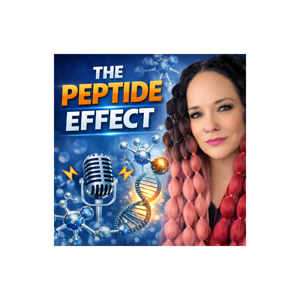
The Peptide Effect is your go-to podcast for breaking down peptides, performance compounds, and cutting-edge wellness science in a way that actually makes sense.
From fat loss and…
Whether you’re brand new to peptides or already deep in the game, this show delivers simple explanations, real-world insight, and practical conversations to help you learn smarter, optimize better, and stay ahead of the curve.
Educational, engaging, and always curious—welcome to The Peptide Effect.

3,437 Listeners

7,181 Listeners

4,978 Listeners
12,104 Listeners

9,103 Listeners

7,945 Listeners

335 Listeners
124 Listeners

292 Listeners
99 Listeners

33 Listeners

3,118 Listeners

19 Listeners

77 Listeners

41 Listeners