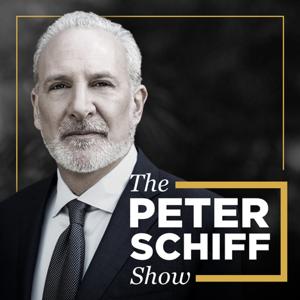
The Peter Schiff Show Podcast

The Peter Schiff Show Podcast

Download on the App Store
  • Ranking

    4th

    on Business News

  • Favorites

    1,761

    Followers

  • Typical duration

    58 min

    per episode

  • If it hooks

    50%

    finish an episode

Based on Podcast App listening data

The Peter Schiff Show Podcast episodes

  • Gold’s 50-Dollar Sunday Night Collapse Explained – Ep. 97

    * Today's Podcast is entirely devoted to gold and gold stocks
    * Last night, in just a few minutes, gold dropped $50
    * One or more major sell orders hit the market at the same time and gold went down below $1100
    * It was down $20 by the time New York trading opened and by market close gold was down around $37 on the day
    * Silver was down only about .15 today
    * Why was all that gold dumped? The goal could not have been to get a good price - the goal was to knock the price down
    * The HUI was down 10% on the day
    * This bear market in gold stocks is now bigger than the one from 1996 to 2000
    * Gold stocks are much cheaper today than they were at the end of the dot com bubble
    * If this a measure of trust in central bankers, the market is expressing greater confidence in Janet Yellen than it did in Alan Greenspan in 1999-2000,
    * We know how badly that turned out for stocks and how bullish it turned out for gold
    * The timing of this selloff comes on the heels of the media's spin on Janet Yellen's recent Congressional testimony
    * But the real news that ignited the sell-off was China's admission that they have gold reserves and in fact they intend to add to those reserves, surprising the market
    * If China was lying about how much gold they have had for the last six years, why does anyone believe they are telling the truth now?
    * I think they are still lying - being strategic
    * They want to get the price of gold down because they still want to buy a lot more gold
    * If China still needs more gold, eventually this will bring the price of gold up
    * Also a very negative WSJ article compared gold to the "pet rock" craze
    * This is the same nonsense that proliferated in the 1990's
    * The WSJ article describes gold investment as "a leap of faith" relative to dollar or stock investments
    * Gold should not be compared to stocks - it is currency, a commodity
    * Gold has intrinsic value, whereas the dollar is a fiat currency, backed by faith alone
    * Gold has had value for 5,000 years - you don't need ot have faith, you just own it
    * There will always be a use for gold
    * Why have faith in central bankers when everybody who has put their faith in central bankers in the past has been burned
    * An article on Zero Hedge compared the WSJ op-ed to a similar one from 1999
    * The title was, "Who Needs Gold, When You Have Alan Greenspan?"
    * They called him "the maestro"
    * He gave us the dot com bubble, the real estate bubble and the financial crisis of 2008
    * That's what happened to the people who put their faith in Alan Greenspan
    * Over the next 12 years after that article was written, gold appreciated 650%
    * Who needs gold when you have Alan Greenspan? Everybody
    * Today Alan Greenspan recommends gold
    * If we've got Janet Yellen, then we need gold
    * Greenspan wrote the playbook that Bernanke and Yellen are expanding and he knows it does not work
    * When you have Janet Yellen, you need all the gold you can get
    * Fortunately, it's a lot cheaper to buy gold and it is a lot cheaper to buy the companies that mine it
    * What could go wrong? Everything - what went wrong in 1999 and in 2008?
    * The same thing that went wrong then will go wrong now, because it is the same central bankers
    * And the same players on Wall Street either don't recognize the danger or are pretending it doesn't exist and abandoning everything we know about monetary policy
    * This is the biggest bubble yet - the entire economy is dependent on bubbles
    * Just when people trust the central bankers the most, that's the best time to buy gold
    * When this market turns it's going to be vicious
    * Once the market turns,

    Our Sponsors:
    * Check out Fast Growing Trees and use my code GOLD for a great deal: https://www.fast-growing-trees.com
    * Check out Plaud AI and use my code GOLD for a great deal: https://www.plaud.ai


    Privacy & Opt-Out: https://redcircle.com/privacy
    23 min
  • Gold’s 50-Dollar Sunday Night Collapse Explained – Ep. 97
    Today's Podcast is entirely devoted to gold and gold stocks
    Last night, in just a few minutes, gold dropped $50
    One or more major sell orders hit the market at the same time and gold went down below $1100
    It was down $20 by the time New York trading opened and by market close gold was down around $37 on the day
    Silver was down only about .15 today
    Why was all that gold dumped? The goal could not have been to get a good price - the goal was to knock the price down
    The HUI was down 10% on the day
    This bear market in gold stocks is now bigger than the one from 1996 to 2000
    Gold stocks are much cheaper today than they were at the end of the dot com bubble
    If this a measure of trust in central bankers, the market is expressing greater confidence in Janet Yellen than it did in Alan Greenspan in 1999-2000,
    We know how badly that turned out for stocks and how bullish it turned out for gold
    The timing of this selloff comes on the heels of the media's spin on Janet Yellen's recent Congressional testimony
    But the real news that ignited the sell-off was China's admission that they have gold reserves and in fact they intend to add to those reserves, surprising the market
    If China was lying about how much gold they have had for the last six years, why does anyone believe they are telling the truth now?
    I think they are still lying - being strategic
    They want to get the price of gold down because they still want to buy a lot more gold
    If China still needs more gold, eventually this will bring the price of gold up
    Also a very negative WSJ article compared gold to the "pet rock" craze
    This is the same nonsense that proliferated in the 1990's
    The WSJ article describes gold investment as "a leap of faith" relative to dollar or stock investments
    Gold should not be compared to stocks - it is currency, a commodity
    Gold has intrinsic value, whereas the dollar is a fiat currency, backed by faith alone
    Gold has had value for 5,000 years - you don't need ot have faith, you just own it
    There will always be a use for gold
    Why have faith in central bankers when everybody who has put their faith in central bankers in the past has been burned
    An article on Zero Hedge compared the WSJ op-ed to a similar one from 1999
    The title was, "Who Needs Gold, When You Have Alan Greenspan?"
    They called him "the maestro"
    He gave us the dot com bubble, the real estate bubble and the financial crisis of 2008
    That's what happened to the people who put their faith in Alan Greenspan
    Over the next 12 years after that article was written, gold appreciated 650%
    Who needs gold when you have Alan Greenspan? Everybody
    Today Alan Greenspan recommends gold
    If we've got Janet Yellen, then we need gold
    Greenspan wrote the playbook that Bernanke and Yellen are expanding and he knows it does not work
    When you have Janet Yellen, you need all the gold you can get
    Fortunately, it's a lot cheaper to buy gold and it is a lot cheaper to buy the companies that mine it
    What could go wrong? Everything - what went wrong in 1999 and in 2008?
    The same thing that went wrong then will go wrong now, because it is the same central bankers
    And the same players on Wall Street either don't recognize the danger or are pretending it doesn't exist and abandoning everything we know about monetary policy
    This is the biggest bubble yet - the entire economy is dependent on bubbles
    Just when people trust the central bankers the most, that's the best time to buy gold
    When this market turns it's going to be vicious
    Once the market turns, it will move quickly that very few people will have an opportunity to buy
    23 min
  • Yellen Almost Admits Economy Too Weak to Raise Rates – Ep. 96

    * Today Janet Yellen goes back up the Hill for the second of her 2-day Congressional testimony and the press has already made headlines about what she did not say
    * According to the headlines, Yellen's "hawkish" testimony reflected that she is putting the Fed on a path to hike rates later later this year
    * That is not what she said
    * From her prepared, written testimony, which was carefully crafted for all eyes, this is what she said:
    * "If the economy evolves as we expect, economic conditions likely will make it appropriate at some time this year to raise the Federal Funds rate target, thereby beginning to normalize the stance on monetary policy."
    * This sentence starts with a big condition: "If the economy evolves as we expect"
    * When has the economy ever evolved as the Fed expected? - Probably never
    * Even if the economy improves, those improvements may not live up to the Fed's unspecified expectations
    * "Economic conditions might make it appropriate to raise rates-
    * Not result in raising rates, of require us to raise rates - just because it is appropriate to raise rates doesn't mean the Fed will raise them
    * If the Fed was going to do what was appropriate, they would have raised rates a long time ago
    * Zero percent interest rates was never appropriate
    * Yellen herself has said she was likely to leave interest rates lower than would be appropriate because of "special circumstances"
    * Even if it is appropriate, there is no commitment to raise rates at any point this year
    * If Janet Yellen really said what the headlines infer, she would have said:
    * "Given the strength in the economy we will be raising interest rates later this year
    * She said nothing like that
    * The Fed went way out of its way to commit to nothing
    * Yet that's not the way the media is covering this
    * Why is that? Everyone wants to pretend that the economy is good and that the Fed is going to normalize interest rates
    * All of this make-believe causes the dollar to rally and gold to go down
    * By talking about raising interest rates, the Fed is pretending that the U.S. economy is strong enough to withstand higher interest rates without actually inflicting the pain of higher interest rates on all those addicted to the bubble economy
    * Yellen's responses to to questions during the Q&A were equally dovish
    * At one point in particular Yellen admitted that we've had zero percent interest rates for a long time and will proceed slowly in any attempt to raise rates
    * If we notice higher rates are causing pain, we will slow down
    * What is hawkish about that?
    * When Paul Volker raised rates to 20% of course he knew it would hurt the economy in the short term, but he knew it was needed
    * Yellen is worried that if the patient makes a bad face, she will discontinue the "medicine"
    * It is impossible to raise rates without hurting the economy, especially because a large part of our economy is now dependent on zero interest rates
    * Higher interest rates will expose a lot of unsound business decisions
    * It's not the economy that will be hurt, but the bubble - zero percent interest rates are the fuel for the bubble
    * Zero percent interest rates are more essential now than they were six years ago
    * Now we have much more debt to service
    * An interest rates hike would quickly wipe out any minimal gain from a stronger economy
    * The reality is the economy is already weakening
    * 70% of our GDP is consumption fueled by debt
    * Yellen said that zero percent interest rates may be a problem in the long run
    * It's the long run now
    * The deficit is already unsustainable
    * One of the most interesting rates went unanswered:


    Our Sponsors:
    * Check out Fast Growing Trees and use my code GOLD for a great deal: https://www.fast-growing-trees.com
    * Check out Plaud AI and use my code GOLD for a great deal: https://www.plaud.ai


    Privacy & Opt-Out: https://redcircle.com/privacy
    32 min
  • Yellen Almost Admits Economy Too Weak to Raise Rates – Ep. 96
    Today Janet Yellen goes back up the Hill for the second of her 2-day Congressional testimony and the press has already made headlines about what she did not say
    According to the headlines, Yellen's "hawkish" testimony reflected that she is putting the Fed on a path to hike rates later later this year
    That is not what she said
    From her prepared, written testimony, which was carefully crafted for all eyes, this is what she said:
    "If the economy evolves as we expect, economic conditions likely will make it appropriate at some time this year to raise the Federal Funds rate target, thereby beginning to normalize the stance on monetary policy."
    This sentence starts with a big condition: "If the economy evolves as we expect"
    When has the economy ever evolved as the Fed expected? - Probably never
    Even if the economy improves, those improvements may not live up to the Fed's unspecified expectations
    "Economic conditions might make it appropriate to raise rates-
    Not result in raising rates, of require us to raise rates - just because it is appropriate to raise rates doesn't mean the Fed will raise them
    If the Fed was going to do what was appropriate, they would have raised rates a long time ago
    Zero percent interest rates was never appropriate
    Yellen herself has said she was likely to leave interest rates lower than would be appropriate because of "special circumstances"
    Even if it is appropriate, there is no commitment to raise rates at any point this year
    If Janet Yellen really said what the headlines infer, she would have said:
    "Given the strength in the economy we will be raising interest rates later this year
    She said nothing like that
    The Fed went way out of its way to commit to nothing
    Yet that's not the way the media is covering this
    Why is that? Everyone wants to pretend that the economy is good and that the Fed is going to normalize interest rates
    All of this make-believe causes the dollar to rally and gold to go down
    By talking about raising interest rates, the Fed is pretending that the U.S. economy is strong enough to withstand higher interest rates without actually inflicting the pain of higher interest rates on all those addicted to the bubble economy
    Yellen's responses to to questions during the Q&A were equally dovish
    At one point in particular Yellen admitted that we've had zero percent interest rates for a long time and will proceed slowly in any attempt to raise rates
    If we notice higher rates are causing pain, we will slow down
    What is hawkish about that?
    When Paul Volker raised rates to 20% of course he knew it would hurt the economy in the short term, but he knew it was needed
    Yellen is worried that if the patient makes a bad face, she will discontinue the "medicine"
    It is impossible to raise rates without hurting the economy, especially because a large part of our economy is now dependent on zero interest rates
    Higher interest rates will expose a lot of unsound business decisions
    It's not the economy that will be hurt, but the bubble - zero percent interest rates are the fuel for the bubble
    Zero percent interest rates are more essential now than they were six years ago
    Now we have much more debt to service
    An interest rates hike would quickly wipe out any minimal gain from a stronger economy
    The reality is the economy is already weakening
    70% of our GDP is consumption fueled by debt
    Yellen said that zero percent interest rates may be a problem in the long run
    It's the long run now
    The deficit is already unsustainable
    One of the most interesting rates went unanswered:
    Because you have waited so long to raise rates, what will the Fed do if we go back into recession?
    The biggest disconnect is that people do not see that if interest rates went up, we would not be able to service out debt
    I said the same thing about sub-prime mortgages - everyone thought real estate prices would go up indefinitely
    The problem the U.S.
    32 min
  • The Real Reason Greece Folded – Ep. 95

    * As I have been saying all along, the Greek Prime Minister capitulated to German demands
    * In fact, he is agreeing to a plan that is more onerous on Greece than the one he encouraged his own people to vote down just over a week ago
    * Those who thought Greece held all the cards, that the Eurozone would risk a domino effect of other nations leaving the euro
    * I felt Germany held the stronger hand and would push Greece from the Eurozone rather than cave in to Greek demands
    * Greece is going to stay a part of the Eurozone, at least for now, because it is the only way they can get the bailout funds they need to sustain Greek socialism
    * Greek socialism will be mitigated to a degree, by the austerity demands to cut government spending
    * They don't need higher taxes
    * If Germany were to allow the Greek debt to be forgiven, the moral hazard for other struggling states would be enormous
    * The message Germany is sending is that it did not go well for Greece, it is not going to go well for any country who refuses to get their economic house in order
    * Germany demonstrated that membership in the Eurozone is not for life
    * This will force other countries to get their house in order
    * I don't agree with Greece's choice, although it might be better for Greece in the short than leaving the Eurozone
    * No Greek politician wants to accept responsibility for the austerity measures - it is easier to throw the blame over to Germany of Brussels
    * Push comes to shove no politician is going to be able to undo Eurozone austerity measures without having to face the music
    * Greece has run out of other people's money to fund socialism
    * Now their debt to GDP will be over 200%
    * They can't pay their debt now - how are they going to pay off a larger debt?
    * Part of the austerity measures, included a €50 billion privatization program, similar to the IMP's recommendation years ago
    * Greek government assets will be sold off for the benefit of foreign creditors
    * I think it would have been best for Europe to kick Greece out and loan them no more money
    * The euro is down today, but I think it is a dip to buy the euro
    * This move will show the markets that the euro is here to stay
    * Greece could have done one of two things:
    * Greece could have refused the aid package and defaulted on the debt
    * If they got kicked out of the euro, they could still use the euro as currency, they just would not have access to the ECB for bailout
    * If this happened, banks would fail; the government would have to downsize, pensions would have to be cut;
    * Without a tax income in euros, the government would have to operate on a balanced budget
    * Eventually, relieved of the debt they currently owe, they would be about to re-establish better credit
    * Greece could then enact real tax reform, become a tax haven in Europe and that would grow the Greek economy
    * The liberals will point to Greek economic challenges as proof that cuts in government spending do not work
    * It's not about asking the people who are already pulling the wagon to pull harder; it's about the people who are riding in the wagon to get out and start pulling themselves
    * Greece needs government level austerity
    * The Greek shipping industry is vibrant because it is not taxed
    * If shipping is now taxed, it will drive the industry away from Greece
    * In order to stimulate business with lower taxes, they would have to leave the Eurozone
    * Another choice is to establish a sound drachma backed by gold
    * Where would they get the gold? From privatization of assets
    * I would use the proceeds to back up my currency
    * Alternatively, they could back the currency with a Foreign Exchange Reserve


    Our Sponsors:
    * Check out Fast Growing Trees and use my code GOLD for a great deal: https://www.fast-growing-trees.com
    * Check out Plaud AI and use my code GOLD for a great deal: https://www.plaud.ai


    Privacy & Opt-Out: https://redcircle.com/privacy
    22 min
  • The Real Reason Greece Folded – Ep. 95
    As I have been saying all along, the Greek Prime Minister capitulated to German demands
    In fact, he is agreeing to a plan that is more onerous on Greece than the one he encouraged his own people to vote down just over a week ago
    Those who thought Greece held all the cards, that the Eurozone would risk a domino effect of other nations leaving the euro
    I felt Germany held the stronger hand and would push Greece from the Eurozone rather than cave in to Greek demands
    Greece is going to stay a part of the Eurozone, at least for now, because it is the only way they can get the bailout funds they need to sustain Greek socialism
    Greek socialism will be mitigated to a degree, by the austerity demands to cut government spending
    They don't need higher taxes
    If Germany were to allow the Greek debt to be forgiven, the moral hazard for other struggling states would be enormous
    The message Germany is sending is that it did not go well for Greece, it is not going to go well for any country who refuses to get their economic house in order
    Germany demonstrated that membership in the Eurozone is not for life
    This will force other countries to get their house in order
    I don't agree with Greece's choice, although it might be better for Greece in the short than leaving the Eurozone
    No Greek politician wants to accept responsibility for the austerity measures - it is easier to throw the blame over to Germany of Brussels
    Push comes to shove no politician is going to be able to undo Eurozone austerity measures without having to face the music
    Greece has run out of other people's money to fund socialism
    Now their debt to GDP will be over 200%
    They can't pay their debt now - how are they going to pay off a larger debt?
    Part of the austerity measures, included a €50 billion privatization program, similar to the IMP's recommendation years ago
    Greek government assets will be sold off for the benefit of foreign creditors
    I think it would have been best for Europe to kick Greece out and loan them no more money
    The euro is down today, but I think it is a dip to buy the euro
    This move will show the markets that the euro is here to stay
    Greece could have done one of two things:
    Greece could have refused the aid package and defaulted on the debt
    If they got kicked out of the euro, they could still use the euro as currency, they just would not have access to the ECB for bailout
    If this happened, banks would fail; the government would have to downsize, pensions would have to be cut;
    Without a tax income in euros, the government would have to operate on a balanced budget
    Eventually, relieved of the debt they currently owe, they would be about to re-establish better credit
    Greece could then enact real tax reform, become a tax haven in Europe and that would grow the Greek economy
    The liberals will point to Greek economic challenges as proof that cuts in government spending do not work
    It's not about asking the people who are already pulling the wagon to pull harder; it's about the people who are riding in the wagon to get out and start pulling themselves
    Greece needs government level austerity
    The Greek shipping industry is vibrant because it is not taxed
    If shipping is now taxed, it will drive the industry away from Greece
    In order to stimulate business with lower taxes, they would have to leave the Eurozone
    Another choice is to establish a sound drachma backed by gold
    Where would they get the gold? From privatization of assets
    I would use the proceeds to back up my currency
    Alternatively, they could back the currency with a Foreign Exchange Reserve
    If Greece abandoned socialism and became a tax haven the proceeds of privatization would yield much more to the Greek government because all of those assets are worth a much in a tax haven
    A tax-free Greece, with all its natural resources, coastline and tourism, would be rich
    Singapore and Hong Kong don't have nearly the resources of Gre...

    22 min
  • Yellen Continues to Talk What the Fed Can’t Walk – Ep. 94

    * This podcast comes from my hotel room in Las Vegas, as I am attending Freedom Fest
    * Janet Yellen received a standing ovation at the end of her talk, and I can't understand why...
    * Headlines from the talk report "Rates to go up by the end of the year"
    * Actual quote:"Based on my outlook, I expect that it will be appropriate at some point later to take the first step to raise the Federal Funds Rate, and thus begin normalizing monetary policy."
    * "I want to emphasize that the course of the economy and inflation remains highly uncertain, and unanticipated developments could delay or accelerate the first step."
    * In other words, the process will be delayed because whatever happens will be unanticipated or unannounced because the last thing Yellen wants to do is to admit that she can't raise rates.
    * We have gone 9 years without a rate hike
    * The market is not prepared for a rate hike given the enormity of the debt
    * The U.S. owes more money than all the other debtor nations combined
    * We can only pretend to be solvent and zero percent interest rates are a big part of that pretense
    * We will not be able to service our debt under normalization
    * Yellen states that the labor market is continuing to improve
    * No, it's not
    * Didn't she see Friday's jobs report, based on downward revisions to prior months?
    * Didn't she see the plunge in the labor force participation rate to a new low since 1977?
    * Didn't she see the all the part-time jobs that have replaced the lost full-time jobs?
    * Didn't she see yesterday's weekly jobless claims report that surged to 297,000?
    * Yellen previously stated that she would not raise interest rates until the labor market improves, and since then, the labor market has worsened
    * Wholesale inventories for May up by .8%
    * Year over year, sales are down 3.4%, the biggest decline since the 2008 financial crisis
    * Greece is forced to revisit austerity measures as Germany refuses to budge
    * Greece realizes they don't want to leave the Eurozone
    * The moral hazards are such that Europe can't budge
    * I dont'know how the Greek economy can grow, given the enormity of their debt in the hands of a socialist government
    * Europe needs to keep pressure on Greece in order to maintain standards for weaker economies
    * The Chinese stock market "collapse" is being overstated in the press
    * Even though the Chinese market is down 30% in a short period of time the Chinese market is still positive on the calendar year
    * The U.S. market is down
    * In April of this year, Chinese stocks took off because changes in Chinese government policy, making it possible for investors to own certain stocks for the first time
    * It should be no surprise that when a rush of investors tried to buy the new stocks, the price went up
    * At some point there is going to be profit-taking, sparking panic selling
    * This is normal market behavior
    * The market just retraced its steps, leaving gains achieved prior to April
    * The fundamentals that drove the market higher earlier this year are still solid, and they're in place
    * The dip in the market is a buying opportunity
    * The next round of gains will be more sustainable
    * The Chinese government exacerbated the volatility, making a classic mistake by chasing the market
    * U.S. economic pundits are commenting on the absurdity of the valuations on some of the Chinese stocks
    * They are living in a glass house - why are they throwing stones?
    * The same can be said about some U.S. stocks with ridiculous valuations
    * The Chinese monetary policy is creating issues, but beneath the bubble is a legitimate economy with production growth, savings and investment


    Our Sponsors:
    * Check out Fast Growing Trees and use my code GOLD for a great deal: https://www.fast-growing-trees.com
    * Check out Plaud AI and use my code GOLD for a great deal: https://www.plaud.ai


    Privacy & Opt-Out: https://redcircle.com/privacy
    21 min
  • Yellen Continues to Talk What the Fed Can’t Walk – Ep. 94
    This podcast comes from my hotel room in Las Vegas, as I am attending Freedom Fest
    Janet Yellen received a standing ovation at the end of her talk, and I can't understand why...
    Headlines from the talk report "Rates to go up by the end of the year"
    Actual quote:"Based on my outlook, I expect that it will be appropriate at some point later to take the first step to raise the Federal Funds Rate, and thus begin normalizing monetary policy."
    "I want to emphasize that the course of the economy and inflation remains highly uncertain, and unanticipated developments could delay or accelerate the first step."
    In other words, the process will be delayed because whatever happens will be unanticipated or unannounced because the last thing Yellen wants to do is to admit that she can't raise rates.
    We have gone 9 years without a rate hike
    The market is not prepared for a rate hike given the enormity of the debt
    The U.S. owes more money than all the other debtor nations combined
    We can only pretend to be solvent and zero percent interest rates are a big part of that pretense
    We will not be able to service our debt under normalization
    Yellen states that the labor market is continuing to improve
    No, it's not
    Didn't she see Friday's jobs report, based on downward revisions to prior months?
    Didn't she see the plunge in the labor force participation rate to a new low since 1977?
    Didn't she see the all the part-time jobs that have replaced the lost full-time jobs?
    Didn't she see yesterday's weekly jobless claims report that surged to 297,000?
    Yellen previously stated that she would not raise interest rates until the labor market improves, and since then, the labor market has worsened
    Wholesale inventories for May up by .8%
    Year over year, sales are down 3.4%, the biggest decline since the 2008 financial crisis
    Greece is forced to revisit austerity measures as Germany refuses to budge
    Greece realizes they don't want to leave the Eurozone
    The moral hazards are such that Europe can't budge
    I dont'know how the Greek economy can grow, given the enormity of their debt in the hands of a socialist government
    Europe needs to keep pressure on Greece in order to maintain standards for weaker economies
    The Chinese stock market "collapse" is being overstated in the press
    Even though the Chinese market is down 30% in a short period of time the Chinese market is still positive on the calendar year
    The U.S. market is down
    In April of this year, Chinese stocks took off because changes in Chinese government policy, making it possible for investors to own certain stocks for the first time
    It should be no surprise that when a rush of investors tried to buy the new stocks, the price went up
    At some point there is going to be profit-taking, sparking panic selling
    This is normal market behavior
    The market just retraced its steps, leaving gains achieved prior to April
    The fundamentals that drove the market higher earlier this year are still solid, and they're in place
    The dip in the market is a buying opportunity
    The next round of gains will be more sustainable
    The Chinese government exacerbated the volatility, making a classic mistake by chasing the market
    U.S. economic pundits are commenting on the absurdity of the valuations on some of the Chinese stocks
    They are living in a glass house - why are they throwing stones?
    The same can be said about some U.S. stocks with ridiculous valuations
    The Chinese monetary policy is creating issues, but beneath the bubble is a legitimate economy with production growth, savings and investment
    This is economic growth that is missing in the U.S. economy
    21 min
  • Out of the Frying Pan Into the Fire – Ep.93

    * Over the weekend the Greeks voted no to the Eurozone bailout terms
    * The Greeks ars still hoping for a better deal, hoping to avoid austerity
    * The irony is that the consequences of their vote will bring on even more austerity, as a return to the drachma will result in a lower-valued currency
    * For example, pensioners will be paid not in fewer euros but drachmas that buy less
    * This will mean a huge collapse in the standard of living in Greece - far worse than the "austerity" called for under the Eurozone bailout terms
    * There is no way out without substantive reforms, particularly in smaller government
    * The markets are reacting adversely because they want to extend and pretend
    * The euro will be stronger without Greece, despite comments in the press to the contrary
    * Fears of "contagion" - other countries leaving - are unfounded
    * Greece is headed for hardship, but they will have to impose austerity from within they could rebound
    * Greece has a lot of potential, they have natural resources and a thriving shipping industries
    * The secret of the success of the shipping industry is that it is not taxed
    * The answer will be fewer taxes and less government spending
    * Short term, leaving the Eurozone will be negative for Greece
    * The Greek vote will be positive for the euro
    * There is still a flight to the dollar for safety over gold
    * The reason gold has not benefited from Greek instability is that the dollar is still viewed as a safe haven
    * More and more economic data reveals how weak the U.S. Eeconomy is
    * This week the Service Sector PMI for June contracted from 56.8 in May to 54.8
    * More and more people are looking for a rate hike in December rather than September, but they are still buying the narrative that interest rate hikes are feasible
    * This belief supports the dollar over gold
    * Our economy is weaker than other countries whose interest rates are higher
    * When are the dollar buyers going to realize that they have jumped out of the frying pan into the fire?
    * The dollar is the grandaddy of the fiat currencies
    * In light of continued weak economic data and further deterioration in the job market, the Fed will have to come out with another round of QE
    * That will be a game changer
    * All the economic news around the world is fundamentally good for gold
    * At some point the speculative forces that are restraining gold will not hold up
    * All that stands behind the U.S. dollar is faith
    * At one point people had faith in Greece, they had faith in Puerto Rican government bonds and in sub-prime mortgages - and then they didn't
    * When we were on the gold standard, we had real value backing up our money
    * All that stands between us and economic collapse is the faith we have in a worthless piece of paper


    Our Sponsors:
    * Check out Fast Growing Trees and use my code GOLD for a great deal: https://www.fast-growing-trees.com
    * Check out Plaud AI and use my code GOLD for a great deal: https://www.plaud.ai


    Privacy & Opt-Out: https://redcircle.com/privacy
    26 min
  • Out of the Frying Pan Into the Fire – Ep.93
    Over the weekend the Greeks voted no to the Eurozone bailout terms
    The Greeks ars still hoping for a better deal, hoping to avoid austerity
    The irony is that the consequences of their vote will bring on even more austerity, as a return to the drachma will result in a lower-valued currency
    For example, pensioners will be paid not in fewer euros but drachmas that buy less
    This will mean a huge collapse in the standard of living in Greece - far worse than the "austerity" called for under the Eurozone bailout terms
    There is no way out without substantive reforms, particularly in smaller government
    The markets are reacting adversely because they want to extend and pretend
    The euro will be stronger without Greece, despite comments in the press to the contrary
    Fears of "contagion" - other countries leaving - are unfounded
    Greece is headed for hardship, but they will have to impose austerity from within they could rebound
    Greece has a lot of potential, they have natural resources and a thriving shipping industries
    The secret of the success of the shipping industry is that it is not taxed
    The answer will be fewer taxes and less government spending
    Short term, leaving the Eurozone will be negative for Greece
    The Greek vote will be positive for the euro
    There is still a flight to the dollar for safety over gold
    The reason gold has not benefited from Greek instability is that the dollar is still viewed as a safe haven
    More and more economic data reveals how weak the U.S. Eeconomy is
    This week the Service Sector PMI for June contracted from 56.8 in May to 54.8
    More and more people are looking for a rate hike in December rather than September, but they are still buying the narrative that interest rate hikes are feasible
    This belief supports the dollar over gold
    Our economy is weaker than other countries whose interest rates are higher
    When are the dollar buyers going to realize that they have jumped out of the frying pan into the fire?
    The dollar is the grandaddy of the fiat currencies
    In light of continued weak economic data and further deterioration in the job market, the Fed will have to come out with another round of QE
    That will be a game changer
    All the economic news around the world is fundamentally good for gold
    At some point the speculative forces that are restraining gold will not hold up
    All that stands behind the U.S. dollar is faith
    At one point people had faith in Greece, they had faith in Puerto Rican government bonds and in sub-prime mortgages - and then they didn't
    When we were on the gold standard, we had real value backing up our money
    All that stands between us and economic collapse is the faith we have in a worthless piece of paper
    26 min

About The Peter Schiff Show Podcast

From the publisher's feed

Peter Schiff is an economist, financial broker/dealer, author, frequent guest on national news, and host of the Peter Schiff Show Podcast. The podcast focuses on economic data analysis and unbiased…

Best of The Peter Schiff Show Podcast

Ranked by our users in the last 21 days

More shows like The Peter Schiff Show Podcast

Rich Dad Radio Show: In-Your-Face Advice on Investing, Personal Finance, & Starting a Business by The Rich Dad Media Network

Rich Dad Radio Show: In-Your-Face Advice on Investing, Personal Finance, & Starting a Business

3,838 Listeners

Peak Prosperity by Chris Martenson

Peak Prosperity

568 Listeners

Macro Voices by Erik Townsend

Macro Voices

3,057 Listeners

The Tom Woods Show by Tom Woods

The Tom Woods Show

3,361 Listeners

Ron Paul Liberty Report by Ron Paul Liberty Report

Ron Paul Liberty Report

2,264 Listeners

Quoth the Raven by Quoth the Raven

Quoth the Raven

933 Listeners

Gold Goats 'n Guns Podcast by Tom Luongo

Gold Goats 'n Guns Podcast

329 Listeners

Palisades Gold Radio by Collin Kettell

Palisades Gold Radio

260 Listeners

Rebel Capitalist News by George Gammon

Rebel Capitalist News

1,030 Listeners

Eurodollar University by Jeff Snider

Eurodollar University

457 Listeners

The Grant Williams Podcast by Grant Williams

The Grant Williams Podcast

1,340 Listeners

Wealthion - Be Financially Resilient by Wealthion

Wealthion - Be Financially Resilient

368 Listeners

Thoughtful Money with Adam Taggart by Adam Taggart | Thoughtful Money

Thoughtful Money with Adam Taggart

410 Listeners

The Julia La Roche Show by Julia La Roche

The Julia La Roche Show

84 Listeners

The David Lin Report by The David Lin Report

The David Lin Report

47 Listeners