
Sign up to save your podcasts
Or

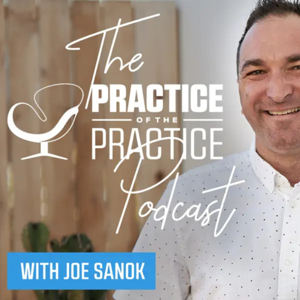


Based on Podcast App listening data
Is your inner critic protecting you, or preventing you from growing? What fears show up when you give yourself permission to rest? How much longer are you willing to wait before pursuing the things that bring you joy?
In this episode, Joe Sanok talks with Emily Pagone about transforming your inner critic from an obstacle into a source of insight. Rather than fighting self criticism, Emily explains how approaching it with curiosity can uncover the fears driving it, making it easier to move forward with confidence and self compassion.
The conversation also explores how burnout, perfectionism, and fear can keep therapists from pursuing meaningful work. Emily shares how confronting her own inner critic inspired her to launch a podcast after years of hesitation. She encourages clinicians to create space for rest, reflect on what truly brings them joy, and take intentional action instead of letting fear make their decisions.
What if documenting your processes today could save you countless hours in the future? How might creating the right environment help your clinicians and practice thrive? Could the knowledge you already have become the foundation for valuable content and long-term SEO growth?
In this episode, Joe Sanok shares another update on building Great Lakes Online Counseling, focusing on the systems that support long term growth. He explains why documenting workflows and decisions from the beginning makes it easier to onboard future team members and streamline operations as the practice expands.
Joe also discusses setting up a coworking space for a new clinician and building a content strategy for the practice website. By repurposing material from his book into blog posts, the team is creating valuable resources for clients while strengthening the site's SEO, demonstrating how existing knowledge can become a powerful marketing asset.
Could psychedelic-assisted therapy offer new possibilities for clients who have not found relief through traditional approaches? What happens when clients can revisit painful experiences without becoming overwhelmed by them? How might leaning into your passions and specialties become the very thing that attracts the right clients to your practice?
In this episode, Joe Sanok talks with Kate Kincaid about the growing role of ketamine assisted therapy and other psychedelics in mental health treatment. Kate explains how ketamine can help clients with treatment resistant depression, anxiety, and PTSD by creating enough emotional distance to process difficult experiences without becoming overwhelmed.
The conversation also explores the differences between various psychedelic therapies, the training and legal considerations for clinicians, and how lower dose ketamine can be integrated with approaches like EMDR and couples therapy. Kate encourages therapists to embrace their unique interests and specialties, explaining that pursuing your passions not only deepens your work but also attracts the clients who are the best fit for your practice.
Did you know that you can use your private residence to open a Google Maps listing for your practice? How do you organize a phone system for a new, fully virtual private practice? How do you know if you need a virtual assistant?
In this episode, Joe Sanok shares another behind the scenes update on building Great Lakes Online Counseling, focusing on the practical systems needed to launch a virtual group practice. He and his assistant, Jen, finalize the practice's phone system using Google Voice, set up a Google Business Profile with a private home address hidden from public view, and continue onboarding their first clinician.
The episode also highlights the value of delegating administrative tasks to a virtual assistant, allowing the practice to move forward more efficiently. From publishing clinician profiles to launching the practice's first social media content, Joe demonstrates how consistent progress on small operational details creates the foundation for long term growth.
What if aging is about far more than just your physical health? Are we treating aging as a personal issue when it's really a societal one? Why is social work a critical pillar in "four dimensional" health care?
In this episode, Joe Sanok talks with Dr. Jacob Kendall about why aging should be viewed as a social, cultural, and systemic issue rather than simply a medical one. Dr. Kendall introduces his four dimensional health framework, explaining how factors such as family, community, economics, and long term planning all shape the aging experience.
The conversation also explores the importance of interdisciplinary care, particularly the vital role of social workers in supporting patients and caregivers. Dr. Kendall encourages clinicians to think beyond traditional health care models, advocate for more integrated systems, and remember that caring for themselves is essential to caring well for others.
Two things are true in our industry: therapists love being in solo practice, AND most don't earn very much. The latest industry report reports median annual income at just 53K for solo therapists - less than most entry-level W2 clinicians. But some solo therapists build their practice strategically to fund their real life and support their family for decades. How do they do it? They're doing 5 specific things right.
In this episode, Melissa Schneider explains why many solo therapists struggle financially despite loving private practice, and shares five strategies for building a sustainable, profitable business. She emphasizes starting with your desired lifestyle and income, then reverse engineering your practice by setting realistic financial goals, choosing the right business model, and calculating how many client sessions you'll actually need each year.
Melissa also encourages therapists to design their practices around what clients value, such as convenient scheduling and flexible appointment options, while being realistic about typical caseloads. Finally, she stresses the importance of seeking business education and community support, arguing that therapists are far more likely to succeed when they learn from others instead of trying to build a practice entirely on their own.
Are your clinician bios and onboarding processes speaking to what clients actually need, or just listing credentials? What makes onboarding a new clinician smooth and successful? Are your systems helping your practice grow, or slowing it down?
In this episode, Joe Sanok shares an update on building Great Lakes Online Counseling, highlighting recent progress with hiring the practice's first clinician, refining onboarding systems, and working with his virtual assistant, Jen, to streamline operations. He also discusses verifying the practice on Google Business to improve online visibility and explains why clinician bios should focus on the needs of prospective clients rather than simply listing qualifications.
Is your solo practice supporting your life, or limiting your potential? What would it take to grow beyond your own time and capacity? How do you scale into a group practice without losing control or burning out?
In this podcast episode, Joe Sanok explores how therapists can successfully transition from solo practice to group practice. He shares his blueprint for sustainable growth, covering when to expand, how to hire and onboard your first clinician, and the systems needed to support long-term success. Joe also discusses building a practice brand that goes beyond the owner and marketing strategies to attract a steady flow of ideal clients.
How do you actually build a group practice from scratch? What systems should you set up before hiring your first clinician? And how can project management tools, delegation, and content systems make scaling your practice easier?
In this podcast episode, Joe Sanok and his assistant, Jen, share the behind-the-scenes process of building Great Lakes Online Counseling from the ground up. They discuss creating scalable systems before hiring, using project management tools to streamline operations, developing effective onboarding workflows, and building authentic marketing that helps a growing group practice connect with prospective clients.
Is your sense of urgency actually helping you, or is it being driven by your inner critic? What happens when perfectionism becomes a way to hide pain instead of process it? As a business owner, how can you ensure you are spending your energy on the work you truly love?
In this podcast episode, Emily Pagone interviews Joe Sanok about his experience with the inner critic, exploring how urgency, perfectionism, and personal challenges have shaped his approach to work and life. Together, they discuss recognizing self-imposed pressure, healing from difficult experiences, and how business owners can reclaim their passion by focusing on the work they love and delegating the rest.
From the publisher's feed

685 Listeners

333 Listeners

4,580 Listeners
234 Listeners
71 Listeners

27,872 Listeners

48 Listeners

2,607 Listeners
32 Listeners

49 Listeners

85 Listeners

81 Listeners

18,897 Listeners
81 Listeners
93 Listeners