
Sign up to save your podcasts
Or

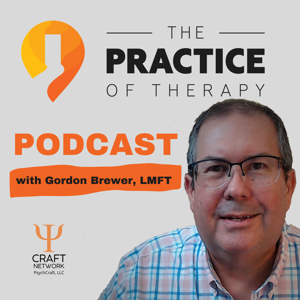


What do we miss when a diagnosis becomes the whole story?
Dr. Travis Heath joins Gordon Brewer to explore how narrative therapy helps us understand the stories clients tell about themselves—and the stories their families, communities, and culture tell about them.
Together, they discuss how labels can both offer clarity and limit understanding, why slowing down matters in therapy, and how curiosity can open up new possibilities. Travis also shares ways therapists can reflect on their sessions, question familiar assumptions, and move beyond simply listing a client's strengths to hearing the experiences behind them.
This conversation invites therapists to look beyond the diagnosis and make room for clients to feel more fully seen and known.
In this episode: • How personal and cultural stories shape identity • The benefits and limitations of diagnostic labels • Slowing down and moving beyond either/or thinking • Asking questions that invite richer client stories • Staying curious about your own clinical work
Resources Mentioned In This Episode
Subscribe to YouTube
Read the show notes here
Watch on YouTube
Use the promo code "GORDON" to get 2 months of Therapy Notes free
Consulting with Gordon
The PsychCraft Network
Follow us on Instagram
Meet Dr. Travis Heath
Travis Heath, PhD, is a licensed psychologist and has been in community practice for nearly two decades. His scholarship has included looking at shifting from a multicultural approach to counseling to one of cultural democracy that invites people to heal in mediums that are culturally near. Other writings have focused on the use of rap music in narrative therapy, working with persons entangled in the criminal injustice system in ways that maintain their dignity, narrative practice stories as pedagogy, and a co-created questioning practice called reunion questions. He is co-author, with David Epston and Tom Carlson, of the first book on Contemporary Narrative Therapy released in June 2022 entitled, Reimagining Narrative Therapy Through Practice Stories and Autoethnography. He has presented his work in 10 countries to date.
Hear more from Travis on his podcast, Therapist Confidential, and explore his conversations and webinars at https://www.psychotherapy.net
Email: [email protected]
Growing a private practice takes more than adding clients and hiring therapists. It also means learning to delegate, trust your team, and let go of doing everything yourself.
In this episode, Gordon Brewer welcomes back Whitney Owens, founder of Water's Edge Counseling and Wise Practice Consulting. Whitney shares her journey from solo therapist to group practice owner, including the challenges of building a leadership team, navigating staff turnover, and creating systems that support growth.
Gordon and Whitney explore how confidence develops through experience, why clear values matter in hiring, and how faith shapes Whitney's approach to leadership. They also discuss taking risks, investing in professional relationships, and making room to enjoy the business you're building.
Whether you're considering your first hire or leading an established group practice, this conversation offers practical ideas for sharing responsibility and growing as a leader.
Resources Mentioned In This Episode
Subscribe to YouTube
Watch on YouTube
Use the promo code "GORDON" to get 2 months of Therapy Notes free
Consulting with Gordon
The PsychCraft Network
Follow us on Instagram
Meet Whitney Owens
Currently, Whitney owns a thriving group practice in Savannah, Georgia, called Water's Edge Counseling. When not running the practice, you can find her coaching, running, or drinking coffee while reading a book. She is married to a pastor and is the mother of two beautiful girls. She has walked the road of balancing work and family and continues to learn along the way.
As a graduate of Richmont Graduate University, she received training not only in professional counseling but also in faith integration. Over the years, she has worked in numerous clinical settings, from residential treatment to hospital work to opening multiple private practices. She is also the author of a Lent devotional for faith-based practice owners called The Practice of Becoming!
Now, she lives the lifestyle she loves, working 4 days a week, picking her kids up from school, and enjoying a profit in her business. She can do the work she loves, live out her faith, and have fun doing it!
Website Water's Edge Counseling Instagram Facebook Wise Practice Podcast
Therapists spend a lot of time encouraging clients to slow down, practice mindfulness, and become more aware of what they need—but practicing those same things in our own lives can be much harder.
In this episode, Gordon talks with Debi Trent Brown about mindfulness beyond meditation, the importance of creating small moments of joy, and what it means to live more authentically. They explore how the "rules" we pick up from family, culture, and society can quietly shape our choices, why pausing before we respond can help us better understand ourselves, and how consistency—not perfection—builds self-trust. Debi also shares practical ways therapists can become more grounded and intentional in everyday life while learning to practice more of what we preach.
Resources Mentioned In This Episode
Subscribe to YouTube
Read the show notes here
Watch on YouTube
Use the promo code "GORDON" to get 2 months of Therapy Notes free
Consulting with Gordon
The PsychCraft Network
Follow us on Instagram
Meet Debi Trent Brown
Debi Trent Brown is a Licensed Marriage and Family Therapist who believes deeply in the power of human connection and the importance of creating a safe, nonjudgmental space where clients feel heard and supported.
Using a collaborative, solution-focused approach, Debi helps clients build self-confidence, strengthen coping skills, practice mindfulness, and develop greater trust in their own inner voice and intuition. Her areas of focus include anxiety, depression, self-esteem, stress management, addiction, negative thinking, anger management, grief, communication, and decision-making.
Debi is especially passionate about helping people become more present, grounded, and intentional in their everyday lives while learning to recognize the things that bring them joy and create meaningful change.
Website https://debitrentbrowntherapy.com Instagram https://www.instagram.com/presentlygrounded/ Facebook https://www.facebook.com/deborah.afs
What happens when being "successful" in private practice starts to look a lot like burnout?
In this episode, Gordon talks with James Marland about the three traps that can keep therapists stuck in one-on-one work: the clock trap, calendar trap, and couch trap. They unpack why being fully booked isn't always the same as being free, and how tying your income, time, and impact entirely to client hours can eventually become exhausting.
James also shares practical ways therapists can begin thinking beyond traditional one-on-one work through workshops, courses, trainings, and other resources that allow their expertise to reach more people. The conversation covers protecting your calendar, testing new ideas without a huge upfront investment, and using the knowledge you already have in a way that creates more flexibility and impact.
If you've ever felt like your schedule is running your life—or wondered how to grow without simply adding more clients—this episode offers a different way to think about success in private practice.
Resources Mentioned In This Episode
Subscribe to YouTube
Watch on YouTube
Use the promo code "GORDON" to get 2 months of Therapy Notes free
Consulting with Gordon
The PsychCraft Network
Follow us on Instagram
Meet James Marland
James Marland helps therapists expand their impact beyond one-on-one clinical work by creating additional income streams through workshops, courses, and other scalable resources. He is the host of the Scaling Therapist podcast and works with therapists to turn their expertise into practical offerings that can reach more people without adding more hours to their schedules. Through Course Creation Studio, James also helps with the strategy and behind-the-scenes tech needed to launch and run workshops and courses.
Email James: [email protected] Website LinkedIn Scaling Therapist Podcast
One of the things I've learned over the years is that the work we feel most drawn to often has some connection to our own experiences.
That doesn't mean our story becomes the center of the therapy room, but it can absolutely shape the populations we care about, the problems we notice, and the kind of practice we want to build.
In this episode, I talk with Hannah Short about how her own experiences with eating disorder recovery and postpartum helped shape her clinical niche. We also get into thoughtful self-disclosure, creating a practice where clients feel genuinely understood, moving from virtual work into an in-person office, and using systems and AI to make solo practice a little more manageable.
There's a lot here about finding meaningful work, building a practice around it, and remembering that sometimes the best clues about your niche are already part of your story.
Watch on YouTube
Resources Mentioned In This Episode
Subscribe to YouTube
Read the show notes here
Use the promo code "GORDON" to get 2 months of Therapy Notes free
Consulting with Gordon
The PsychCraft Network
Follow us on Instagram
Meet Hannah Short, LCSW, BCBC
Hannah Short, LCSW, Board-Certified Bariatric Counselor, is the founder of Rooted & Nourished Psychotherapy, a solo private practice in Waco, Texas, offering in-person and virtual therapy services across Texas.
She specializes in women's mental health, body image, eating disorders, bariatric surgery preparation and recovery, perinatal and postpartum support, and trauma-informed care, including EMDR.
Hannah has struggled with her own eating disorder and is 10 years in recovery. She also built her practice while navigating her own postpartum journey, bringing both lived and professional expertise to her work with women in transition.
She's known for her direct, relatable approach both in clinical work and through her "Between Sessions" newsletter and content. Her mission is to create space for women's stories without shame, diet culture, or clinical distance.
Website Instagram TikTok
When therapists think about branding, it's easy to immediately think about logos, fonts, colors, and websites. But your brand is so much more than what your practice looks like online. It is also the feeling people get when they encounter you, the story they associate with you, and ultimately, whether they feel like they can trust you.
In this episode of The Practice of Therapy Podcast, I had the pleasure of talking with Ritu Riedweg about personal branding, marketing, and what therapists can do to make their practices easier to find and easier to connect with.
Ritu brings an interesting perspective to this conversation because her career has crossed both the marketing and therapy worlds. She originally studied social work before building a career in marketing, branding, and design. Later, after experiencing the transformational impact of therapy in her own life, she trained as a therapist herself. Eventually, she realized she could combine those two areas of experience by helping other therapists become more effective at marketing and branding their practices.
Resources Mentioned In This Episode
Subscribe to YouTube
Read the show notes here
Watch on YouTube
Use the promo code "GORDON" to get 2 months of Therapy Notes free
Consulting with Gordon
The PsychCraft Network
Follow us on Instagram
Meet Ritu Riedweg
Ritu Riedweg is a brand strategist, web designer, and personal branding expert who helps therapists, coaches, and healers stand out online, get found on Google, and connect with their ideal clients. With a background spanning marketing, coaching, therapy, and web design, Ritu brings both strategy and a deep understanding of the helping professions to her work.
After building her own therapy practice, Ritu returned to her marketing roots and launched a personal branding and website agency focused on helping heart-centered professionals build businesses that reflect who they are and the people they are called to serve. Her approach blends thoughtful branding, clear strategy, and authentic storytelling to create an online presence that feels personal, professional, and aligned.
Website LinkedIn Instagram
Working with high-risk teens can feel overwhelming, especially when self-harm, suicidal thoughts, emotional dysregulation, or repeated hospitalizations are part of the picture. So how can therapists provide both compassion and structure without letting fear drive the treatment?
In this episode, Gordon talks with Katie K. May about working effectively with high-risk teens and their families. Katie shares why validation matters, how therapists can provide strong clinical leadership, and why caregiver involvement is such an important part of the process.
They also discuss proactive safety planning, recognizing patterns before a crisis, helping teens build skills they can actually use outside the therapy room, and why therapists need clear frameworks and support when doing high-risk clinical work.
Katie also shares ideas from her book, Teen DBT in Practice, including how therapists can help teens move toward a life worth living while creating more confidence and sustainability in the work.
Resources Mentioned In This Episode
Subscribe to YouTube
Read the show notes here
Watch on YouTube
Use the promo code "GORDON" to get 2 months of Therapy Notes free
Consulting with Gordon
The PsychCraft Network
Follow us on Instagram
Meet Katie K. May
Katie K. May is a licensed therapist, author, speaker, trainer, and group practice owner whose mission is to stop the revolving door of hospitalizations for teen self-harm, suicidal behaviors, and shutdowns by giving families and clinicians practical tools that create lasting change.
She is the founder of Creative Healing, a multi-location teen support center in the Philadelphia area, and the author of the #1 Amazon best-seller You're On Fire, It's Fine: Effective Strategies for Parenting Teens with Self-Destructive Behaviors. Her second book, Teen DBT in Practice, provides clinicians with a practical framework for applying DBT with adolescents and moving beyond surface-level behavior management toward meaningful, lasting change.
One of a select few Linehan ("Lynn-a-hayn") Board-Certified DBT Clinicians in Pennsylvania, Katie specializes in evidence-based treatment for self-harm, suicidal behaviors, and complex emotional challenges in teens. She is an ongoing guest expert on Good Day Philadelphia, where she shares practical guidance on teen and parent mental health.
Known for her clinical practicality and lived experience as a teen who once turned to self-harm herself, Katie bridges the gap between the therapy room and the family living room. Her work helps parents and professionals decode behavior as survival, regulate the nervous system, and create new coping strategies that last because the whole family is integrated into the treatment plan.
Building rapport isn't just about helping clients feel comfortable. It can play a major role in whether they trust you, open up, and keep coming back.
In this episode, I sit down with Nora Anger, LPC, to talk about building stronger therapeutic relationships in private practice. We discuss what clients really want from their therapists, common reasons they leave therapy, thoughtful self-disclosure, creating safety and trust, and how to balance compassion with challenging clients when they need it.
Resources Mentioned In This Episode
Subscribe to YouTube
Read the show notes here
Watch on YouTube
Use the promo code "GORDON" to get 2 months of Therapy Notes free
Consulting with Gordon
The PsychCraft Network
Follow us on Instagram
Meet Nora Anger
Nora Anger, MS, LPC, is a Licensed Professional Counselor with more than a decade of experience in the mental health field. She specializes in trauma, grief, anxiety, and depression, helping clients navigate difficult life transitions and experiences. Known for her warm, direct, and down-to-earth approach, Nora has a particular strength in building rapport with clients who may have struggled with therapy in the past. She earned her master's degree from Chestnut Hill College and currently provides counseling in the greater Philadelphia area.
Nora's Website Nora's Instagram
What happens to your private practice when you step away?
In this episode, Gordon talks with TaVona Denise about what her Private Practice Vitality Report revealed about owner dependency, burnout, delegation, and the systems that keep a practice running. They explore why hiring more staff doesn't always create more freedom, how to tell if your practice still depends too heavily on you, and the simple 30-day question that can uncover exactly where your systems need work. If you want to build a practice that can grow without requiring you to be involved in every decision, this conversation is a great place to start.
Resources Mentioned In This Episode
Subscribe to YouTube
Read the show notes here
Watch on YouTube
Use the promo code "GORDON" to get 2 months of Therapy Notes free
Consulting with Gordon
The PsychCraft Network
Follow us on Instagram
Meet TaVona Denise
TaVona Denise is a strategic operations consultant for independent practice owners who are making money but can't take a vacation. A former clinic director and PT with 13 years running her own contracting company, she knows what it's like to be the best thing that ever happened to your patients and show up sick because calling out would lead to chaos. She is the author of the Private Practice Vitality Report 2026, a cross-disciplinary study of 43 practice owners that challenges what most owners assume about stability and freedom. TaVona's on a mission to ensure there are no martyrs in medicine.
Instagram @TaVonaDenise
Facebook Page
The 2026 Practice Vitality Report is free
A private practice can look successful on the outside and still feel exhausting behind the scenes. Clients are showing up, revenue is coming in, and everything appears to be working, but the owner may still be answering every question, fixing every exception, following up on loose ends, and carrying far too much of the practice in their own head.
In this episode, Gordon talks with Lisa Permar about the small, repeated friction points that quietly drain a practice owner's time, attention, and energy. They explore how everyday tasks around intake, scheduling, billing, documentation, and team communication can become much bigger problems when there are no clear systems behind them. Lisa also shares her framework of moving from firefighter to builder to operator and explains why hiring more help does not necessarily solve the problem if the processes themselves are unclear.
Gordon and Lisa also discuss delegation, creating simple and useful SOPs, and what it takes to build a practice that can continue functioning when the owner needs to step away. Whether you are running a group practice or working solo, the goal is not to automate every interaction or remove the human side of your work. It is to create enough structure around the predictable and repeatable parts of your practice that you can protect your attention for the things that truly require your judgment and care.
Resources Mentioned In This Episode
Subscribe to YouTube
Wise Practice Summit
Read the show notes here
Watch on YouTube
Use the promo code "GORDON" to get 2 months of Therapy Notes free
Consulting with Gordon
The PsychCraft Network
Follow us on Instagram
Meet Lisa Permar
Lisa Permar is an operations architect and the founder of Zero Friction Practice, where she helps private practice owners build the systems their businesses need to run smoothly without relying on memory, constant oversight, or late nights. Drawing on years of experience building the operational backends of businesses across multiple industries, Lisa specializes in helping clinical practices improve intake, scheduling, billing, cash flow, delegation, and documentation. Through the Zero Friction Method, she works alongside practice owners to install practical infrastructure, create clear playbooks, and remove the owner as the bottleneck so the practice can operate with greater clarity, consistency, and freedom.
Free Practice Friction Quiz + Friction Tax Calculator The assessment identifies their Practice Friction Type (Firefighter, Builder, or Operator), estimates the financial impact of operational friction inside their practice, and provides a clearer next step based on their results.
Podcast listeners will also receive 55% off The Friction Tax Blueprint, a step-by-step diagnostic that helps practice owners uncover where their practice is quietly draining time, money, and mental bandwidth. Through five guided assessments and calculations, they'll identify their biggest operational leaks, estimate the true cost of those inefficiencies, and walk away with a prioritized 30-day action plan so they know exactly what to fix first. Discount code: THERAPY50
Website Instagram Facebook
From the publisher's feed
335 Listeners

16,620 Listeners

48 Listeners
32 Listeners

49 Listeners

81 Listeners

19,058 Listeners
81 Listeners

93 Listeners
65 Listeners

5 Listeners

25 Listeners