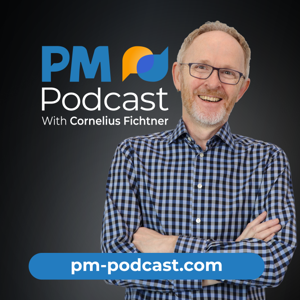
The Project Management Podcast

The Project Management Podcast

By Cornelius Fichtner, PMPBusinessCareers
Download on the App Store
  • Ranking

    2nd

    on Management & Marketing

  • Favorites

    512

    Followers

  • Typical duration

    35 min

    per episode

Based on Podcast App listening data

The Project Management Podcast episodes

  • Episode 402: Generational Sensitivity and Diversity for Project Leaders (Free)
    Play Now: For your Project Management Professional (PMP)® exam get PMP Training on your phone from The PM PrepCast: Margaret Meloni, MBA, PMP Here are some buzzwords for you: Multi-generational teams. Generational shifts. Inter- and intra-generational communication. Multi-generational workplace. Millennials vs baby boomers. I think you get the idea... right? We’re here today to talk about how old I am... :-) Just kidding... we’re here to talk about generational sensitivity and diversity and how to make the best of it in project management. And in order to explore this generational topic we turn to our "soft side expert" Margaret Meloni (www.margaretmeloni.com). She has been an IT and project manager for some time and has had the pleasure to work with people from many generations. And I’m not saying she’s old either... Episode Transcript Below are the first few pages of the transcript. The complete transcript is available to Premium subscribers only. Podcast Introduction Transcript coming soon! Above are the first few pages of the transcript. The complete transcript is available to Premium subscribers only. Please subscribe to our Premium Podcast to receive a PDF transcript.
    37 min
  • Episode 400: Mindfulness for Project Managers (Free)
    Play Now: Margaret Meloni, MBA, PMP Becoming better at project management and by extension also becoming a better project manager does not necessarily mean learning about and then also implementing the latest tools, techniques or methodologies. Instead, it can simply mean that you start paying attention in a particular way; on purpose, in the present moment and nonjudgmentally. That’s mindfulness. Mindfulness as a business practice and leadership tool has seen a significant increase in press coverage lately. It originally started out as a means for improving yourself and your interactions with others but you will find that many leadership articles in the large business journals will make reference to it. And so we are very glad to welcome Margaret Meloni (www.margaretmeloni.com) to look at Mindfulness for Project Managers with us today. We will give you a definition, discuss the benefits, but most importantly we go through a number of familiar project management situations to see how mindfulness will help us improve and become better leaders. Episode Transcript Below are the first few pages of the transcript. The complete transcript is available to Premium subscribers only. Podcast Introduction Cornelius Fichtner:   In this episode of the Project Management Podcast™, we look at how mindfulness will not only help you to be more in the moment but deliver better projects as a result.   Hello and welcome to the Project Management Podcast™ at www.pm-podcast.com . This is Episode #400 and I am Cornelius Fichtner. Thank you for joining us. If you listen to the podcast regularly, then you will probably already have noticed that this didn’t sound like it used to and you would be right. We have decided to make a few minor adjustments here and there in the show’s structure. But of course, we are going to continue to bring you expert guests and quality interviews. The topic today is Mindfulness and our guest is Margaret Meloni. Becoming better at Project Management and by extension also becoming a better project manager does not necessarily mean learning about it and also implementing the latest tools, techniques or methodologies. Instead, it can simply mean that you start paying attention in a particular way on purpose, in the present moment and non-judgmentally. That’s mindfulness. Mindfulness as a business practice has seen a significant increase in press coverage lately. It originally started out as a means for improving yourself and your interactions with others but you will find that many leadership articles in the large business journals will make reference to it. And so, we are very glad to welcome Margaret Meloni to look at Mindfulness for project managers with us today. We will give you a definition, discuss the benefits but most importantly we will go through a number of familiar Project Management situations to see how Mindfulness will help us improve. Podcast Interview Cornelius Fichtner:   Hello Margaret and welcome to the 400th podcast episode. Margaret Meloni:   Wow! Cornelius, thank you! Cornelius Fichtner:   Mindfulness. What exactly is mindfulness? How do you define it? Margaret:   Simply, and yet it’s not simple. It’s pure awareness. When you first become aware of something, there’s this moment of pure awareness. Before you start hanging all your thoughts and stuff on it, before you start conceptualizing it and framing it. For example, when an idea pops in your head and it feels like it came from nowhere, the moment before you start putting all kinds of mental parameters around it, that’s mindfulness. When out of nowhere you realize why you [audio glitch] the budget presentation, that’s a form of mindfulness. It’s present-time awareness, it’s non-judgmental observation, it’s non-egoistic. So, if you’re aware of something and not putting in the context about how it’s about you and your world and this is an odd one for those of us who are project managers, it’s
    34 min
  • Episode 399: Situational Project Management (Free)
    Play Now: For your Project Management Professional (PMP)® exam get PMP Training on your phone from The PM PrepCast: Oliver F. Lehmann, MSc., PMP The one thing I really like about project management is how unpredictable my days can sometimes be. I come to the office in the morning with a clear plan of what we are going to do today, and then something happens. Maybe something breaks, a critical resource is unexpectedly not available today, or -- even more normal -- the customer wants a change and he wants it now. I love this challenge, because as a project manager I now have to re-evaluate the situation and change my plans accordingly. That is situational project management. However, there's more to situational project management than just responding with a knee-jerk reaction. These times demand situational awareness, skill and finesse from us project managers. And so I’m very happy to welcome Oliver Lehmann (www.oliverlehmann.com -- www.linkedin.com/in/oliverlehmann/) who literally wrote the book on this topic. The book is called Situational Project Management the dynamics of success and failure. PDU Tip Most of this interview is on technical aspects, but a little over 15 minutes are on leadership topics. That is why you can claim 0.50 'technical' and 0.25 'leadership' PDUs. Episode Transcript Below are the first few pages of the transcript. The complete transcript is available to Premium subscribers only. Podcast Introduction Cornelius Fichtner: Hello and welcome to Episode #399. This is The Project Management Podcast™ at www.pm-podcast.com and I am Cornelius Fichtner. The one thing I really like about project management is how unpredictable my days can sometimes be. I come to the office in the morning with a clear plan of what we are going to do today and then something happens. Maybe something breaks, critical resources, unexpectedly not available today, or even more normal, the custom of once a change and of course he wants it today. I love this challenge because as a project manager, I now have to reevaluate the situation and change my plans accordingly. That is situational project management. If you are a project manager who wants to become PMP or PMI-ACP Certified then the easiest way to do so is with our sister Podcast --- The PM PrepCast or The Agile PrepCast and study for the exam by watching the in-depth exam prep video training from www.pm-prepcast.com. However, there is more to situational project management than just responding with a knee jerk reaction. These times demand situational awareness skill and finesse from us project managers. So I’m very happy to welcome Oliver Lehmann who literally wrote the book on this topic. The book is called “Situational Project Management – The Dynamics of Success and Failure”. And now, please get situated. Enjoy the interview! Podcast Interview Female Voice: The Project Management Podcast's feature interview: Today with Oliver Lehmann, Project Management Trainer, Speaker, Coach and Author. Cornelius Fichtner: Hallo, Oliver! [Ich heiße sie willkommen] Oliver Lehmann: Hallo, Cornelius! [Schön dich zu sehen]. Cornelius Fichtner: So to begin, let’s define what we are going to be discussing in this interview. What is your definition of situational awareness? Oliver Lehmann: Situational awareness builds on a very simple observation, the same tools, the same practices, the same behaviors, the same approaches that are successful. And when project situation may fail in another one. So we rely on simple best practices. They may sometimes match the situation and be the right thing to do and sometimes they lead into disaster. So we should always ask ourselves: Am I doing the right thing for the right situation, the right moment, the right environment, context in which we are, and so on… Cornelius Fichtner: And then what do we mean by situational project management? Oliver Lehmann: Situational project management begins with the same observation. The same thing that can lead to success. One

    49 min
  • Episode 398: Coaching, Mentoring, Training & Motivational Techniques (Free)
    Play Now: For your Project Management Professional (PMP)® Exam Training Susanne Madsen, Author Every project that you and I have ever and will ever manage depends on people’s skills. The sponsor relies on you as the project manager to successfully lead the team, you rely on the team to have what it takes to create all the deliverables at the required quality, and the end user -- the recipient of what you and the team deliver -- must have the skills to use the product you finally give them. But what if the skills don’t match up to the tasks at hand? What if a team member is lacking a skill? What if the technology is so new and different that your users will have a hard time with it? The answer is of course coaching, mentoring and training. And there is no one better than Susanne Madsen (www.susannemadsen.com -- www.linkedin.com/in/susanne-madsen-1134312) who coaches and mentors project managers into project leaders to come on the program and help us understand these three similar yet different activities. PDU Tip This interview is 42:34 minutes long. This means that you can "legally" only claim 0.50 PDUs for listening to it, because in order to claim 0.75 PDUs the interview must be 45 minutes long. However... if you first listen to the interview and then also read the following article from Susanne about coaching and project management, then you can go ahead and claim 0.75 PDUs! Click to read the article Episode Transcript Below are the first few pages of the transcript. The complete transcript is available to Premium subscribers only. Podcast Introduction Cornelius Fichtner:   Hello and welcome to Episode # 398. This is the Project Management Podcast™ at www.pm-podcast.com and I am Cornelius Fichtner. Every project that you and I have ever and will ever manage depends on people’s skills. The sponsor relies on you as the project manager to successfully lead the team. You rely on the team to have all it takes to create all the deliverables at the required quality and the end-user, the recipient of what you and the team will deliver, well, they must have the skills to use that product that you’re finally going to give to them. If you are a project manager who wants to become PMP or PMI ACP-certified, then the easiest way to do so is with our sister podcast, the www.PMPrepCast.com  or the www.AgilePrepCast.com  and study for the exam by watching the in-depth Exam Prep video training from www.PMPrepCast.com, But what if the skills don’t match up to the task at hand? What if a team member is lacking a skill? What if the technology is so new and different that your end-users will have a hard time with it? The answer is of course Coaching, Mentoring and Training and there is no one better than Susanne Madsen who coaches and mentors project managers into project leaders to come on the program and help us understand these three similar yet different activities. And so, let us get going with our training on Coaching, Mentoring and Training. Enjoy the interview.   Female Voice:   Project Management Podcast™ Feature Interview.  Today with Susanne Madsen, Project Leadership coach, author and speaker. Cornelius Fichtner:   Hello, Susanne, good afternoon. Susanne Madsen:   Hello, Cornelius, good morning. Cornelius:   Yes, we have just determined we really seem to be living in an alternate universe while it’s 9 degrees Centigrade here in California, it’s like 13 degrees in London. I’m moving. It’s warmer where you are. Susanne:   Yes. It’s really good because this doesn’t happen that often for us. [laughs] Cornelius:   Yeah. To begin, let’s review each of the terms—a quick definition as it relates to projects. So, what is coaching? Susanne:    Coaching—there are many different ways of describing it but I think for the listeners, it’s useful to think of it as a technique that we can use outside the project or inside the project to facilitat
    43 min
  • Episode 397: Lessons Learned Management Techniques (Free)
    Play Now: For your Project Management Professional (PMP)® Exam Elizabeth Harrin, FAPM There is no doubt in my mind that you have heard the term lessons learned before. It is mentioned extensively throughout A Guide to the Project Management Body of Knowledge, (PMBOK® Guide), I teach it as part of my PMP training lessons and my favorite search engine gives me over 51,000 results for the search term “lessons learned in project management”. In fact, as an experienced project manager you have probably participated or even chaired one or two lessons learned meetings yourself on your own projects. But let’s consider the bigger picture around lessons learned. What process do we follow? What management techniques are there for lessons learned? Are all documented lessons learned equally valuable? These questions need answers. And so I’m happy to welcome Elizabeth Harrin (www.girlsguidetopm.com -- www.linkedin.com/in/elizabethharrin/ - ) who has the answers for us! Episode Transcript Below are the first few pages of the transcript. The complete transcript is available to Premium subscribers only. Podcast Introduction Cornelius Fichtner:   Hello and welcome to Episode # 397. This is the Project Management Podcast™ at www.pm-podcast.com and I am Cornelius Fichtner. There is no doubt in my mind that you have heard the term “Lessons Learned” before. It is mentioned extensively throughout the PMBOK Guide. I teach it as part of my PMP Training Lessons and my favorite search engine gives me over 51,000 results for the search term, “Lessons Learned in Project Management”. In fact, as an experienced project manager, you have probably participated or even chaired one or two lessons learned meeting yourself on your own projects. If you are preparing for your PMP Exam, then the best way to calm the butterflies in your stomach is to take a Practice Exam. Our PMP Exam Simulator offers you nine such exams. To see how it works and take a free test drive, please go to www.freeexamsimulator.com . But let’s consider the bigger picture around lessons learned here. What processes do we follow? What management techniques are there for lessons learned? And are all documented lessons learned equally valuable? These questions need answers and so I’m happy to welcome Elizabeth Harrin who has the answers for us. And now, please pay attention. We’ll be doing a Lessons Learned at the end. Enjoy the interview. Female Voice:   Project Management Podcast™ Feature Interview.  Today with Elizabeth Harrin, author, blogger and speaker.   Cornelius Fichtner:   Hello, Elizabeth. Elizabeth Harrin:   Hello, Cornelius.  I’ll certainly do my best. Cornelius:   [laughs] Oh well, let’s find out because we’re going to be defining our topic first. From your perspective, what are lessons learned? Elizabeth:   They are the bits of organizational knowledge that we pick up as we go through our projects and you’ll typically find them split into things that went well—so all the things that we patted ourselves on the back about— “Yes, we did a great job on that!”—and then the things that didn’t go so well where we have issues and things. The main thing I would say when we’re defining “lessons learned” is that we need to make the distinction between “lessons captured” and “lessons learned” because often on projects and I know we’re going to talk more about the process of capturing output at the end of the project and later on in our discussion today, we often write things down and capture them without actually learning or doing anything with them. So, I suppose the key point for me as we’re starting this discussion is to think we really need to make sure that whatever comes out of our –whatever organizational knowledge we learn as we go, we actually do something with it and it becomes learned.  Cornelius:   And what do we mean by “management techniques” for lessons learned? Elizabeth:   Man
    33 min
  • Episode 396: More Projects Are Using Agile Than Ever (Free)
    Play Now: For your PMI Agile Certified Practitioner (PMI-ACP)® Exam Joseph Flahiff, PMP, PMI-ACP Are you using an adaptive life cycle to manage your projects? You know, something that falls under the general umbrella of Agile like Scrum, XP, Kanban or DSDM? And if your answer to this question is yes, then think about when exactly you started using these approaches, because that date says a lot about you and your organization. If you started 20 or more years ago then you can consider yourself to be an innovator, but if you started just recently you are a laggard. (And just in case you are wondering, I would put myself in the middle with what is called the "early majority".) But no matter when you started your journey into Agile it might be interesting to know how many of us out there are actually using Agile on our projects. And according to Joseph Flahiff (www.whitewaterprojects.com -- www.linkedin.com/in/josephflahiff) there are more than you would think. How many more? He doesn’t have an exact number, but then again nobody knows how many waterfall-based projects there are either. However, studies done on this subject and a number of other indicators lead him to believe that Agile is now the new normal. The number of Agile projects is massive, which is just one more reason to also get started with your PMI-ACP Exam Prep PDU Tip This interview is 28:59 minutes long. This means that you can "legally" only claim 0.25 PDUs for listening to it, because in order to claim 0.50 PDUs the interview must be 30 minutes long. However... if you first listen to the interview and then also read the article on which it is based, then you can go ahead and claim 0.50 PDUs! Click to read the article Episode Transcript Below are the first few pages of the transcript. The complete transcript is available to Premium subscribers only. Podcast Introduction Cornelius Fichtner:   Hello and welcome to Episode #396. This is the Project Management Podcast™ at www.pm-podcast.com and I’m Cornelius Fichtner. Are you using an adaptive life cycle to manage your projects? You know, something that falls under the general umbrella of Agile like Scrum, XP, Kanban or DSDM and if your answer to this question is yes, then think about when exactly you started using these approaches because that date says a lot about you and your organization. If you started 20 or more years ago, then you can consider yourself to be an innovator, but if you started just recently, you are a laggard and just in case you’re wondering, I would put myself somewhere in the middle with the early majority. If you are a project manager who wants to become PMI ACP certified, then the easiest way to do so is with our sister podcast, the Agile PrepCast and get your certification training for the exam by watching the in-depth Exam Prep Video Training from www.AgilePrepCast.com . But no matter when you started your journey into Agile, it might be interesting to know how many of us out there are actually using Agile on their projects and according to Joseph Flahiff, there are more than you would think. How many more? He doesn’t have an exact number but then again nobody really knows how many Waterfall-based projects there are either. However, studies done on this subject and the number of other indicators lead him to believe that Agile is now the new normal. The number of Agile projects is massive. Enjoy the interview. Female Voice:   Project Management Podcast™ Feature Interview. Cornelius Fichtner:  Today with Joseph Flahiff, Project Management Author, Consultant and Organizational Alchemist Cornelius:   Hello, Joseph and welcome back to the podcast. Joseph Flahiff:   Hey Cornelius. Thank you and it’s great to be here again. I love [talked over] Cornelius:   Wonderful. We’re happy to have you. Joseph:   Thank you. Cornelius:   So why were you interested in writing an article about how well Agile is implemented around the wo
    29 min
  • Episode 395: How to Pass the PMI Agile Certified Practitioner (PMI-ACP)® Exam (Free)
    Play Now: Agile exam prep on your smart phone: Yazmine Darcy, MBA, PMP, PMI-ACP, CSM This is another episode where I’m asking: Are you currently studying or thinking about studying for your PMI Agile Certified Practitioner (PMI-ACP)® Exam? Wonderful. That’s what we are going to be talking about. In this interview you are going to meet Yazmine Darcy (https://www.linkedin.com/in/yazminedarcy). Yazmine is not only one of my students and coworkers, she is also the project manager in charge of developing the sample exam questions that we use in our PMI-ACP Simulator. And so, if you not only want to know how to prepare for your own PMI-ACP Exam but also want to hear about all the work that goes into creating one of the training tools you could be using, then you have come to the right place. As you know, the rules of all Project Management Institute (PMI)® exams are such that we are not allowed to discuss specific questions from the exam. But we can discuss her overall experience, general thoughts on the process and her recommendations to you. So you can look forward to an experience and tip filled interview on how to prepare for and pass your PMI-ACP Exam. Full disclosure: Yazmine Darcy and Cornelius Fichtner both work for OSP International LLC, makers of The Agile PrepCast and The PMI-ACP Exam Simulator. Episode Transcript Below are the first few pages of the transcript. The complete transcript is available to Premium subscribers only. Podcast Introduction Cornelius Fichtner:   Hello and welcome to Episode #395. This is the Project Management Podcast™ at www.pm-podcast.com and I’m Cornelius Fichtner. This is another episode where I’m asking: “Are you currently studying or thinking about studying for your PMI ACP Exam?” Wonderful! Because that’s what we are going to be talking about. This is the third and final interview in which we learn from one of my work colleagues, how they passed their PMI ACP Exam. And of course, that brings me to this: If you are a project manager who wants to become PMI ACP certified, then the easiest way to do so is with our sister podcast, the Agile PrepCast and get your certification training for the exam by watching the in-depth Exam Prep Video Training from www.AgilePrepCast.com . In this interview, we are going to meet Yazmine Darcy. Yazmine is not only one of my students and co-workers, she is also the project manager in charge of developing the sample exam questions that we use in our PMI ACP Exam Simulator. So, if you not only want to know how to prepare for your PMI ACP Exam but also want to hear about all the work that goes into actually creating one of the training tools that you could be using, then you have come to the right place. As you know, the rules of all PMI Exams are such that we are not allowed to discuss specific questions from the exam but we can discuss Yazmine’s overall experience, general thoughts on the process and her recommendations to you so you can look forward to an experience and tip-filled interview on how to prepare for and pass your PMI ACP Exam. And now does a podcast interview qualify as an information radiator? Enjoy the interview. Female Voice:   Project Management Podcast™ Feature Interview. Today with Yazmine Darcy, Senior Project Manager for OSP International. Cornelius:   Hello, Yazmine and thank you very much for stopping by. Yazmine:   Hello Cornelius. Thanks for having me over. Cornelius:   Sure. Well, first of all, congratulations on passing the PMI ACP Exam. Yazmine:   Thank you [laughs] I am glad that it worked out. Cornelius:   [laughs] When exactly did you pass?   Yazmine:   I passed in November. I recall it was a holiday weekend, so I studied and prepared on a Friday and I went in and took my exam bright and early on a Monday. Cornelius:   OK. The PMI ACP is not your first exam, right? You’ve already taken the PMP before that. Yazmine:   That’s rig
    50 min
  • Episode 394: Project Management is Hard. Complexity Makes it Even Harder. (Premium)
    This episode is reserved for subscribers of the Premium Podcast. Learn how to subscribe to the Premium Podcast to access this interview and transcript... For your Project Management Professional (PMP)® exam use PMP exam prep on your phone with The PM PrepCast: Jordan Kyriakidis, CEO of QRA Corp One thing that every project manager notices over the course of her or his career is this: We begin with managing relatively simple projects. Here we learn about the theory of project management, its good practices and how to apply them. And as we get better we are assigned to bigger and more important projects. But in recent years you may have begun to notice that even though your projects may not have become any bigger their complexity has never the less steadily been increasing. In other words, if you took a project you managed 5 years ago and repeated it today in exactly the same way then the one thing that would definitely change is the complexity caused by an increase in interdependencies. And that’s where Jordan Kyriakidis (https://www.linkedin.com/in/jordankyriakidis/) and I are starting this interview. We are exploring why complexity is increasing, whether it is actually real or just a perceived problem, and what you can do about it. PDU Tip This interview is 29 minutes long. This means that you can "legally" only claim 0.25 PDUs for listening to it, because in order to claim 0.50 PDUs the interview must be 30 minutes long. However... if you first listen to the interview and then also read Jordan's related white paper, then you can go ahead and claim 0.50 PMP PDUs! Click to download the white paper Episode Transcript Below are the first few pages of the transcript. The complete transcript is available to Premium subscribers only. Podcast Introduction Cornelius Fichtner:   Hello and welcome to this Premium Episode #394. I’m Cornelius Fichtner. As always, Premium means that this interview is reserved for you, our Premium subscribers. Thank you very much for your financial support of the Project Management Podcast™ One thing that every project manager notices over the course of her or his career is this: We begin with managing relatively simple projects. Here we learn about the theory of Project Management, its best practices and how to apply them and as we get better we are assigned to bigger and more important projects. But in recent years, you may have begun to notice that even though your projects may not have become any bigger, their complexity has nevertheless steadily been increasing. In other words, if you took a project that you managed five years ago and repeated it today in exactly the same way then the one thing that would definitely change is the complexity caused by an increase in interdependencies and that’s where Jordan Kyriakidis and I are starting this interview. We are exploring why complexity is increasing, whether it is actually real or just perceived and what you can do about it. Enjoy the interview. Female Voice:   Project Management Podcast Feature Interview. Today with Jordan Kyriakidis, CEO and co-founder of QRA Corporation. Cornelius:   Hello, Jordan. Welcome back to the Project Management Podcast™ Jordan:  Thank you. Thank you for having me back. It’s a pleasure to be here. Cornelius:   In our first interview we talked about Natural Language Processing, the word complexity came up a couple of times so we decided to follow it up with an interview on the increasing project complexity and how it’s impacting us project managers. How do you define complexity yourself in the context of Project Management? Jordan:   Well, that’s like a four-month long course (laughs). Can I go just on complexity? Cornelius:   OK. We have thirty minutes (laughs). Jordan:   I’ll give a closed notes version. There’s many measures of complexity. Some simple measures which I think are not very good is the budget, the length of the project, whether you’ve do
    0 min
  • Episode 393: How to Pass the PMI Agile Certified Practitioner (PMI-ACP)® Exam (Free)
    Play Now: Agile exam prep on your smart phone: Stas Podoxin, MBA, PMP, PMI-ACP, CSM Are you currently studying or thinking about studying for your PMI Agile Certified Practitioner (PMI-ACP)® Exam? Wonderful. That’s what we are going to be talking about. In this interview you are going to meet Stas Podoxin (https://www.linkedin.com/in/staspodoxin). Stas is not only one of my students but also one of my coworkers. And one of the interesting differences in how he prepared for the PMI-ACP exam is the fact that he took an Agile course at a university that helped him get a better understanding of the Agile mindset. And so by the time he got around to using our own online training course he was already quite far ahead on the curve. As you know, the rules of all Project Management Institute (PMI)® exams are such that we are not allowed to discuss specific questions from the exam. But we can discuss Stas's overall experience, how he did his PMI-ACP Exam Prep, his general thoughts on the process and his recommendations to you. So you can look forward to an experience and tip filled interview on how to prepare for and pass your PMI-ACP Exam. Full disclosure: Stas Podoxin and Cornelius Fichtner both work for OSP International LLC, makers of The Agile PrepCast and The PMI-ACP Exam Simulator. Episode Transcript Below are the first few pages of the transcript. The complete transcript is available to Premium subscribers only. Podcast Introduction Cornelius Fichtner:   Hello and welcome to Episode #393. This is the Project Management Podcast™ at www.pm-podcast.com and I’m Cornelius Fichtner. Thank you very much for joining us today. Are you currently studying or maybe thinking about studying for your PMI Agile Certified Practitioner Exam? That’s the PMI ACP Exam—well, wonderful because that’s what we are going to be talking about, which brings me to this little announcement. If you are a Project Manager who wants to become PMI ACP certified, then the easiest way to do so is with our sister podcast, The Agile PrepCast and get your certification training for the exam by watching the in-depth Exam Prep video training from www.AgilePrepCast.com. In this interview, you are going to meet Stas Podoxin. Stas is not only one of my students but also one of my co-workers and one of the interesting differences in how he prepared for his PMI ACP Exam is the fact that he took an Agile course at a university that helped him get a better understanding of the Agile mindset. And so, by the time he got around to using actually our own training course, he was already quite ahead of the curve. As you know, the rules of all PMI exams are such that we are not allowed to discuss specific questions from the exam but we can discuss his overall experience, general thoughts on the process and his recommendations to you so you can look forward to an experience and tip-filled interview and how to prepare for and pass your PMI ACP Exam. And now, let’s timebox this for 45 minutes. Enjoy the interview. Female Voice:   Project Management Podcast Feature Interview. Today with Stas Podoxin, senior Project Manager for OSP International.   Cornelius:   Hello, Stas. Thank you so much for joining us today. Stas Podoxin:   Hello Cornelius, thank you for having me. Cornelius:   Absolutely! And of course, congratulations to you on passing your PMI ACP Exam. Stas:   Thank you very much.   Cornelius:   Yeah. When exactly did you pass? How long ago was that from today? Stas:   From today it was about – just over half a year ago in October. Cornelius:   OK. At this point I think it is also important that you and I mentioned that we are colleagues. We work for the same company. We both work for OSP International and we are a training company—we train people to prepare for their PMP CAPM and also the PMI ACP Exam and as part of this, you have used both our training products, right? You’ve use
    34 min
  • Episode 392: Face it. Your Project Requirements are Poorly Written! (Free)
    Play Now: For your Project Management Professional (PMP)® exam use PMP exam prep on your phone with The PM PrepCast: Jordan Kyriakidis, CEO of QRA Corp My goal of having these show notes on the website is to give a quick and concise introduction of the podcast topic and to tell you what you can expect to learn from it. Sometimes I am right on point and sometimes I’m a little more vague. And tomorrow, when you are back at the office working on your project requirements your goal will be to correctly and succinctly describe the requirements for that project your company is going to launch. The big difference here is that your descriptions have to be 100% on point. You cannot afford to be vague, because requirements that can be misinterpreted is a sure-fire way to doom your project. So what can you do to improve your requirements? The problem of poorly written, ambiguous, and inconsistent requirements is something that Jordan Kyriakidis (https://www.linkedin.com/in/jordankyriakidis/) has thought about a lot. And his answer to this problem is not only a list of “21 Top Tips for Writing an Exceptionally Clear Requirements Document” (https://qracorp.com/write-clear-requirements-document/) but also to use computing power. Yes, there is actually a software that will scan your requirements document and tell you what's wrong with it. But we’re not going to talk about the software much, because that would be pretty boring here on an audio podcast. Instead, Jordan and I look at the root causes of poorly written requirements and then we introduce you to the most important 6 out his 21 tips. In that way you can start using your brain power to write better requirements. Episode Transcript Podcast Introduction Cornelius Fichtner:   Hello and welcome to Episode #392. This is the Project Management Podcast™ at www.pm-podcast.com and I’m Cornelius Fichtner. My goal here during the first ninety seconds of every podcast episode is to give you a quick and concise introduction of the podcast topic and to tell you what you can expect to learn from it. Sometimes I am right on point and sometimes I’m a little bit more vague. And tomorrow when you are back at the office working on your project requirements, your goal will be to correctly and succinctly describe the requirements for that project your company is going to launch. The big difference here is that your descriptions have to be 100% on point. You cannot afford to be vague because requirements that can be misinterpreted, well they are a sure fire way to doom your project. So what can you do to improve your project requirements? Are you PMP certified and want to earn 37 PDUs quickly and for less than $6 per hour? That’s no problem with the Agile PrepCast. It not only prepares you for your PMI-ACP Exam but also qualifies for a ton of PMP PDUs. Log on at www.AgilePrepCast.com/pdu for the details. The problem of poorly written, ambiguous and inconsistent requirements is something that Jordan Kyriakidis has thought about a lot and his answer to this problem is not only a list of the 21 top tips for writing an exceptionally clear requirements document but also to use computing power. Yes there is actually a software that would scan your requirements document and tell you what’s wrong with it but we’re not going to talk about the software all that much because that would be pretty boring here on an audio-only podcast. Instead, Jordan and I looked at the root causes of poorly written requirements and then we introduced you to the most important six out of his 21 tips. That way, you can then start using your brain power to write better requirements. And now, following this very badly written introduction, please enjoy the interview. Female Voice:   Project Management Podcast Feature Interview. Today with Jordan Kyriakidis, CEO and co-founder of QRA Corporation. Cornelius:   Hello, Jordan and welcome to the Project Management Podcast™ Jordan:   Hello, Cornelius. It
    34 min

About The Project Management Podcast

From the publisher's feed

Become the project manager everyone wants on their team. Tune in to The Project Management Podcast™ and join Cornelius Fichtner, PMP, CSM, as he interviews global PM experts to uncover what drives…

Best of The Project Management Podcast

Ranked by our users in the last 21 days

More shows like The Project Management Podcast

TED Radio Hour by NPR

TED Radio Hour

21,775 Listeners

The Tim Ferriss Show by Tim Ferriss: Bestselling Author, Human Guinea Pig

The Tim Ferriss Show

16,036 Listeners

Coaching for Leaders by Dave Stachowiak

Coaching for Leaders

1,455 Listeners

HBR IdeaCast by Harvard Business Review

HBR IdeaCast

138 Listeners

Something You Should Know by Mike Carruthers | OmniCast Media

Something You Should Know

4,237 Listeners

The Diary Of A CEO with Steven Bartlett by DOAC

The Diary Of A CEO with Steven Bartlett

8,334 Listeners

Projectified by Project Management Institute

Projectified

231 Listeners

Learning English from the News by BBC Radio

Learning English from the News

237 Listeners

Life Kit by NPR

Life Kit

4,747 Listeners

The Happiness Lab with Dr. Laurie Santos by Pushkin Industries

The Happiness Lab with Dr. Laurie Santos

14,298 Listeners

Think Fast Talk Smart: Communication Techniques by Matt Abrahams, Think Fast Talk Smart

Think Fast Talk Smart: Communication Techniques

803 Listeners

Huberman Lab by Scicomm Media

Huberman Lab

28,981 Listeners

The Everyday PM: Project Management Principles for Your Everyday Life by Ann Campea

The Everyday PM: Project Management Principles for Your Everyday Life

37 Listeners

The Mel Robbins Podcast by Mel Robbins

The Mel Robbins Podcast

18,838 Listeners

HBR On Leadership by Harvard Business Review

HBR On Leadership

159 Listeners