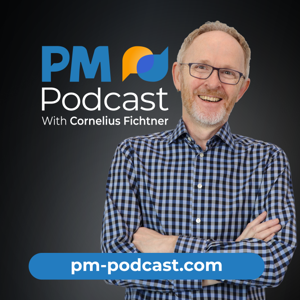
The Project Management Podcast

The Project Management Podcast

By Cornelius Fichtner, PMPBusinessCareers
Download on the App Store
  • Ranking

    2nd

    on Management & Marketing

  • Favorites

    512

    Followers

  • Typical duration

    35 min

    per episode

Based on Podcast App listening data

The Project Management Podcast episodes

  • Episode 391: My Agile Exam Application Got Audited (Free)
    Play Now: Agile exam prep on your smart phone: Jonathan Hebert, PMP, PMI-ACP Are you by any chance thinking of getting your certification as a PMI Agile Certified Practitioner (PMI-ACP)®? Great. Because that certification is our topic. Today you are going to meet Jonathan Hebert (https://www.linkedin.com/in/jonathan-hebert-pmp-csm-pmi-acp-0712471) who not only passed his PMI-ACP® Exam, but he also got audited in the process. So he has a story to tell! As you know, the rules of all Project Management Institute (PMI)® exams are such that we are not allowed to discuss specific questions from the exam. But we can discuss Jonathan's overall experience, how he got his PMI-ACP Exam Prep, his general thoughts on the process and his recommendations to you. So you can look forward to an experience and tip filled interview on how to prepare for and pass your PMI-ACP Exam. Full disclosure: Jonathan Hebert and Cornelius Fichtner both work for OSP International LLC, makers of The Agile PrepCast and The PMI-ACP Exam Simulator. Episode Transcript Below are the first few pages of the transcript. The complete transcript is available to Premium subscribers only. Podcast Introduction Cornelius Fichtner: Hello and welcome to Episode #391. This is the Project Management Podcast™ at www.pm-podcast.com and I’m Cornelius Fichtner. Are you by any chance thinking of getting your certification as a PMI Agile Certified Practitioner (PMI-ACP)®? Great! Because today, that certification is our topic—which brings me to this: If you are a Project Manager who wants to become PMI-ACP® certified, then the easiest way to do so is with our sister podcast, the Agile PrepCast™ and get your certification training for the exam by watching the in-depth exam prep video training from www.AgilePrepCast.com. Today you are going to meet Jonathan Hebert, who not only passed his PMI‑ACP® Exam but he also got audited in the process so he has quite a story to tell. As you know, the rules of all PMI exams are such that we are not allowed to discuss specific questions from the exam but we can discuss Jonathan’s overall experience, general thoughts on the process and his recommendations to you. So you can look forward to an experience and tip-filled interview on how to prepare for and pass your PMI-ACP® Exam. And now, remember, in Agile, we don’t call these lessons learned, it’s a retrospective. Enjoy the interview. Female Voice: Project Management Podcast™ Feature Interview. Today with Jonathan Hebert, Senior Project Manager for OSP International and a very good friend of mine.    Cornelius Fichtner: Hello Jonathan. Thank you very much for joining us today. Jonathan Hebert: Hello Cornelius, thanks for interviewing me. Cornelius Fichtner: Hey, first of all, congratulations on passing the PMI-ACP® Exam.   Jonathan Hebert: Thank you very much. Cornelius Fichtner: When exactly did you pass? It was just a little while ago, right? Jonathan Hebert: It was. It was on March 13th of this year. Cornelius Fichtner: Excellent. Excellent. Before we move on, at this point we have to include a disclaimer and that disclaimer is all about the fact that both you and I, we work for OSP International and among other things, our company offers PMI‑ACP® Exam training and also a simulator and you’ve used both in your exam preparation and will probably mention these two products during the interview as well. We just wanted to make everybody aware of this situation that we are actually colleagues here. So first things first, if you have to do this again, what would you do differently? Jonathan Hebert: I would set aside more time for preparation and I would probably time it or not so much was going on in my life. I was renovating our kitchen, I had plenty of work to do, there were many things that were in play and looking back, I probably could have scheduled things more beneficial for me. [laughs]  Cornelius Fichtner: And when you said you would schedule more time, you mean longer dura

    43 min
  • Episode 389: Conflict Resolution in Project Management (Free)
    Play Now: For your smart phone: Project Management Professional (PMP)® Exam Prep: Karin Brünnemann, PMP Conflict in project management is inevitable. In fact they say that the only way to not have a project management conflict is to have a one-person project. And even then, some people have a tendency to argue with themselves. Karin Brünnemann (https://www.linkedin.com/in/karinbrunnemann) recently gave a presentation on the topic of Managing Conflict in Projects to the Project Management Institute (PMI)® Slovakia Chapter. And because it was such a success she suggested that we bring it to you as well! Karin’s presentation and our interview is full of solid advice and best practices you can apply to the conflicts you will inevitably encounter. We will discuss: Definition & Characteristics of Conflict Conflict in the Context of Project Management How to Analyse a Conflict How to Manage Conflict A big part of the interview is actually focused on that last part -- the actual project management conflict resolution. We are, however, not going to talk about conflict resolution on multicultural projects. That’s reserved for next week. Presentation Slide Deck Karin has made her presentation slides available for listeners of The PM Podcast. Download the file here: Click to download the presentation... Episode Transcript Below are the first few pages of the transcript. The complete transcript is available to Premium subscribers only. Podcast Introduction Cornelius Fichtner: Hello and welcome to Episode #389. This is the Project Management Podcast™ at www.pm-podcast.com and I’m Cornelius Fichtner. Conflict in Project Management is inevitable. In fact, they say that the only way to not have a project management conflict is to have a one-person project and even then some people have a tendency to argue with themselves. Karin Brunnemann recently gave a presentation on the topic of Managing Conflicts to the PMI Slovakia Chapter and because it was such a success, she suggested that we bring it to you as well. If you are a project manager who wants to become PMP or PMI Agile Certified Practitioner (PMI-ACP)® certified, then the easiest way to do so is with our sister podcast, the PM PrepCast™ or the Agile PrepCast™ and get your certification training for the exam by watching the in-depth exam prep video training from www.pm-prepcast.com Karin’s presentation and our interview is full of solid advice and best practices that you can apply to the conflicts you will inevitably encounter. We’ll discuss the definition and characteristics of conflict in the context of Project Management, how to analyze a conflict and of course how to manage a conflict. A big part of the interview is actually focused on that last part, the actual Project Management conflict resolution. We are however not going to talk about conflict resolution on multi-cultural projects—that is reserved for next week. And now, are you looking at me? Enjoy the interview. Female Voice: Project Management Podcast Feature Interview. Today with Karin Brunnemann, PMP, Intra-cultural expert. Cornelius Fichtner: Hello Karin. [Und dir ich wilkommen zurück] The Project Management Podcast™. Karin Brunnemann: Hi, Cornelius! Cornelius Fichtner: [laughs] Yes it always confuses people when I start the interview in German or another language. Welcome back, Karin. It’s been quite a while. Karin Brunnemann: Thank you, Cornelius. I’m happy to be a guest speaker on the PM Podcast once again. Cornelius Fichtner: Yes. So, we want to talk about conflict in projects and the reason for this is really the new PMI Talent Triangle, right? Karin Brunnemann: Yes. If you look at the Talent Triangle under the leadership heading, Conflict Management is actually explicitly mentioned as a leadership skill for Project Management. So, this is quite an important topic. Cornelius Fichtner: Yeah absolutely. Just as an aside for our listeners, because you are listening to this podcast interview, you can claim PDUs for lis
    43 min
  • Episode 387: Project Portfolio Management (Free)
    Play Now: For your smart phone: Project Management Professional (PMP)® Training: Jamal Moustafaev, MBA, PMP Project Portfolio Management and the realization that strategic alignment of all projects within an organization is crucial are both gaining ground. And this realization also emphasizes the need for having solid project selection methods. But how exactly do you do all of this? The number of books that focus on practical advice for implementing a strategic project portfolio management process is quite small. Lucky for us that a new one with exactly that focus has just been published The new book is titled Project Portfolio Management in Theory and Practice: Thirty Case Studies from around the World (Best Practices and Advances in Program Management) written by Jamal Moustafaev (https://ca.linkedin.com/in/jmoustafaev. In our discussion, we answer these questions: What is project portfolio management? What are the three pillars of strategic PPM? What are some project selection models that support a company's strategy? How do we achieve strategic alignment? Episode Transcript Below are the first few pages of the transcript. The complete transcript is available to Premium subscribers only. Podcast Introduction Cornelius Fichtner:  Hello and welcome to Episode #387. This is the Project Management Podcast™ at www.pm-podcast.com and I’m Cornelius Fichtner. Project Portfolio Management and the realization that strategic alignment of all projects within an organization is crucial are both gaining ground and this realization also emphasizes the need for having solid project selection methods. But how exactly do you do all of this? The number of books that focus on practical advice for implementing a project portfolio management process is quite small. Lucky for us that a new book with exactly that focus has just been published. If you are a project manager who wants to become PMP or PMI ACP certified, then the easiest way to do so is with our sister Podcast, the Project Management PrepCast or the Agile PrepCast and study for the exam by watching the in-depth exam prep video training from www.pm-prepcast.com . The new book is titled, “Project Portfolio Management in Theory and Practice: 30 Case Studies from Around the World” written by Jamal Moustafaev. In our discussion, we answered questions like: What is Project Portfolio Management? What are the three pillars of portfolio management? What are some project selection models and how do we achieve strategic alignment? And of course we have two copies of Jamal’s book to give away. One copy is reserved for our Premium subscribers and the other one is up for grabs. If you want to participate in this give-away, then please go to www.facebook.com/pmpodcast and look for the book give away announcement. And now, add this to the portfolio of your skills and enjoy the interview.   Female Voice: Project Management Podcast feature interview. Today with Jamal Moustafaev, President and CEO of Think Tank Consulting, a consulting company specializing in product and portfolio management services. Podcast Interview Cornelius Fichtner:   Hello, Jamal. Welcome back to the podcast. Jamal Moustafaev:   Hi, Cornelius. Always great to be on your program.     Cornelius:   Hey, in 2010, you wrote the book, “Delivering Exceptional Project Results: A Practical Guide to Project Selection Scoping Estimation and Management”. Then in 2014 came “Project Scope Management: A Practical Guide to Requirements Engineering Product Construction, IT and Enterprise Project, Best Practices and Advances in Program Management” and then last year, you published your third book titled, “Project Portfolio Management in Theory and Practice: 30 Case Studies from Around the World, Best Practices and Advances in Program Management”. What prompted you to write this new book? Jamal:   Well, if you
    39 min
  • Special: Scope of Success
    Play Now: Scope of Success Podcast with Brian K. Wagner, MBA, PMP and James Kittle, PMP Welcome to another "special" episode from The PM Podcast, in which we introduce you to new podcasts that are created and produced for/by project managers. Today we feature 'Scope of Success'. Launched in 2016, Scope of Success brings you Business Life Lessons to help you advance your career one interview at a time. Hosted by Brian K. Wagner, MBA, PMP and James Kittle, PMP, advocates for business issues at hand. Sponsored by Project Management Institute (PMI)® Long Island Chapter. So please enjoy Ep1- Mastering the Job Interview - Guest/Steve Potter. Here is what Brian and James write about it in their show notes: In this episode we speak with one of PMI® Long Island chapter's founders and current member of the board of directors. Steve Potter talks to us about interviewing questions and styles that lead to success. Episode Transcript Below are the first few pages of the transcript. The complete transcript is available to Premium subscribers only. Podcast Introduction Brian:   Welcome to the Special Edition of the Project Management Podcast. I’m Brian. James:   I’m James Brian:   We’re the hosts of Scope of Success, the podcast where we bring you business life lessons, one interview at a time. In this episode, we speak to the founder of PMI Long Island, it’s an amazing episode… James:   Totally tubular.DONE Brian:   Excellent. James:   Awesome. Brian:   We learned a lot from it. Thank you Cornelius for this tremendous opportunity. We hope you enjoy the episode and remember to follow us on Twitter and Facebook and subscribe to us on iTunes. Music Male Voice: This is Scope of Success, where we bring you business life lessons and throw a lifeline to your career. And now, Brian and James. Podcast Interview Brian:  Yeah, Welcome to Scope of Success where we’re helping you advance your career one interview at a time but of course we need you to help us so please email us with your show ideas, questions, comments, feedback. You can email us at [email protected] and follow us on Twitter @scopeofsuccess, we’ll try to read as many responses on air as we can. I’m your host Brian, along with my co-host James. We’ll be your advocates for issues at hand. Hey James! James:   Hello, Brian. We have a fantastic show today. We’ll be speaking with Steve Potter, he is one of the founders and on the Board of Directors of PMI Long Island, which is Project Management Institute, Long Island Chapter and they’re also our sponsor. James:   Yeah. I think he’s probably the first genuine celebrity that we’ve had on the podcast. Brian:   He is a celebrity. Absolutely. James:   Not quite at the Clooney level but probably somewhere just below that. Brian:   Yeah. I would say. Absolutely. A well-respected guy. Fantastic to have him on the show. We’re going to be talking about interviews, we’re going to get interview tips from him, ideas, have to answer certain questions. I have a joke—an interview joke. James:   A joke that you tell when you’re interviewing people that you’re hiring or…a joke that you tell when you’re on an interview? Brian:   No, a joke when I tell when I just stand up. James: Oh ok. Brian:  [laughs]   A couple of weeks ago, I had a job interview. James:   Is this the joke? Brian:   This is the joke. It’s starting now. James:  Ok [laughs] Just so we’re all ready. Brian:   So, a couple of weeks ago I had a job interview. I spoke with the HR Manager. James:   Right. Brian:   And she asked me if I had any weaknesses. James:   Ok. Brian:   So I said—I’m too honest. James:
    34 min
  • Episode 386: Interpersonal Skills for Project Success (Free)
    Play Now: For your smart phone: Project Management Professional (PMP)® Certification Training: Congress presenters reveal their most important interpersonal skill Last year at the Project Management Institute (PMI)® Global Congress 2016 in San Diego, California I recorded an all time high of 14 interviews. They have all been published over the past few months and you’ve probably heard some or all of them. But what you don’t know is what happened once each interview was complete. I pressed the recording button one more time and asked each of my guests the following question: Which is the interpersonal skill that you attribute the most of our success in your career to? In other words, what skill has helped you most on your projects when you interact with others? And today you are going to get all the answers. In one nice mashup. Here are all the presenters in the order you will hear their answers Jay Payette Kristy Tan Neckowicz Nk Shrivastava David Hillson Denise McRoberts Joy Beatty Kristine Hayes Munson Andrew Burns Kim Wasson Wanda Curlee Beth Spriggs Cyndi Snyder Dionisio Connie Inman Oh, and spoiler alert... the answer that I received most often was "Relationships". Episode Transcript Below are the first few pages of the transcript. The complete transcript is available to Premium subscribers only. Podcast Introduction Cornelius Fichtner:  Hello and welcome to Episode #386. This is the Project Management Podcast™ at www.pm-podcast.com and I’m Cornelius Fichtner. Last year at the PMI Global Congress 2016 in San Diego, California, I recorded an all-time high of 14 interviews. They have all been published over the past few months here on the program and you’ve probably heard some or all of them but what you don’t know is what happened once each interview was complete because I pressed the recording button one more time and I asked each of my interview guests the following question: What interpersonal skill do you attribute the most to your success in Project Management to? In other words, what skill has helped you most on your projects when you interact with others? And today, you are going to get all the answers in one nice, big mash-up. We begin with Jay Payette who attributes his success to what I have to do a lot here on the Project Management Podcast and that’s talking.     Podcast Interview Cornelius Fichtner:   Jay, please tell me which is the interpersonal skill that you attribute the most of your success in Project Management to? Jay Payette:   It’s an excellent question and it’s a difficult question because there are so many interpersonal skills I know that being able to be empathetic is important and understand different people’s perspectives but for me actually, if I have to attribute success in Project Management, it would be in simply, communication—being able to stand up in a room and present and speak with confidence and win people over with my ideas. Being able to speak confidently, being able to speak what I would hope to be charismatically to me has been the one skill that has allowed me to win confidence in my clients but also drive success in delivering projects.   Cornelius:   Now that we know that talking is important, how about listening? Here are Kristy Tan Neckowicz and NK Shrivastava Kristy:   I would say that one key skill that I attribute my success to is active listening. I feel like the fact that people that I communicate with recognize that I’m listening, that I actually do care about what they are going to say and I’m actually going to take action as a result of what they say. That has given me a lot of leeway in building relationships with them and also getting the results that we both want. So I say active listening is key. NK:   If I were to put the interpersonal skills I will say listening is the most critical skill because that te
    25 min
  • Episode 385: Aligning Projects with Organizational Strategy (Free)
    Play Now: Our recommended Project Management Professional (PMP)® Exam Prep: Jay Payette, PMP Projects are the tool businesses use to take a strategy and turn it into reality. So your project better be aligned with your long term business plan. All of them! This interview about strategic alignment with Jay Payette was recorded at the Project Management Institute (PMI)® Global Congress 2016 in San Diego, California. We discuss his presentation and white paper Making it Happen - How Project Managers Can Drive Strategic Alignment and Strategy Execution. Here is the abstract: Good strategy can be critical to organizational success, however in order for strategy to transform from ideas into results it must be successfully executed. In order for organizations to successfully formulate and execute strategy they must achieve sufficient strategic alignment. Project managers and project team members can make a critical contribution to their organization’s strategic alignment. This paper examines strategic alignment through the frame of three strategic functions: formulate, align, and execute and how they interact with each other. Additionally, three strategic alignment frameworks are presented and recommendations are made as to how they may be used by project managers to contribute to organizational strategic alignment at the project-level. PDU Tip This interview is 29 minutes and 30 seconds long. This means that it is 30 seconds too short and you can "legally" only claim 0.25 PDUs for listening to it. However... if you first listen to the interview and then also read the white paper on which it is based, then you can go ahead and claim 0.50 PMP PDUs! Click to download the white paper Episode Transcript Below are the first few pages of the transcript. The complete transcript is available to Premium subscribers only. Podcast Introduction Cornelius Fichtner:  Welcome everyone. You are listening to the Project Management Podcast™ at www.pm-podcast.com . We are coming to you once again live from the 2016 PMI Global Congress in now not-so-sunny San Diego in Southern California and with me standing here in the hallway is Jay Payette. Podcast Interview Cornelius Fichtner:   Hello, Jay. Jay Payette:   Hello, good day! Cornelius:  So, the Congress has just ended. We have heard the final keynote with Wesmore. How was the Congress for you? Jay:  Oh, it was a phenomenal Congress. I felt –unfortunately I wasn’t able to attend last year in Orlando but I was able to attend in New Orleans the year before and I find every year, participants become even more engaged with the speakers. They tend to ask even more and more questions and the participation level, it just continues to go up. So, I’m really excited to see that kind of enthusiasm amongst practitioners to pick your brains and learn new things. Cornelius:   Excellent. The title of your presentation is: Making It Happen: How Project Managers Can Drive Strategic Alignment and Strategy Execution. How was the presentation for you here? Jay:   The presentation was wonderful. Cornelius:   Well-attended? Jay:   Very well-attended. It was a full room, Standing Room Only in the back. I did have the benefit of presenting on the first day so sometimes when you’re the last group in the last day you’ll get people flying home but I did have that kind of first mover’s advantage so the attendance was fantastic. Cornelius:   Alright. The subtitle of your presentation is How Project Managers Can Drive Strategic Alignment and Strategy Execution. Allow me to begin with a somewhat critical question because many of us project managers feel that we are not necessarily in a position where we are asked or even considered when strategic alignment and strategy execution is being discussed. We’re kind of left out of this discussion. People don’t come to us, the C Level, they
    30 min
  • Episode 384: Situational Awareness for Project Managers (Free)
    Play Now: For your Project Management Professional (PMP)® exam we recommend the following PMP Exam Prep: Wanda Curlee and Cornelius Fichtner Every project manager needs to master situational awareness. That is because no two projects are perfectly alike. What worked last time may have to be tweaked next time. Even worse, what may have worked just yesterday may have to be tweaked today! This interview about situational awareness with Wanda Curlee was recorded at the Project Management Institute (PMI)® Global Congress 2016 in San Diego, California. It was co-written and co-presented with Marie Sterling. Wanda and I discuss their presentation and white paper Situational Awareness. Do you have the Emotional Intelligence for it?. Here is the abstract: This paper explores the relationship of situational awareness and emotional intelligence of portfolio, program, and project leadership. Included in the paper is an introduction to situational awareness, emotional intelligence, SAGAT, recommendations and details about the workshop exercise. Situational awareness plays a critical role in effective decision making, and more so in complex and challenging portfolio, program and project management environments. Emotional Intelligence (EI) is the study of how in tune a person is with his or her own emotions and the ability to understand emotions of those around himself or herself. Through the use of a live training simulation, an individual’s level of situational awareness and their emotional intelligence will be determined. Click to download the white paper Episode Transcript Below are the first few pages of the transcript. The complete transcript is available to Premium subscribers only. Podcast Introduction Cornelius Fichtner:  Hello everyone and welcome back to the Project Management Podcast™ at www.pm-podcast.com . I am sitting here in the halls of the beautiful and sunny San Diego Convention Center here at the 2016 PMI Global Congress and in front of me is Wanda Curlee. Podcast Interview Cornelius Fichtner:   Hello, Wanda. Wanda Curlee:   Nice to see you again, Cornelius.      Cornelius:   Welcome back on the program.   Wanda:  Thank you very much. An honor to be here. Cornelius:  Yeah. You are speaking on Situational Awareness: Do you have the Emotional Intelligence for it? Have you already presented it? Wanda:   No, I have not. I’ll present tomorrow morning. Cornelius: Have you any idea how many people have registered? Wanda:   The last time we checked there were about 60 people, so we’re hoping for a little bit more but if only 60 show up, that’s fine. If one shows up, we’ll do it. Cornelius:   OK. Wonderful. Well, good luck. You said “we” and that is the moment where we also have to acknowledge your co-author and co-presenter. Wanda:   Yes. That is Marie Sterling. She is actually the expert on situational awareness. She does a lot with the Canadian Military Services. I know they’ve combined everybody but she does the air side. She also does something similar to the American Civil Air Patrol where she goes out and tries to find lost hikers or planes that have gone down. Cornelius:   So, let’s take a look at your paper since there are two authors you mentioned. You are more on the emotional intelligence side and she is more on the situational awareness but we’re going to cover both topics. The abstract begins as follows: The paper explores the relationship of situational awareness and emotional intelligence of portfolio, program and project leadership. How does this understanding help me as a project manager? Wanda:   OK. We all know that we need to understand what the political situation is in a company. However, situational awareness takes that one step further. It’s—am I reading the data correctly? So that’s Lev
    23 min
  • Episode 383: Project Failure Is Not An Option (Free)
    Play Now: Need Project Management Professional (PMP)® training? Here's PMP Exam Prep for your phone! Kristy Tan Neckowicz, Connie Inman and Cornelius Fichtner At some point in their career, every project manager has to deal with troubled projects. This interview about project recovery with Kristy Tan Neckowicz and Connie Inman was recorded at the Project Management Institute (PMI)® Global Congress 2016 in San Diego, California. We discuss their presentation and white paper Recognize Warning Signs and Rescue Your Troubled Projects. Here are the abstract and summary: Abstract: Come to this session to hear real stories of troubled projects and recovery journeys from two seasoned project management professionals. You will learn to recognize common warning signs of troubled projects, approaches to right-sizing your project management processes, and applications of stakeholder management lessons for project success. Summary: The common theme across the case studies is a focused spirit of continuous improvement to rescue troubled projects. Although projects are temporary in nature, project management processes are always evolving. It is tempting to move on to the next project when a troubled project has been placed safely back on track. However, you will have more assurance of the project manager’s future success by conducting a lessons learned evaluation focused on the practice of project management before claiming victory. By sharing the warning signs, right-sizing approach, and lessons learned from these case studies, we hope you will leverage our experience to keep your next project “on track” to successful delivery. PDU Tip This interview is 29 minutes and 57 seconds long. This means that it is 3 seconds too short and you can "legally" only claim 0.25 PDUs for listening to it. However... if you first listen to the interview and then also read the white paper on which it is based, then you can go ahead and claim 0.50 PMP PDUs! Click to download the white paper Episode Transcript Below are the first few pages of the transcript. The complete transcript is available to Premium subscribers only. Podcast Introduction Cornelius Fichtner:  Welcome everyone. You are listening to the Project Management Podcast™ at www.pm-podcast.com . We are coming to you live from the 2016 PMI Global Congress in beautiful and sunny San Diego, California. And with me this morning here in the hallways of the Conference Center are two people. We have Kristy Tan Neckowicz and Connie Inman.    Podcast Interview Cornelius Fichtner:   Hello, Kristy. Kristy Tan Neckowicz:   Hello.     Cornelius:   Good morning. Unfortunately I can’t say hello, Connie because I only have two microphones and Kristy’s wearing it but we will bring Connie into the mix in just a bit. So, your presentation is titled “Recognize Warning Signs and Rescue Your Troubled Projects”. Have you already given the presentation? Kristy:   Not yet. We’ll be giving the presentation this afternoon. Cornelius:   Wonderful. You have an opportunity for a dry run right now. [laughs] Kristy:   Yes. Cornelius:   Excellent. Do you know how many people are going to be attending? Kristy:   I do not. Cornelius:   Yeah OK. Kristy:   I hope that it will be well-attended. Cornelius:   Have they moved you into a different room? That’s always a good sign. Kristy:   Oh no, they haven’t. [laughs] Cornelius:   If they move you into a different it means, oh, there are a lot more people than we expect to be interested in this. Alright, what is your interest in Troubled Projects? Why talk about them? Kristy:   It’s a good question. I saw Connie give the presentation on her case study back in the Spring this year and I thought to myself when I was sitting in the audience, I th
    30 min
  • Episode 382: Top Five Warning Signs that Agile Isn't Working (Free)
    Play Now: Studying for the Project Management Professional (PMP)® exam? Get PMP Exam Prep on any mobile device! NK Shrivastava and Cornelius Fichtner This interview about why Agile might be failing in your organization with NK Shrivastava was recorded at the Project Management Institute (PMI)® Global Congress 2016 in San Diego, California. We discuss his presentation and white paper Top Five Warning Signs That Agile is Not Working for You. Here are the abstract and conclusion: Abstract: There are good possibilities of success when adopting an agile approach in an organization, but five symptoms in particular serve as warning signs that the organization’s agile transformation is not working well. The five warning signs include: (a) no signs of value delivery for over 3 months, (b) teams resisting customer changes, (c) teams “waterfalling” sprints, (d) customers foregoing involvement in development and testing, and (e) lack of visibility for agile in the organization. Potential solutions for these problems are also described in this paper. Many organizations can solve these problems internally, but sometimes an external resource such as a change agent or an agile coach is needed. By addressing these issues, organizations can increase the chances of a successful agile transformation. Conclusion: Agile doesn’t work by itself. Organizations that implement agile with minimal team support and expect it to work perfectly “out of the box” will likely be disappointed. Successful agile adoption depends on factors at the organization and team levels. Organizations need the right mindset, a strong commitment, a culture conducive to implement agile, and the ability to secure resources and outside help as needed. Teams need the training, skills, and empowerment to absorb and implement agile principles. With these factors in place, organizations and teams should be able to build the foundation for agile success. Click to download the white paper Episode Transcript Below are the first few pages of the transcript. The complete transcript is available to Premium subscribers only. Coming Soon... Above are the first few pages of the transcript. The complete transcript is available to Premium subscribers only. Please subscribe to our Premium Podcast to receive a PDF transcript.
    31 min

About The Project Management Podcast

From the publisher's feed

Become the project manager everyone wants on their team. Tune in to The Project Management Podcast™ and join Cornelius Fichtner, PMP, CSM, as he interviews global PM experts to uncover what drives…

Best of The Project Management Podcast

Ranked by our users in the last 21 days

More shows like The Project Management Podcast

TED Radio Hour by NPR

TED Radio Hour

21,775 Listeners

The Tim Ferriss Show by Tim Ferriss: Bestselling Author, Human Guinea Pig

The Tim Ferriss Show

16,036 Listeners

Coaching for Leaders by Dave Stachowiak

Coaching for Leaders

1,455 Listeners

HBR IdeaCast by Harvard Business Review

HBR IdeaCast

138 Listeners

Something You Should Know by Mike Carruthers | OmniCast Media

Something You Should Know

4,237 Listeners

The Diary Of A CEO with Steven Bartlett by DOAC

The Diary Of A CEO with Steven Bartlett

8,334 Listeners

Projectified by Project Management Institute

Projectified

231 Listeners

Learning English from the News by BBC Radio

Learning English from the News

237 Listeners

Life Kit by NPR

Life Kit

4,747 Listeners

The Happiness Lab with Dr. Laurie Santos by Pushkin Industries

The Happiness Lab with Dr. Laurie Santos

14,298 Listeners

Think Fast Talk Smart: Communication Techniques by Matt Abrahams, Think Fast Talk Smart

Think Fast Talk Smart: Communication Techniques

803 Listeners

Huberman Lab by Scicomm Media

Huberman Lab

28,981 Listeners

The Everyday PM: Project Management Principles for Your Everyday Life by Ann Campea

The Everyday PM: Project Management Principles for Your Everyday Life

37 Listeners

The Mel Robbins Podcast by Mel Robbins

The Mel Robbins Podcast

18,838 Listeners

HBR On Leadership by Harvard Business Review

HBR On Leadership

159 Listeners