
Sign up to save your podcasts
Or

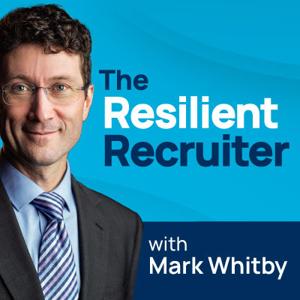


Based on Podcast App listening data
One placement can be a transaction.
Or it can be the start of a long-term enterprise relationship.
Most recruiters treat it like the first.
Brendan Thomas built his career on the second.
He started recruiting at 36, got fired after his first $60,000 placement, and joined a new agency six months later with two clients.
By the end of that year, he had built over $600,000 in billings.
Six years later, he has generated more than $5 million in lifetime billings, averaged $1 million per year, and qualified for the CEO Club every quarter.
In this episode, we break down:
• How to win enterprise clients that most recruiters avoid
• How to approach hiring managers before HR blocks you
• The three responses you’ll get from Talent Acquisition - and how to handle each
• How to expand one placement into long-term recurring revenue
• What discipline actually looks like on a $1M desk
If you want to move beyond one-off transactions and build strategic client relationships, this episode gives you the framework.
Timestamps00:00 Intro
Not sure what’s slowing your agency’s growth?
Take the free Seven Figure Freedom Scorecard:
👉 recruitmentcoach.com/scorecard
Recruiterflow – the AI-first operating system built for recruitment agencies:
👉 recruitmentcoach.com/recruiterflow
Trusted Voice Video – build authority through consistent short-form content:
👉 recruitmentcoach.com/video
Resources MentionedHow to Get Access to Hiring Managers Without Alienating HR
https://recruitmentcoach.com/how-to-get-access-to-hiring-managers-without-alienating-hr/
Recruiterflow - AI-first operating system for recruitment agencies
https://www.recruitmentcoach.com/recruiterflow
👍 Subscribe for weekly conversations with elite recruitment business owners, search leaders, and top billers.
Your follow helps us reach more recruiters who want to build smarter, more profitable businesses.
#RecruitmentPodcast #RecruitmentAgency #RecruiterTraining #ExecutiveSearch #EnterpriseRecruiting #RecruitmentBusiness #MillionDollarBiller #RecruiterGrowth #BusinessDevelopment #RecruitmentStrategy
One placement can be a transaction. Or it can be the start of a long-term enterprise relationship.
Most recruiters treat it like the first. Brendan Thomas built his career on the second.
He started recruiting at 36, got fired after his first $60,000 placement, and joined a new agency six months later with two clients. By the end of that year, he had built over $600,000 in billings.
Six years on, he has generated more than $5 million in lifetime billings, averaged $1 million per year, and qualified for CEO Club every quarter.
He did it by ignoring the advice nearly every experienced recruiter gave him. When he asked million-dollar billers how they did it, the one piece of advice he kept hearing was to avoid enterprise accounts. He ignored it.
In this episode, Brendan breaks down exactly how he cracks major enterprise accounts, navigates HR and Talent Acquisition without getting blocked, and earns the kind of deep access - hiring manager calendars, ATS logins, long-term contracts - that turns one deal into recurring revenue.
This episode is brought to you by Recruiterflow
Recruiterflow is the AI-first operating system built specifically for recruitment agencies and executive search firms. It combines a powerful ATS and CRM with AI embedded directly into your recruiting process.
Less admin. Smarter follow-up. More time spent on revenue-generating conversations.
Request a demo: recruitmentcoach.com/recruiterflow
In this episode, you'll discover:
Why Brendan ignored the advice to avoid enterprise accounts - and what happened when he did
How to lead with a real candidate to get hiring manager buy-in before HR enters the picture
The three responses you'll get from Talent Acquisition - and how to handle each one
When to walk away from an account and the red flags that tell you it's time
How to expand one placement into a long-term enterprise relationship
Why Brendan never asks for referrals until the candidate has had at least a week in the role
How to earn direct access to hiring manager calendars
What discipline actually looks like on a million-dollar desk
Episode Highlights:
[0:38] The $60,000 placement that got Brendan fired and what he did next
[1:01] Starting over: $600,000 in billings in six months
[3:25] How Brendan entered recruitment at age 36
[18:46] The question he asked million-dollar billers and the advice he rejected
[23:16] Why enterprise accounts are harder to crack and why he pursued them anyway
[28:15] How to approach hiring managers before going to HR
[35:38] The three HR responses and how to handle each one
[46:14] Red flags, yellow flags, and green flags - deciding which accounts to pursue
[54:15] Expanding an account after your first placement
[56:42] Earning direct access to hiring manager calendars
[1:03:23] What "uptime" really means for a million-dollar biller
About Brendan Thomas
Brendan Thomas specialises in finance and accounting placements across manufacturing, construction, and technology industries in the United States. He joined Jobot in June 2020 and has since generated over $5 million in lifetime billings, averaging approximately $1 million per year.
He has qualified for CEO Club every quarter and hit the $125,000+ quarterly threshold 22 quarters in a row. He is ranked third in lifetime billing at Jobot.
He works nationwide and is available from 5am to 5pm Pacific daily.
Connect with Brendan:
linkedin.com/in/brendanwthomas
Connect with Mark Whitby
Free 30-minute strategy call: recruitmentcoach.com/strategy-session
LinkedIn: linkedin.com/in/mwhitby
Instagram: @RecruitmentCoach
I can’t keep making $40,000.
That’s what Larissa Gerlach told her manager in year one of recruitment.
She was making 200+ calls a week.
Hitting the activity metrics.
Doing everything she was told to do.
And still unsure whether she would make it.
Three years later, she was President’s Club.
Soon after, the CFO of a private equity-backed recruiting firm emailed her:
“What are you doing — and how do we replicate it across 25 offices?”
That question became a national recruiter training programme.
And it reveals a bigger truth:
Most recruitment agencies believe in training.
Very few build a system that consistently produces top billers.
This episode answers one critical question:
Why do most recruiter training programmes fail — even when activity is high?
In this conversation, Larissa breaks down:
• The 200-calls-per-week discipline that changed her trajectory
• Why knowledge doesn’t translate into live performance
• What a real training playbook looks like — from binder to LMS
• Why daily role plays accelerate billings
• The three reasons founders struggle to build structured training
• Why cohort-based learning outperforms one-to-one onboarding
• How to reduce ramp-up time and build $2M+ billers
If you’re building a recruitment agency and want consultants billing faster, progressing quicker, and performing consistently, this is a masterclass in building performance systems.
Chapters
Resources & Tools Mentioned
Want a structured 18-week recruiter training system for your team?
👉 recruitmentcoach.com/training
Not sure what’s slowing your agency’s growth?
Take the free Seven Figure Freedom Scorecard:
👉 recruitmentcoach.com/scorecard
Recruiterflow – the AI-first operating system built for recruitment agencies:
👉 recruitmentcoach.com/recruiterflow
Trusted Voice Video – build authority through consistent short-form content:
👉 recruitmentcoach.com/video
Connect with LarissaLinkedIn:
https://linkedin.com/in/larissagerlach
Work With Mark Whitby
Book a free strategy session:
https://recruitmentcoach.com/strategy-session
LinkedIn:
https://linkedin.com/in/mwhitby
If you’re serious about building a high-performance recruitment business, subscribe for weekly conversations with elite agency owners, search leaders, and top billers.
Each episode breaks down what actually drives billings, growth, and long-term resilience in recruitment.
Your follow helps us reach more recruiters who want to build smarter, more profitable businesses.
Most recruitment agencies believe in training.
Very few build a structured system that consistently produces top billers.
Larissa Gerlach experienced the hard version first. In year one, she earned $40,000 and questioned whether she would make it in recruitment at all. By year three, she had reached President’s Club. Soon after, the CFO of a private equity-backed recruiting firm asked her to replicate her results across 25 offices.
That request became the foundation of a national recruiter training programme.
In this episode, Mark Whitby and Larissa unpack what actually drives recruiter performance, why activity metrics alone don’t create top billers, and how recruitment business owners can build scalable training systems that reduce ramp-up time and increase recruiter billings.
If you are serious about recruitment agency growth, search firm leadership, and building consistent performance inside your team, this conversation goes beyond theory.
It’s about systems.
What You’ll Discover• Why 200+ calls per week worked — and why most recruiters still fail at high activity
• The difference between knowledge and live desk performance
• How to turn individual billing success into a national training framework
• Why daily role plays accelerate recruiter revenue
• The three structural reasons founders struggle to implement training
• Why cohort-based onboarding produces stronger long-term performance
• How to build recruitment agency systems that scale beyond one top performer
[03:56] From fashion sales to recruitment after the 2009 recession
[08:37] The $40,000 first year and the meeting where she nearly quit
[12:35] Why most recruiters struggle in year one — and what actually starts to click
[22:15] The 200-calls-per-week discipline that changed her trajectory
[26:07] The CFO email that led to building a national sales training programme
[28:17] What the training playbook looked like — from binder to LMS
[35:51] Why daily role plays create elite performers
[1:05:49] The three reasons most founders struggle to train their teams
[1:10:29] Why group cohorts outperform one-to-one onboarding
Larissa Gerlach is the founder of Vibrant Talent Group, an executive search firm specialising in marketing, product, and design roles across New York and San Francisco. She has over 15 years of experience across billing, business development, national learning and development, and agency leadership. At a private equity-backed recruiting firm, she became the fastest-growing salesperson in company history before leading national recruiter training initiatives.
Resources MentionedRecruiter Training Programme
https://recruitmentcoach.com/training
Seven Figure Freedom Scorecard
https://recruitmentcoach.com/scorecard
Recruiterflow
https://recruitmentcoach.com/recruiterflow
Trusted Voice Video
https://recruitmentcoach.com/video
Book a free strategy session with Mark Whitby
https://recruitmentcoach.com/strategy-session
If you want weekly conversations with recruitment business owners, executive search leaders, and top billers focused on recruitment agency revenue, recruiter performance, and long-term business resilience, follow The Resilient Recruiter on Apple Podcasts.
The difference between average billers and elite teams is rarely motivation.
It’s structure.
AI in recruitment was supposed to make hiring faster, smarter, and more efficient.
Greg Savage believes it has made recruitment harder.
Fraud at scale. Inflated CVs. AI screening tools producing just 14% shortlist overlap. And automation that speeds up broken recruitment processes instead of fixing them.
In Episode 300 of _The Resilient Recruiter,_ we break down AI in recruitment, the future of recruitment agencies, retained vs contingent recruitment, and what recruitment agency owners must do to stay relevant in an AI-driven market.
Greg was my very first guest back in 2019. In 2023, he made a series of bold predictions about how AI would reshape recruitment.
Two years later? Those predictions were “scarily accurate.”
But in some areas, things have accelerated even faster than expected.
Greg has built four recruitment businesses. He’s the author of _The Savage Truth_ (20,000+ copies sold). He’s spent five decades watching the recruitment and executive search industry evolve.
His view?
AI hasn’t simplified recruitment.
It has raised the bar.
Episode Timeline00:00 Intro
Which Recruitment Models Will Survive• Why the contingent, multi-listed recruitment model is under pressure
• Why retained search and executive search are positioned to grow
• The recruitment business models likely to thrive over the next five years
• Why recruiters must sell decision-making, not just placements
What Recruitment Leaders Must Master Next• The highest ROI AI opportunity: activating and cleaning your recruitment database
• Why “techno-empath” recruiters will win
• The moments of truth in recruitment that must never be automated
• The skills that will define high-performing recruiters in an AI-driven market
Why Episode 300 MattersSix years ago, when I launched this recruitment podcast, Greg Savage was my very first guest.
Since then, we’ve lived through a global pandemic, a hiring boom, a market correction, and now the fastest wave of AI adoption in recruitment.
Episode 300 is less about tools — and more about leadership, positioning, and building a recruitment agency that stays relevant in a changing market.
Greg SavageGreg Savage is the founder of four recruitment businesses and the author of two best-selling books, including _The Savage Truth._ He has spent five decades in recruitment and executive search and is widely regarded as one of the industry’s most direct voices on leadership and the future of work.
Savage Recruitment Academy: https://thesra.co/
SponsorThis episode is proudly sponsored by Recruiterflow.
Recruiterflow is an end-to-end, AI-first ecosystem built to run and scale your recruitment business. It combines ATS, CRM, sequencing, data enrichment, marketing automation, and AI agents in one platform.
Many recruitment agency owners use Recruiterflow to improve visibility, accountability, and performance.
Book a demo here:
https://www.recruitmentcoach.com/recruiterflow
If you run a recruitment agency, executive search firm, or staffing business and want to stay ahead of AI in recruitment, subscribe to _The Resilient Recruiter_ for weekly conversations with leading recruitment entrepreneurs.
Six years ago, Greg Savage was the very first guest on The Resilient Recruiter.
For episode 300, he returns to discuss the biggest shift our industry has faced since the rise of the internet: artificial intelligence.
And he doesn’t hold back.
“The contingent, multi-listed perm market… I think that is over.”
Greg has built four recruitment businesses. He’s the author of The Savage Truth (20,000+ copies sold). He’s spent five decades watching this industry evolve.
His view?
AI hasn’t made recruitment easier.
In many ways, it’s made it harder.
Two years ago, Greg outlined a series of predictions about how AI would reshape recruitment. In this episode, we revisit those predictions and assess what’s proving true — and where the pace of change has accelerated.
But this isn’t a doom-and-gloom conversation.
It’s about where recruitment agencies win next.
If you lead a recruitment agency or executive search firm, this episode will challenge how you think about AI, positioning, and long-term relevance.
Episode Highlights00:33 The biggest threat and opportunity Greg has seen in decades
02:14 Why the contingent, multi-listed perm model is under pressure
06:34 AI shortlisting chaos and the 14% overlap test
08:32 What “automating dysfunction” really means
26:20 The highest ROI AI opportunity right now
30:43 Four questions to ask before buying any AI tool
54:04 The rise of the “techno-empath” recruiter
Why AI Is Making Recruitment Harder
Why AI screening tools produced only 14% overlap in shortlists
Research suggesting around 40% of tech candidates have inflated their resumes
What “automating dysfunction” looks like in practice
The four questions every recruitment leader should ask before investing in AI
Which Recruitment Models Will Survive
Why the contingent, multi-listed perm model is under pressure
Why retained search and executive search are positioned to grow
The business models most likely to thrive over the next five years
Why recruiters must sell decision-making, not just placements
What Recruiters Must Master Next
The highest ROI AI opportunity: activating and cleaning your recruitment database
Why “techno-empath” recruiters will win
The moments of truth that must never be automated
The skills that will define high-performing recruiters in an AI-driven market
This episode speaks directly to recruitment agency growth, retained versus contingent recruitment, and how to scale a recruitment business as AI reshapes hiring.
Why Episode 300 MattersWhen I launched this podcast in 2019, Greg was my first guest.
Since then, we’ve lived through a pandemic, a hiring boom, a market correction, and now the fastest wave of AI adoption our industry has ever seen.
Bringing him back for episode 300 felt right.
This conversation is less about tools and more about leadership, positioning, and how to build a recruitment business that stays relevant.
SponsorThis episode is brought to you by Recruiterflow.
Recruiterflow is an end-to-end, AI-first ecosystem built to run and scale your recruitment business. It combines ATS, CRM, sequencing, data enrichment, marketing automation, and AI agents in one platform, helping recruitment agencies improve visibility, accountability, and performance.
Book a demo at:
https://recruitmentcoach.com/recruiterflow
If you want to future-proof your recruitment business without burning out, this episode is a must-listen.
Connect with Mark WhitbyGet your FREE 30-minute strategy call:
https://www.recruitmentcoach.com/strategy-session/
Connect with Mark on LinkedIn.
If you’re a recruitment agency owner serious about scaling, retained search, and staying ahead of AI in recruitment, subscribe to The Resilient Recruiter so you don’t miss future conversations like this.
If you want to future-proof your recruitment business without getting left behind, this episode is essential listening.
Why do some recruiters close retained work in a single meeting while others pitch for weeks and still lose to contingent competitors?
In this episode of *The Resilient Recruiter,* Mark Whitby sits down with *James O’Brien,* Managing Director and COO at i-intro, to unpack what really separates recruiters who win retained and exclusive work from those stuck chasing job orders.
James has been in recruitment since the late 1980s and has spent the last decade helping agencies transition from contingent recruitment to retained search. His clients consistently outperform the market, achieving *96% one-year retention* and *93% of placements still in role after two years.*
This conversation isn’t about pitching harder or discounting fees. It’s about changing the _dynamic_ of the client conversation by reframing hiring around risk, retention, and accountability.
If you’re tired of competing with multiple agencies for the same role and want clients to see you as a trusted advisor rather than a supplier, this episode will change how you run client meetings.
What You’ll Learn in This Episode:
* Why recruitment isn’t the real problem — retention is
* The three questions that expose hidden hiring failure
* How to justify higher fees by measuring retention
* Why most recruiters lose retained work in the preparation, not the pitch
* How to show value instead of describing your process
* What accountability really looks like beyond the placement
* Why retained work is won before you walk into the meeting
Timestamps:00:00 Why most recruiters struggle to win retained work
*Listen to the full episode:* https://recruitmentcoach.com/podcast/
SponsorThis episode is brought to you by *Recruiterflow* — an end-to-end, AI-first recruitment platform that helps recruiters run and scale their business. Recruiterflow combines ATS, CRM, sequencing, data enrichment, marketing automation, and AI agents in one streamlined system.
Learn more or request a demo at recruitmentcoach.com/recruiterflow
👍 *If you found this episode helpful, don't forget to subscribe for more interviews with top recruitment leaders every week.*
Your follow helps us reach more recruiters who want to grow their business and win more retained work.
*GUEST BIO*
James O'Brien is the Managing Director and COO at i-intro. Since the late 1980s, he has worked across every part of the recruitment industry and now helps recruitment firms transition from contingent to retained and exclusive search. His work focuses on retention, accountability, and elevating recruiters from job fillers to trusted talent advisors.
Why do some recruiters get ghosted while others hear: *“I never respond to recruiters, but I had to respond to you”?*
In this episode of *The Resilient Recruiter,* Mark Whitby is joined by *Theresa Nordstrom,* founder of Talent Company, to break down what _actually_ makes candidates respond in today’s noisy recruitment market.
Before launching her own search firm, Theresa spent nearly 20 years as an HR leader. At one company, she cut agency spend by over $700,000 by building creative employee referral programs and filling roles in-house. Then she crossed to the agency side.
Her biggest insight?
*Job descriptions don’t recruit talent. Stories do.*
In this conversation, Theresa explains why messaging beats volume, how video cuts through candidate noise, and how recruiters can get better responses without being pushy, salesy, or sending more messages. If you’re tired of candidates ignoring your outreach, this episode will change how you think about recruiting.
🎧 *Listen to the full episode on the podcast:*
https://recruitmentcoach.com/podcast/
What You’ll Learn in This Episode
* Why candidates ignore most recruiter outreach
* How storytelling outperforms job descriptions
* How to get candidates to self-select early
* Why proof of progression beats vague culture claims
* How recruiters can use video without being polished
* What most employee referral programs get wrong
* Why detailed submittals increase interview ratios
* How to use AI to elevate quality without losing judgment
Timestamps00:00 Intro
Sponsor: Recruiterflow
This episode is brought to you by *Recruiterflow.*
Recruiterflow is an AI-first ATS and CRM built specifically for recruitment agencies and executive search firms. It combines ATS, CRM, sequencing, data enrichment, marketing automation, and AI agents in one intuitive platform.
Many recruitment leaders in our coaching community use Recruiterflow to move faster, onboard new hires more easily, and spend more time having real conversations with clients and candidates.
👉 Learn more or request a demo at:
https://recruitmentcoach.com/recruiterflow
About the Guest
*Theresa Nordstrom* is the founder of Talent Company, an executive search firm specialising in accounting, finance, HR, and C-suite roles. Before launching her firm in 2015, she spent nearly 20 years as an HR leader, where she became known for creative employee referral programs that dramatically reduced agency spend. Her work today centres on storytelling, video outreach, and presenting candidates in ways that make hiring decisions easier.
👍 *Don’t forget to subscribe* for weekly interviews with top recruitment leaders, agency owners, and executive search professionals.
#RecruitmentPodcast #RecruitmentAgency #ExecutiveSearch
#RecruiterGrowth #CandidateEngagement #VideoOutreach
Why do some recruitment agencies collapse when the market turns, while others keep growing?
Gerard Koolen has lived through three major crises: the 2008 financial crash, COVID-19, and the war in Ukraine. Each time, his recruitment business didn’t just survive. It grew.
In this episode of _The Resilient Recruiter,_ Gerard explains why growth in tough markets has nothing to do with working harder. It comes down to how your agency is built.
Gerard is the founder of Lugera, a recruitment agency with 11 offices, over 500 employees, and €243 million in annual revenue. Instead of relying on a single service line, he built what he calls an *“all-seasons service portfolio”* with eight revenue streams. When permanent hiring slowed, outplacement surged. When clients froze recruitment, other services took over.
We break down exactly how the model works, why most agencies monetise only 0.2% of their candidate database, and how technology allowed Gerard to replace the work of 30 people with one part-time role.
If you’re a recruitment agency owner or search firm leader who wants a business that can grow in any market, this episode will challenge how you think about revenue, systems, and resilience.
What you’ll learn in this episode:
* Why Lugera grew 20% during the 2008 recession
* What an “all-seasons service portfolio” looks like in practice
* Why most agencies monetise only 0.2% of their candidates
* How eight revenue streams reduce risk and smooth cash flow
* Why your ATS may be limiting your growth without you realising
* How automation replaced 30 staff with one part-time role
* Why outplacement becomes powerful when hiring stops
Timestamps:00:00 Why some agencies grow in any market
SponsorThis episode is brought to you by *Recruiterflow.*
Recruiterflow is an AI-first ATS and CRM built to help recruitment businesses run and scale more efficiently. It combines ATS, CRM, sequencing, data enrichment, marketing automation, and AI agents in one platform. Many leaders in our coaching community rely on Recruiterflow to streamline operations and improve execution.
Learn more or request a demo at *recruitmentcoach.com/recruiterflow*
👍 *Don’t forget to subscribe* for more interviews with top recruitment leaders every week.
Why do some recruiters stay stuck on contingent work while others quietly shift a large part of their business to retained without pitching harder or sounding salesy?
James Cairns found the answer the hard way.
James left a stable corporate finance career to start a boutique search firm with no agency experience, no local network, and just $30,000 in savings. His first year was brutal. Three placements. Borrowed money. Serious doubts about whether he’d made a huge mistake.
Then one summer night, sitting on his back porch, James made a decision that changed everything. He eliminated Plan B.
From that moment on, momentum followed.
Today, James runs The CSP Group, a highly respected finance and accounting search firm in St. Louis. He places senior talent up to CFO level, consistently beats national firms, and now operates with roughly 40% of his work on retained or contained terms.
In this episode, James explains what actually drove that shift. Not better sales tactics. Not scripts. But commitment, process, and the confidence to walk away from the wrong work.
If you’re a recruiter who wants to stop competing on volume and start building a calmer, more controlled business, this conversation will resonate.
What you’ll learn in this episode:
* Why eliminating “Plan B” unlocked consistent momentum
* How James moved from 3 placements to 40% retained work
* The candidate profiling system that generates a third of his placements
* Why local specialization beats national firms
* How to position retained search without pressure or pitching
* Why walkaway power matters more than persuasion
Timestamps:00:00 Introduction
*This episode is brought to you by Recruiterflow.*
Recruiterflow is an AI-first ATS and CRM built to help recruitment businesses run and scale more efficiently. With built-in sequencing, data enrichment, marketing automation, and AI agents, it’s trusted by many leaders in our coaching community.
Learn more or request a demo at https://recruitmentcoach.com/recruiterflow
👍 *Don’t forget to subscribe* for more interviews with top recruitment leaders every week.
From the publisher's feed

16,058 Listeners
582 Listeners
16,841 Listeners

2,193 Listeners
577 Listeners

4,445 Listeners

8,343 Listeners
7 Listeners

6 Listeners

25 Listeners

2,639 Listeners

29,036 Listeners

41 Listeners

958 Listeners

933 Listeners