
Sign up to save your podcasts
Or

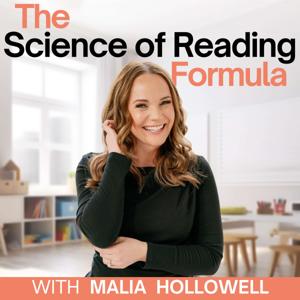
By Malia Hollowell
Welcome to The Science of Reading Formula, the podcast that helps you simplify reading instruction, save time, and support every student’s success—without feeling like you’re runn
... more

4.8
3939 ratings


The podcast currently has 117 episodes available.
The most played episodes among Podcast App listeners.
Is play just for fun—or is it doing something deeper? In this episode, I sit down with Kristen Day, founder of Butterfly Hill Nature Preschool and a fierce advocate for honoring how young children actually learn. We dig into the real science behind play-based learning—what it does for the brain, how it shapes behavior, and why removing it from early childhood classrooms may be doing more harm than we realize. Whether you're feeling pressure to “get more academic” or just need language to advocate for more play in your day, this episode will leave you feeling grounded, validated, and inspired to make small changes that matter. In this episode, we'll talk about:What the research really says about play-based learning.Why risky play (yes, even stick sword fights!) builds essential life skills.What happens when children don’t get enough time to play.Practical ways to bring meaningful play back into your PreK–2 classroom.How to talk to admin about protecting playtime—using research, not guilt.Show Links Kristen Day's Website // Instagram // Facebook Join Malia on Instagram. Become a Science of Reading Formula member! Rate, Review, and Follow If you loved this episode, please take a minute to rate and review my show! That helps the podcast world know that this show is worth sharing with other educators just like you. Scroll to the bottom, tap to rate with five stars, and select "Write a Review". Then let me know what you loved most about the episode! While you're there, be sure to follow the podcast. I'm adding a bunch of bonus episodes to the feed and I don't want you to miss out!

Still asking your students to guess word meanings from context? It’s time for a change. In this episode, Natalie Wexler breaks down the science of how vocabulary really works—and why it’s the key to unlocking reading comprehension. You’ll learn how to move beyond surface-level word lists and start building deep, long-term word knowledge using techniques grounded in cognitive science. In this episode, we'll talk about:Why context clues often lead students away from true understanding.How long-term memory supports comprehension—and how to build it.The three-step process for helping students retain and apply new words.How to use writing and oral language to deepen vocabulary.Ways to integrate vocabulary across subjects—even in math and science.Show Links Natalie Wexler's Website / Book / LinkedIn Join Malia on Instagram. Become a Science of Reading Formula member! Rate, Review, and Follow If you loved this episode, please take a minute to rate and review my show! That helps the podcast world know that this show is worth sharing with other educators just like you. Scroll to the bottom, tap to rate with five stars, and select "Write a Review". Then let me know what you loved most about the episode! While you're there, be sure to follow the podcast. I'm adding a bunch of bonus episodes to the feed and I don't want you to miss out!
Why do some kids act out, melt down, or shut down—no matter how consistent or calm we are? In this powerful episode, I’m joined by internationally respected occupational therapist Kim Barthel, who helps us unpack the neuroscience of behavior. We talk about how trauma affects student behavior, what’s really happening when kids dysregulate, and why traditional behavior plans often miss the mark for the kids who need our help the most. If you’ve ever felt helpless in the face of a child’s big emotions—or exhausted from trying to manage it all—this conversation will leave you feeling grounded, validated, and better equipped to support every learner in your room. In this episode, we'll talk about:How trauma affects student behavior—and what we often missWhy some kids explode, while others shut down completelyWhat “co-regulation” looks like in real-life classroomsHow your own nervous system impacts your studentsWhat you can do tomorrow to create more safety and connectionShow Links Kim's Course: Trauma Sensitive Education (Use MALIA20 for 20%off!) Join Malia on Instagram. Become a Science of Reading Formula member! Rate, Review, and Follow If you loved this episode, please take a minute to rate and review my show! That helps the podcast world know that this show is worth sharing with other educators just like you. Scroll to the bottom, tap to rate with five stars, and select "Write a Review". Then let me know what you loved most about the episode! While you're there, be sure to follow the podcast. I'm adding a bunch of bonus episodes to the feed and I don't want you to miss out!
What if your voice was the key to calming chaos in your classroom? In this episode, voice expert Tracy Goodwin shares how tone, pace, and presence can either soothe or activate a child’s nervous system—especially those who are dysregulated. You’ll learn simple shifts you can make to use your voice as a powerful tool for connection, co-regulation, and classroom calm. In this episode, we'll talk about:How your voice impacts student behavior and emotional safety.The science behind tone, cadence, and nervous system response.Why some calm voices still feel “tense” to kids—and how to fix it.Simple strategies to use your voice for co-regulation.How to build student trust without raising your volume.Show Links Tracy Goodwin Website / Instagram / LinkedIn Join Malia on Instagram. Become a Science of Reading Formula member! Rate, Review, and Follow If you loved this episode, please take a minute to rate and review my show! That helps the podcast world know that this show is worth sharing with other educators just like you. Scroll to the bottom, tap to rate with five stars, and select "Write a Review". Then let me know what you loved most about the episode! While you're there, be sure to follow the podcast. I'm adding a bunch of bonus episodes to the feed and I don't want you to miss out!
Missy Purcell was a teacher. Her son went to a “good” school. But in third grade, she realized something no one else had: he couldn’t read. In this powerful conversation, Missy shares the story that shocked her district—and later, the country—when she told it on Emily Hanford’s Sold a Story. What happens when a bright, well-behaved child falls through the cracks of a balanced literacy system? And what does it take to finally get him the instruction he deserved? This episode is part personal wake-up call, part rally cry for educators who want to get it right. If you’ve ever wondered whether your reading block is working for all kids… don’t miss this one. In this episode, we'll talk about:The moment Missy realized her son had been “passing” without reading.How balanced literacy hides real reading struggles.Why compliant kids are the easiest to overlook.What Sold a Story revealed about systemic failure.How teachers can shift without shame—and start making change now.Show Links Missy's Website // Instagram // Facebook Join Malia on Instagram. Become a Science of Reading Formula member! Rate, Review, and Follow If you loved this episode, please take a minute to rate and review my show! That helps the podcast world know that this show is worth sharing with other educators just like you. Scroll to the bottom, tap to rate with five stars, and select "Write a Review". Then let me know what you loved most about the episode! While you're there, be sure to follow the podcast. I'm adding a bunch of bonus episodes to the feed and I don't want you to miss out!
The podcast currently has 117 episodes available.

2,418 Listeners
1,260 Listeners
967 Listeners
1,417 Listeners
438 Listeners

439 Listeners
643 Listeners
211 Listeners

205 Listeners
62 Listeners
7,662 Listeners
179 Listeners
82 Listeners
43 Listeners

52 Listeners