
Sign up to save your podcasts
Or



Based on Podcast App listening data
My dad used to say to us as kids, “Your rights end where someone else’s nose begins.” And that’s where I began learning about boundaries. Psychological boundaries are those that define where your own personal limits are as to what is emotionally harmful, and what is not. And that is unique to every individual. We'll ask these questions: What makes a boundary necessary to voice? Or there “understood” boundaries? When does a boundary have a positive effect and when is it not? How is a boundary different from an demand? Or is it? What is your recourse if a boundary you’ve set and explained is continuously ignored or blatantly defied
The listener email offers has a great question about how a history of an ex with a pornography problem and the underlying deceit can have an effect on future trust and self-confidence. She’s asking for help – what can she do?
You can hear more about boundaries and many other topics by listening to my podcast, SelfWork with Dr. Margaret Rutherford. Subscribe to my website and receive one weekly newsletter including my weekly blog post and podcast! If you’d like to join my FaceBook closed group, then click here and answer the membership questions! Welcome!
My new book entitled Perfectly Hidden Depression has arrived and you can order here! Its message is specifically for those with a struggle with strong perfectionism which acts to mask underlying emotional pain. But the many self-help techniques described can be used by everyone who chooses to begin to address emotions long hidden away that are clouding and sabotaging your current life.
And there’s a new way to send me a message! You can record by clicking below and ask your question or make a comment. You’ll have 90 seconds to do so and that time goes quickly. By recording, you’re giving SelfWork (and me) permission to use your voice on the podcast. I’ll look forward to hearing from you!
There are certain diagnoses that may be co-occurring with perfectly hidden depression (PHD) or could be confused with PHD. And the last thing I want is for anyone to label themselves PHD or identify with PHD and stop there – when instead, you may need to recognize that you're experiencing another type of psychological issue that warrants understanding and even treatment. Those diagnoses are Bipolar II disorder, Obsessive Compulsive disorder, Generalized Anxiety Disorder and Borderline Personality Disorder. We'll talk today about what traits PHD and these other disorders have in common and what makes them distinct from one another.
The listener email for the week comments on my habit of including research and ideas from other people on SelfWork -- and I respond about the "why" of that choice on my part.
Important Links:
The INFJ personality category or the Myers-Briggs
Don't Panic by Reid Wilson
Understanding the Borderline Mother by Christine Lawson
Bipolar II Disorder Meets criteria for a current or past hypomanic episode And meets criteria for a current or past depressive episode:A distinct period of abnormally and persistently elevated, expansive, or irritable mood and abnormally and persistently increased activity or energy, lasting at least four consecutive days and present most of the day, nearly every day, and including at least three of the following symptoms:
Five or more of the following symptoms present during the same two-week period:
At least one of the symptoms is either depressed mood or loss of interest or pleasure.
Generalized Anxiety Disorder
Obsessive-Compulsive Disorder This disorder is characterized by the presence of obsessions, compulsions, or both. The obsessions or compulsions are time consuming (i.e., take more than one hour per day) or cause clinically significant distress or impairment in social, occupational, or other important areas of functioning.
Obsessions:
Compulsions:
Borderline Personality Disorder
BPD is characterized by a pervasive pattern of instability of interpersonal relationships, self-image, and affects, and marked impulsivity, beginning by early adulthood and present in a variety of contexts, as indicated by five or more of the following symptoms:
You can hear more about PHD and many other topics by listening to my podcast, SelfWork with Dr. Margaret Rutherford. Subscribe to my website and receive one weekly newsletter including my weekly blog post and podcast! If you’d like to join my FaceBook closed group, then click here and answer the membership questions! Welcome!
My new book entitled Perfectly Hidden Depression has arrived and you can order here! Its message is specifically for those with a struggle with strong perfectionism which acts to mask underlying emotional pain. But the many self-help techniques described can be used by everyone who chooses to begin to address emotions long hidden away that are clouding and sabotaging your current life.
And there’s a new way to send me a message! You can record by clicking below and ask your question or make a comment. You’ll have 90 seconds to do so and that time goes quickly. By recording, you’re giving SelfWork (and me) permission to use your voice on the podcast. I’ll look forward to hearing from you!
Valentines can hold as much angst for people as the holiday season. And if you have conflict or estrangement or alienation within your relationship, then that pain can become more distinct. Today we’re going to focus on what can cause these kinds of problems. But as usual, we’re also focusing on “what you can do about it.” I’ll use a couples therapy case from my own practice that shows that even though a problem may seem insurmountable, and like the relationship is over, there are four attitudes and actions that can help you find your way back to each other – and even to love.
Our listener email today is a very poignant one from a young man whose relationship with his mom was rocky due to her being abusive. But now she’s died of a second bout with cancer. And he finds himself pushing away others who love him, except for his two year-old child. He wants to understand his actions, and I’ll do my best to answer his question.
Important Links:
Podcast on handling narcissism in relationships
Podcast on loving someone with borderline personality disorder
You can hear more relationship advice and many other topics by listening to my podcast, SelfWork with Dr. Margaret Rutherford. Subscribe to my website and receive one weekly newsletter including my weekly blog post and podcast! If you’d like to join my FaceBook closed group, then click here and answer the membership questions! Welcome!
My new book entitled Perfectly Hidden Depression has arrived and you can order here! Its message is specifically for those with a struggle with strong perfectionism which acts to mask underlying emotional pain. But the many self-help techniques described can be used by everyone who chooses to begin to address emotions long hidden away that are clouding and sabotaging your current life.
And there’s a new way to send me a message! You can record by clicking below and ask your question or make a comment. You’ll have 90 seconds to do so and that time goes quickly. By recording, you’re giving SelfWork (and me) permission to use your voice on the podcast. I’ll look forward to hearing from you!
Kobe Bryant's family is only one of the many families who have to face an extremely harsh tragedy - the traumatic death of someone they love. There is a difference in this kind of grief because it's traumatic in the most pure sense. One second your world was safe, known and secure. And the next, it was not -- due to an extremely dramatic and out-of-the-ordinary experience that induces grief, disbelief, shock, fear, panic, or terror. There's not anything you can do about the loss. But there is something you can do, as well as things that are definitely not helpful. So we'll talk about it today on SelfWork.
The listener email is from someone who asked how she could ever rid herself of a shame she has carried “from birth.” I didn’t understand so reached out to her for more explanation. Her answer as fascinating to me because after her explanation, it was clear to see that the shame didn’t belong to her at all.
Important Links:
A very moving article on the "seven others on board" as people began writing about their lives, as well as their loved ones whose lives have been shattered.
CNN writer Pat Etheridge's article on how sudden death involves trauma
Definition of trauma by the APA
A wonderful book: “The Dance of Anger” by Harriet Lerner
Another helpful read: Toxic Parents
You can hear more about trauma and many other topics by listening to my podcast, SelfWork with Dr. Margaret Rutherford. Subscribe to my website and receive one weekly newsletter including my weekly blog post and podcast! If you’d like to join my FaceBook closed group, then click here and answer the membership questions! Welcome!
My new book entitled Perfectly Hidden Depression has arrived and you can order here! Its message is specifically for those with a struggle with strong perfectionism which acts to mask underlying emotional pain. But the many self-help techniques described can be used by everyone who chooses to begin to address emotions long hidden away that are clouding and sabotaging your current life.
And there’s a new way to send me a message! You can record by clicking below and ask your question or make a comment. You’ll have 90 seconds to do so and that time goes quickly. By recording, you’re giving SelfWork (and me) permission to use your voice on the podcast. I’ll look forward to hearing from you!
I’ve had several people write to me lately and explain that they are just pulling out of a slump or even worse, clinical depression. And they’re scared. Is there a time frame for what’s supposed to happen after a major depression has struck? How do you deal with some of the destructive choices you may have made when you were depressed? We’ll talk today about the factors that are important … and how to work with and manage your insecurity and fear of your depression returning.
There's a lot of hope in new treatments that psychiatrists are prescribing for treatment resistant depression. We’ll touch on two of them -- Transcranial Magnetic Stimulation (TMS) and ketamine infusions -- both now being used to treat recurrent depression, cyclic disorders and recurrent suicidal ideation, and often meeting with good success.
The listener email is from someone who calls herself a “social chameleon," which is the tendency to mimic the behaviors and actions of others while in their presence. Its traditional definition states that this tendency is intentional, but in her case, it seems quite unintentional or even unconscious. It's a fascinating topic and one that I was eager to explore, and it led to a discussion on boundaries.
Important Links:
Symptoms of Major Depression given by The Mayo Clinic.
Quote from The Noonday Demon: At Atlas of Depression. by Andrew Solomon
Johns Hopkins’ website describes the TMS procedure
Harvard article on ketamine infusions
Psychology Today by Dr. Ronald Riggio in which he describes being a social chameleon or being a “high self-monitor”.
Recent article on the “best” books on boundary setting.
You can hear more about depression and many other topics by listening to my podcast, SelfWork with Dr. Margaret Rutherford. Subscribe to my website and receive one weekly newsletter including my weekly blog post and podcast! If you’d like to join my FaceBook closed group, then click here and answer the membership questions! Welcome!
My new book entitled Perfectly Hidden Depression has arrived and you can order here! Its message is specifically for those with a struggle with strong perfectionism which acts to mask underlying emotional pain. But the many self-help techniques described can be used by everyone who chooses to begin to address emotions long hidden away that are clouding and sabotaging your current life.
And there’s a new way to send me a message! You can record by clicking below and ask your question or make a comment. You’ll have 90 seconds to do so and that time goes quickly. By recording, you’re giving SelfWork (and me) permission to use your voice on the podcast. I’ll look forward to hearing from you!
In today’s SelfWork, we’re going to be talking about how to enrich your emotional life through self-compassion. So many people tell me that they don’t know how to begin to risk feelings that have been suppressed for years.But when you do, you expand the emotions available to you, and enrich your own emotional life. I gave some basics in Episode 102 – so there are other ideas there as well. Today, i offer one simple exercise or visualization for you to try that might open an emotional door for you.
There’s always the caveat when I’m talking about reaching out to deeper feelings.That caveat is that trauma work – risking feeling emotions that are a result of trauma or abuse – often needs to be done with a trauma expert. You can get overwhelmed or even dissociate if by yourself. So please assess the risk carefully.
The listener email is from someone who’s angry that a loved one attempted suicide, although there is also great compassion. She’s confused and afraid she doesn’t have the right to be angry.
Important Links:
Dr. Foojan Zeine (Link to see our interview on YouTube),
Dr. Kristin Neff's book Self-Compassion
You can hear more about emotional growth and many other topics by listening to my podcast, SelfWork with Dr. Margaret Rutherford. Subscribe to my website and receive one weekly newsletter including my weekly blog post and podcast! If you’d like to join my FaceBook closed group, then click here and answer the membership questions! Welcome!
My new book entitled Perfectly Hidden Depression has arrived and you can order here! Its message is specifically for those with a struggle with strong perfectionism which acts to mask underlying emotional pain. But the many self-help techniques described can be used by everyone who chooses to begin to address emotions long hidden away that are clouding and sabotaging your current life.
And there’s a new way to send me a message! You can record by clicking below and ask your question or make a comment. You’ll have 90 seconds to do so and that time goes quickly. By recording, you’re giving SelfWork (and me) permission to use your voice on the podcast. I’ll look forward to hearing from you!
.
Today we’re talking about the difference between narcissism and healthy narcissism. There are big differences and since the word "narcissistic" is being thrown around so much these days, I thought I’d do my part to keep things clear. I’m quoting three experts -- Dr. Dale Archer, Bob Taibbi, and Dr. Craig Malkin – all who have fascinating takes on the subject. I'd definitely recommend giving the links below a click to read more. You can also listen to three SelfWork episodes on narcissism and how I see it played out: Episode 019 on how to cope with it in a relationship, Episode 122 on its relationship with love addiction, and Episode 127, dealing with two of the main manipulative techniques used -- gaslighting and stonewalling.
The listener email is from a mom who’s overshared with her oldest daughter about her father’s financial issues and now regrets her actions. This kind of what's termed "enmeshment" in families happens often, when one parent or even both pull a child into a pseudo-adult role in relationship with them, without realizing the damage.
Important Links:
Diagnostic criteria for Narcissistic Personality Disorder.
Dr. Dale Archer's full article on Jody Arias and his book Better Than Normal: How What Makes You Different Can Make You Exceptional
Bob Taibbi's article on healthy narcissism in Psychology Today and his book– Brief Therapy with Couples in Crisis
Dr. Craig Malkin's article in Psychology Today on the more subtle signs of narcissism and his book Rethinking Narcissism
A helpful link on asexuality:
You can hear more about narcissism and many other topics by listening to my podcast, SelfWork with Dr. Margaret Rutherford. Subscribe to my website and receive one weekly newsletter including my weekly blog post and podcast! If you’d like to join my FaceBook closed group, then click here and answer the membership questions! Welcome!
My new book entitled Perfectly Hidden Depression has arrived and you can order here! Its message is specifically for those with a struggle with strong perfectionism which acts to mask underlying emotional pain. But the many self-help techniques described can be used by everyone who chooses to begin to address emotions long hidden away that are clouding and sabotaging your current life.
And there’s a new way to send me a message! You can record by clicking below and ask your question or make a comment. You’ll have 90 seconds to do so and that time goes quickly. By recording, you’re giving SelfWork (and me) permission to use your voice on the podcast. I’ll look forward to hearing from you!
What happens in therapy that can be helpful? How does it work? These are basic questions that were brought to my attention during my recent interview with Lewis Howes on his podcast The School of Greatness. He and his team bring what they consider “great” ideas and ways of being to his listeners. And I was honored to be there.
If you're interested in listening to his podcast, here it is! You can click here: LewisHowes.com. Upgrade Your Mental Health with Dr. Margaret Rutherford Ep 895.
I was intrigued with some of his questions. I sometimes forget that there are many people who don’t have a concept of what therapy is even like or what it’s purpose is. His questions grounded me in the reality most people have – that they’ve never tried therapy and don’t quite understand it. His questions dealt with shame, common reasons for seeking therapy, how I might define mental illness and are we all mentally ill, and how to recognize depression, especially if you’re a perfectionist or have trouble with denial. I figured if he wanted my answers to these questions, so might you.
Our listener email today is a from therapist who listened to that very interview and had a question about my mention of pseudoseizures – a disorder I did my dissertation on years ago -- as well as any thoughts I had on a case she was presenting.
You can hear more about therapy and many other topics by listening to my podcast, SelfWork with Dr. Margaret Rutherford. Subscribe to my website and receive one weekly newsletter including my weekly blog post and podcast! If you’d like to join my FaceBook closed group, then click here and answer the membership questions! Welcome!
My new book entitled Perfectly Hidden Depression has arrived and you can order here! Its message is specifically for those with a struggle with strong perfectionism which acts to mask underlying emotional pain. But the many self-help techniques described can be used by everyone who chooses to begin to address emotions long hidden away that are clouding and sabotaging your current life.
And there’s a new way to send me a message! You can record by clicking below and ask your question or make a comment. You’ll have 90 seconds to do so and that time goes quickly. By recording, you’re giving SelfWork (and me) permission to use your voice on the podcast. I’ll look forward to hearing from you!
Welcome to 2020 and more SelfWork!
First, thank you to everyone who’s purchased Perfectly Hidden Depression and left reviews. Those show up on Amazon as a verified purchase and are extremely important offering even more validity. So if you’ve been reading PHD, and when you’re done, two sentences on what you experienced would be extremely gratifying.
Today we’re talking about the lack of sexual intimacy that so many couples are experiencing; in fact, research shows that 15 to 20% of committed relationships or marriages had become rarely if ever sexual. We’ll touch on ten of the most common reasons I've seen; some are probably familiar, some may be painful to hear, but some may surprise you.
The listener email today is from a man who’s befriended someone with chronic abuse in her past (with a diagnosis of C-PTSD) and asked me for advice on how he can help.
Important links:
In the US, the sexual abuse hotline number for the US
Dr. Pat Love's Hot Monogamy
Research study on pornography addiction
HuffPost article on the sexless marriage
You can hear more about relationships and many other topics by listening to my podcast, SelfWork with Dr. Margaret Rutherford. Subscribe to my website and receive one weekly newsletter including my weekly blog post and podcast! If you’d like to join my FaceBook closed group, then click here and answer the membership questions! Welcome!
My new book entitled Perfectly Hidden Depression has arrived and you can order here! Its message is specifically for those with a struggle with strong perfectionism which acts to mask underlying emotional pain. But the many self-help techniques described can be used by everyone who chooses to begin to address emotions long hidden away that are clouding and sabotaging your current life.
And there’s a new way to send me a message! You can record by clicking below and ask your question or make a comment. You’ll have 90 seconds to do so and that time goes quickly. By recording, you’re giving SelfWork (and me) permission to use your voice on the podcast. I’ll look forward to hearing from you!
Coping with rejection in a relationship, whether it be a friendship or partnership or a marriage, can be very difficult. But to add to the hurt, you can also learn that your ex has moved on quickly -- or perhaps had moved on while still in a relationship with you. And that can lead to a feeling of being replaced. We'll talk about the feelings and thoughts this can create -- and something that can help you move through this grieving process. It's called redefinition or reinterpretation -- and although it takes time to heal, this idea will help you move through feeling rejected into a better and more healthy life.
Our listener email is from someone from Sweden who used the SpeakPipe opportunity to tell me of her interest in perfectly hidden depression or PHD and its potential place with spiritual problems..I give her my thoughts..
You can hear more about relationships and many other topics by listening to my podcast, SelfWork with Dr. Margaret Rutherford. Subscribe to my website and receive one weekly newsletter including my weekly blog post and podcast! If you’d like to join my FaceBook closed group, then click here and answer the membership questions! Welcome!
My new book entitled Perfectly Hidden Depression has arrived and you can order here! Its message is specifically for those with a struggle with strong perfectionism which acts to mask underlying emotional pain. But the many self-help techniques described can be used by everyone who chooses to begin to address emotions long hidden away that are clouding and sabotaging your current life.
And there’s a new way to send me a message! You can record by clicking below and ask your question or make a comment. You’ll have 90 seconds to do so and that time goes quickly. By recording, you’re giving SelfWork (and me) permission to use your voice on the podcast. I’ll look forward to hearing from you!
From the publisher's feed
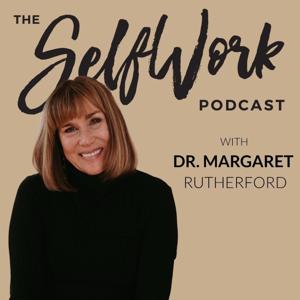
I'm Dr. Margaret, a psychologist for over 30 years, TEDx speaker, and the author of Perfectly Hidden Depression. I created The SelfWork Podcast in 2016 to explain mental health…
Ranked by our users in the last 21 days

2,589 Listeners

680 Listeners

3,326 Listeners

1,895 Listeners

1,410 Listeners

2,509 Listeners

1,533 Listeners

428 Listeners

782 Listeners

585 Listeners

364 Listeners

1,849 Listeners

18,949 Listeners

339 Listeners

83 Listeners