
Sign up to save your podcasts
Or



Send us Fan Mail
A sharpening workout at 10,000 feet. A sudden stab in the chest. Vision slipping. Hours later, Abby Locke learned her right lung had collapsed—and that was only the beginning. Across one summer she weathered three collapses, seven chest tubes, helicopter flights, and two surgeries, then found her way back to 50-mile weeks with a new definition of strength.
We talk through the full arc with honesty and grit: the ER chaos, hospital routines, and why “take it easy” is dangerous advice for driven athletes. Abby details the shift from vague rest to a precise, metrics-based return—heart rate caps, minutes-based progressions, and a deliberate habit of undershooting. We dig into the identity quake that comes when sport is stripped away, and how watercolor, friendship, and a gentler mindset helped her rebuild. She shares practical wisdom on training by feel, listening for pain signals, and balancing risk without living in fear.
We also explore what’s next: genetic testing, altitude questions, and a smart path toward longer trail races where intensity spikes are fewer. Abby opens up about coaching, sub-ultra roots, and why the northeast’s technical trails deserve more love. The takeaway is bigger than running: gratitude changes performance, diversified meaning sustains motivation, and a broader life makes you braver on race day.
If this story resonates, tap follow, share it with a friend who needs perspective, and leave a quick review so more runners can find conversations like this.
Follow Abby on IG - @abigaildlock
Follow Abby on Substack - @adlock
Reach out to Abby for coaching & Nutrition
Create a Rendezvu Account @rendezvu
Use code SteepStuff for 20% your cart on Sidas.us
Follow James on IG - @jameslauriello
Follow the Steep Stuff Podcast on IG - @steepstuff_pod
Follow Sidas USA on IG - @sidas_usa
Send us Fan Mail
Ready to stop signing up for everything and start building a season that actually fits your life? We sit down with CTS coach Addison Smith to design a smarter year from the ground up: choosing an A race that truly motivates you, mapping B and C races that build skill without burnout, and matching training blocks to your goal’s specific demands. Whether you’re eyeing a first 50K or sharpening for a 100-mile bid, this conversation turns vague intentions into a practical plan.
We break down the three-phase progression that drives long-term growth—learning to train, learning to race, and learning to win—and show how each stage shapes your calendar. Addison explains how to dial intensity by race duration and athlete level, why mid-packers often race best with more zone two than they think, and how to layer in threshold and marathon-effort work at the right time. We also get real about volume and recovery: minimum viable hours for 50K, 100K, and 100 mile, the risk of copying pro training, and how to avoid the all-in gambles that lead to burnout.
Fueling myths get a major reality check. That 100 to 120 grams of carbs per hour? It only works if your pace and gut training support it. Most runners succeed at 60 to 90 grams per hour with fewer GI blow-ups. We walk through a simple framework to personalize hydration with a one-time sodium sweat test and easy at-home sweat rate tests, so your plan adapts from cold starts to hot, exposed climbs. Plus, actionable race routines, post-race debriefs, and candid insights from crewing at Javelina help you execute calmly when it counts.
If lotteries didn’t go your way—or life’s time budget got tight—you’ll hear how to pivot without losing momentum. Subscribe for more coaching-focused episodes, share this with a training partner who’s planning their season, and leave a quick review so we know which topics to dig into next. Your next PR starts with a better plan—let’s build it together.
Work with Addison, CTS Coach - @addisonsmith
Follow Addison on IG - @addison_smith16
Create a Rendezvu Account @rendezvu
Use code SteepStuff for 20% your cart on Sidas.us
Follow James on IG - @jameslauriello
Follow the Steep Stuff Podcast on IG - @steepstuff_pod
Follow Sidas USA on IG - @sidas_usa
Send us Fan Mail
A week after tackling a steep Canadian classic, two-time Leadville champion Adrian Macdonald joins us to chart a season that nearly went off the rails—and how he brought it back. After Western States left him drained and “half-sick,” bloodwork confirmed anemia. Adrian pressed pause on workouts, added iron, and rebuilt with patience. That decision reshaped his plans: fewer hero efforts, more deliberate steps. Now he’s heading to Ultra‑Trail Cape Town’s 100 miler to practice night pacing, big vert management, and problem‑solving—key skills he wants dialed before returning to UTMB.
We trace Adrian’s path from Massachusetts soccer and college track to Boston road marathons and, finally, Colorado trails. Winning Leadville unlocked travel, sponsorship, and a renewed sense of racing—not just time‑trials—but it also brought pressure and a few humbling lessons. He learned race specificity the hard way: the same engine that crushes runnable high altitude doesn’t guarantee success on technical, hour‑long burners. His solution is pragmatic and refreshing. Choose one major ultra a year, sometimes two. Add short, sub‑ultra mountain races as tune‑ups to sharpen nerves, descents, and pacing without the deep fatigue of an ultra. Mix in East Coast staples like Mount Washington for nostalgia and family time, and lean on a supportive Fort Collins crew—mentors like Nick Clark and training partners who keep the work honest.
We also go inside the On Running ecosystem, where rapid gear innovation and a cross‑discipline team culture keep Adrian inspired. From plated trail shoes to polished kits, he’s part of a brand sprinting forward while still celebrating the messy, human side of ultras. If you’ve wondered how to rebuild after a rough race, plan a smarter season, or pick courses that actually fit your strengths, this is your blueprint. Enjoy the story, steal the strategies, and tell us what big race you’re targeting next. If this conversation resonates, follow the show, leave a quick review, and share it with a friend who loves big climbs and bigger comebacks.
Follow Adrian on IG - @macdonaldadrian
Follow Adrian on Youtube - @adrianmacdonald
Contact Adrian - @adrian.run
Create a Rendezvu Account @rendezvu
Use code SteepStuff for 20% your cart on Sidas.us
Follow James on IG - @jameslauriello
Follow the Steep Stuff Podcast on IG - @steepstuff_pod
Follow Sidas USA on IG - @sidas_usa
Send us Fan Mail
A tailbone crash on a triangle rock. A season of strange falls and late-race cramping. And then a decision to tear it all down and rebuild. We sit with Dan Curts to map the truth behind his 2025 campaign, from a promising start at Canyons to a frustrating run through Iger, ETC, and Plitz Alpin Glacier. The thread is unglamorous and vital: when the posterior chain shuts down, quads overwork, climbing implodes, and even the best descenders can’t press when it matters.
Dan walks us through a hard reset with coach Jack Kenzel—starting with a track-based drift test to lock in real aerobic limits, adding heavy strength to hit a baseline of force, and then pressing the volume button with sustained climbs, daily vert, and technical footwork. We dig into why he believes cramping is a muscular endurance problem more than a bottle problem, how heart rate caps keep ego in check, and why Northeast granite and mud might prep athletes better for Europe than endless sunshine ever will.
We also zoom out. Short trail is growing, but it needs stars, live coverage, and sharper storytelling. Dan shares what Europe gets right—stacked fields, iconic venues, and snackable highlight reels—and how U.S. races can catch up with consistent live streams, honest athlete recaps, and creative embeds that show how fast “runnable” really looks. Gear matters too: lighter, grippier shoes like the Cascadia Elite change what’s sustainable at speed on wet rock and alpine grass, expanding both safety and excitement.
If you care about subultra trail, this is the blueprint: build durability, race smart, tell the story well, and make it easy to watch. Hit play, then tell us—what race do you want live-streamed next? And if you’re new here, follow, share, and drop a quick review so more runners can find the show.
Follow Dan on IG - @dancurts
Create a Rendezvu Account @rendezvu
Use code SteepStuff for 20% your cart on Sidas.us
Follow James on IG - @jameslauriello
Follow the Steep Stuff Podcast on IG - @steepstuff_pod
Follow Sidas USA on IG - @sidas_usa
Send us Fan Mail
A short trail host, a 214-mile finish, and a brutally honest look at what it really takes to cross a 200-mile line with your head still on straight. Franc returns fresh off the Mammoth 200 to unpack the race that started as a joke and turned into a test of logistics, mindset, and pain tolerance. We talk about the fast first day that had him mixing it with the leaders, the sandy fire roads that shredded his feet, and the moment—somewhere around mile 114—when he had to find a real why or walk off the course.
We go deep on the parts most recaps skip. How do you structure sleep so you stop dozing while walking? What does smart foot care actually look like under constant sand—washing, lube, taping, sock swaps—and how fast does neglect ruin a great engine? Why does some pain feel worse when you walk than when you jog? Franc shares what worked in his fueling (steady gels and real food, zero stomach drama), what didn’t (delayed foot fixes), and why crew can make or break a second night. We also zoom out to the front of the race: how Jimmy Elam proved 200s can be fast and how Rachel Enterkin’s relentless push hints at a new era for the distance.
Training takeaways are clear and actionable: build volume patiently, treat heavy strength work as a durability cornerstone, and test your sleep and foot systems long before race week. We touch tough edges too—microdosing debates, WADA rules, appetite suppression risks, and the boundaries of sobriety—without glamorizing shortcuts. If you’re eyeing Sedona 125, Cocodona, or any race where days blur and aid stations feel like islands, this conversation gives you a roadmap and a reality check.
If this resonated, follow the show, share it with a trail friend, and leave a quick review so more runners can find it. Your support helps us bring on athletes who tell the whole story—the messy parts, the smart choices, and the moments that change how we race.
Follow Francesco on IG - @Franc.Sunseri
Follow Run.SL.UT on IG - @run.sl.ut
Follow Chasing Trail on Youtube - @Chasing Trail
Follow Chasing Trail on Spotify - @ Chasing Trail
Follow Chasing Trail on Apple - @Chasing Trail
Create a Rendezvu Account @rendezvu
Use code SteepStuff for 20% your cart on Sidas.us
Follow James on IG - @jameslauriello
Follow the Steep Stuff Podcast on IG - @steepstuff_pod
Follow Sidas USA on IG - @sidas_usa
Send us Fan Mail
A month after Canfranc, the dust has settled but the stories still sting—sometimes literally. We sat down with Team USA leaders Paul Kirsch and Tom Hooper to unpack a world championship defined by raw terrain, tight logistics, and athletes who found another gear when it mattered most. If you watched the medals, you saw the headlines. If you listen here, you’ll hear the blueprint.
We start where results are made: planning. Paul and Tom pull back the curtain on selection debates, athlete travel, hotel puzzles, kit approvals, and an aid station operation designed for seconds, not comfort. Imagine three staff crewing a dozen athletes off a single table while frost slicks the rocks, ground wasps erupt near the trail, and two bulls jog past a sunrise checkpoint. That’s the reality of world-level trail—messy, improvised, and relentlessly precise.
From there we dig into racing. The long and short trail routes tilted skyward and technical, but champions like Jim Walmsley and Katie Schide still rose, proving that range and resilience travel across terrain. Hillary Gerardi stepped from VK to 80K to keep the team whole. Short trail newcomers like Jane and Ruby showed composure well beyond their caps. The vertical and classic squads highlighted rising stars—Anna Gibson, Cam Smith—and real team tactics, with athletes working together late to lock in points, cross-country style. Meanwhile, U20 athletes arrived with true mountain chops, signaling a pipeline ready to meet a deeper, more global field that now includes full squads from Uganda and Kenya and breakthrough team medals from nations like Canada.
We also talk about the gap that still holds the sport back: brand buy-in. Many athletes earn no bonuses for worlds and must choose between country and paycheck. With more sponsor support—following models we already see in track and the Olympics—world championships could become the premier stage they deserve to be. South Africa is next, and with the right mix of citizen races, media, and partners, the scene could match the spectacle.
Hit play for a candid, inside look at how Team USA turned chaos into podiums and why the future of mountain and trail running has never looked brighter. If this conversation resonates, subscribe, share with a friend, and leave a quick review to help more fans find the show.
Follow Paul Kirsch on IG - @pkrunswithdogs
Follow Tom Hooper on IG - @tomhooper603
Follow Six03 Endurance on IG - @six03endurance
Check out Six03 Races - @six03endurance
Follow James on IG - @jameslauriello
Follow the Steep Stuff Podcast on IG - @steepstuff_pod
Use code steepstuffpod for 25% off your cart at UltimateDirection.com!
Create a Rendezvu Account @rendezvu
Use code SteepStuff for 20% your cart on Sidas.us
Follow James on IG - @jameslauriello
Follow the Steep Stuff Podcast on IG - @steepstuff_pod
Follow Sidas USA on IG - @sidas_usa
Send us Fan Mail
What if you didn’t grow up on a track and still became a force on steep, thin-air courses? We sit down with Colorado Springs native Amanda Koslosky to trace a candid, practical path from soccer fields to summit podiums—top ten at the Pikes Peak Ascent, podiums at Telluride Mountain Run and Bar Trail—and the bold decision to go part-time at work to chase what’s possible.
Amanda opens up about the moment a Golden Trail–stacked Ascent proved her ceiling was higher than she thought, and why a coach, community, and course-first strategy changed everything. We unpack the mental game—pre-race nerves, stacking confidence with small wins, and holding a belief that borders on audacious. Then we get tactical: altitude prep with 3-2-1 uphill sessions, Rampart Reservoir loops, and smart long runs that build climbing economy without frying the legs. With Moab ahead, her training pivots to speed—three-minute reps near six-minute pace, downhill economy, and the quad conditioning needed to finish fast.
Recovery and longevity take center stage. Amanda shares how she replaced “smaller is better” with fuel-first thinking—pairing protein and carbs post-run, dialing hydration, and protecting easy days. Nightly rolling, consistent stretching, and monthly massage keep the system absorbing work. TRX strength provides the chassis: core stability, single-leg control, and full-body resilience that pays off on steep climbs and technical descents. We also cover race-day strategy on the Ascent’s W’s, when to sit on a steady runner, and how to time the move past A-Frame.
If you’re chasing a sub-three at altitude, eyeing Broken Arrow, or wondering whether your fastest years can still be ahead, Amanda’s story offers a blueprint: train for the course you’ll race, treat recovery like a pillar, and let community sharpen your edge. Follow Amanda at run_cos_run, then hit play and take notes for your next build. Enjoy the conversation, and if it helps your long run, subscribe, share, and leave a quick review to help others find the show.
Follow Amanda on IG - @run_kos_run
Follow James on IG - @jameslauriello
Follow the Steep Stuff Podcast on IG - @steepstuff_pod
Use code steepstuffpod for 25% off your cart at UltimateDirection.com!
Create a Rendezvu Account @rendezvu
Use code SteepStuff for 20% your cart on Sidas.us
Follow James on IG - @jameslauriello
Follow the Steep Stuff Podcast on IG - @steepstuff_pod
Follow Sidas USA on IG - @sidas_usa
Send us Fan Mail
Ten hours on the edge, a live stream watched by hundreds of thousands, and a second-place finish that announced David Sinclair to the world stage. We unpack how an injury scare turned into a smarter build, why he chose CCC over OCC, and the exact training and fueling choices that helped him lead for hours, survive the low points, and find the grit to hold the podium in Chamonix.
David takes us inside the chaos at Worlds—from canceled flights to a sky-high vert profile—and what that taught him about specificity and course targeting. Then we go deep on the nuts and bolts: threshold-focused workouts drawn from his ski background, a summer of cross-training and uphill-only running, and the course recon that let him pace with intent. We break down his fueling strategy in plain terms—80 to 100 grams of carbs per hour, flavor fatigue management, and why separating carbs, fluids, and electrolytes can save your stomach late. With Western States on the horizon, he shares a practical heat plan: steady sauna work, relentless ice at every aid, and simple systems that keep core temperature down without overcomplicating race day.
We also talk shoes and gear, including Craft prototypes that balance cushioning with stability on runnable terrain, and why East Coast training—rolling dirt roads, rooty steeps, variable weather—can build world-class durability without altitude. David’s philosophy is refreshingly clear: keep it fun, stay flexible, and double down on the basics that actually move the needle. If you’re mapping your next build or just love a front-row view of a breakthrough season, this conversation is a masterclass in turning setbacks into fuel.
If this episode adds value to your training, follow the show, share it with a friend, and leave a quick rating or review. Your support helps us bring on more voices you’ll want to learn from.
Follow David on IG - @david.a.sinclair.92
Follow James on IG - @jameslauriello
Follow the Steep Stuff Podcast on IG - @steepstuff_pod
Use code steepstuffpod for 25% off your cart at UltimateDirection.com!
Create a Rendezvu Account @rendezvu
Use code SteepStuff for 20% your cart on Sidas.us
Follow James on IG - @jameslauriello
Follow the Steep Stuff Podcast on IG - @steepstuff_pod
Follow Sidas USA on IG - @sidas_usa
Send us Fan Mail
The race began before the gun—shoulder to shoulder, 12 rows deep, with a call-up protocol that flipped expectations and turned the opening meters into a high-stakes fight for position. From a fast frontage road into stairs and tight singletrack, Tyler McCandless had to manage chaos without panic: protect effort, find clean lines, and pass only when it counted. What followed was a masterclass in patience and presence—steady gains through the forest, a fierce late surge on a 30% wall to the summit, and a finish that helped Team USA lock down bronze at the World Mountain Running Championships in Confranc.
We get into the texture of Worlds that you can’t see on a results sheet: the camaraderie of sharing meals with athletes you’d never usually race alongside, the electricity of cheering other disciplines all week, and the way team identity changes how you suffer. Tyler breaks down the travel and course recon with Joe Gray, the jet lag fix that worked, and the quiet confidence that came from previewing key sections. We also revisit Broken Arrow VK—how a last-minute course change erased the runnable grind he wanted, why he still qualified under pressure, and what it feels like to crest steep singletrack with David Sinclair closing fast.
There’s gear talk too—Nike’s radical cooling long sleeve, why it’s more than a fashion statement, and how innovation is finally meeting trail reality. Then we look ahead: a winter marathon bid to punch a fifth Olympic Trials ticket (sub-2:16), plus a summer slate that fits Tyler’s engine—Sierre-Zinal, Pikes Peak Ascent, and select Golden Trail races. And we make the case for a dedicated U.S. uphill series to cultivate specialists, build team culture, and grow the fan base with short, watchable vertical races.
If you enjoy stories of resilience, smart racing on steep ground, and the power of team over self, you’ll want to queue this one up. Hit follow, share it with a trail friend, and leave a quick review—what part of Tyler’s strategy would you try on your next climb?
Follow Tyler on IG - @trackty
Follow James on IG - @jameslauriello
Follow the Steep Stuff Podcast on IG - @steepstuff_pod
Use code steepstuffpod for 25% off your cart at UltimateDirection.com!
Create a Rendezvu Account @rendezvu
Use code SteepStuff for 20% your cart on Sidas.us
Follow James on IG - @jameslauriello
Follow the Steep Stuff Podcast on IG - @steepstuff_pod
Follow Sidas USA on IG - @sidas_usa
Send us Fan Mail
Golden Trail World Series Final Preview with Robert Prosser
Follow Robert Prosser on Substack - @robrunsround (substack.com/@robrunsround)
Follow Robert Prosser on Instagram - @robrunsround
Follow James Lauriello on IG - @jameslauriello
Follow the Steep Stuff Podcast on IG - @steepstuff_pod
Use code steepstuffpod for 25% off your cart at UltimateDirection.com!
Create a Rendezvu Account @rendezvu
Use code SteepStuff for 20% your cart on Sidas.us
Follow James on IG - @jameslauriello
Follow the Steep Stuff Podcast on IG - @steepstuff_pod
Follow Sidas USA on IG - @sidas_usa
From the publisher's feed
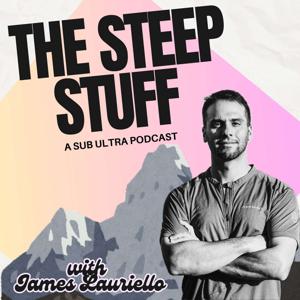
Professional trail runner James Lauriello sits down with some of the most interesting athletes, coaches, adventurers, and personalities in the mountain running world to take an inside look at…
With no script and no two conversations quite the same, The Steep Stuff Podcast dives deep into the people, stories, and ideas shaping trail, mountain, and skyrunning. From training and racing to adventure, gear, lifestyle, the highs and lows of competition, and everything in between, James brings an athlete’s perspective and genuine curiosity to every conversation.
Whether it’s sitting down with the world’s best mountain runners, emerging talents, legendary figures, or the people working behind the scenes, The Steep Stuff explores what makes these individuals tick, what they’ve learned along the way, and why they continue to push themselves into the mountains. It’s all things trail, mountain and skyrunning—and the people who make the sport what it is.

1,167 Listeners

11,741 Listeners
1,341 Listeners
779 Listeners

1,874 Listeners

179 Listeners
954 Listeners

291 Listeners

366 Listeners
1,419 Listeners

1,771 Listeners

165 Listeners

190 Listeners

174 Listeners

55 Listeners