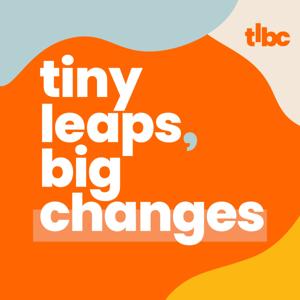
Tiny Leaps, Big Changes

Tiny Leaps, Big Changes

Download on the App Store
  • Favorites

    3,332

    Followers

  • Typical duration

    13 min

    per episode

Based on Podcast App listening data

Tiny Leaps, Big Changes episodes

  • 559 - A Better Way to Learn

    In this episode, we look at the effects of learning for examination vs learning to teach.

    Try Blinkist: http://blinkist.com/tinyleaps

    Abstract

    "This study tested whether students who learned with an active orientation would be more intrinsically motivated to learn and would learn more than students who learned with a passive orientation. The active orientation was created by having subjects learn material with the expectation of teaching it to another student; the passive orientation was created by having subjects learn the same material with the expectation of being tested on it. The results indicate that subjects who learned in order to teach were more intrinsically motivated, had higher conceptual learning scores, and perceived themselves to be more actively engaged with the environment than subjects who learned in order to be examined."

    How to use this in your own life

    • When you need to learn something new for work or for your own life, find someone who is willing to support you and schedule a teaching session with them . Create the expectation that they will ask questions throughout the session.
    • This will allow you to learn the topic with the additional pressure of needing to explain it to others. That pressure can lead to the motivation required to dive deeper into topics and ask better questions yourself.
    • The Study

      https://journals.sagepub.com/doi/10.3102/00028312021004755

      14 min
    • 558 - The Privilege of Personal Development

      In this episode, we continue our discussion on Personal Development as a form of Privilege.

      Join Thrive Market: http://thrivemarket.com/tinyleaps

      Get Adam's Book: http://reframetheday.com

      Adams Thoughts

      "Pursuing self-improvement is indeed a privilege, and it can easily become a selfish endeavor. But it doesn't have to end up this way. These practices are also tools to equip us for our collective struggle. To give us the awareness, the perspective, the time, the attention, the focus, and the mental energy to step up when the moment calls for it. To know we have the time and emotional capacity to drop everything to take care of a family member. To show up for a friend who's hurting. To knock on doors for a cause or candidate. To join and contribute to a mutual aid network. To protest, march, and stand in solidarity. To use that privilege for something other than our own pleasure or well-being".

      In Episode 553 I Said

      • Personal development is a form of privilege. It's something that people who are doing okay are able to pursue while those who are struggling, and need it most, often can't.
      • In this episode

        • If you have privilege you should take advantage of it
        • It's not something to feel bad about
        • It doesn't have to be a bad thing
        • It's about recognizing that privilege
        • If you're in a position to pay off your student loans quickly because of where you started in life or the kind of job you had or because of the support you received earlier in your life...that is a good thing. But that doesn't make you better than someone who is stuck with their loans for the rest of their life.
        • Some realizations

          • You are in the position you are in in part because of the life you have lived
          • Struggling isn't always because of someones choices and success isn't always because of someones choices
          • Tiny privileges throughout your life lead to massive shifts in the direction of your life
          • Privilege isn't about receiving something, it's about never having to think about something
          • What to do

            • Privilege isn't a bad thing. Personal development isn't a bad thing. Use both to help others.
            • Don't burn the ladder when you get to the top, build an elevator instead.
            • If you ARE in a place of privilege, pursuing personal development, growth, and progress allows you to fully use that privilege to aid others.

            • 19 min
            • 557 - How to Get Back on Track

              In this episode, we look at how to get back on track when you've lost your habits or routines. 

              Purchase The Consistency Code: http://consistencycourse.com

              Have your own question or want a shout out?

              • Follow the podcast on Instagram http://instagram.com/tinyleaps
              • Send a message with your question or comment
              • The Core Question

                When you develop a habit or routine but eventually break it, how do you get it back?

                Why this is a problem

                • Leads to frustration with yourself
                • Hard to find direction
                • Feeling overwhelmed
                • Confirms negative beliefs about self
                • Why its hard to get back

                  • What you're talking about is an identity. Your way of being.
                  • You were there, and you still identify that way, so it feels like you should be able to just pick back up
                  • You don't necessarily identify the way you are now, even though it is your current reality
                  • So you wake up every day feeling like you should be this person...even though you aren't
                  • It's like if you grew up super super rich and then lost all your money. It still feels like you're rich. You still think like you're rich. You probably still act like you're rich. So the reality of where you are currently can't ever quit settle in.
                  • How do we get back there

                    • Remember that you didn't get there all at once. You grew into that person little by little over time. But yet you are trying to and expecting to get BACK there all at once. that expectation is still there because you still feel like that person. So you have to accept that you aren't that person anymore. You could be again, but as of this moment you are not that person. Accept that and treat it like a journey you are going on to get there from scratch
                    • Stop focusing on getting back to where you were and start focusing on getting to somewhere better than here. A focus on getting back to is a focus on the end goal. A focus on improvement from where you are is a focus on progress with a splash of empathy
                    • Make a list of everything you liked about yourself when you were that person.. Get clear on what exactly it is you are trying to become. It's hard to "get back to" something because you are thinking about it as a whole picture. Break that person down to the individual habits and routines that made them up...then focus on each piece individually. It won't be quick but you'll build back up to that person again.
                    • Have your own question or want a shout out?

                      • Follow the podcast on Instagram http://instagram.com/tinyleaps
                      • Send a message with your question or comment
                      • 14 min
                      • 556 - Do This When You Feel Upset or Anxious

                        In this episode, we look at the H.A.L.T framework. 

                        Buy The Consistency Code: www.consistencycourse.com

                        Follow Puzzio The Poet: https://www.instagram.com/puzziothepoet/

                        What is HALT?

                        HALT is a tool used in various mental health treatment programs including narcotics and addiction dependencies. It's an acronym that stands for Hungry, Angry, Lonely, Tired. Basically you can think of it like a checklist for checking in with yourself and identifying potential reasons for how you are feeling.

                        In general, checking in with yourself is a fantastic habit to build. HALT is just one framework to help you do so.

                        Why do people use HALT?

                        Let's think of a pretty common situation.

                        You've been busy all day and forgot to eat lunch. It's not 4 pm and you have just a few more items on your list of things to get done. Your friend messages you and you just feel annoyed at everything they're saying. Then you head into the store and someone cuts you off in line. You find yourself getting angrier than you normally would have.

                        This happens because we get hangry. It's something we all experience but we don't unfortunately do a good job recognizing the cause.

                        When something like this happens you can use the HALT framework to check in with yourself, recognize why you feel so upset, and calm yourself down until you can solve the problem (eat).

                        Questions to Ask Yourself:

                        Am I hungry?

                        • when did I last eat?
                        • was it healthy?
                        • Do I need to eat now and what are my options.
                        • Am I angry?

                          • who can I call to talk about that with?
                          • What can I do to take care of myself around this emotion?
                          • Am I lonely?

                            • Who can I reach out to?
                            • where can I go to feel connected and not alone?
                            • Am I tired?

                              • Do I need to reset and rest?
                              • Can I adjust my day to better care for my own needs?
                              • 13 min
                              • 555 - What is Action Faking?

                                In this episode, we take a look at Action Faking. 

                                Learn more about The Consistency Code: http://consistencycourse.com 

                                What is Action Faking?

                                "Action-Faking: when you take solitary and/or uncommitted action that is NOT part of a bigger process


                                For the aspiring entrepreneur who wants to get rich, be his own boss, and blah blah blah, "action-faking" is ordering cards from Vistaprint." - MJ Demarco, Millionaire Fastlane

                                • Action faking is all the stuff we do that makes us feel good about our progress without actually making any meaningful progress.
                                • What does Action Faking Look Like?

                                  Fitness

                                  • Getting a gym membership but not going to the gym
                                  • Buying exercise equipment but not using it
                                  • Reading articles on the best shoes for running or the best running form but not running
                                  • Nutrition

                                    • Planning your entire week of meals but not prepping them
                                    • Reading about the best diets
                                    • Getting a free nutrition consultation but not hiring the nutritionist
                                    • Finances

                                      • Setting up a savings account but not setting up automatic transfers
                                      • Reading books on how to save but not taking action
                                      • Mental Health

                                        • Learning about meditation but not meditating
                                        • Career

                                          • Creating your 5 year plan
                                          • Relationships

                                            • Swiping left and right on an app, going on dates, but never being willing to commit.
                                            • Why do we Action Fake?

                                              • It feels like progress
                                              • It doesn't require risk
                                              • It's a good starting point
                                              • How to stop Action Faking

                                                • Plan your first real action and schedule it
                                                • Utilize accountability to get started
                                                • https://www.thefastlaneforum.com/community/threads/whats-an-action-fake-action-faking.92039/ 

                                                  16 min
                                                • 554 - Mental Health Emergencies

                                                  In this episode, look at mental health emergencies. 

                                                  Recognizing an Emergency:

                                                  Any time a person is an immediate danger to others or themselves, experts say.

                                                  Quote:

                                                  "In many ways, issues related to suicide are similar to having chest pain: This is an emergency, and it should be taken seriously," Borenstein says. In other words, if someone around you is threatening violence, call 911 or take the person to the nearest emergency room yourself, he says.

                                                  Other situations that warrant quick care include people who show signs of psychosis that affect their functioning such as delusions, paranoia or fear, Borenstein says. People who are extremely agitated, wild, overly active and unable to calm down should also raise red flags – particularly if they don't respond to verbal interventions like saying, "Hey, can we sit down and talk?" Lieberman adds.

                                                  Sudden behavior changes should be taken seriously, too. "If something evolves rapidly, it's probably not psychiatric," Lieberman says. It's probably something really, really serious like poisoning, and they just need to be taken to the closest emergency room immediately." If you have a choice, head to an academic medical center, since clinicians there tend to be up-to-date on the most effective procedures and treatments, he says."

                                                  When to Ask For Help if its Not an Emergency:

                                                  1. Feeling sad, angry, or otherwise “not yourself.”
                                                  2. Abusing drugs, alcohol, food, or sex to cope.
                                                  3. You’ve lost someone or something important to you.
                                                  4. Something traumatic has happened.
                                                  5. You can’t do the things you like to do.
                                                  6. Resources:

                                                    https://www.psychologytoday.com/us/blog/where-science-meets-the-steps/201303/5-signs-its-time-seek-therapy

                                                    https://www.mhanational.org/finding-help-when-get-it-and-where-go

                                                    https://health.usnews.com/health-news/best-hospitals/articles/2015/07/21/what-to-do-during-a-mental-health-crisis

                                                    17 min
                                                  7. 552 - How to Combat Decision Fatigue

                                                    In this episode, we talk about decision fatigue.

                                                    Try Bllinkist: http://blinkist.com/tinyleaps

                                                    What is Decision Fatigue?

                                                    "As it turns out, your willpower is like a muscle. And similar to the muscles in your body, willpower can get fatigued when you use it over and over again. Every time you make a decision, it’s like doing another rep in the gym. And similar to how your muscles get tired at the end of a workout, the strength of your willpower fades as you make more decisions." - James Clear

                                                    • Everyone has a reserve of mental energy, and each decision draws on it
                                                    • The more decisions you make, the less mental energy you have
                                                    • Two Ways to Avoid It:

                                                      • Proactive: Optimizing your day to day routine to reduce unnecessary decisions (the president)
                                                      • Choose your outfit the night before
                                                        Set out clothes for workouts
                                                        Meal prep
                                                      • Reactive: Giving yourself space to reset and improve decision making (taking a break)
                                                        • Do something fun
                                                        • Take a break
                                                        • Stop for the day
                                                        • Key Takeaways:

                                                          1. Plan to make decisions early in the day

                                                          2. Make small decisions ( like what to wear) ahead of time

                                                          3. Avoid impulse decisions

                                                          Resources:

                                                          https://jamesclear.com/willpower-decision-fatigue

                                                          https://www.forbes.com/sites/womensmedia/2019/05/13/how-to-identify-when-youre-experiencing-decision-fatigue/#1dfea0267fb4

                                                          16 min
                                                        • 551 - How Habit Stacking Works

                                                          In this episode, we take a look at habit stacking and why it works.

                                                          Join Thrive Market: http://thrivemarket.com/tinyleaps

                                                          What is Habit Stacking?

                                                          "Also termed 'habit chaining', the process involves grouping together small activities into a routine which you link to a habit already set in your day. This makes the routine memorable and anchors your new habits to an existing trigger. Or in simpler terms: use the things you already remember to do to remind you to do something else, like reading one chapter of a book when you get into bed."

                                                          Why Does This Work?

                                                          • Classical Conditioning
                                                          • What is Classical Conditioning?

                                                            "Classical conditioning involves placing a neutral signal before a naturally occurring reflex. In Pavlov's classic experiment with dogs, the neutral signal was the sound of a tone and the naturally occurring reflex was salivating in response to food. By associating the neutral stimulus with the environmental stimulus (food), the sound of the tone alone could produce the salivation response."

                                                            The 5 Stages:

                                                            1. Acquisition
                                                            2. Extinction
                                                            3. Spontaneous Recovery
                                                            4. Key Takeaways:

                                                              • Habit Stacking is the process of pairing a new habit with an existing one
                                                              • This works because of classical conditioning which ties new behaviors to existing behaviors
                                                              • When trying to build new habits you'll go through periods of acquisition, extinction, and spontaneous recovery
                                                              • Resources:

                                                                https://www.verywellmind.com/classical-conditioning-2794859

                                                                https://www.esquire.com/uk/life/fitness-wellbeing/a15489/habit-stacking-chaining/

                                                                14 min
                                                              • 550 - How to Change Yourself

                                                                In this episode, we talk about how to change yourself.

                                                                Follow on Instagram: http://instagram.com/tinyleaps

                                                                What is Reciprocal Determinism:

                                                                "According to psychologist Albert Bandura, reciprocal determinism is a model composed of three factors that influence behavior: the environment, the individual, and the behavior itself. According to this theory, an individual's behavior influences and is influenced by both the social world and personal characteristics."

                                                                Behavior

                                                                "behavior is controlled or determined by the individual, through cognitive processes, and by the environment, through external social stimulus events."

                                                                Environment

                                                                "the physical surroundings around the individual that contain potentially reinforcing stimuli, including people who are present (or absent). "

                                                                Individual

                                                                "all the characteristics that have been rewarded in the past. Personality and cognitive factors play an important part in how a person behaves, including all of the individual's expectations, beliefs, and unique personality characteristics."

                                                                Each of these factors over the course of your life have combined in unimaginable ways to create you. The combinations are endless and so you are unique.

                                                                How can we use this to change in the future?

                                                                • Change behavior
                                                                • Change environment
                                                                • Change yourself
                                                                • By changing one of these things you change the potential combinations going forward. By changing all of these things you completely shatter the path you were travelling.

                                                                  Challenge:

                                                                  • Do something different today
                                                                  • Go somewhere new today
                                                                  • Respond to something differently today
                                                                  • Resources:

                                                                    https://www.verywellmind.com/what-is-reciprocal-determinism-2795907

                                                                    15 min

                                                                  About Tiny Leaps, Big Changes

                                                                  From the publisher's feed

                                                                  Tiny Leaps, Big Changes is a personal development podcast focused on exploring the day-to-day behaviors we all engage in that determine the results we gain in our lives. Hosted by Gregg Clunis, the…

                                                                  Best of Tiny Leaps, Big Changes

                                                                  Ranked by our users in the last 21 days

                                                                  More shows like Tiny Leaps, Big Changes

                                                                  Untangle by Untangle

                                                                  Untangle

                                                                  812 Listeners

                                                                  Good Life Project by Jonathan Fields / Acast

                                                                  Good Life Project

                                                                  3,328 Listeners

                                                                  The School of Greatness by Lewis Howes

                                                                  The School of Greatness

                                                                  21,061 Listeners

                                                                  10% Happier with Dan Harris by 10% Happier

                                                                  10% Happier with Dan Harris

                                                                  12,671 Listeners

                                                                  Being Well with Forrest Hanson and Dr. Rick Hanson by Rick Hanson, Ph.D., Forrest Hanson

                                                                  Being Well with Forrest Hanson and Dr. Rick Hanson

                                                                  2,518 Listeners

                                                                  Depression Detox Show | Daily Inspirational Talks by Maleek Josephs

                                                                  Depression Detox Show | Daily Inspirational Talks

                                                                  311 Listeners

                                                                  The Science of Happiness by PRX and Greater Good Science Center

                                                                  The Science of Happiness

                                                                  1,887 Listeners

                                                                  The Positive Mindset Podcast by Henry Lawrence

                                                                  The Positive Mindset Podcast

                                                                  613 Listeners

                                                                  7 Good Minutes by Clyde Lee Dennis

                                                                  7 Good Minutes

                                                                  667 Listeners

                                                                  The Motivated Mind by Scott Lynch

                                                                  The Motivated Mind

                                                                  414 Listeners

                                                                  On Purpose with Jay Shetty by Perfect Strangers

                                                                  On Purpose with Jay Shetty

                                                                  27,840 Listeners

                                                                  The Happiness Lab with Dr. Laurie Santos by Pushkin Industries

                                                                  The Happiness Lab with Dr. Laurie Santos

                                                                  14,311 Listeners

                                                                  How to Be a Better Human by TED

                                                                  How to Be a Better Human

                                                                  1,388 Listeners

                                                                  The Daily Motivation by Lewis Howes

                                                                  The Daily Motivation

                                                                  908 Listeners

                                                                  The Mel Robbins Podcast by Mel Robbins

                                                                  The Mel Robbins Podcast

                                                                  18,833 Listeners