
Sign up to save your podcasts
Or

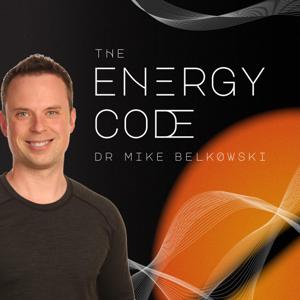

In this Energy Code Deep Dive, Dr. Mike breaks down a mini-review asking a provocative question: could urolithin A support sleep health, indirectly, by improving the biology that makes sleep restorative? The authors don’t claim urolithin A “improves sleep,” and they emphasize a key limitation: there are no direct sleep-outcome studies using EEG, polysomnography, or actigraphy. Instead, they map the pathways that connect urolithin A to sleep-relevant physiology: central circadian clock genes in the SCN, protection against sleep-deprivation–induced neuroinflammation, support for brain mitochondrial integrity and dynamics, and stabilization of the gut microbiota / gut barrier — all systems tightly linked to sleep quality, recovery, and aging. The takeaway isn’t “take urolithin A for sleep.” It’s that the mechanistic groundwork may now be strong enough to justify real sleep trials that measure sleep architecture and circadian markers directly.
(Educational content only, not medical advice.)
-
Article Discussed in Episode:
Potential impact of urolithin A on pathways relevant to sleep health: a mini review
-
Key Quotes From Dr. Mike:
“They map out the biological pathways through which urolithin A might influence sleep.”
“Urolithin A is not a plant polyphenol in the direct sense. It is a gut microbial metabolite.”
“Urolithin A can influence core clock-related genes in the suprachiasmatic nucleus.”
“Not because it (urolithin a) is a sedative… but because it may support the deeper biology that makes sleep restorative.”
“Sometime in the future — sleep health may not come from forcing the brain to sleep, but from restoring the biology that allows sleep to heal.”
-
Key Points
The paper is hypothesis-building, not a sleep-claims paper.
Urolithin A is a gut-derived metabolite from ellagitannins/ellagic acid (pomegranate, berries, nuts).
No direct urolithin A sleep studies using EEG / polysomnography / actigraphy were found.
Preclinical evidence clusters into 4 domains: SCN clock modulation, sleep-deprivation neuroprotection, mitochondrial integrity, microbiome support.
Urolithin A may influence SCN clock genes (e.g., Clock, Cry1, Bmal1) in inflammatory conditions.
Sleep deprivation models: urolithin A linked to improved fatigue resistance, lower inflammatory/oxidative markers.
Brain resilience: reduced glial activation, lower hippocampal cytokines, preserved mitochondrial morphology/dynamics, better memory task performance post–sleep deprivation.
Gut-brain-sleep axis: sleep disruption associates with dysbiosis; urolithin A may help microbiome compositionand barrier function, especially under sleep stress.
Serotonin and SIRT1 pathways are more speculative and dose-context dependent.
Future direction: controlled trials with objective sleep metrics + circadian markers, and mechanistic studies using physiologic concentrations.
-
Episode timeline
0:19–1:38 — The premise: a careful question, not a claim (why this paper matters)
1:54–2:53 — What urolithin A is: gut metabolite + why that intersects with sleep systems
2:58–4:32 — Human context + the key limitation: no direct sleep-outcome studies
4:32–5:13 — The “pathway buckets”: clock, brain inflammation, mitochondria, gut microbiota
5:13–6:46 — Circadian angle: SCN genes and rhythm markers (relevance vs proof)
6:46–8:53 — Sleep deprivation models: fatigue, inflammation/oxidative stress, hippocampal protection
8:53–9:55 — The Energy Code frame: restorative sleep depends on mitochondrial + inflammatory resilience
10:03–11:32 — Gut-brain-sleep axis: dysbiosis links + urolithin A as a stabilizer (indirect support)
11:50–13:34 — Speculative pathways: serotonin + SIRT1 as hypothesis generators
14:03–15:20 — What we don’t know + what studies should be done next
15:26–17:04 — Synthesis: sleep support via “restoration biology,” not sedation
Dr. Mike's #1 recommendations:
Deuterium depleted water: Litewater (code: DRMIKE)
-
Stay up-to-date on social media:
Dr. Mike Belkowski:
BioLight:
Website
YouTube
 View all episodes
 By Dr. Mike Belkowski

4.8
124124 ratings
In this Energy Code Deep Dive, Dr. Mike breaks down a mini-review asking a provocative question: could urolithin A support sleep health, indirectly, by improving the biology that makes sleep restorative? The authors don’t claim urolithin A “improves sleep,” and they emphasize a key limitation: there are no direct sleep-outcome studies using EEG, polysomnography, or actigraphy. Instead, they map the pathways that connect urolithin A to sleep-relevant physiology: central circadian clock genes in the SCN, protection against sleep-deprivation–induced neuroinflammation, support for brain mitochondrial integrity and dynamics, and stabilization of the gut microbiota / gut barrier — all systems tightly linked to sleep quality, recovery, and aging. The takeaway isn’t “take urolithin A for sleep.” It’s that the mechanistic groundwork may now be strong enough to justify real sleep trials that measure sleep architecture and circadian markers directly.
(Educational content only, not medical advice.)
-
Article Discussed in Episode:
Potential impact of urolithin A on pathways relevant to sleep health: a mini review
-
Key Quotes From Dr. Mike:
“They map out the biological pathways through which urolithin A might influence sleep.”
“Urolithin A is not a plant polyphenol in the direct sense. It is a gut microbial metabolite.”
“Urolithin A can influence core clock-related genes in the suprachiasmatic nucleus.”
“Not because it (urolithin a) is a sedative… but because it may support the deeper biology that makes sleep restorative.”
“Sometime in the future — sleep health may not come from forcing the brain to sleep, but from restoring the biology that allows sleep to heal.”
-
Key Points
The paper is hypothesis-building, not a sleep-claims paper.
Urolithin A is a gut-derived metabolite from ellagitannins/ellagic acid (pomegranate, berries, nuts).
No direct urolithin A sleep studies using EEG / polysomnography / actigraphy were found.
Preclinical evidence clusters into 4 domains: SCN clock modulation, sleep-deprivation neuroprotection, mitochondrial integrity, microbiome support.
Urolithin A may influence SCN clock genes (e.g., Clock, Cry1, Bmal1) in inflammatory conditions.
Sleep deprivation models: urolithin A linked to improved fatigue resistance, lower inflammatory/oxidative markers.
Brain resilience: reduced glial activation, lower hippocampal cytokines, preserved mitochondrial morphology/dynamics, better memory task performance post–sleep deprivation.
Gut-brain-sleep axis: sleep disruption associates with dysbiosis; urolithin A may help microbiome compositionand barrier function, especially under sleep stress.
Serotonin and SIRT1 pathways are more speculative and dose-context dependent.
Future direction: controlled trials with objective sleep metrics + circadian markers, and mechanistic studies using physiologic concentrations.
-
Episode timeline
0:19–1:38 — The premise: a careful question, not a claim (why this paper matters)
1:54–2:53 — What urolithin A is: gut metabolite + why that intersects with sleep systems
2:58–4:32 — Human context + the key limitation: no direct sleep-outcome studies
4:32–5:13 — The “pathway buckets”: clock, brain inflammation, mitochondria, gut microbiota
5:13–6:46 — Circadian angle: SCN genes and rhythm markers (relevance vs proof)
6:46–8:53 — Sleep deprivation models: fatigue, inflammation/oxidative stress, hippocampal protection
8:53–9:55 — The Energy Code frame: restorative sleep depends on mitochondrial + inflammatory resilience
10:03–11:32 — Gut-brain-sleep axis: dysbiosis links + urolithin A as a stabilizer (indirect support)
11:50–13:34 — Speculative pathways: serotonin + SIRT1 as hypothesis generators
14:03–15:20 — What we don’t know + what studies should be done next
15:26–17:04 — Synthesis: sleep support via “restoration biology,” not sedation
Dr. Mike's #1 recommendations:
Deuterium depleted water: Litewater (code: DRMIKE)
-
Stay up-to-date on social media:
Dr. Mike Belkowski:
BioLight:
Website
YouTube
770 Listeners
364 Listeners
7,205 Listeners
4,986 Listeners
717 Listeners

1,705 Listeners
4,872 Listeners
3,457 Listeners
9,231 Listeners

142 Listeners
1,096 Listeners
1,781 Listeners
840 Listeners
516 Listeners
292 Listeners