
Sign up to save your podcasts
Or

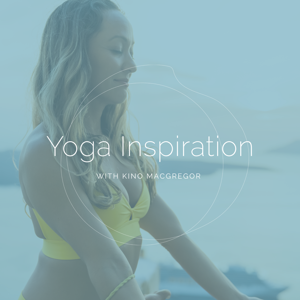


The lineage of yoga is a sacred key to our practice. Unfortunately, the way yoga is packaged up and delivered today - especially in the Western hemisphere - can have an impact on our personal and individual connections to the lineage.
My guest today grew up in a Hindu household where yoga was and is an integral part of her faith. Anusha arranges her home in such a way that brings attention to the divine consciousness, and she begins every day with yoga. But she isn't practicing asanas first thing in the morning. She wakes up early for her morning meditation, then shares her morning prayers with her son. While asana is a part of the yoga practice, it is just one element of the faith and the lineage Anusha discusses today.
Anusha sits at the edge of the decolonization of yoga, a space that is uncomfortable for many of us. Yoga is very sacred to us, and it is normal to react defensively when it comes to our practice. But there are historical inaccuracies that we cannot deny, and it is our responsibility now as yoga students and as yoga teachers to create a sacred space that honors the true lineage of yoga.
Decolonizing is not just a buzzword, as Anusha explains today through her work and experience teaching decolonization to the yoga community. We discuss the historical implications of colonization and how it manifests now in the modern whitewashing of history, media, and the wellness community.
The whitewashing of wellness limits the education modern yogis receive. We miss out on the true essence of what the yoga scriptures are teaching us, and those students who follow after us will continue to be limited by this colonized perspective.
We can use our yoga practice as a tool to dismantle and decolonize our minds, and Anusha shares the ways she and other members of the yoga community can platform minority voices and lift us up and out of the echo chamber.
I am personally very inspired by Anusha's journey and her sense of responsibility to her faith and her practice. Each of us, as yoga students, has the responsibility to honor the lineage of yoga and maintain our agency as a yogi. By educating ourselves and seeking out diverse voices and perspectives, we can move away from the colonized perspective and break down any of the unconscious barriers in our own minds that could be translating into our practice.
If you have an inspiring story to share, please get in touch. Send an email at [email protected] and tell me - what does yoga mean to you? You could be invited to guest spot on The Yoga Inspiration Podcast.
Stay connected: @kinoyoga and @omstarsofficial
View my teaching schedule, blogs, etc on Kinoyoga.com
Get your free 30 day membership on Omstars.com& use code: PODCAST
I want to thank each and every one of you for showing up and getting on your mats. Whether it's for meditation or yoga practice, it is inspiring to see so many of my fellow yogis sticking with the practice.
The tiny steps we all take during meditation practice can have a huge impact on the world around us. I know we can't change the world overnight, but we can start making the positive changes within ourselves and carry them with us into the world.
Working on yourself is working on the world because it changes the way you interact with the world. Every time we get on the mat we are putting in the difficult work of removing the old habit patterns of the mind that breed seeds of anger, hatred, and ill will. Removing these habits from within ourselves is the only way to remove the same bad habits from the rest of the world.
We are each overcoming all sorts of obstacles of the mind, but the techniques we practice in meditation (like focusing on your breath) can train us in ways that have a positive impact on the world around us. For example, training our minds how not to react in anger is a benefit to everyone we interact with on a daily basis.
Meditation will open you up to all sorts of experiences and ideas you never knew about yourself, but it's important to understand that each of these experiences is fleeting. Don't make attachments to or judgments on these interactions and experiences - simply acknowledge them and let them go.
What we are practicing is a way to observe these moments as they happen, and then let them go without attributing any expectation to them. This kind of deep emotional regulation that you experience during meditation changes your brainwaves, and five minutes is all you need to start seeing a difference in your state of mind.
If you have an inspiring story to share, please get in touch. Send an email at [email protected] and tell me - what does yoga mean to you? You could be invited to guest spot on The Yoga Inspiration Podcast.
Stay connected: @kinoyoga and @omstarsofficial
View my teaching schedule, blogs, etc on Kinoyoga.com
Get your free 30 day membership on Omstars.com& use code: PODCAST
Get comfortable, close your eyes, and take a deep breath. Take in the presence of this moment and join me for a traditional Anapanasati meditation. The awareness of the inflowing and outflowing breath that we focus on in this meditative practice is meant to teach your mind to relax and achieve a state of equanimity.
Pure awareness doesn't come easily, but you can make the practice easier on yourself by focusing on a tiny part of your body, such as your nostrils, your lips, or any spot where the sensation of your breath makes contact with your skin.
Take this moment now to observe your breath. Observe the way it sounds and the way it feels. There is no right way or wrong way to do this, but sometimes the old habits of the mind will start to take over and pass judgment. The technique of Anapanasati is not to control or judge the breath but to simply observe. So, if you hear your mind wandering off with its typical patterns, bring your awareness back to the breath as it is.
We are training the mind to observe things as they are without any attachment or aversion, or any of those things that feed these habits of the mind. Remain diligent here and don't let your mind wander off into its own thoughts too far.
If this becomes difficult, remember that these thought patterns are only natural. Remind yourself that your breath changes just as often as your mind and your body change. We all evolve and grow, but the only thing that can remain constant is the state of equanimity we are trying to cultivate with our meditative practice. So take a deep breath and let's get started.
If you have an inspiring story to share, please get in touch. Send an email at [email protected] and tell me - what does yoga mean to you? You could be invited to guest spot on The Yoga Inspiration Podcast.
Stay connected: @kinoyoga and @omstarsofficial
View my teaching schedule, blogs, etc on Kinoyoga.com
Get your free 30 day membership on Omstars.com& use code: PODCAST
It's always an honor to share this space with you. You show up every day to practice and it really is an inspiration to me. I always feel better after a yoga practice, and you should, too. Regardless of what asanas you do (or not) on the mat shouldn't impact the way you feel about your practice.
We all need a lesson in being a little bit nicer to ourselves. We can't judge our success by our asana - you can succeed at yoga even if you mess up some of the poses!
Failing at a pose or two doesn't mean you are failing at yoga. The real success of the practice comes from the balance you find within yourself when you let go of all the overhanging - and sometimes unrealistic - expectations we put on ourselves.
I am discussing the opposing forces in yoga, and two of these forces are in our asana practice. One force - sthira - is our strength, willpower, and determination. The second, sukha, is the ease and flow of the practice, the force that represents happiness and comfort.
Of course, you're probably asking yourself how can we be both? How can we be determined yet maintain a comfortable ease and flow in our yoga practice? We can't be too strict on ourselves, but we also can't be so lenient that we don't complete a single pose. Finding the balance in our yoga practice is the true success we should be working toward.
To find this balance, I invite you to once again try and find that state of stillness. But rather than chase the stillness of mind, ruminate on its opposite. Think of a tornado, spinning violently, destroying everything in its wake. Take this outward energy and focus it inward. Reverse the spin until it slows and eventually comes to a stop.
Calming the mind and stilling the storm is at the root of our yoga practice. Whether it's the poses, the breathing, or the meditation, each is working together to achieve a calm and peaceful state of mind. Sooner or later, after much practice, it will happen. The joy in yoga is the experiences we have along this path and through the journey of the storm.
If you have an inspiring story to share, please get in touch. Send an email at [email protected] and tell me - what does yoga mean to you? You could be invited to guest spot on The Yoga Inspiration Podcast.
Stay connected: @kinoyoga and @omstarsofficial
View my teaching schedule, blogs, etc on Kinoyoga.com
Get your free 30 day membership on Omstars.com& use code: PODCAST
Many of us take up the path of yoga to heal, both physically and emotionally, and each of us should pursue the practice of seated meditation for the same reason. Because the benefits from each meditation will be immediately noticeable. You should feel better, lighter, freer, regardless of whether you were able to keep your mind focused and neutral the whole time.
It's not about each little moment. The benefits of meditation come from the accumulation of all your time spent in the practice. Each hour of meditation is a practice in calming the mind. Each hour of meditation means more time spent between the thoughts rather than inside of them.
What we learn from yoga is that we are not our thoughts. What we learn from meditation is how to get into that space between our thoughts. That in-between state of mind - the one that almost feels like you're about to fall asleep - is where you need to be to achieve that serenity we seek through our practice.
Of course, we aren't going to master this overnight. It takes 10,000+ hours to achieve mastery, and sitting continuously for hours is more daunting than it seems. Even if you meditate for one hour every day for ten years, you'd barely be a third of the way there!
But that's not the point. The point is we keep going.
The journey to inner peace is slow and steady. Both yoga and meditation are lessons in patience, and through meditation, we are better equipped to face the hardest lessons on this path. Those lessons in loss and letting go are important and only get harder the farther this journey takes, and it takes a great deal of strength and patience to face them.
What lessons have you faced on the yoga mat? Send an email at [email protected]. You could be invited to guest spot on The Yoga Inspiration Podcast.
Stay connected: @kinoyoga and @omstarsofficial
View my teaching schedule, blogs, etc on Kinoyoga.com
Get your free 30 day membership on Omstars.com& use code: PODCAST
Get situated and take a comfortable position for this meditation. Do your best to keep your posture to avoid as many distractions as possible. Without distractions, your mind can focus on your breath and you can start to cultivate the quality of concentration needed to achieve the quiet state of meditation.
Remember, your breath is the anchor during meditation. No matter what thoughts you have racing through your mind, acknowledge them once and let them go. Bring your attention back to the breath as it flows in and out.
The breath will draw your attention inward.
Sometimes it can help to focus on certain points of the breath - the temperature, the speed, the way it may sound as it passes in and out of your nostrils. Focus on it, but don't judge it. No breath is too hot or too cold, no one breathes too fast or too slow. There is no room for judgment here.
When you practice meditation, you are staking a claim of neutrality. You are agreeing not to pass judgment on the thoughts that pass through your mind. This is no easy feat, but this practice of neutrality is how we keep our minds steady.
Your breathing brings your mind back to you when it wanders. It can help to follow your breath through its entire cycle - from the first inhalation until you start to exhale, then back around again. This ongoing chain of breath after breath after breath prepares the mind and calms it for the meditative state.
Through your breath, you can start to tune into the neutral state of mind. This neutrality will set the foundation for the quality of concentration you need to meditate. Join me now for a lesson on breathing without judgment where you can begin to claim your seat of neutrality.
What lessons have you learned from meditation? Send an email at [email protected]. You could be invited to guest spot on The Yoga Inspiration Podcast.
Stay connected: @kinoyoga and @omstarsofficial
View my teaching schedule, blogs, etc on Kinoyoga.com
Get your free 30 day membership on Omstars.com& use code: PODCAST
It's such a pleasure to share the yoga practice with you. I appreciate every single time you carve time out of your day to commit to the practice and join me on the yoga mat. We've accomplished so much, and I hope you feel this sense of gratitude for one another and this opportunity to practice.
Everything you've achieved and accomplished so far is a result of all of your efforts and dedication to the practice. Give yourself the props you deserve for coming to the mat every day. It's your effort that keeps you moving on this path, and it's this same effort that preserves the tradition of the practice.
You choose yoga (and yourself) every time you commit to your practice. Every time you sit on the mat it's a choice you consciously make to continue this journey and live your own yoga. Like all things, the yoga practice must be nurtured. Our journey on this path is a lesson in kindling and rekindling the fire that inspired us to take up yoga in the first place.
Every student that comes onto the path of yoga has the opportunity to experience real peace and real happiness, and I hope I inspire you as much as you inspire me to keep practicing. It can be hard to make this commitment, but I know we all love yoga enough to keep trying and to put our best foot forward.
But sometimes, people who love yoga have a harder time loving themselves, and the practice is your opportunity to recognize your goodness. It's also our responsibility to help others recognize that same goodness in themselves.
The tradition of yoga is in our hands as students. Thousands of generations of yogis have come before us, setting the groundwork and giving us a path to start on. Now, it is our turn to set the foundation for the next generation of yogis. Join me now as I discuss why it's important to maintain your commitment to the yoga mat and what you can keep doing to kindle the fire that drives you to continue your practice and share it with others.
If you have an inspiring story to share, please get in touch. Send an email at [email protected] and tell me - what does yoga mean to you? You could be invited to guest spot on The Yoga Inspiration Podcast.
Stay connected: @kinoyoga and @omstarsofficial
View my teaching schedule, blogs, etc on Kinoyoga.com
Get your free 30 day membership on Omstars.com& use code: PODCAST
Sometimes after meditation, you may feel pretty peaceful. This can be a signal to your higher mind that you're ready for deeper challenges. It may be time to face your shadow self on the yoga mat.
When you start this spiritual journey, you're beginning to work with (or sometimes against) the habit patterns of the mind. We have many good habits, but some of us are battling with destructive habits that we may not even recognize in our conscious, waking lives.
When you realize you have these seeds of negativity within you, it may be hard to face. We don't always want to look at the things we don't like about ourselves, and you will run into obstacles like these a lot on this spiritual path of yoga.
Please don't be discouraged. Shadow work isn't easy, but every step you take on this spiritual path is progress, even if it feels like a step backward. There are no rules here that say your spiritual journey needs to follow a linear path, and if shadow work feels like it's taking you two steps back, maybe that's the point.
Shadow work is your opportunity to forgive yourself. During my meditation practices, I have invited you to recognize when your mind wanders away and how to bring it back with your breath. These little exercises in observing your breath are practice for the shadow work.
If you feel your thoughts circling around the negative habits in your mind, bring these thoughts back to your breath. You don't need to be on the yoga mat to practice your breathing. You can take advantage of any space or opportunity to find your center and bring your mind back to your breath.
There's no need to add more negativity. Speak kindly to yourself, observe these negative emotions, and bring your focus back to your breath. Every time your mind wanders and you forgive yourself, it is a practice in self-forgiveness that is so necessary on this journey.
Meditation brings the tool of equanimity to our yoga asana practice as well as our daily routines. It helps us face the many failures we experience on and off the mat and gives us the strength to learn from these situations without judging ourselves negatively for making a mistake.
The more you practice meditation, the more flexible your mind becomes. And a more flexible mind creates a more flexible body and a more flexible heart, which makes it easier and easier to not only come to your yoga mat every day but to also face the uphill battle that is our reality.
Please tell me what inspires you to continue practicing yoga. Send an email at [email protected] and tell me - what does yoga mean to you? You could be invited to guest spot on The Yoga Inspiration Podcast.
Stay connected: @kinoyoga and @omstarsofficial
View my teaching schedule, blogs, etc on Kinoyoga.com
Get your free 30 day membership on Omstars.com& use code: PODCAST
Please join me in this meditation with a calm mind. Take a deep breath and come into a comfortable seated position. On your exhale, notice your breath as it moves out.
When your awareness is focused on something so specific as the way your breath feels on your upper lip, you will always be able to cultivate peace of mind.
That is a goal of meditative practice. When you practice Anapanasati, you are training your mind to focus on a single point of attention: the ingoing and outgoing breath. In order to reach true mental awareness, you have to focus on your breath without judging it beyond the realm of what it is.
Your breath is your breath no matter how it sounds or what it may feel like. Whether it is deep, smooth, shallow, or erratic - simply observe the quality of breath as breath. Every time your mind wanders, bring it back to the breath. No matter where it may go, you can always bring it back to the breath.
Every time you bring your mind back to the breath, you're getting stronger. Consider this a form of mental exercise, a practice in the art of forgiveness, especially toward yourself. The more your mind wanders during this meditative practice, the more opportunities you have to train your tumultuous thoughts to relax and return to the breath, and the more chances you have to forgive yourself for past mistakes.
To get the most out of this meditation, I want you to observe your reactivity to different types of distractions. Thoughts in your memory, the sounds happening around you, limbs falling asleep, and so many more annoying discomforts can interrupt this practice. Don't let them!
If something triggers a high response in you, make note of this reaction and then bring your mind immediately back to the breath. Your breath is the anchor of this practice that tethers and trains the mind so you can practice equanimity.
During this meditation, I will ask you to bring your awareness and the focus of your breath to different levels of the body to help establish the mind-body-spirit complex. Balancing this can bring your body into harmony, and you can take this harmony with you off the yoga mat and into your waking world.
Your spiritual journey goes beyond the yoga mat, but the things you learn here - how to observe breath and cultivate equanimity - is a skill you can take with you. It is good mental practice for the challenges to come so that you can keep a clear mind and an open heart in the face of adversity.
I created this series to inspire you to get on your yoga mat every day. Send an email at [email protected] and tell me - what does yoga mean to you? You could be invited to guest spot on The Yoga Inspiration Podcast.
Stay connected: @kinoyoga and @omstarsofficial
View my teaching schedule, blogs, etc on Kinoyoga.com
Get your free 30 day membership on Omstars.com& use code: PODCAST
One of the goals of our spiritual journey of yoga is cultivating peace of mind. Only a disciplined mind can seek this eternal truth, but disciplining your subconscious can take years and years of practice.
Unfortunately, we can't just run away to a cave and meditate without distraction. We have to interact with others and ourselves, and sometimes our own thoughts and feelings can be our biggest distraction.
This is where the tool of self-observation comes in. Self-observation is the practice of bringing your attention inward and observing what you think, feel, and do without judgment. During self-observation, you will neutrally and silently describe the thoughts, feelings, or emotions that arise throughout a meditative practice.
Self-observation uses the dichotomy between the state of judgment and the state of discernment to teach yogis how to observe themselves from a neutral perspective.
What is the difference between judgment and discernment? I answer that question with an example from a Zen Buddhist parable you may have heard already called "Maybe So, Maybe Not".
In this story, a farmer's son loses his one and only horse only to have that horse return three days later with three more horses. The father, a meditator, does not react when his horse goes missing, nor when the horse returns, reminding us that it does not change things to react emotionally, nor do things change when we apply judgment values to them. Only without reaction can you see reality clearly.
For example, when you act with judgment, your behavior has an emotional tinge impacted by past experiences that are influencing your current value judgments. This tinge impacts the way you see reality.
Practicing self-observation can help you break away from reactionary judgments and reach the state of discernment where you can see reality more clearly.
I never learned more about myself and my strong opinions than when I started on this spiritual journey of yoga. These were hard lessons to learn, but they helped me to remember that mindfulness practice like this doesn't have to be serious.
Yes, this is a serious spiritual journey, but you can cultivate a little bit of curiosity and whimsy, too! As you learn new things about the practice and about yourself as well, you're going to experience a wide variety of emotions. Don't judge yourself. Practice being in a state of discernment by becoming curious and tuning in to this special episode of the Yoga Inspiration Podcast.
What lessons have you learned about yourself on the yoga mat? Send an email at [email protected]. You could be invited to guest spot on The Yoga Inspiration Podcast.
Stay connected: @kinoyoga and @omstarsofficial
View my teaching schedule, blogs, etc on Kinoyoga.com
Get your free 30 day membership on Omstars.com& use code: PODCAST
From the publisher's feed
570 Listeners

7,175 Listeners

1,258 Listeners

1,922 Listeners

73 Listeners

5,749 Listeners

3,613 Listeners

3,420 Listeners

9,157 Listeners

29 Listeners

73 Listeners
48 Listeners

454 Listeners

486 Listeners

635 Listeners