
Sign up to save your podcasts
Or

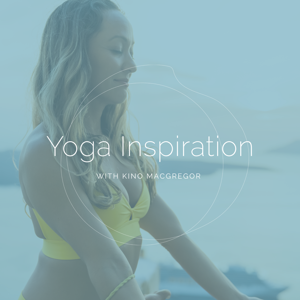


Welcome to the Yoga Inspiration Podcast! Wherever you're joining me from today, make sure you're comfortable. You want to change your posture as little as possible during this meditation. Allow the physical structure of your body to settle right now and into this moment.
As you get comfortable, close your eyes and direct your physical senses inward. Always begin this journey by focusing on your breath. Focus on the way it sounds coming out of your nose and the way it feels hitting your upper lip.
It may seem impossible to bring awareness of the sensation on such a small piece of the body, but meditation will always surprise you. When you stop paying attention to the traffic clogging your conscious mind, you will be amazed at the level of awareness you can have regarding something so tiny.
This level of awareness is something we strive for during meditation. This state is a judgment-free zone where we simply are aware of what is. It is a state of equanimity where we recognize that what is simply is.
Take a moment to let this sink in.
What is simply is.
Practice recognizing how you are reacting to this moment without experiencing the reaction itself. Do not tie a judgment clause to your reaction - what is simply is.
Now, bring your attention back to your breath.
You will teeter-totter back and forth between awareness and judgment on this spiritual journey, but your breath is key to this balancing act of the mind. Any time the anchor of your mind seems to drift away and start passing judgments on your thoughts, you can always bring it back with your breath.
Your breath will help you cultivate the state of equanimity we strive for in our yoga journey. It won't be easy to cultivate because no lesson worth learning is ever easy. It will take all of your strength - your physical, mental, and emotional strength - to transcend the conscious mind.
I'm inviting you to this mediation to give you the strength to stay on this path toward equanimity. Only a realized mind has the power to understand what it really means to be here and now in this body, in this time, and in this space without judgment. Practice achieving this equanimous state with me now.
What lessons have you learned to face on the yoga mat? Send an email at [email protected]. You could be invited to guest spot on The Yoga Inspiration Podcast.
Stay connected: @kinoyoga and @omstarsofficial
View my teaching schedule, blogs, etc on Kinoyoga.com
Get your free 30 day membership on Omstars.com& use code: PODCAST
Every yoga student needs is a teacher. The spiritual journey of yoga should never be ventured into alone. Teachers fuel our spiritual growth on his path, but it can be hard to find a balance between learning from and over-idolizing the yoga teacher.
Learning needs a balance between a healthy notion of self-worth and humility. Finding this balance is a feat we yoga students have to face more than once. Had it not been for my own yoga teachers I would not be here teaching you today, but I still had to work to find that balance.
I learned to recognize teachers as imperfect and fallible human beings. You cannot put your teacher on a pedestal because no living being can be perfect. As long as you hold someone up to an unachievable standard, you're setting yourself up for disappointment.
Worse than that, you're more likely to hold yourself up to these same ridiculous standards, which will only harm your spiritual growth.
Is it possible to avoid putting your yoga teacher on a pedestal?
Yes, but it takes practice. I share stories here of my own yoga teachers to help you understand the importance of learning from a space of humility. Remember that through the yoga practice you are seeking a community with other human beings who are on this same path. When it comes to yoga teachers, they are simply farther along on this path.
Think of it like this - you're lost on a roadway with no cell service and you stop to ask for directions.
We are going to get lost and stumble on this yoga journey, and a yoga teacher is there to give you directions. They have the knowledge and forethought to lead you a little further, but they are not the absolute authority over your practice.
Your yoga practice is the art of building a community, and any authority you give a yoga teacher undermines that sense of togetherness we are trying to build. Yoga teachers don't need a pedestal. We want you to respect and learn from our experience and to give yourself this same level of respect.
Keep practicing and respect yourself for the things that you've learned and the work you are putting in on your own path, and I promise you will make your yoga teacher proud.
I want to keep inspiring you to continue your practice. Send an email at [email protected] and tell me - what does yoga mean to you? You could be invited to guest spot on The Yoga Inspiration Podcast.
Stay connected: @kinoyoga and @omstarsofficial
View my teaching schedule, blogs, etc on Kinoyoga.com
Get your free 30 day membership on Omstars.com& use code: PODCAST
Through my experience on the yoga mat, I believe that every spiritual student needs to start with the kind of contemplation practices that cultivate stillness of mind. In order to liberate the mind, we need this stillness, but it doesn't happen overnight.
Cultivating mindfulness - or sati - means finding a seat of awareness within you that is without judgment. The stillness breaks all the patterns of your past actions and reactions and creates a space for true growth. But to get there takes practice, and the only way to cultivate stillness is by practicing meditation and contemplation.
Every student on this yoga journey starts as a seeker. All of us on this path have suffered through the material world and are actively seeking to answer - what is the nature of suffering? If suffering is inevitable, is true peace possible?
With sati, we can find the answer to this question. Through meditation we uncover and break down the habits of our mind that lead us through this continuous cycle of suffering.
Without sati, all of those mantras we tell ourselves, all the contemplation and prayers, they can never penetrate the subconscious mind. To make a long-lasting impact on your quality of life, you must make an impact on the subconscious mind, which is the stronghold of all your past habits and patterns. But we can never get all the way through to the subconscious without a quiet mind.
How do you cultivate a stillness? In five minutes.
Stillness doesn't happen overnight, but training in sati can start with as few as five minutes of meditation. After twenty minutes you'll start tapping into the stillness, and after forty minutes you can start reaching deep down to the root of your mind.
The longer you sit in meditation, the harder it gets to reach the subconscious mind. It can feel strange, frightening, and it may upset you. You may feel as if you are losing your identity. But as you start to chip away at the old foundations of your subconscious to make way for the stillness we are cultivating here, you'll find that you'll get much farther on this journey when you have a balanced mind.
Listen now for ways to train in sati, find equanimity, and build your spiritual yoga practice on a strong foundation of stillness that will make penetrating the root of your mind that much easier.
If you have an inspiring story to share, please get in touch and tell me - what does yoga mean to you? Send an email to [email protected] and you could be invited to guest spot on The Yoga Inspiration Podcast.
Stay connected: @kinoyoga and @omstarsofficial
View my teaching schedule, blogs, etc on Kinoyoga.com
Get your free 30 day membership on Omstars.com& use code: PODCAST
Sometimes there are no words to describe the meditative process, and it can get in the way of our awareness and stillness of mind. Traditionally, a meditative series includes the Anapanasati, or the breathing exercises, followed by the calming of the mind, and ending with the metta practice.
But if you find yourself at a loss for words, simply come back to the breath. Anapanasati is the key to cultivating the stillness of mind all yoga students seek.
Allow your body to settle and relax as you bring your attention to the inflowing and outgoing breath. Notice the qualities of your breath. This sensation of your breath is the beginning of the Anapanasati training that inspires the presence of mind.
Is your breath warm or cool?
Are you breathing fast or slow?
Practicing this kind of awareness is what brings you into that mindful state and grants you the ability to observe what is just as it is, without any judgment or emotional attachment.
Yet, sometimes, there are no words to describe our breath, our state of being, our meditative process. There is an infinite number of qualities we can apply, and that infinity can be overwhelming.
If you cannot find the words, do not force them. Instead, I invite you to observe this awareness of nothingness. It is the perfect opportunity to practice observing your reactions instead of participating in them. This is a lesson in being aware of an emotion without trying to qualify it.
Observe that reaction with as much equanimity as possible, then return to your breathing.
Your breath is the single tactile sensation that can keep you grounded as you practice Anapanasati. It is the perfect opportunity to practice awareness and reach a plane of non-reactivity that you can eventually cultivate and carry with you into the complex, modern world we live in.
I invite you now to join me through this meditative practice as we sharpen our minds and accept that sometimes words cannot do justice, and this awareness of mind is enough. It is enough to reach that nothingness and return to the ingoing and outgoing breath.
If you have an inspiring story to share, please get in touch and tell me - what does yoga mean to you? Send an email to [email protected] and you could be invited to guest spot on The Yoga Inspiration Podcast.
Stay connected: @kinoyoga and @omstarsofficial
View my teaching schedule, blogs, etc on Kinoyoga.com
Get your free 30 day membership on Omstars.com& use code: PODCAST
When I think about my first ever yoga class, I remember that feeling of finally being back in my body again. More than that, I finally felt comfortable in the body I was in. For Jonathan Ferrucci, his first class inspired him to wonder where his body ends and the rest of the universe begins.
Jonathan is a professional pianist sharing his experience at the intersection between yoga and music. For him, these are both languages he used to find his authenticity as not only a musician but as a human being.
His introduction to yoga came from his mother, but it wasn't until he discovered the Ashtanga practice in his twenties that he started to really understand the spiritual journey of yoga.
The ambitious, performance-oriented side of his mind is balanced by the patience of the practice, and Jonathan shares how his yoga routine transformed into a spiritual practice through Ashtanga.
Many of us can relate to Jonathan's experience of being "outside of the body," where our minds are constantly wandering in circles of anxiety and stress. Performing on stage can bring this anxiety to a new level, and Jonathan saw yoga as a tool that would help him return to his body.
Our yoga journeys are more than a sequence of poses or routines. Yoga is a practice; it is a daily effort in being present in the moment, which forces many of us to dig deep and recognize some parts of ourselves we may have forgotten or misplaced.
You cannot predict how the practice will affect you, and Jonathan shares how he was struck most by the silence and how it turned into the biggest lesson he's learned on the yoga mat.
If any of us have ever lost ourselves and are looking for a way back onto the mat, Jonathan's story will inspire you to come back to the practice with a new perspective. You may be humbled by this new perspective, or maybe you will learn something new.
Meet Jonathan at this intersection between self, yoga, and music with a special concert performance on Omstars. All charitable donations will bring music to children in disadvantaged situations.
If you have an inspiring story to share, please get in touch. Send an email at [email protected] and tell me - what does yoga mean to you? You could be invited to guest spot on The Yoga Inspiration Podcast.
Stay connected: @kinoyoga and @omstarsofficial
View my teaching schedule, blogs, etc on Kinoyoga.com
Get your free 30 day membership on Omstars.com& use code: PODCAST
What does yoga represent to you? Why did you take that first step onto the yoga mat?
I've been practicing yoga because I was looking for a more peaceful life. Now, more than twenty years later, I can confidently say that when I walk off my mat after practice I'm a little bit more peaceful, a little bit kinder.
Yoga practice has the power to bring a little bit more love and peace into your life by changing the way you treat others and the way you treat yourself. One can even argue that this quest for peace is why the practice of yoga has survived for so many years.
The spirituality of our yoga journey reminds us that this practice is more than just the pose. Even now, when we keep seeing perfectly photographed poses on Instagram, we have to remind ourselves that we are more than just our asana obsessions.
We all have our favorite poses. I'm the first to admit that I really wanted to do a headstand when I started my Ashtanga practice. But the true journey of yoga is not limited to the physical poses. The path of yoga is more spiritual and metaphysical.
At the core of the metaphysical practice of yoga are the five niyamas:
These moral and ethical self-disciplines help yogis relate with society. Since very few of us will become monks, the niyamas can help us householder yogis balance our yoga practice with the society in which we live.
As I discuss the five niyamas, you may recognize some of these from other episodes. I've discussed tapas many times before on this podcast, but not in the way it influences the effort the yogi dedicates to their practice.
In yoga, your effort is directly related to how much yoga is asking you to change your life. These changes can manifest in many ways, from dietary changes to complete mental makeovers in your subconscious. Tapas will help you balance your discipline so you can dedicate the right kind of effort to your practice.
Remember - we should have that feeling of effort or else we miss the very thing that yoga is trying to teach us.
The five niyamas are the substance of the lifelong journey into the spiritual practice of yoga. You will think of them every time you get on your mat, and your perspective of the niyamas will change as you evolve on this journey.
Tune in now to learn how to fit the niyama into your yoga practice.
I want to keep inspiring you to continue your practice. Send an email at [email protected] and tell me - what does yoga mean to you? You could be invited to guest spot on The Yoga Inspiration Podcast.
Stay connected: @kinoyoga and @omstarsofficial
View my teaching schedule, blogs, etc on Kinoyoga.com
Get your free 30 day membership on Omstars.com& use code: PODCAST
The important thing to understand on this spiritual journey we're on is knowing the difference between what is real and what is imaginary.
If we only live in the imaginary, then we risk the spiritual practice becoming a way for us to ignore reality. On the other hand, some of us can get attached to difficult realities, which can lock us into those negative cycles of thinking.
Luckily, yoga practice and meditation teach us that we are not helpless victims of the life experience.
We have the power to break our subconscious thinking patterns if we learn to accept our failures in the practice. It's no secret that this spiritual journey is made up of struggles - that's why we call it a practice, but through this practice we have the opportunity to learn.
One of my biggest lessons on the yoga mat was (and sometimes still is) the acceptance of failure. More than that, it's being able to sit with this failure with a relaxed and non-judgmental attitude.
For me personally, the more I expect something to work out in a particular way, the more tightly I'm wound to it, which breeds negative thoughts and judgmental behavior. Does this happen to you?
If the answer is yes, realize that the brain doesn't subconsciously know the difference between imagination and reality. The way you react to real-world stimulation is the same way you react to a visualization, and your subconscious mind will interpret it as such.
It is this reaction that is the root of suffering, and I'm discussing the ways we can recognize these moments during our meditative and yoga practices so we can train our brain to understand the difference between what is imagined and what is reality.
Recognizing this opens up the possibility to remain neutral in the face of failure, which makes it much easier to break the unconscious patterning of the mind. I want to empower you to sit with your failure without judging yourself, and learning to recognize the difference between your reality and your imagination is a great place to start.
What failures have you learned to face on the yoga mat? Send an email at [email protected]. You could be invited to guest spot on The Yoga Inspiration Podcast.
Stay connected: @kinoyoga and @omstarsofficial
View my teaching schedule, blogs, etc on Kinoyoga.com
Get your free 30 day membership on Omstars.com& use code: PODCAST
For this meditation I want you to choose something you want to manifest. I always recommend having this idea in mind before you sit down for practice so you don't interrupt the spiritual journey, but don't hold it so tightly that you can't relax your mind.
Remember - your mind needs an anchor. Just as your body needs a seat in order to settle into this moment, so does your mind. And just as in previous practices, this anchor will be your inflowing and outgoing breath.
As you focus on your breathing, pay attention to the way it feels on your upper lip, the way it flows in and out of your nostrils. If you find your mind wandering, bring it back to your breath.
It's important to use this anchor of your breath. Keep your attention focused there in order to practice the state of equanimity we've discussed before, but it's interesting to note where your mind wanders during meditation.
Is there a pattern to your thoughts? Do you find yourself focusing on the same emotional and physical reactions?
All of these distractions - even something as simple as your feet falling asleep - are worth noting, especially if there is a pattern of reactivity. Acknowledge and note this discomfort, note how you want to react, and then bring your attention back to your breath.
This is the work we put in during meditation. We are training our minds to be neutral, to detach our ego from all that we've experienced, and break the chain of attachment and aversion that traps us in negative thinking patterns.
This humble work of practicing holding a single point of concentration in your mind is the key to this meditative practice, and the key to unlocking the subconscious patterns we all fall victim to in our daily lives. Please find a comfortable space to sit and relax as you join me in this meditation.
I want to keep inspiring you to continue your practice. Send an email at [email protected] and tell me - what does yoga mean to you? You could be invited to guest spot on The Yoga Inspiration Podcast.
Stay connected: @kinoyoga and @omstarsofficial
View my teaching schedule, blogs, etc on Kinoyoga.com
Get your free 30 day membership on Omstars.com& use code: PODCAST
Practicing meditation is a practice in doing nothing. That may sound like a riddle, but it's the truth! And it's why meditation is so difficult for some of us.
My yoga teacher always used to say that meditation was very difficult. Asana yoga is almost easier because as we practice the poses, we are giving our minds a distraction from the sheer weight of nothingness.
I'm here to tell you that the key to meditation lies in embracing this nothingness, this intangibility of the practice. Meditation is designed to move us away from the material world and into the quality of the exact moment we are in without a hectic need to define it or run away from it.
Unfortunately, our minds don't always work that way. Don't you ever experience doubts on the yoga mat?
We are always looking for something to fill up the moment that, in the instant we're left alone with the stillness, we start to doubt ourselves.
Who are you without your thoughts?
What are we without our busy schedules?
Sometimes there can be unprocessed thoughts and emotions laying heavy on our hearts that we don't want to face. The silence forces us to face them, which breeds fear and doubt.
This is because if your mind is not trained it will ruminate back and forth between worrying about the past and projecting into the future. Meditation trains our mind to recognize the frequency of our thoughts so we can break that cycle of worry and doubt.
I have a few helpful tips for my fellow yogis who have a hard time accepting the stillness of meditation, and I'm discussing many ways you can break the cycle, including:
Tune in now for more helpful ways to anchor your mind and more tips on how to get into that state of mind even if you don't have a silent space to practice at home. Quarantine has made many of us modify our yoga practice to fit into our new lifestyles, and it's important to share these moments together.
Practicing meditation together, as I have done in previous episodes of this podcast, creates a collective energy that inspires us and makes meditation a little less intimidating. When practice is more attainable like this, you're more likely to stick with it.
I want to keep inspiring you to continue your practice. Send an email at [email protected] and tell me - what does yoga mean to you? You could be invited to guest spot on The Yoga Inspiration Podcast.
Stay connected: @kinoyoga and @omstarsofficial
View my teaching schedule, blogs, etc on Kinoyoga.com
Get your free 30 day membership on Omstars.com& use code: PODCAST
Please prepare for a long sit if you're joining me for this meditation. These guided meditations are important to the spiritual practice, but the longer we practice you may find that certain positions aren't as comfortable as they used to be. So get comfortable and settle into this moment.
Feel free to use a chair. Feel free to lay down. As long as we settle into this moment and are aware of our bodies and our breath releasing and relaxing, the meditation can begin.
When we meditate, we are doing the subtle, inner work that is so important to our yoga practice. We are creating a path for the mind to be inwardly focused. Think of this as your chance to be the silent traveler in your mind - the silent observer of your thoughts.
As your thoughts arise, observe them without judgment or emotion. This takes practice, so be nice to yourself as your thoughts start to wander. If this happens, remind yourself that you are not your thoughts and return to your breath.
Sometimes, when we're in the stillness of meditation, it can be hard to turn off the waking mind. Your breath gives the mind a focal point so that you can begin to enter that stillness of mind. This takes great discipline, so I am inviting you to join me in this episode for a special meditative practice.
In this meditation, we practice recognizing Anapanasati, or the awareness of the inflowing and outflowing breath. This awareness puts us in a state of equanimity, where breath is simply breath and thoughts are simply thoughts, and we can truly reach that space of stillness.
Because it is only in this stillness of the mind where you are open to receiving the energy of happiness and peace, and we can begin to practice metta. Join me now to practice finding that balance with all things, including our own minds.
Share with me your tips for finding peace and stillness on the yoga mat. Send an email at [email protected] and tell me - what does yoga mean to you? You could be invited to guest spot on The Yoga Inspiration Podcast.
Stay connected: @kinoyoga and @omstarsofficial
View my teaching schedule, blogs, etc on Kinoyoga.com
Get your free 30 day membership on Omstars.com& use code: PODCAST
From the publisher's feed
570 Listeners

7,175 Listeners

1,258 Listeners

1,922 Listeners

73 Listeners

5,749 Listeners

3,613 Listeners

3,420 Listeners

9,157 Listeners

29 Listeners

73 Listeners

48 Listeners

454 Listeners

486 Listeners

635 Listeners