
Sign up to save your podcasts
Or

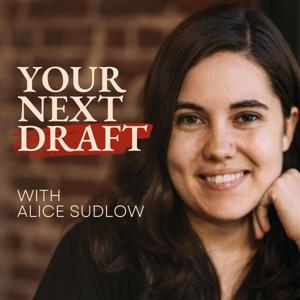


In order to edit a scene effectively, you need to know what to change. The best edits are strategic, intentional, and target the most important problems with effective solutions.
How do you figure out what those edits are?
Ask the right questions.
In this episode, you’ll discover six questions that will help you identify what’s working and what’s not in the beginnings and endings of your scenes. Then, they’ll show you exactly how to fix the weak spots.
You’ll learn:
This is the second part of a two-part series. Don’t miss How to Edit a Scene of a Novel, Part 1 for twelve more scene editing questions.
Want a quick reference guide to all eighteen questions from this episode and the last one? Download the Scene Edit Questionnaire at alicesudlow.com/sceneedit.
Links mentioned in the episode:
Send me a Text Message!
Support the show
Rate, Review, & Follow on Apple Podcasts
"I love Alice and Your Next Draft." If that sounds like you, please consider rating and reviewing my show! This helps me support more writers through the mess—and joy—of the editing process. Click here, scroll to the bottom, tap the stars to rate, and select “Write a Review.” Then be sure to let me know what you loved most about the episode!
Loving the show? Show your support with a monthly contribution »
How do you edit a scene of a novel?
In order to edit a scene effectively, you need to know a few things:
That last one is the most important, and often the hardest to figure out.
How do you identify the specific changes that will improve your scene?
Ask the right questions.
In this episode, you’ll learn 12 questions that will show you exactly what to change in your scenes. These questions will show you:
This episode is packed with practical strategies to edit every scene in your novel. You might want to take notes, or even save this to listen again.
Want a quick reference guide to all 12 questions? Download the Scene Edit Questionnaire at alicesudlow.com/sceneedit.
Links mentioned in the episode:
Send me a Text Message!
Support the show
Rate, Review, & Follow on Apple Podcasts
"I love Alice and Your Next Draft." If that sounds like you, please consider rating and reviewing my show! This helps me support more writers through the mess—and joy—of the editing process. Click here, scroll to the bottom, tap the stars to rate, and select “Write a Review.” Then be sure to let me know what you loved most about the episode!
Loving the show? Show your support with a monthly contribution »
One of the best ways to learn how to edit your book is to study other excellent books.
The best-sellers. The award winners. The ones your readers are reading and loving.
So in this episode, that’s what we’re going to do.
I’m breaking down the first scene of Looking for Alaska by John Green to show you how it works.
Looking for Alaska was best-selling author John Green’s debut novel. It won the 2006 Printz award, the highest award in young adult literature. And in 2019, it was adapted into an eight-episode show on Hulu.
All that to say: this book works really, really well.
And in this episode, I’ll show you how John Green opens the story with an excellent opening scene.
You’ll learn:
If you’re writing a YA novel or a novel set in the regular world, this scene is a perfect example of how to do that well.
And no matter what genre you’re writing, you’ll learn how to think like an editor so you can make your scenes even better.
Before you listen, be sure to read the opening scene of Looking for Alaska so you can follow along. (Don’t worry—it’s short!) Read the scene for free here.
And be sure to download the free guide to this analysis. Get the guide at alicesudlow.com/lfa.
Links mentioned in the episode:
Send me a Text Message!
Support the show
Rate, Review, & Follow on Apple Podcasts
"I love Alice and Your Next Draft." If that sounds like you, please consider rating and reviewing my show! This helps me support more writers through the mess—and joy—of the editing process. Click here, scroll to the bottom, tap the stars to rate, and select “Write a Review.” Then be sure to let me know what you loved most about the episode!
Loving the show? Show your support with a monthly contribution »
What happens in your scenes? Do they even matter to your book? Do they move the story forward and keep your readers engaged? Or are they . . . boring?
In order for a scene to earn its place in your story, something needs to happen. It needs a story event, a single event that contributes to the larger plot.
The thing is, it’s really easy to write scenes—thousands of words!—where nothing ever happens.
A group of friends go to a restaurant and have a pleasant conversation. A woman sits in her favorite chair, sipping tea and thinking.
These are normal things we do in everyday life. (And when we do them, we really enjoy them! They’re quite lovely, aren’t they?)
But in stories, “scenes” like these will bore your readers to tears . . . unless something interesting happens. Conflict arises. Something changes.
So I’ll ask you again: What happens in your scenes?
Not sure? Not to worry. In this episode, I’m sharing five essential questions to help you figure out what happens in a scene—and why it matters to your story.
These questions are deceptively simple. They won’t take long to answer. But they’ll give you so much invaluable insight into how and why your story is working—or where it’s not working, and how you can fix it.
Plus, I’ll show you how to answer them using an example scene: the first scene of UNDER THE WHISPERING DOOR by T. J. Klune. Read the first scene for free here. (And if you love it, read the whole book—it's a good one!)
Ready to answer all these questions for your scenes and make every page of your book un-put-down-able? Download the Scene Analysis Worksheet at alicesudlow.com/sceneworksheet.
And if you'd like expert feedback on your scenes, plus personalized strategies for how to make them even better, I'd love to help. Send me a note at [email protected] and tell me about your book!
Links mentioned in the episode:
Want more editing tips and resources? Follow me on Instagram and
Send me a Text Message!
Support the show
Rate, Review, & Follow on Apple Podcasts
"I love Alice and Your Next Draft." If that sounds like you, please consider rating and reviewing my show! This helps me support more writers through the mess—and joy—of the editing process. Click here, scroll to the bottom, tap the stars to rate, and select “Write a Review.” Then be sure to let me know what you loved most about the episode!
Loving the show? Show your support with a monthly contribution »
Great books are made of great scenes. Which means the skill of writing and editing amazing scenes is one of the most important skills you can learn if you want to create a novel readers will love.
The thing is, though, readers don't think in terms of scenes. Chapters are clearly marked for readers, but scenes often aren't. Which means that when people make the jump from "reader" to "writer," they often don't know what scenes actually are.
What is a scene? What elements must it include? What makes the difference between a scene readers want to skip and a scene that earns its place in your book? And how can you fix a boring scene?
In this episode, I'll cover all that and more. You'll learn:
And I'll break all these elements down using an example scene: the first scene of UNDER THE WHISPERING DOOR by T. J. Klune. Read the first scene for free here. (And if you love it, read the whole book—it's a good one!)
Ready to apply all these concepts to your book and make your scenes un-put-down-able? Download the Scene Analysis Worksheet at alicesudlow.com/sceneworksheet.
And if you'd like expert feedback on your scenes, plus personalized strategies for how to make them even better, I'd love to help. Send me a note at [email protected] and tell me about your book!
Links mentioned in the episode:
Want more editing tips and resources? Follow me on Instagram and Facebook.
And if you're enjoying the podcast, would you mind leaving a rating and review? That helps more listene
Send me a Text Message!
Support the show
Rate, Review, & Follow on Apple Podcasts
"I love Alice and Your Next Draft." If that sounds like you, please consider rating and reviewing my show! This helps me support more writers through the mess—and joy—of the editing process. Click here, scroll to the bottom, tap the stars to rate, and select “Write a Review.” Then be sure to let me know what you loved most about the episode!
Loving the show? Show your support with a monthly contribution »
Writing your book doesn't have to take forever. Editing your book doesn't have to take forever.
And in this episode, the fourth and final installment of our speedy writing and editing series, you'll learn seven strategies to make your editing process more efficient so you can finish your next draft—and then your next book—faster.
We'll cover:
Want more speedy tips? Check out episode 6 of the podcast for three more strategies to edit your novel faster. And check out episode 4 and episode 5 for tips on how to finish your first draft faster. Hint: these tips will be helpful in your editing process, too!
Plus, get a quick-reference list of all ten speedy editing strategies by going to alicesudlow.com/editfast.
And if you’d like expert editing support that will help you finish your next draft so much faster, I’d love to help. Send me a note at [email protected] and tell me about your book!
Links mentioned in the episode:
Send me a Text Message!
Support the show
Rate, Review, & Follow on Apple Podcasts
"I love Alice and Your Next Draft." If that sounds like you, please consider rating and reviewing my show! This helps me support more writers through the mess—and joy—of the editing process. Click here, scroll to the bottom, tap the stars to rate, and select “Write a Review.” Then be sure to let me know what you loved most about the episode!
Loving the show? Show your support with a monthly contribution »
You can finish editing your next draft in just a few weeks.
That’s right. You can finish it in three months—or less!
The trick, of course, is to find the editing process that works for you. The process that keeps you focused, motivated, and inspired so you can make the right changes to your book every day.
And in this episode, I’ll share three strategies I recommend to help you do just that.
You’ll learn:
Plus, get a free worksheet to guide you through setting your deadline for your next draft. Go to alicesudlow.com/deadline to get your worksheet.
Want more speedy tips? There are more fast editing tips coming for you in the next episode, so be sure to follow the podcast so you don’t miss them.
And be sure to check out episode 4 and episode 5 of the podcast for tips on how to finish your first draft faster. Hint: these tips will be helpful in your editing process, too!
And if you’d like expert editing support that will help you finish your next draft so much faster, I’d love to help. Send me a note at [email protected] and tell me about your book!
Links mentioned in the episode:
Send me a Text Message!
Support the show
Rate, Review, & Follow on Apple Podcasts
"I love Alice and Your Next Draft." If that sounds like you, please consider rating and reviewing my show! This helps me support more writers through the mess—and joy—of the editing process. Click here, scroll to the bottom, tap the stars to rate, and select “Write a Review.” Then be sure to let me know what you loved most about the episode!
Loving the show? Show your support with a monthly contribution »
Have you ever gotten stuck in your first draft? Hit writer's block? Lost all your inspiration and wondered what in the world would happen next?
If so, you're not alone. That's a totally normal part of the writing process.
The tough news is, part of your job as a writer is . . . to write anyway. Your challenge is to push through it and write when you're inspired and when you're not.
But the good news is, you don't have to stay stuck in the struggle. You can use a variety of strategies to boost your creativity and get back in the flow of writing.
And the better news is, once you're writing again, it's way easier to keep writing. You won't stay stuck forever!
How do you boost your creativity and beat the block? That's the topic of this episode. I'll give you eleven inspiring strategies to get your ideas flowing again: everything from writing the worst sentence in the world to optimizing your writing space to leaving your writing space behind and going on a walk.
And if creativity is only part of the challenge, check out this episode on writing productivity, too. There, you'll find ten strategies to boost your productivity and surround yourself with a team to support you as you write.
Together, these twenty-one ideas are sure to get you writing again—and boost your writing speed so you can finish your first draft and get published sooner!
Don't forget to download this free guide to all twenty-one ideas. Print it out, post it in your writing space, and refer to it whenever you get stuck so you can get un-stuck at a moment's notice.
Liked what you heard?
If you enjoyed this episode, please consider leaving a rating and review. Also, be sure to follow the podcast so you don’t miss future episodes.
And if you’d like personalized feedback on your book, reach out to me at alicesudlow.com. I’d love to support you in your editing process!
Send me a Text Message!
Support the show
Rate, Review, & Follow on Apple Podcasts
"I love Alice and Your Next Draft." If that sounds like you, please consider rating and reviewing my show! This helps me support more writers through the mess—and joy—of the editing process. Click here, scroll to the bottom, tap the stars to rate, and select “Write a Review.” Then be sure to let me know what you loved most about the episode!
Loving the show? Show your support with a monthly contribution »
Every great book begins with a first draft.
And sometimes, it can feel like that first draft goes on forever. Have you ever spent months writing the first draft of a book? Years?
If so, you’re not alone. It’s easy to get stuck in the middle of a draft. Or spend years trying to write the perfect first draft . . . and never finish. Or stop writing before you even start!
But you can’t edit—or publish—a book you haven’t written.
Which means your first task is to finish your first draft.
How do you do it? How do you finally finish your first draft in a matter of weeks?
In this episode, I’ll give you ten strategies to speed up your writing process so you can make it to “The End.”
Six of these ideas will boost your productivity. Four more will help you surround yourself with a team to hold you accountable and help you finish.
You don’t have to apply all of them at once. Choose two or three to use in your writing every day, then try one or two more when you get stuck.
And to make it easier, download and print this quick-reference guide to all ten ideas, plus eleven more ideas coming in the next episode.
Liked what you heard?
If you enjoyed this episode, please consider leaving a rating and review. Also, be sure to follow the podcast so you don’t miss future episodes.
And if you’d like personalized feedback on your book, reach out to me at alicesudlow.com. I’d love to support you in your editing process!
Send me a Text Message!
Support the show
Rate, Review, & Follow on Apple Podcasts
"I love Alice and Your Next Draft." If that sounds like you, please consider rating and reviewing my show! This helps me support more writers through the mess—and joy—of the editing process. Click here, scroll to the bottom, tap the stars to rate, and select “Write a Review.” Then be sure to let me know what you loved most about the episode!
Loving the show? Show your support with a monthly contribution »
Which draft are you working on right now? If that question is easy to answer, fantastic! But if it's not, don't worry.
You're not alone, and in this episode, I'll show you how to find out which draft you're writing—and what to do next.
Download a quiz to find out which draft you're currently working on at alicesudlow.com/draftquiz.
And if you liked what you heard, be sure to rate, review, and subscribe so you don't miss the next episode!
Send me a Text Message!
Support the show
Rate, Review, & Follow on Apple Podcasts
"I love Alice and Your Next Draft." If that sounds like you, please consider rating and reviewing my show! This helps me support more writers through the mess—and joy—of the editing process. Click here, scroll to the bottom, tap the stars to rate, and select “Write a Review.” Then be sure to let me know what you loved most about the episode!
Loving the show? Show your support with a monthly contribution »
From the publisher's feed
Supporting fiction writers doing the hard work of revising unputdownable novels. The novel editing process is the creative crucible where you discover the story you truly want to tell—and it can…
Developmental editor and book coach Alice Sudlow will be your companion through the mess and magic of revision. You’ll get inspired by interviews with authors, editors, and coaches sharing their revision processes; gain practical tips from Alice’s editing practice; and hear what real revision truly requires as Alice workshops scenes-in-progress with writers.
It’s all a quest to discover: How do you figure out what your story is truly about? How do you determine what form that story should take? And once you do, how do you shape the hundreds of thousands of words you've written into the story’s most refined and powerful form?
If you’ve written a draft—or three—but are still searching for your story’s untapped potential, this is the podcast for you. Together, let’s dig into the difficult and delightful work of editing your next draft.

38,654 Listeners
1,296 Listeners
1,007 Listeners
627 Listeners
251 Listeners
1,479 Listeners
114 Listeners
782 Listeners
430 Listeners

40 Listeners
32 Listeners

17 Listeners
21 Listeners

12,521 Listeners
15 Listeners