
Sign up to save your podcasts
Or



Use the limitations of your POV to enhance your story.
Your story’s point of view impacts everything. It shapes how your readers get access to information about your story. And it shapes what information they have access to.
And since at its core, storytelling is just telling your reader information about a story, this is huge.
In this episode, I’m tackling a common POV problem I’ve seen in many, many manuscripts.
You’ll learn:
Send me a Text Message!
Support the show
Rate, Review, & Follow on Apple Podcasts
"I love Alice and Your Next Draft." If that sounds like you, please consider rating and reviewing my show! This helps me support more writers through the mess—and joy—of the editing process. Click here, scroll to the bottom, tap the stars to rate, and select “Write a Review.” Then be sure to let me know what you loved most about the episode!
Loving the show? Show your support with a monthly contribution »
How to make the most of your editor’s feedback—even if you disagree with it.
If you want to make the most of your editor’s feedback, there’s one phrase not to say.
It’s natural. It’s normal. It’s something I’ve definitely said in other areas of my life.
But when you’re collaborating with an editor to make your novel the best it can be, this phrase won’t help you.
And in this episode, I’m sharing what this pesky phrase is and why it’s so dangerous.
You’ll learn:
If you’ve ever wondered how to make the most of working with an editor, this episode is for you. I hope it makes it a little easier—and more exciting!—to get an editor’s feedback.
Links mentioned in this episode:
Send me a Text Message!
Support the show
Rate, Review, & Follow on Apple Podcasts
"I love Alice and Your Next Draft." If that sounds like you, please consider rating and reviewing my show! This helps me support more writers through the mess—and joy—of the editing process. Click here, scroll to the bottom, tap the stars to rate, and select “Write a Review.” Then be sure to let me know what you loved most about the episode!
Loving the show? Show your support with a monthly contribution »
How to developmentally edit absolutely ANY piece of writing.
There’s an editing tip that applies to literally every kind of writing.
Bold statement, I know. But I stand by it.
Actually, “tip” is understating the matter. This “tip” is actually a mission-critical principle. It’s essential to every writing project.
Also, it’s my current favorite writing and editing tool. Lately, I’ve been using this every single time I sit down to write something new, and every time I open up a draft to edit.
What is this writing tip, you ask? Well, that's the topic of this episode.
In the episode, you’ll learn:
This episode is extra-special—and not just because I love this editing tip.
Today, Your Next Draft hits a major milestone: fifty episodes!
Would you celebrate with me by leaving a rating and review?
Here’s how:
If you’re not using an Apple device, feel free to send me an email at [email protected] and tell me what you love about the podcast. We’ll have a party in my email inbox!
Here’s to fifty more! 🎉
Links mentioned in the episode:
Send me a Text Message!
Support the show
Rate, Review, & Follow on Apple Podcasts
"I love Alice and Your Next Draft." If that sounds like you, please consider rating and reviewing my show! This helps me support more writers through the mess—and joy—of the editing process. Click here, scroll to the bottom, tap the stars to rate, and select “Write a Review.” Then be sure to let me know what you loved most about the episode!
Loving the show? Show your support with a monthly contribution »
A simple decision-making framework to help you find YOUR best writing path.
Yesterday, I shared a framework to help you make any decision about your writing career.
Well—yesterday, I shared part one of that framework.
And today, I’m back on the podcast with part two!
In yesterday’s episode, I coached you through how to identify your values in your writing. What’s truly important to you?
And in today’s episode, I’ll coach you through identifying your needs. What do you need most in your writing, editing, and publishing process right now?
When you know what you value and what you need, making decisions about your writing journey becomes almost easy.
You’ll know what courses you need. What book professionals you want to hire. What specific areas of learning and development you want to focus on.
Ready for complete clarity about your writing journey? Check out the episode.
Links mentioned in the episode:
Send me a Text Message!
Support the show
Rate, Review, & Follow on Apple Podcasts
"I love Alice and Your Next Draft." If that sounds like you, please consider rating and reviewing my show! This helps me support more writers through the mess—and joy—of the editing process. Click here, scroll to the bottom, tap the stars to rate, and select “Write a Review.” Then be sure to let me know what you loved most about the episode!
Loving the show? Show your support with a monthly contribution »
How to answer the question, “When should I work with an editor?”
Hire an editor. Join a writing course. Work with a book coach. Gather beta readers. Join a writing group.
There are so many resources to help you write and edit an amazing novel.
This is great news when you know exactly what resource you need. If you need a very specific type of support, I can almost guarantee that it exists.
But it’s terrible news when you don’t know what you need. When you don’t know what to look for, all the options are just overwhelming.
So what’s the solution? How do you cut through the overwhelm and find the perfect writing resource for you, right now, at this very moment in your writing career?
Well, that’s what I’m covering in this episode.
I’m going to walk you through my favorite decision-making framework. It’s the answer I give anytime someone asks, “How do I know when to hire an editor?”
And it will help you make any decision in your entire writing career (and maybe in life, too!).
Plus, I’ll show you exactly how to use this framework in a real-life example, a decision you get to make right now:
Should you join Notes to Novel before the doors close this Thursday?
I won’t tell you whether you should join or not. That’s up to you.
What I will do is help you discover what’s most important to you. Then, I’ll show you whether Notes to Novel is a good fit for that.
Think of this episode as a one-on-one coaching session with me where I’ll help you figure out whether the Notes to Novel course is right for you.
There’s no one right answer here. Just a process of discernment you can use for this decision—and every decision you make about your writing journey.
Links mentioned in the episode:
Send me a Text Message!
Support the show
Rate, Review, & Follow on Apple Podcasts
"I love Alice and Your Next Draft." If that sounds like you, please consider rating and reviewing my show! This helps me support more writers through the mess—and joy—of the editing process. Click here, scroll to the bottom, tap the stars to rate, and select “Write a Review.” Then be sure to let me know what you loved most about the episode!
Loving the show? Show your support with a monthly contribution »
See the masterful story structure that undergirds the opening scene of How to Train Your Dragon.
Great stories are built on great story structure. And my favorite story structure framework is one that you can apply on every level of story.
It’s called the six elements of story, and it’s an editing tool you can use on every layer of your story.
To prove it, I’m doing a deep dive into the structure of How to Train Your Dragon. First, I broke down the six elements of the movie as a whole. Then, I took a closer look at the first act of the movie.
And in this episode, I’m breaking down the opening scene.
You’ll learn:
Want more? You can see my full analysis of How to Train Your Dragon all on one spreadsheet. Go to alicesudlow.com/dragon to get the spreadsheet.
Then, go find the six elements of story in your scenes!
Links mentioned in the episode:
Send me a Text Message!
Support the show
Rate, Review, & Follow on Apple Podcasts
"I love Alice and Your Next Draft." If that sounds like you, please consider rating and reviewing my show! This helps me support more writers through the mess—and joy—of the editing process. Click here, scroll to the bottom, tap the stars to rate, and select “Write a Review.” Then be sure to let me know what you loved most about the episode!
Loving the show? Show your support with a monthly contribution »
The story structure that makes the first act of How to Train Your Dragon work.
One of my favorite things about the six elements of story structure is the fact that they work everywhere.
You can use them to structure your entire novel. You can use them to structure each act. And you can use them to structure each scene.
And to prove it, I’m breaking down the first act of How to Train Your Dragon to show you the six elements at work.
You’ll learn:
Plus, you can get my full spreadsheet analyzing How to Train Your Dragon at alicesudlow.com/dragon.
Links mentioned in the episode:
Send me a Text Message!
Support the show
Rate, Review, & Follow on Apple Podcasts
"I love Alice and Your Next Draft." If that sounds like you, please consider rating and reviewing my show! This helps me support more writers through the mess—and joy—of the editing process. Click here, scroll to the bottom, tap the stars to rate, and select “Write a Review.” Then be sure to let me know what you loved most about the episode!
Loving the show? Show your support with a monthly contribution »
See the story structure that makes this brilliant movie work.
The six elements of story are the essentials of great story structure. And in the last few episodes of Your Next Draft, I’ve shared a lot of theory about them: what they are, how they work, and where to use them.
But theory only gets you so far. Story structure makes a lot more sense when you can see it at work.
So in this episode, I’m breaking down the movie How to Train Your Dragon so you can see the six elements in practice.
You’ll learn:
See story structure at work in this masterful example. Then, put it to work in your own stories and craft your own masterpieces!
Links mentioned in the episode:
Send me a Text Message!
Support the show
Rate, Review, & Follow on Apple Podcasts
"I love Alice and Your Next Draft." If that sounds like you, please consider rating and reviewing my show! This helps me support more writers through the mess—and joy—of the editing process. Click here, scroll to the bottom, tap the stars to rate, and select “Write a Review.” Then be sure to let me know what you loved most about the episode!
Loving the show? Show your support with a monthly contribution »
How to use one story structure tool to edit every part of your story.
The best story structure is the one you can apply to your story.
For the last couple of weeks, I’ve been discussing a lot of story theory on the podcast. Today, I’m getting back to application.
In this episode, I’ll show you three ways to apply the six elements of story to your novel.
You’ll learn:
One of my favorite things about this story structure framework? It works at every level of story.
That means that once you learn it, you’re prepared to edit your entire manuscript, your scenes, and more.
In today’s episode, I’ll show you how.
Links mentioned in the episode:
Send me a Text Message!
Support the show
Rate, Review, & Follow on Apple Podcasts
"I love Alice and Your Next Draft." If that sounds like you, please consider rating and reviewing my show! This helps me support more writers through the mess—and joy—of the editing process. Click here, scroll to the bottom, tap the stars to rate, and select “Write a Review.” Then be sure to let me know what you loved most about the episode!
Loving the show? Show your support with a monthly contribution »
The story structure framework I use in every story I edit.
What do fractals and nesting dolls have to do with story structure? More than you might think.
Last week on the podcast, I shared my favorite story structure framework. It’s the same structure I use with all my one-on-one clients and in every novel I edit.
But I didn’t tell you why.
Why is it so powerful? Why do I use it in every story? Why do I love it so much that I’m still talking about it on the podcast?
In this episode, you’ll find out.
You’ll learn:
If your story’s structure is feeling a little shaky, give these six elements a try. I think they’ll reveal powerful insights about your story.
Links mentioned in the episode:
Send me a Text Message!
Support the show
Rate, Review, & Follow on Apple Podcasts
"I love Alice and Your Next Draft." If that sounds like you, please consider rating and reviewing my show! This helps me support more writers through the mess—and joy—of the editing process. Click here, scroll to the bottom, tap the stars to rate, and select “Write a Review.” Then be sure to let me know what you loved most about the episode!
Loving the show? Show your support with a monthly contribution »
From the publisher's feed
Supporting fiction writers doing the hard work of revising unputdownable novels. The novel editing process is the creative crucible where you discover the story you truly want to tell—and it can…
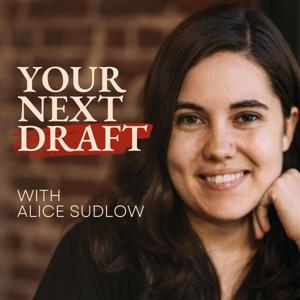
Developmental editor and book coach Alice Sudlow will be your companion through the mess and magic of revision. You’ll get inspired by interviews with authors, editors, and coaches sharing their revision processes; gain practical tips from Alice’s editing practice; and hear what real revision truly requires as Alice workshops scenes-in-progress with writers.
It’s all a quest to discover: How do you figure out what your story is truly about? How do you determine what form that story should take? And once you do, how do you shape the hundreds of thousands of words you've written into the story’s most refined and powerful form?
If you’ve written a draft—or three—but are still searching for your story’s untapped potential, this is the podcast for you. Together, let’s dig into the difficult and delightful work of editing your next draft.

38,654 Listeners
1,296 Listeners
1,007 Listeners

627 Listeners
251 Listeners

1,479 Listeners
114 Listeners

782 Listeners
430 Listeners

40 Listeners
32 Listeners

17 Listeners
21 Listeners

12,521 Listeners
15 Listeners