
Sign up to save your podcasts
Or


You check their phone.
Their location.
Their social media.
Their messages.
Their tone of voice.
The time they arrived home.
The way they answered a question.
The hesitation before they replied.
And even when you find nothing, the urge eventually comes back.
So why do you keep checking?
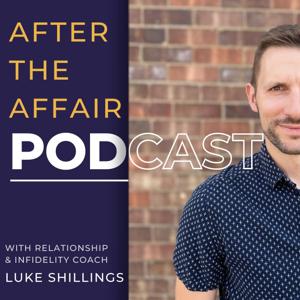
In this episode of After the Affair, Luke explores one of the most common but misunderstood behaviours following betrayal: the compulsion to monitor, investigate, and search for reassurance.
At first glance, checking appears logical. After all, you were lied to. You were blindsided. The person you trusted broke that trust. Of course your brain wants to make sure it never happens again.
But what if checking isn't actually creating safety?
What if it's doing something else entirely?
Luke explores the hidden relationship between checking and uncertainty, why the nervous system becomes trapped in threat detection mode after betrayal, and why the relief checking provides is often temporary rather than transformative.
Most importantly, this episode explores the deeper question beneath the behaviour itself:
What are you hoping checking will eventually give you?
Because understanding the answer to that question may reveal far more about your healing than any phone, message, location history, or social media account ever could.
"What are you hoping checking will eventually give you?"
Not what you're looking for.
Not what you might find.
Not who you're checking.
What are you hoping it will give you?
Safety?
Certainty?
Control?
Relief?
Reassurance?
Because once you understand the need beneath the behaviour, you can begin addressing the real problem rather than managing the symptom.
✅ Checking is a normal response to betrayal.
✅ Your nervous system is trying to prevent you from being blindsided again.
✅ Checking provides temporary relief, not lasting safety.
✅ The brain often mistakes uncertainty reduction for security.
✅ Finding nothing rarely resolves the deeper fear.
✅ Hypervigilance can become exhausting emotionally and physically.
✅ Trust cannot be rebuilt through monitoring alone.
✅ The urge to check does not automatically mean something is wrong.
✅ Recovery involves learning to tolerate uncertainty without immediately acting on it.
✅ The ultimate goal is not trusting them blindly, it is rebuilding trust in yourself.
Many betrayed partners spend months, or even years, trapped in a cycle of checking.
Checking feels responsible.
Checking feels protective.
Checking feels like you're doing something.
But over time, it can become a prison.
Not because you're weak.
Not because you're obsessive.
But because your nervous system learned a painful lesson and is desperately trying to keep you safe.
This episode explores why checking is often an attempt to manage anxiety rather than gather information, and why genuine recovery requires something deeper than monitoring another person's behaviour.
Because eventually the question stops being:
"Can I trust them?"
And becomes:
"Can I trust myself?"
If you're navigating the aftermath of infidelity and looking for support, guidance, and practical tools to help you move forward, Luke offers both private coaching and community support.
https://www.lifecoachluke.com
https://www.lifecoachluke.com
 View all episodes
 By Luke Shillings

4.7
2727 ratings
You check their phone.
Their location.
Their social media.
Their messages.
Their tone of voice.
The time they arrived home.
The way they answered a question.
The hesitation before they replied.
And even when you find nothing, the urge eventually comes back.
So why do you keep checking?
In this episode of After the Affair, Luke explores one of the most common but misunderstood behaviours following betrayal: the compulsion to monitor, investigate, and search for reassurance.
At first glance, checking appears logical. After all, you were lied to. You were blindsided. The person you trusted broke that trust. Of course your brain wants to make sure it never happens again.
But what if checking isn't actually creating safety?
What if it's doing something else entirely?
Luke explores the hidden relationship between checking and uncertainty, why the nervous system becomes trapped in threat detection mode after betrayal, and why the relief checking provides is often temporary rather than transformative.
Most importantly, this episode explores the deeper question beneath the behaviour itself:
What are you hoping checking will eventually give you?
Because understanding the answer to that question may reveal far more about your healing than any phone, message, location history, or social media account ever could.
"What are you hoping checking will eventually give you?"
Not what you're looking for.
Not what you might find.
Not who you're checking.
What are you hoping it will give you?
Safety?
Certainty?
Control?
Relief?
Reassurance?
Because once you understand the need beneath the behaviour, you can begin addressing the real problem rather than managing the symptom.
✅ Checking is a normal response to betrayal.
✅ Your nervous system is trying to prevent you from being blindsided again.
✅ Checking provides temporary relief, not lasting safety.
✅ The brain often mistakes uncertainty reduction for security.
✅ Finding nothing rarely resolves the deeper fear.
✅ Hypervigilance can become exhausting emotionally and physically.
✅ Trust cannot be rebuilt through monitoring alone.
✅ The urge to check does not automatically mean something is wrong.
✅ Recovery involves learning to tolerate uncertainty without immediately acting on it.
✅ The ultimate goal is not trusting them blindly, it is rebuilding trust in yourself.
Many betrayed partners spend months, or even years, trapped in a cycle of checking.
Checking feels responsible.
Checking feels protective.
Checking feels like you're doing something.
But over time, it can become a prison.
Not because you're weak.
Not because you're obsessive.
But because your nervous system learned a painful lesson and is desperately trying to keep you safe.
This episode explores why checking is often an attempt to manage anxiety rather than gather information, and why genuine recovery requires something deeper than monitoring another person's behaviour.
Because eventually the question stops being:
"Can I trust them?"
And becomes:
"Can I trust myself?"
If you're navigating the aftermath of infidelity and looking for support, guidance, and practical tools to help you move forward, Luke offers both private coaching and community support.
https://www.lifecoachluke.com
https://www.lifecoachluke.com
498 Listeners
405 Listeners
749 Listeners

388 Listeners
1,432 Listeners
204 Listeners

27,775 Listeners

442 Listeners

195 Listeners

363 Listeners
197 Listeners

1,068 Listeners

19,524 Listeners
58 Listeners

65 Listeners